
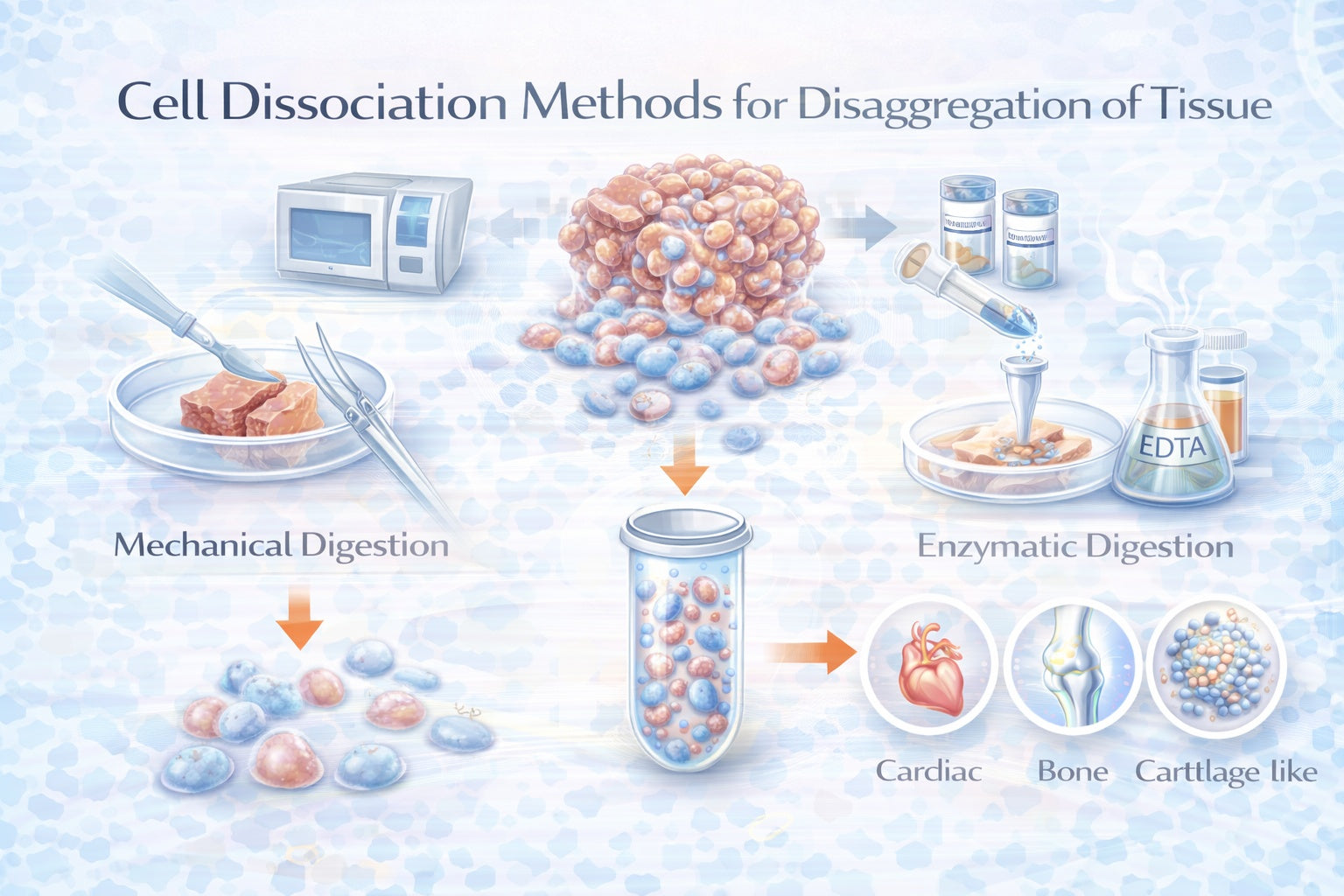
Tissue processing has become a foundational step in modern life science research because many downstream workflows depend on high-quality single-cell or enriched cell suspensions. When researchers discuss Cell dissociation and Tissue disaggregation, they are usually focused on one practical goal: separating tissue into usable cellular material while preserving structure, identity, and Cell viability as effectively as possible.
A good dissociation strategy does more than break tissue apart. It supports better Cell isolation, more consistent analysis, cleaner downstream workflows, and stronger confidence in research outcomes. That is why choosing between Mechanical dissociation, Enzymatic dissociation, and Chemical dissociation is such an important early decision.
Why cell dissociation matters in tissue workflows
Cell dissociation is the process of separating cells from tissue so they can be studied, counted, cultured, analyzed, or prepared for downstream applications. In many settings, the purpose of Tissue disaggregation is to create a suspension that keeps cells as intact and functional as possible.
The goals of tissue disaggregation
A successful Tissue disaggregation workflow often aims to support:
- high-quality Cell isolation
- strong Cell viability
- consistent downstream assay performance
- reduced debris and clumping
- efficient processing across sample types
Why method choice affects results
The dissociation method can shape cell yield, viability, purity, and functional integrity. This is why researchers often compare Mechanical dissociation, Enzymatic dissociation, and Chemical dissociation before selecting a workflow.
Mechanical dissociation for tissue disaggregation
Mechanical dissociation uses physical force to break tissue into smaller fragments or release cells. This may involve mincing, shearing, pipetting, filtering, grinding, or specialized dissociation devices.
Benefits of mechanical dissociation
One of the strengths of Mechanical dissociation is speed. It can be a practical option when researchers want a straightforward process with fewer added reagents.
Common advantages include:
- simple workflow setup
- reduced dependence on enzymes
- useful early-stage sample breakdown
- compatibility with selected soft tissues
Limits of mechanical dissociation
Although Mechanical dissociation can be helpful, it is often most effective when paired with other methods. Some tissue types are dense or matrix-rich, so physical disruption alone may not produce the desired cell yield or suspension quality.
Enzymatic dissociation and its role in cell isolation
Enzymatic dissociation uses enzymes to degrade extracellular matrix components and disrupt tissue architecture. This is one of the most widely used approaches in tissue processing because it enables more controlled release of cells from structured tissues.
Why is enzymatic dissociation popular?
Researchers often choose Enzymatic dissociation because it can improve Cell isolation from tissues where matrix proteins strongly hold cells in place. With a well-matched protocol, enzymatic workflows may support more complete tissue breakdown and smoother suspensions.
Enzymatic dissociation and cell viability
A major advantage of well-optimized Enzymatic dissociation is that it can support good Cell viability by reducing the need for excessive physical force. When digestion conditions are balanced well, cells can be released more gently and consistently.

Chemical dissociation in tissue processing
Chemical dissociation refers to the use of chemical agents that help loosen cell junctions, alter tissue interactions, or support tissue breakdown as part of a broader processing workflow. In some discussions, this term is used broadly, which is why context matters when comparing methods.
Where chemical dissociation can fit
In practice, Chemical dissociation may be used:
- as a supportive step before mechanical processing
- alongside enzyme-based workflows
- for specific tissue types or research protocols
- to improve handling or reduce aggregation
Why workflow balance matters
The best Chemical dissociation strategy depends on tissue type, downstream goals, and sample sensitivity. Researchers usually achieve the best outcomes when chemistry, timing, and handling are aligned with the biological needs of the sample.
Comparing dissociation methods
There is no single best dissociation method for every tissue. The ideal workflow depends on the sample, the target cell population, and what happens next in the experiment.
Mechanical vs enzymatic vs chemical approaches
Each approach offers different strengths:
- Mechanical dissociation supports a simple physical breakdown
- Enzymatic dissociation helps to digest the matrix and release cells more selectively
- Chemical dissociation can support loosening and workflow optimization
Combination strategies often work best.
In many real laboratory settings, researchers use a combined approach. A sample may first be cut or disrupted mechanically, then treated with enzymes, and later cleaned or filtered to improve Cell isolation and Cell viability.

Cell viability as a key success marker
Among all workflow goals, Cell viability is one of the most important. Good viability means the recovered cells remain healthier and more useful for downstream analysis, culture, molecular testing, or functional assays.
Why cell viability matters so much
Strong Cell viability supports:
- more reliable single-cell analysis
- better culture performance
- stronger molecular readouts
- improved interpretation of biological results
How to support cell viability during dissociation
Researchers often protect Cell viability by:
- choosing the right method for the tissue type
- avoiding unnecessary harsh handling
- optimizing timing and temperature
- reducing debris and aggregation
- using suitable cleanup and buffer systems
Cell isolation after tissue disaggregation
Once Tissue disaggregation is complete, the next step is often Cell isolation. This may involve filtration, enrichment, debris removal, density-based methods, or selective separation tools, depending on the workflow.
Why does cell isolation follow dissociation?
Dissociation creates access to the cells, while Cell isolation helps refine the sample for research use. This makes the two processes closely connected.
Clean input helps with better isolation.
A better dissociation workflow often leads to better Cell isolation because cleaner suspensions usually contain fewer aggregates, less debris, and more usable cells.
Microbubbles and emerging tissue-processing workflows
The keyword Microbubbles is increasingly relevant in life science and biomedical discussions because microbubble-based technologies are being explored for separation, imaging, and targeted processing. In tissue-processing conversations, Microbubbles can be part of the broader innovation story around gentler enrichment and advanced sample-handling methods.
Why microbubbles are interesting
Microbubbles are attracting interest because they may support novel approaches to cell enrichment, separation, and sample manipulation in specialized workflows.
Microbubbles in the context of cell isolation
Although not every tissue lab uses Microbubbles in routine Cell isolation, the concept fits naturally into the future-facing discussion around smarter sample preparation and refined separation tools.
FireGene’s relevance to tissue dissociation workflows
FireGene is especially relevant to this topic because tissue processing aligns closely with the brand’s sample preparation focus. FireGene offers tissue dissociation kits, cell cleanup reagents, cell and tissue storage solutions, molecular workflow tools, and related laboratory support that align with modern Cell dissociation needs.
Where FireGene fits best
For laboratories working on Tissue disaggregation and Cell isolation, FireGene’s relevance includes:
- tissue dissociation support
- sample cleanup workflows
- cell and tissue storage solutions
- molecular biology and downstream research support
- practical tools for better sample handling
Why brand-fit matters in educational content
Educational content performs best when it matches the brand’s real strengths. For FireGene, tissue dissociation is a key topic because it directly connects to sample preparation, workflow quality, and laboratory efficiency.
FAQs
What is cell dissociation?
Cell dissociation is the process of separating cells from tissue so they can be collected and used for analysis, culture, or further research.
What is tissue disaggregation?
Tissue disaggregation is the breakdown of tissue into smaller fragments or cell suspensions to support downstream workflows such as Cell isolation.
What is mechanical dissociation?
Mechanical dissociation uses physical force, such as mincing or filtering, to break tissue apart and release cells.
What is enzymatic dissociation?
Enzymatic dissociation uses enzymes to digest extracellular matrix components, helping release cells more efficiently from tissue.
What is chemical dissociation?
Chemical dissociation uses chemical agents to support tissue loosening or processing within a broader dissociation workflow.
Why is cell viability important?
Cell viability is important because healthier recovered cells usually support better downstream results in culture, analysis, and molecular workflows.
How do microbubbles relate to cell isolation?
Microbubbles are part of emerging separation and sample-handling technologies that may support future innovation in Cell isolation and tissue-processing workflows.
Conclusion
A strong Cell dissociation strategy is one of the most valuable starting points in tissue-based research. Whether the workflow uses Mechanical dissociation, Enzymatic dissociation, Chemical dissociation, or a thoughtful combination of methods, the goal stays the same: improve Tissue disaggregation, support efficient Cell isolation, and preserve Cell viability.
FireGene Single-Cell Sample Prep
Looking for validated dissociation kits?
FireGene's tissue dissociation kits are optimized for specific organ types — brain, tumor, liver, GI, reproductive, and more. Validated for 10x Genomics Chromium and BD Rhapsody workflows.


