
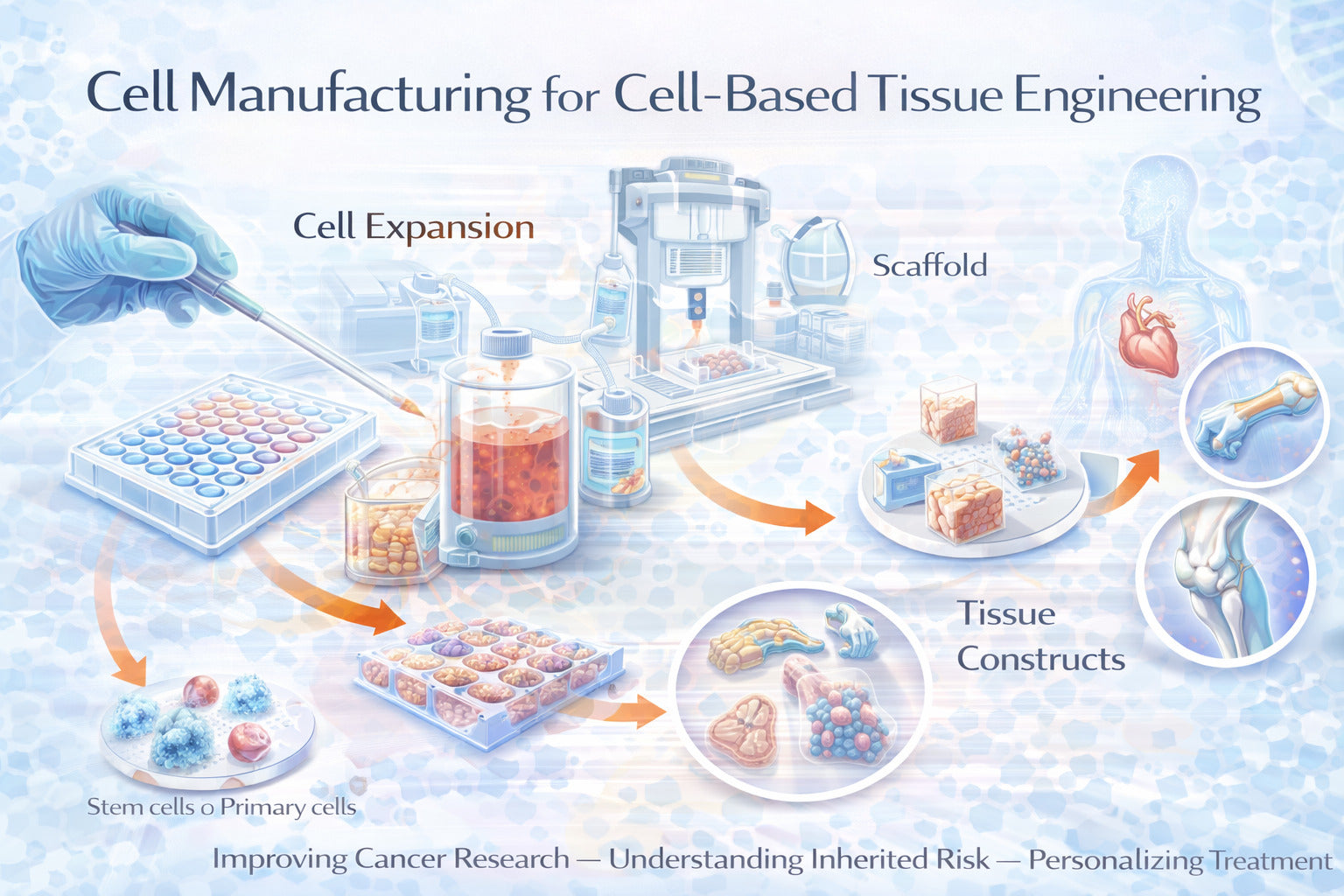
Cell manufacturing has become one of the most important foundations of modern tissue engineering because the quality of the starting cells often shapes the quality of the final construct, therapy, or research outcome. In practical terms, successful cell-based tissue engineering depends on more than growing cells in culture. It requires careful planning for sourcing, expansion, characterisation, Cell sorting, and process consistency to ensure the final cell product meets performance, safety, and biological relevance requirements.
Why cell manufacturing matters in tissue engineering
At the center of Tissue engineering is a simple idea: combine the right cells with the right environment to support tissue formation, repair, or functional modelling. This means Cell manufacturing is not only about producing more cells. It is about producing cells with the right quality profile for the intended purpose.
The goals of cell manufacturing
A strong Cell manufacturing process often aims to support:
- reliable cell expansion
- consistent phenotype and function
- lower unwanted variability
- cleaner downstream processing
- readiness for research or translational use
Why tissue engineering depends on cell quality
In Tissue engineering, cell quality affects attachment, growth, signalling, matrix production, and overall tissue performance. Better manufacturing supports better biological outcomes, which is why workflow discipline matters so much.
Cell manufacturing in regenerative medicine
The rise of Regenerative medicine has increased the importance of scalable, well-controlled cell production. This field depends on cells that can contribute to repair, restoration, or functional replacement in a meaningful and reproducible way.
Regenerative medicine needs reliable cell systems.
Because Regenerative medicine often involves advanced biological applications, the manufacturing process needs to protect identity, viability, and function while supporting practical workflow consistency.
From research culture to translational readiness
Modern Cell manufacturing is evolving from simple laboratory culture into a more structured system that includes sourcing, expansion, characterisation, quality review, and fit-for-purpose preparation for downstream use.

Managing cell heterogeneity during manufacturing
One of the biggest practical challenges in cell workflows is Cell heterogeneity. Even when cells come from the same tissue, not every cell behaves the same way. This variability can influence expansion, differentiation, signalling, and final tissue performance.
Why cell heterogeneity matters
Cell heterogeneity matters because different subpopulations may respond differently during manufacturing. Some may expand well, some may lose function more quickly, and others may affect consistency in the final engineered product.
How researchers respond to heterogeneity
Teams working in tissue engineering often manage Cell heterogeneity through improved sourcing, controlled culture conditions, characterisation strategies, and selective enrichment approaches, such as Cell sorting.
The role of cell sorting in tissue engineering workflows
Cell sorting is often one of the most useful tools for improving manufacturing precision. It helps researchers enrich desired populations, reduce unwanted cells, and build a more controlled starting point for engineered tissues.
Why cell sorting supports better manufacturing
A well-planned Cell sorting step can help:
- enrich target cell populations
- reduce background variability
- improve consistency in downstream cultures
- support more defined tissue-engineering models
Cell sorting and workflow quality
In practical workflows, Cell sorting can improve the match between manufacturing inputs and engineering goals. This is especially helpful when working with mixed tissues, primary samples, or complex regenerative systems.
Endothelial cells in cell-based tissue engineering
Endothelial cells are highly relevant in Tissue engineering because vascular support is a major part of tissue health and function. These cells help form the inner lining of blood vessels and are often important in engineered tissue environments where perfusion, signalling, and nutrient exchange matter.
Why are endothelial cells valuable?
In engineered systems, Endothelial cells can contribute to more physiologically relevant models and support the broader goal of building tissues that function more like native biology.
Manufacturing considerations for endothelial cells
The Cell manufacturing process for Endothelial cells often benefits from careful expansion, identity confirmation, and handling conditions that preserve their biological usefulness.

Muscle stem cells and regenerative applications.
Muscle stem cells are another important population in the broader conversation around Regenerative medicine and tissue engineering. These cells are valuable because of their role in muscle repair, regeneration, and tissue maintenance.
Why muscle stem cells matter
For muscle-focused applications, Muscle stem cells are of high interest because they can support regeneration-oriented research and the design of more specialised engineered tissue models.
Manufacturing muscle stem cells for research.
Successful Cell manufacturing for Muscle stem cells often depends on gentle handling, clean isolation workflows, and culture conditions that help preserve their regenerative potential.
Sample preparation and cell handling before manufacturing
Before large-scale culture or engineering begins, the earliest handling steps already influence success. Tissue dissociation, cleanup, storage, and sample preparation all contribute to the quality of the initial cell population.
Early workflow quality shapes outcomes.
A strong start often improves:
- Input cell quality
- expansion performance
- downstream Cell sorting efficiency
- consistency across manufacturing batches
Molecular analysis in cell manufacturing
As Cell manufacturing becomes more advanced, molecular analysis is playing a larger role in characterisation and workflow control. Researchers increasingly use nucleic acid-based methods to understand identity, quality, and biological consistency.
Why molecular tools matter
Molecular workflows can help teams better understand gene expression, cell identity, and process behavior during Tissue engineering and Regenerative medicine research.
FireGene’s relevance to molecular support
FireGene’s molecular biology reagents and kits, nucleic acid extraction products, and life science workflow support fit naturally into this part of the manufacturing conversation. These tools help strengthen the bridge between cell handling and downstream analysis.
Building a stronger cell manufacturing workflow
A successful Cell manufacturing strategy is usually built through a series of controlled steps rather than a single optimisation. The strongest workflows connect sample preparation, culture, enrichment, quality review, and downstream application goals in a clear sequence.
Practical priorities for better manufacturing
Teams often improve Cell manufacturing by focusing on:
- selecting the right source material
- reducing unnecessary variability
- addressing Cell heterogeneity early
- using Cell sorting where helpful
- protecting the function of Endothelial cells or Muscle stem cells when relevant
- aligning workflows with tissue-engineering objectives
FAQs
What is cell manufacturing?
Cell manufacturing is the process of producing, expanding, handling, and preparing cells in a controlled way for research, tissue engineering, or regenerative applications.
Why is cell manufacturing important in tissue engineering?
It is important because the quality of the cells influences how well the engineered tissue performs, develops, and supports biological function.
What is cell heterogeneity?
Cell heterogeneity refers to differences among cells within a sample or population, which can affect consistency and downstream results.
Why is cell sorting useful?
Cell sorting helps enrich desired cell populations and reduce unwanted variability, thereby supporting better tissue-engineering workflows.
Why are endothelial cells important in tissue engineering?
Endothelial cells are important because they support vascular-like functions and help make engineered tissues more biologically relevant.
What role do muscle stem cells play in regenerative medicine?
Muscle stem cells are valuable because they contribute to muscle repair, regeneration research, and tissue-focused engineering models.
How does FireGene relate to this topic?
FireGene supports related workflows with tissue dissociation kits, cell-cleanup reagents, storage solutions, molecular biology reagents and kits, nucleic acid extraction products, life science buffers, and sample-preparation tools for cell-focused research.
Conclusion
The future of Cell manufacturing in tissue engineering is becoming more precise, more biology-driven, and more closely tied to the goals of Regenerative medicine. As researchers work with complex populations such as Endothelial cells and Muscle stem cells, the need to manage Cell heterogeneity and apply smart Cell sorting strategies becomes even more important.


