
Introduction:
The Limulus Amebocyte Lysate (LAL) test is a cornerstone in endotoxin detection. As the demand for safe pharmaceutical and medical products grows, ensuring that endotoxins are eliminated from these products has become a top priority. This comprehensive guide explores how the LAL test works, its importance, and how FireGene’s TAL/LAL Reagents offer superior accuracy for endotoxin testing.
I. What is the LAL Test?
The LAL test uses the blood of the horseshoe crab, Limulus polyphemus, to detect endotoxins. Endotoxins are toxic substances that come from the cell wall of Gram-negative bacteria. Even a small amount of endotoxins can cause significant adverse effects in humans, including fever, shock, and even death. This makes endotoxin testing an essential quality control measure in various industries.
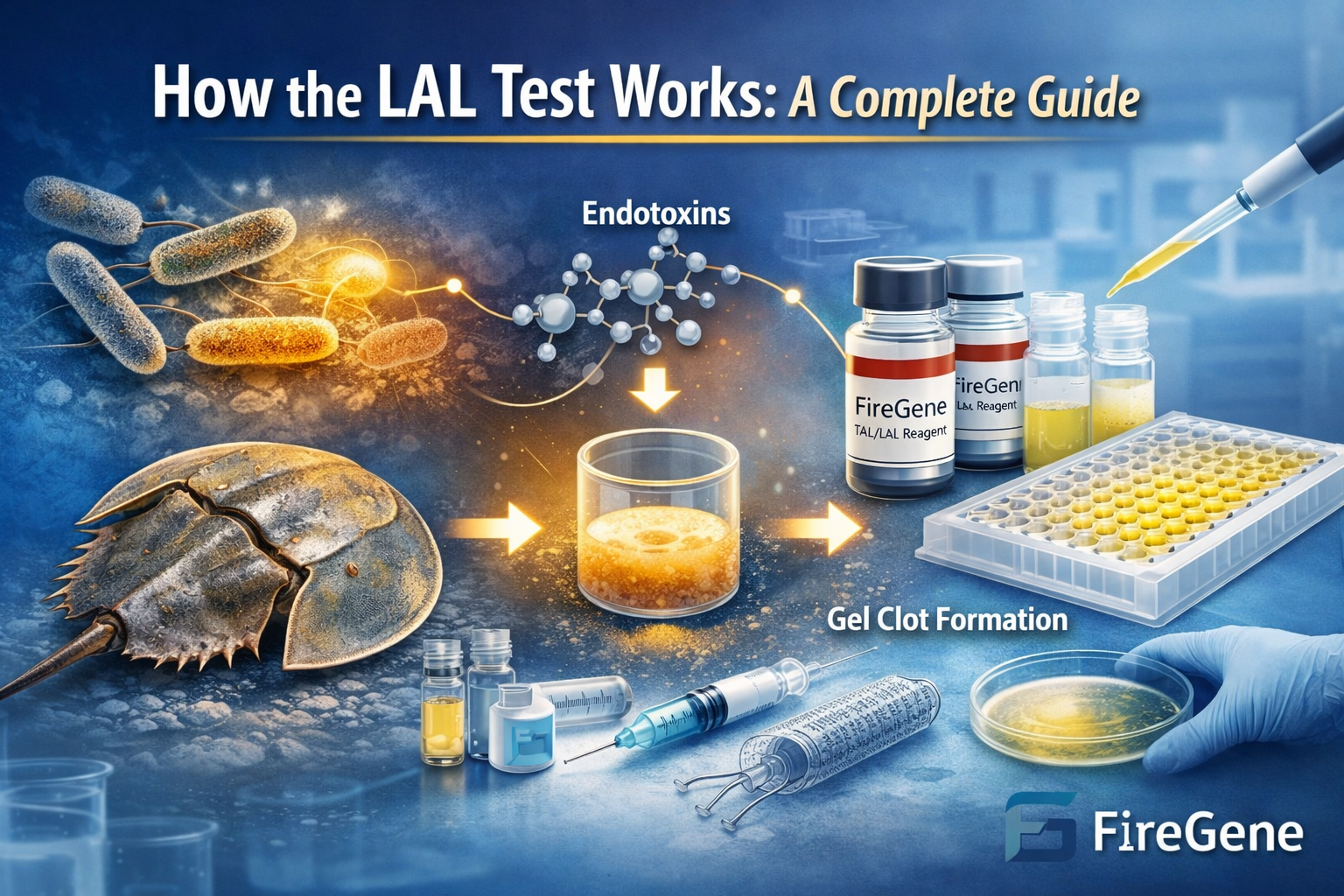
The LAL test leverages the natural immune response of the horseshoe crab's blood. When endotoxins are present, they trigger a cascade of biochemical reactions in the blood cells, leading to the formation of a gel-like clot. This reaction is used to determine the presence and quantity of endotoxins in the sample.
II. How the LAL Test Works
The process begins with the preparation of the TAL/LAL Reagent, which is derived from the horseshoe crab's blood. When endotoxins are introduced to this reagent, they initiate a series of chemical reactions that result in the formation of a gel clot. The presence and size of this clot indicate the level of endotoxin in the sample.
There are various methods of performing the LAL test, including gel clot, chromogenic, and turbidimetric methods. While the basic principle remains the same, each method offers its unique advantages depending on the application and sensitivity requirements.
In the gel clot method, the formation of a solid gel is directly observed. This method is easy to perform and ideal for small sample sizes. The chromogenic method uses color changes to indicate the presence of endotoxins, making it suitable for high-throughput applications. The turbidimetric method measures the turbidity (cloudiness) of the sample as it reacts with endotoxins, allowing for large-volume testing.
III. The Importance of Endotoxin Testing
Endotoxin contamination is a serious issue in industries that manufacture injectable drugs, medical devices, and biologics. Even trace amounts of endotoxins can trigger severe health reactions in humans, particularly when introduced into the bloodstream.
The LAL test provides a reliable and consistent method for detecting endotoxins, helping manufacturers ensure that their products meet safety standards. By using FireGene’s high-quality TAL/LAL Reagents, you can be confident that your endotoxin testing is precise and accurate.
IV. The Different Applications of Endotoxin Testing
Endotoxin testing is not limited to the pharmaceutical industry. It is equally critical in the manufacture of medical devices, cell-based therapies, and biologics. For example, in the production of vaccines, endotoxin levels must be carefully monitored to ensure safety. Similarly, for medical devices that come in direct contact with human tissues, endotoxin testing is essential to prevent adverse reactions.
The presence of endotoxins can also affect the quality and shelf life of biologics. As biologics become more popular, the need for reliable and efficient endotoxin testing continues to rise. This makes the LAL test a vital component of modern manufacturing.
V. Why FireGene’s TAL/LAL Reagents are the Best Choice
FireGene offers some of the highest-quality TAL/LAL Reagents on the market. Our reagents are carefully formulated to deliver accurate results with high sensitivity, ensuring that endotoxins can be detected even at low concentrations. Whether you're using the gel clot, chromogenic, or turbidimetric method, our reagents are designed to provide reliable and reproducible results.
Furthermore, FireGene’s TAL/LAL Reagents are backed by years of research and development, ensuring they meet the rigorous standards required for a wide range of applications. With FireGene, you can rest assured that your endotoxin testing is in expert hands.
Conclusion:
The LAL test is a cornerstone of endotoxin detection, ensuring that products are safe for human use. With FireGene’s TAL/LAL Reagents, you can ensure the highest level of accuracy and reliability in your endotoxin testing procedures. By understanding the science behind the LAL test, you can make more informed decisions about the safety and quality of your products.
FireGene, light your research with passion, innovation, and profession.


