

Description
Product Introduction
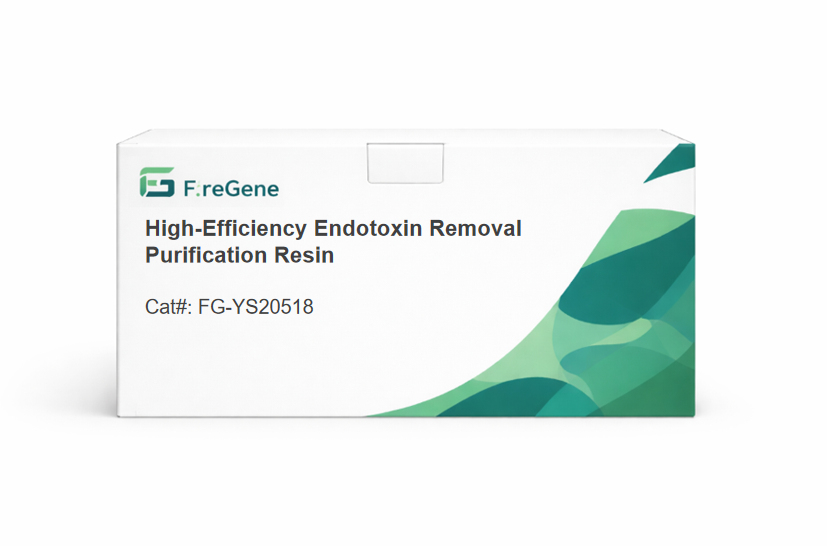
The Endotoxin Removal Purification Resin is designed for the removal of endotoxins from biogenic protein-based products (including proteins, peptides, antibodies, polysaccharides, etc.). Its mechanism involves immobilizing modified Polymyxin B onto 4% agarose microspheres to achieve the specific removal of endotoxins. Through this purification process, the endotoxin levels in a sample can be reduced to as low as 0.1 EU/mL, while maintaining a high sample recovery rate.
FireGene High-Efficiency Endotoxin Removal Purification Resin is stored in 20% ethanol, with a gel-to-storage solution ratio of 1:1; the product specifications listed correspond to the actual volume of the gel matrix.
Product Features
|
Matrix |
4% Agarose Microspheres |
|
Ligand |
Modified Polymyxin B |
|
Bead size |
45-165 µm |
|
Capacity |
> 2,000,000 EU/mL matrix |
|
PressureMax |
0.1 MPa, 1bar |
|
pH range |
5-10 |
|
Buffer |
20% Ethanol |
Storage Conditions
Store at 2–8°C. Shelf life: 2 years.
Applications
- Recombinant protein purification — removing endotoxin from E. coli-expressed proteins prior to use in cell culture, animal studies, or clinical-adjacent research
- Plasmid DNA preparation — endotoxin removal from maxi-prep and large-scale plasmid purification for transfection-sensitive applications
- Antibody and Fc-fusion protein purification — polishing step after Protein A/G chromatography
- Vaccine and biologics process development — endotoxin reduction in upstream bioprocessing workflows
- Research-grade reagent preparation — any protein or nucleic acid solution requiring low-endotoxin status for downstream cell-based work
Workflow
Equilibrate resin → Load sample → Wash → Collect flow-through (endotoxin-depleted product) or elute bound fraction depending on resin format → Verify endotoxin reduction with a LAL/TAL assay
For verifying the endotoxin reduction achieved, pair with the FireGene Kinetic Chromogenic Endotoxin Test Kit for quantitative before/after measurement.
Product FAQ
Q: Why is the endotoxin removal efficiency low?
A: This may be because the sample pH falls outside the optimal range for endotoxin binding; it is recommended to adjust the pH to 7–8 using 0.1 M NaOH or 0.1 M HCl.
Q: Why was the sample contaminated?
A: The resin had previously been used to purify other samples; do not use previously used resin to remove endotoxins from different samples.
Q: Why is the sample recovery rate low?
A: This may be due to non-specific adsorption of the sample onto the resin; it is recommended to increase the NaCl concentration in both the sample and the equilibration buffer.
Q: Which reagents can this product withstand?
A: 20% DMSO, 20% ethanol, 20% glycerol; 1 M urea, 300 mM imidazole; 0.05% Tween 20, 10 mM DTT, etc.
Q: How do I determine the required volume of packing material?
A: This can be determined based on the packing material's endotoxin binding capacity and the measured endotoxin content of your specific sample. If you are unable to measure the endotoxin content of your sample, for an initial experiment, you may proceed by loading the sample at a packing material-to-sample volume ratio of 1:1 or 1:2.
Q: Can your endotoxin removal and purification resin remove endotoxins from nucleic acid samples—such as plasmids or DNA?
A: No, it cannot.
Q: Regarding this packing material for removing endotoxins from proteins, what are the typical recovery rates for the protein and removal rates for the endotoxin?
A: The protein recovery rate can reach 90%, and the endotoxin removal rate can reach 99%.
Q: Regarding the endotoxin removal packing material, the client wishes to confirm the appropriate flow rate. They are utilizing a column with an inner diameter of 3.5 cm and intend to pack it with 40 mL of the material; the sample consists of a protein solution that has already undergone filtration and column chromatography. They would like to confirm the maximum flow rate that can be applied.
A: To ensure a contact time of greater than 10 minutes during the column run, the maximum flow rate for 40 mL of packing material should not exceed 4 mL/min.
Q: If not currently in use, can the endotoxin removal packing material be temporarily stored in 1% Triton X-114, or should it be stored in the recommended equilibration buffer?
A: How long do you mean by "temporarily"? Short-term storage—approximately 30 minutes—is acceptable; however, if the material will not be used for an extended period, we recommend storing it in the equilibration buffer.
Q: What is the glycerol tolerance limit for the endotoxin removal purification resin?
A: We recommend using a concentration of no more than 5%; high concentrations of glycerol can increase viscosity, which may negatively impact sample recovery rates.
Q: Can HEPES buffer be used as the buffer solution for the endotoxin purification resin?
A: Yes, it can.
Q: Does the endotoxin removal packing material require regeneration prior to its first use?
A: Yes, it does.
Q: How can one ensure that the regeneration solution is endotoxin-free?
A: Use endotoxin-free water for preparing the reagents, subject the containers to endotoxin removal treatment, or select consumables that are certified to be endotoxin-free.