
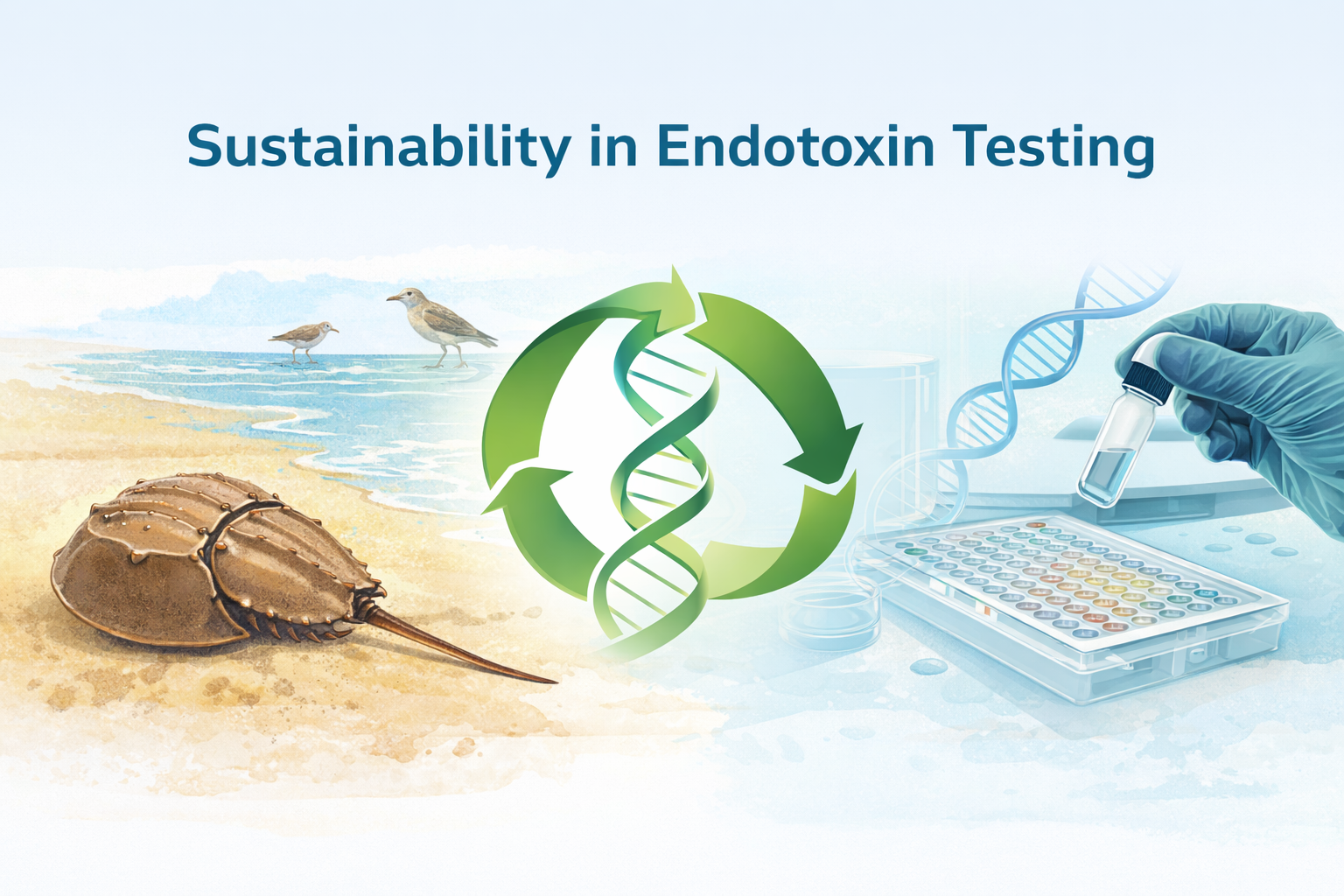
Endotoxin testing remains a critical quality control step across the pharmaceutical, biotechnology, and medical device industries. For decades, this essential testing has relied on TAL/LAL Reagents derived from the amebocyte cells of horseshoe crabs. While this approach has safeguarded patient safety worldwide, growing concerns around sustainability, environmental impact, and animal welfare are prompting an important industry-wide question:
Can endotoxin testing evolve beyond reliance on horseshoe crabs without compromising performance or regulatory compliance?
I. The Traditional TAL/LAL Reagent Supply Chain
Historically, TAL/LAL Reagents have been sourced from horseshoe crabs through a controlled bleeding process. The extracted amebocyte lysate is then processed into reagents used to detect bacterial endotoxins in injectable drugs, biologics, vaccines, and medical devices.
This biologically derived system has proven to be highly sensitive, reliable, and globally accepted by major pharmacopeias. As a result, TAL/LAL Reagents remain deeply embedded in pharmaceutical quality control workflows. However, their dependence on a natural marine resource introduces vulnerabilities related to supply stability and ecological impact.
II. Environmental and Ethical Challenges
As global demand for injectable therapeutics continues to rise, concerns surrounding the sustainability of TAL/LAL Reagent production have become more pronounced.
Population Impact:
Although harvesting is regulated, repeated annual collection can place stress on horseshoe crab populations, particularly in sensitive coastal ecosystems.
Ecosystem Effects:
Horseshoe crabs play a key ecological role, serving as a vital food source for migratory shorebirds and contributing to overall coastal biodiversity.
Regulatory and Public Scrutiny:
Environmental organizations and regulatory stakeholders are increasingly encouraging the industry to evaluate more sustainable endotoxin testing approaches, especially where validated alternatives are available.
These factors have elevated sustainability from a peripheral concern to a strategic consideration in endotoxin testing.
III. Synthetic and Recombinant Alternatives to TAL/LAL Reagents
Advances in biotechnology have led to the development of synthetic and recombinant endotoxin testing reagents that eliminate the need for animal-derived materials. Recombinant Factor C (rFC)-based methods, for example, aim to replicate the endotoxin-specific response mechanism of traditional TAL/LAL Reagents while reducing environmental burden.
These alternatives are designed to offer:
-
High sensitivity and specificity for endotoxin detection
-
Improved batch-to-batch consistency
-
Reduced dependency on natural resources
As validation data continues to grow, synthetic approaches are increasingly viewed as viable complements—or, in some cases, replacements—for traditional TAL/LAL Reagents.
IV. Industry Movement Toward Sustainable Endotoxin Testing
Across the pharmaceutical and biotech sectors, quality control teams are reassessing how endotoxin testing fits into broader sustainability goals. Rather than an abrupt transition, many organizations are adopting hybrid testing strategies, continuing to use TAL/LAL Reagents where appropriate while introducing recombinant alternatives in parallel workflows.
This measured approach allows laboratories to:
-
Maintain regulatory compliance
-
Protect data continuity
-
Gradually reduce environmental impact
Sustainability is no longer viewed as a trade-off against data quality, but as a dimension of responsible scientific practice.
V. FireGene’s Commitment to Responsible Innovation
At FireGene, we recognize that the future of endotoxin testing must balance scientific rigor, regulatory expectations, and environmental responsibility. Our development strategy reflects this philosophy.
In addition to supplying reliable TAL/LAL Reagents for established workflows, FireGene actively invests in R&D initiatives focused on next-generation endotoxin testing technologies. These efforts aim to support laboratories seeking sustainable solutions without sacrificing sensitivity, reproducibility, or compliance with global pharmacopeial standards.
By aligning innovation with responsibility, FireGene supports laboratories at every stage of their endotoxin testing journey.
VI. What This Means for Your Laboratory
As sustainability becomes an increasingly important consideration, laboratories can take proactive steps to prepare for the future of endotoxin testing:
Plan Strategically:
Assess current and projected assay needs, including reagent availability and long-term supply considerations.
Validate Alternatives Carefully:
When exploring synthetic or recombinant methods, parallel testing and robust validation are essential to ensure continuity and confidence.
Communicate Sustainability Value:
Demonstrating environmentally responsible testing practices can strengthen relationships with partners, regulators, and end users.
VII. The Road Forward for Endotoxin Testing
Traditional TAL/LAL Reagents will continue to play a critical role in endotoxin testing for the foreseeable future. However, the industry’s momentum toward sustainable solutions is unmistakable.
Through continued innovation, thoughtful validation, and responsible adoption, endotoxin testing can evolve to meet both scientific and environmental expectations. The path forward is not about replacing one solution with another overnight, but about building a more resilient, ethical, and sustainable testing ecosystem.
FireGene remains committed to supporting this transition—helping laboratories maintain confidence in their results while contributing to a more sustainable future for endotoxin testing.


