
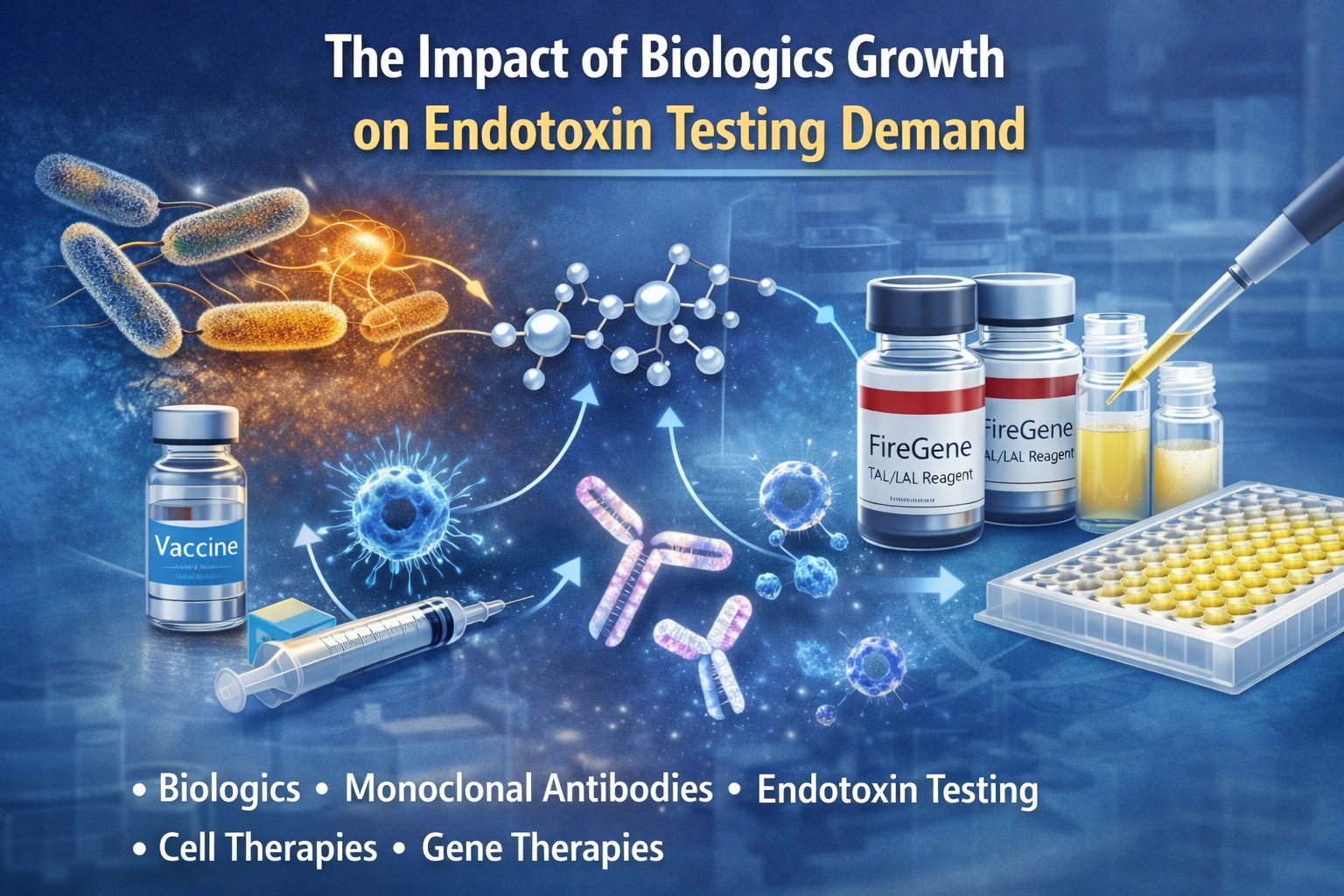
Over the past decade, the global biologics market has experienced remarkable growth. Biologics—including monoclonal antibodies, recombinant proteins, vaccines, cell therapies, and gene therapies—have transformed the way many complex diseases are treated. However, as biologic drugs become more sophisticated and widely used, ensuring their safety has become increasingly critical.
One of the most important safety requirements in biologics manufacturing is endotoxin testing. Endotoxins are toxic components derived from the outer membrane of Gram-negative bacteria, and even extremely small amounts can trigger severe immune reactions in humans. For this reason, regulatory authorities worldwide require strict endotoxin test procedures throughout the production process.
As the biologics industry continues to expand, the demand for reliable bacterial endotoxin test solutions is rising rapidly. In this article, we explore how the growth of biologics is reshaping the endotoxin testing landscape and why advanced TAL/LAL Reagent technologies are becoming increasingly essential for modern pharmaceutical manufacturing.
I. The Biologics Boom
Biologics represent one of the fastest-growing sectors in the pharmaceutical industry. Unlike traditional small-molecule drugs, biologics are derived from living systems such as cultured cells, bacteria, yeast, or mammalian expression systems.
Today, biologics are used to treat a wide range of diseases, including:
-
Cancer
-
Autoimmune diseases
-
Rare genetic disorders
-
Infectious diseases
-
Chronic inflammatory conditions
Many of the world's best-selling drugs are biologics, and the pipeline for biologic therapies continues to grow each year. With this expansion comes increased complexity in manufacturing and quality control.
Because biologics are produced using living organisms, they are inherently more susceptible to contamination. Among the most critical contaminants are bacterial endotoxins, which can originate from Gram-negative bacteria present in raw materials, equipment, or production environments.
This is why endotoxin testing has become a fundamental part of biologics manufacturing. Every batch of biologic product must undergo rigorous bacterial endotoxin test procedures to ensure patient safety.
As production volumes increase globally, laboratories and manufacturers are performing more endotoxin test assays than ever before.
II. The Role of Endotoxin Testing in Biologics Manufacturing
The presence of endotoxins in injectable or implantable medical products poses a serious risk to patient health. Endotoxins can cause fever, inflammation, septic shock, organ failure, and in extreme cases, death. Because biologic drugs are often administered intravenously or through injection, strict endotoxin testing is required before products can be released to the market.
The bacterial endotoxin test (BET) is widely recognized as the industry standard for detecting endotoxin contamination. Regulatory agencies such as the FDA, USP, and EMA require endotoxin limits to be carefully controlled throughout the entire drug development and manufacturing process.
In biologics production, endotoxin test procedures may be performed at multiple stages, including:
-
Raw material testing
-
Process water monitoring
-
In-process control testing
-
Final product release testing
-
Equipment validation
Because endotoxins are extremely stable and resistant to heat, removing them once contamination occurs can be difficult. Therefore, continuous endotoxin testing is essential for maintaining product quality.
The most widely used technology for conducting the bacterial endotoxin test is the TAL/LAL reagent-based assay, which uses natural coagulation reactions derived from horseshoe crab blood cells to detect endotoxins with high sensitivity.
III. Rising Demand for Endotoxin Testing
As biologics production increases globally, the number of endotoxin testing procedures required during manufacturing is rising dramatically. Each batch of biologic product must undergo validated endotoxin test protocols before it can be released to patients.
Several factors are contributing to the growing demand for bacterial endotoxin test solutions:
1. Expansion of Biopharmaceutical Manufacturing
The rapid expansion of global biopharmaceutical manufacturing facilities has created a strong need for reliable endotoxin testing technologies. New biologics production plants require validated endotoxin detection systems to ensure compliance with regulatory standards.
2. Increasing Regulatory Requirements
Regulatory agencies continue to emphasize stricter control of endotoxin contamination. Guidelines such as those from the United States Pharmacopeia (USP <85>) require validated bacterial endotoxin test procedures to ensure drug safety.
Manufacturers must demonstrate that their endotoxin test methods are accurate, reproducible, and sensitive enough to detect trace levels of endotoxin contamination.
3. Growth of Advanced Therapies
Emerging therapies such as:
-
Gene therapy
-
Cell therapy
-
CAR-T therapy
-
mRNA vaccines
require extremely stringent endotoxin testing protocols due to their high sensitivity to contaminants. These advanced therapies often require ultra-sensitive endotoxin test methods to meet regulatory standards.
4. Global Vaccine Production
The expansion of global vaccine production has also increased the need for reliable bacterial endotoxin test technologies. Vaccine manufacturers must conduct multiple rounds of endotoxin testing during development, production, and release testing.
As a result, demand for high-quality TAL/LAL Reagents used in endotoxin test assays continues to grow worldwide.
IV. FireGene’s Commitment to Reliable Endotoxin Testing
As the need for dependable endotoxin testing solutions continues to rise, manufacturers require reagents that deliver accuracy, consistency, and regulatory compliance.
FireGene is dedicated to providing high-performance TAL/LAL Reagents designed specifically for modern bacterial endotoxin test applications. Our reagents support multiple endotoxin detection methods, including:
Each FireGene TAL/LAL reagent is developed to ensure:
-
High sensitivity for endotoxin detection
-
Excellent reproducibility in endotoxin testing workflows
-
Compatibility with a wide range of sample types
-
Compliance with international regulatory standards
By providing reliable solutions for endotoxin testing, FireGene helps pharmaceutical manufacturers maintain strict quality control while improving laboratory efficiency.
Whether for routine bacterial endotoxin test procedures or advanced biologics development, FireGene’s TAL/LAL reagents are designed to deliver consistent and dependable results.
FireGene, light your research with passion, innovation, and profession.


