
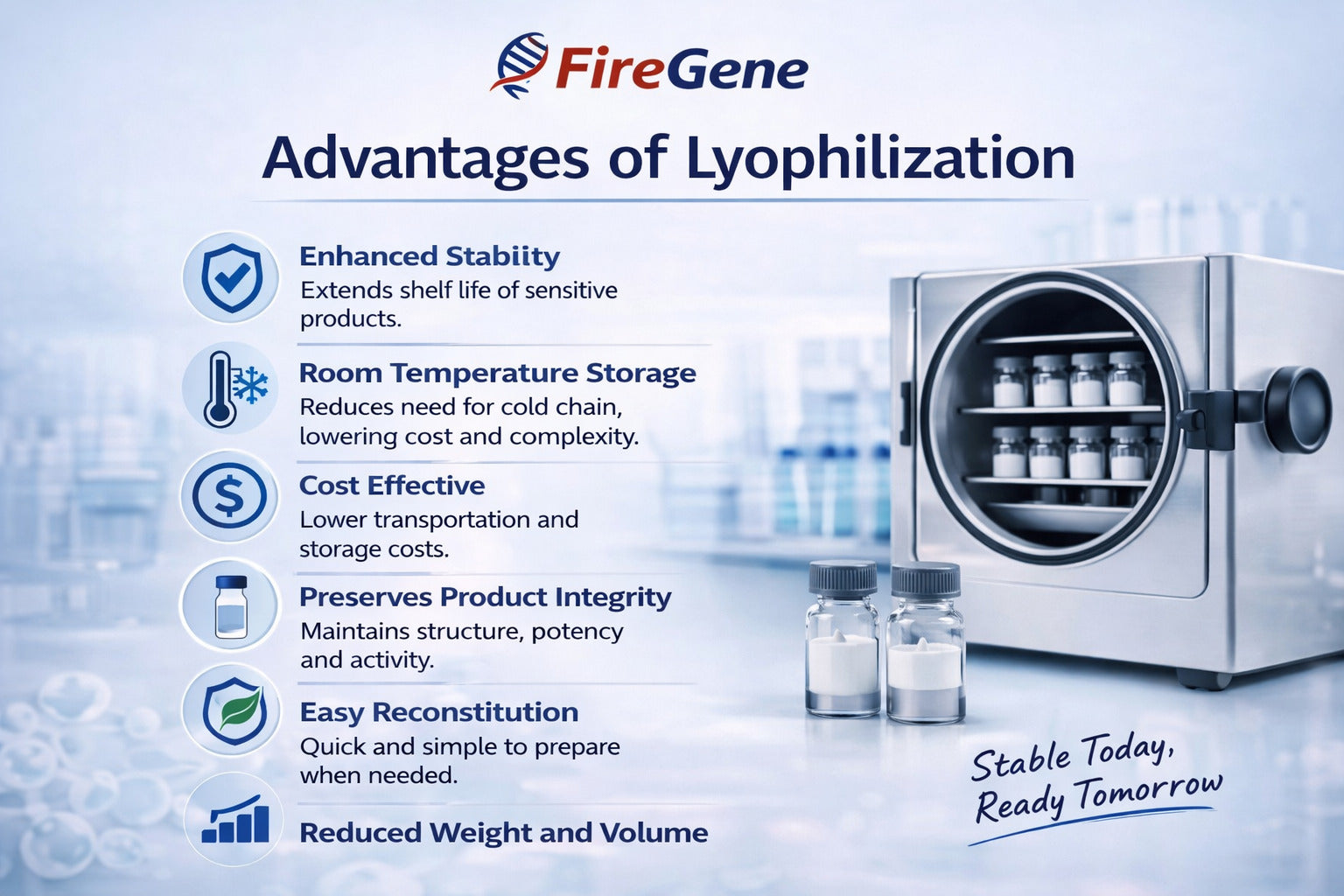
Lyophilization, also known as freeze drying, is one of the most reliable methods for preserving sensitive materials without exposing them to high heat. In pharmaceuticals, diagnostics, biotechnology, and research, moisture can quickly degrade quality, shorten shelf life, and affect performance. That is where the advantages of lyophilization become clear.
By using a controlled freeze-drying process, manufacturers can remove water while protecting product structure, activity, and long-term stability. This makes lyophilization an important solution for modern labs and life science companies that need dependable preservation methods. In this article, we will examine the main benefits of lyophilization, explain how it works, and demonstrate why it is widely used for high-value, moisture-sensitive products.
What Is Lyophilization?
Before looking at the benefits, it helps to understand the basics. Lyophilization is a drying method that removes water from a frozen product under vacuum. Instead of melting first, the ice changes directly into vapor through sublimation. This controlled water-removal process helps reduce the damage that can occur with standard heat-based drying methods.
The general lyophilization process includes:
- Freezing the product
- Lowering pressure in a vacuum chamber
- Removing ice through sublimation
- Eliminating residual moisture for better stability
Because the process is gentle, freeze drying is especially useful for products that are sensitive to heat, moisture, or structural change.
How Lyophilization Works
Many people search for how lyophilization works because the process sounds complex, but the principle is easy to understand. During the freeze-drying process, the product is first frozen. Then the surrounding pressure is reduced. Under those conditions, the frozen water leaves the product by sublimation, moving directly from solid ice to vapor.
The process normally happens in three stages:
1. Freezing
The product is cooled to the point where water turns into ice.
2. Primary Drying
Most of the frozen water is removed through sublimation under vacuum.
3. Secondary Drying
Any remaining moisture is removed to improve final stability and extend shelf life. This method is slower than some traditional drying techniques, but the preservation results are often much better for sensitive materials.
Top Advantages of Lyophilization
The biggest reason companies choose freeze drying is simple: it helps preserve quality while improving storage and usability.
Here are the main advantages of lyophilization.
1. Longer Shelf Life
One of the most important benefits of lyophilization is better shelf life. Water often drives chemical reactions, microbial growth, and product degradation. By removing moisture to a very low level, lyophilization helps reduce those risks and keeps products stable for longer.
This is especially useful for:
- Diagnostic reagents
- n- Biological materials
- Enzymes and proteins
- Vaccines and injectable formulations
- Laboratory reference materials
A longer shelf life means fewer losses, greater storage flexibility, and greater confidence in product reliability.
2. Better Stability for Sensitive Products
Many products used in the life science and medical fields cannot tolerate heat well. Traditional drying methods may damage active ingredients, reduce biological function, or alter product structure. The lyophilization process avoids this problem by operating at low temperatures.
That is why freeze drying is often preferred for:
- Heat-sensitive compounds
- Bioactive ingredients
- Protein-based products
- Molecular diagnostic materials
- Moisture-sensitive formulations
When performance matters, this gentle preservation method offers a major advantage.
3. Preserves Product Structure and Integrity
Another key benefit is structural preservation. Because the freeze-drying process removes ice by sublimation, the product often keeps its original shape, porous structure, and physical integrity better than it would with standard evaporation.
This matters when products need to be:
- Reconstituted quickly
- Measured accurately
- Handled without collapse or clumping
- Maintained in a consistent final form
For many scientific and pharmaceutical products, preserved structure directly supports better usability.
4. Supports Fast and Easy Reconstitution
Lyophilized products are often easier to rehydrate than products dried by other methods. The porous structure left behind after sublimation allows liquid to enter the material quickly. This can speed up and improve the efficiency of reconstitution, which is important in clinical, laboratory, and manufacturing settings.
For example, a freeze-dried diagnostic reagent may return to usable form quickly when mixed with the correct buffer or solution. That saves time and helps maintain workflow efficiency.
5. Lower Shipping and Storage Burden
Since the water-removal process removes most of the moisture, the product becomes lighter and easier to store.
This creates several practical advantages:
- Reduced shipping weight
- Easier handling
- Lower storage space requirements
- Better transport flexibility
For companies serving broad markets, this can support cost control and easier global distribution.
6. Reduced Risk of Degradation
Degradation can occur due to moisture, heat, oxidation, and an unstable liquid form. The advantages of lyophilization include reducing several of these risks at once. By converting a product into a dry and stable form, manufacturers can protect sensitive ingredients from breakdown during storage and transit. This is one reason why freeze drying is used for high-value products that require strong performance consistency.
7. Ideal for High-Value Life Science Applications
In the pharmaceutical, biotech, and diagnostic industries, product quality is often more important than processing speed. Lyophilization works well for applications where even small quality losses can become a major issue.
Common examples include:
- PCR and qPCR reagents
- Molecular diagnostic kits
- Peptides and proteins
- Antibodies
- Culture media components
- Biologics and vaccines
For organizations working in this space, including companies like FireGene, lyophilization can support better product stability and help protect end-user confidence.
8. Better Support for Long-Distance Distribution
Many scientific and medical products need to move across regions and countries. Liquid products are often more difficult to transport safely because they may require strict storage conditions and carry a higher risk of instability. Freeze-dried formats can make logistics easier to manage. This is one of the practical advantages of lyophilization for growing brands and international suppliers.
9. Helps Maintain Biological Activity
For some materials, preserving activity is just as important as preserving appearance. The controlled lyophilization process can help maintain the functional properties of certain biological materials better than conventional heat drying. This makes a difference in research, diagnostics, and pharmaceutical development. While every formulation behaves differently, lyophilization is often selected because it offers a better chance of protecting activity in sensitive products.
10. Improves Product Convenience
End users often prefer products that are easier to store, transport, and prepare.
Lyophilized formats can improve user experience by offering:
- Simple storage conditions in some applications
- Quick reconstitution before use
- Better portion control
- Reliable batch-to-batch consistency
Convenience may seem like a small benefit, but in busy labs and production environments, it has a real impact.
Real-World Applications of Freeze Drying
The value of freeze drying becomes even clearer when considering its use in real-world settings.
Pharmaceutical Use
Freeze-drying is used for injectable drugs, vaccines, and biologics that require long-term stability.
Diagnostic Use
Diagnostic reagents and kit components are often lyophilized to extend shelf life and maintain performance.
Biotechnology Use
Proteins, enzymes, antibodies, and cell-related materials may benefit from this process when liquid stability is limited.
Food and Specialty Ingredients
Outside the lab, freeze-drying is used to preserve coffee, fruits, herbs, and other nutritional products.
These examples show how the same core technology can support both scientific and commercial value.
Lyophilization vs Traditional Drying
Compared with traditional drying methods, lyophilization offers a more gentle approach.
Traditional Drying May Cause:
- Heat damage
- Loss of activity
- Structural collapse
- Lower product quality
Freeze Drying May Offer:
- Better preservation
- Longer shelf life
- Improved reconstitution
- Better product consistency
Although lyophilization may require more time and specialized equipment, the benefits are often worth it for sensitive materials.
Are There Any Limitations?
A balanced article should also acknowledge the challenges.
Lyophilization can involve:
- Higher equipment costs
- Longer processing time
- Need for process optimization
- Formulation-specific testing
However, when product quality, stability, and preservation are top priorities, the benefits often outweigh these limitations.
Why the Advantages of Lyophilization Matter for Modern Manufacturers
Today’s life science and diagnostic markets demand more than simple drying. They require reliability, reproducibility, and confidence over time. That is why the advantages of lyophilization matter so much. This process supports stable products, easier handling, and better long-term value.
For innovative suppliers and manufacturers, including FireGene, freeze drying can be part of a smarter strategy to preserve sensitive materials and improve product readiness. If your business is focused on quality, stability, and performance, it is worth learning more about how freeze drying fits into your product development or service model.
FAQ:
What are the main advantages of lyophilization?
The main advantages include longer shelf life, better stability, improved preservation of sensitive materials, easier transport, and faster reconstitution.
How does lyophilization work?
Lyophilization works by freezing a product, then removing water under vacuum by sublimation, followed by drying the residual moisture.
Why is freeze-drying better for sensitive products?
Freeze drying uses lower temperatures than traditional drying, which helps reduce heat damage and preserve product quality.
Does lyophilization improve shelf life?
Yes. By removing moisture, lyophilization helps reduce degradation and can significantly improve shelf life.
Is lyophilization the same as freeze drying?
Yes. Lyophilization is the scientific term, while freeze drying is the more common term used in general language.
Conclusion
The main advantages of lyophilization come down to one thing: better preservation without unnecessary heat damage. By using a controlled freeze-drying process based on sublimation, lyophilization helps improve shelf life, protect sensitive ingredients, and support easier storage, shipping, and reconstitution. It is one of the most effective methods for preserving high-value products across pharmaceutical, biotech, diagnostic, and laboratory applications.
Whether you are exploring new formulation strategies or seeking better ways to protect moisture-sensitive materials, lyophilization offers practical, long-term value.


