
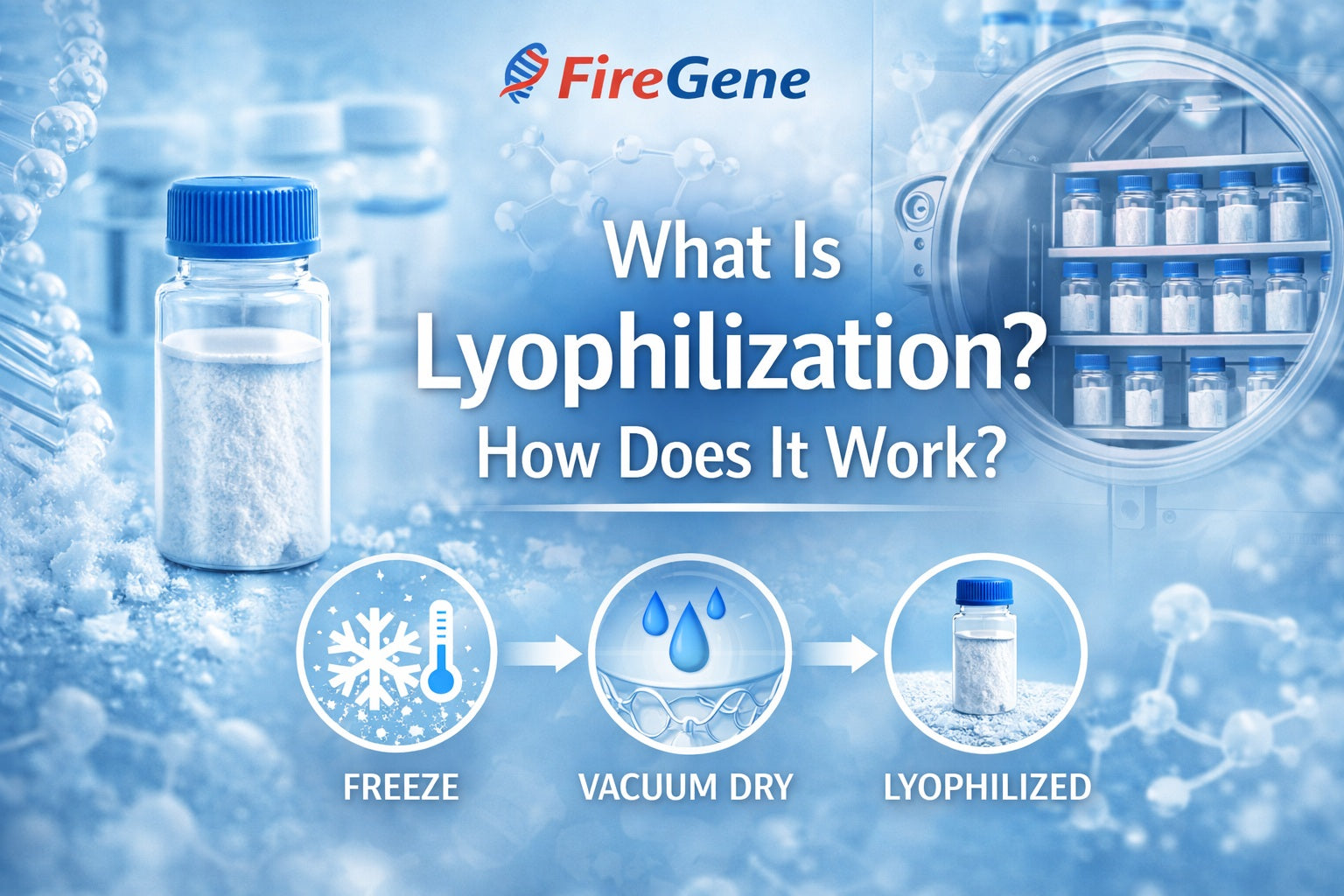
Lyophilization, also known as freeze drying, is one of the most effective methods for removing water from sensitive products while preserving their structure, stability, and performance. If you have ever wondered what lyophilization is and how it works, the short answer is simple: it is a controlled water-removal process that first freezes a product and then removes the ice by turning it directly into vapor.
This method is widely used in pharmaceuticals, biotechnology, diagnostics, food processing, and laboratory applications because it supports shelf life extension without exposing materials to damaging high heat. For brands and labs working with moisture-sensitive materials, understanding the lyophilization process can help improve storage, transport, and product reliability.
What Is Lyophilization?
Lyophilization is a dehydration method that removes water from a frozen product under low pressure. Instead of melting into liquid water, the process causes ice to go directly from solid to vapor. This step is called sublimation. Because of this, freeze drying is especially useful for heat-sensitive materials that traditional drying methods could damage.
In simple terms, lyophilization helps preserve a product by:
- Removing moisture gently
- Protecting product structure
- Improving long-term stability
- Supporting easier storage and transport
That is why lyophilization is commonly used for vaccines, enzymes, reagents, proteins, diagnostic materials, and other sensitive formulations.
Lyophilization vs Freeze Drying: Is There a Difference?
Many people search for the difference between lyophilization and freeze drying, but in most practical cases, the two terms mean the same thing.
- Lyophilization is the more technical and scientific term
- Freeze-drying is the more common everyday term
Both describe the same preservation process: freezing a product and removing water under vacuum. So, when comparing lyophilization vs freeze drying, there is usually no true process difference. The main difference is just the language used in scientific, industrial, or general contexts.
Why Is Lyophilization Important?
Lyophilization matters because many biological and chemical materials are unstable in liquid form. Moisture can trigger degradation, contamination risk, reduced activity, or shorter usability. A well-designed lyophilization process helps solve these problems by extending product life while maintaining quality.
Key Benefits of Lyophilization
- Better shelf life extension for sensitive products
- Reduced need for cold-chain dependence in some applications
- Lower product weight for shipping and storage
- Improved stability during transport
- Fast and easy reconstitution when needed
- Better preservation of shape, activity, and composition
For life science and diagnostic manufacturers, this can directly support quality consistency and operational efficiency.
How Does Lyophilization Work?
To understand what lyophilization is and how it works, it helps to break the method into its main stages.
Freeze Drying Process Steps
The freeze-drying process steps are usually divided into three main phases:
- Freezing
- Primary drying
- Secondary drying
Each stage plays a different role in the total water removal process.
1. Freezing Stage
In the first stage, the product is cooled until the water inside it becomes ice. This step is critical because the freezing pattern can influence the final product structure. Slow freezing may create larger ice crystals, while faster freezing may create smaller ones. The size and distribution of these crystals can affect drying speed and final porosity. A carefully controlled freezing stage helps prepare the product for efficient moisture removal.
2. Primary Drying Stage
Primary drying is the core of the lyophilization process. After the product is frozen, the pressure inside the chamber is reduced, creating a vacuum. Then, controlled heat is added. Under these conditions, the ice does not melt first. Instead, it sublimates directly into vapor. This is where most of the water is removed. The product must be handled carefully at this stage. Too much heat can damage the structure, while too little heat can slow the process.
3. Secondary Drying Stage
Even after primary drying, some moisture remains bound to the product. During secondary drying, the temperature is further increased under vacuum to remove the residual moisture. This final stage improves stability and helps achieve the low moisture levels needed for long-term storage. At the end of the process, the dried product is usually sealed in moisture-protective packaging.
What Happens During the Water Removal Process?
The water-removal process in lyophilization differs from ordinary evaporation. In traditional drying, liquid water evaporates due to heat. In lyophilization, frozen water is removed through sublimation under low pressure. This difference matters because it allows the product to dry with less thermal stress. That makes lyophilization especially valuable for fragile, bioactive, or structurally sensitive materials.
Real-World Example of Lyophilization
Imagine a diagnostic reagent that loses performance when stored in liquid form for too long. By applying freeze-drying, the reagent can be converted into a stable, dry format. It can then be stored longer, shipped more easily, and reconstituted with the right solution before use.
This approach is often useful in:
- Molecular diagnostics
- PCR and qPCR reagents
- Enzymes and proteins
- Antibodies
- Reference materials
- Vaccines and biologics
For companies working in these areas, including brands like FireGene, lyophilization can improve product stability and broaden distribution opportunities.
Common Applications of Lyophilization
Lyophilization is used across many industries because it balances preservation with product quality.
Pharmaceutical and Biotech Applications
- Injectable drugs
- Vaccines
- Peptide and protein formulations
- Biological samples
- Cell culture materials
Diagnostic and Laboratory Applications
- Molecular diagnostic kits
- Enzyme-based reagents
- Reference standards
- Research-use reagents
- Sample preparation components
Food and Specialty Applications
- Instant coffee
- Fruits and herbs
- Nutritional products
- Specialty ingredients
Although the process is widely known in food preservation, its scientific and medical value is especially important where performance and stability matter.
What Factors Affect the Lyophilization Process?
A successful lyophilization process depends on more than just freezing and drying. Several variables can influence product quality, drying time, and final moisture content.
Important Factors Include:
- Product formulation
- Freezing temperature
- Chamber pressure
- Shelf temperature
- Container type
- Product fill volume
- Desired final moisture level
Even small changes in these factors can affect the final result. That is why process optimization is so important in commercial and laboratory settings.
Advantages of Lyophilization Over Other Drying Methods
Compared with conventional drying, lyophilization offers several practical advantages.
Why Many Industries Prefer Freeze Drying
- Better preservation of heat-sensitive compounds
- Stronger support for shelf life extension
- Lower risk of structural collapse
- Faster product recovery through reconstitution
- Better retention of biological activity in many applications
These are benefits that matter when product performance cannot be compromised.
Are There Any Limitations?
Yes, lyophilization offers clear benefits, but it also poses challenges.
Common Limitations
- Equipment can be expensive
- Process times may be long
- Cycle development requires expertise
- Not every formulation responds the same way
Still, for high-value and sensitive products, the benefits often outweigh the limitations.
How Lyophilization Supports Shelf Life Extension
One of the main reasons companies use lyophilization is to extend shelf life. Moisture is a major cause of degradation in many biological and chemical products. By removing water to a very low level, lyophilization helps reduce the reactions that can damage product quality over time.
This can lead to:
- Longer storage life
- Better batch consistency
- More flexible shipping conditions
- Improved convenience for end users
For manufacturers, that means stronger product reliability. For users, it means more confidence in performance.
Best Use Cases for Lyophilization
Lyophilization is often the right choice when a product is:
- Sensitive to heat
- Unstable in liquid form
- Intended for long-term storage
- Shipped across long distances
- Reconstituted before use
- High in value and quality-sensitive
This makes it especially relevant in modern biotech, diagnostics, and life science manufacturing.
FAQ
Is lyophilization the same as freeze drying?
Yes. Lyophilization and freeze drying generally refer to the same process. Lyophilization is the technical term, while freeze drying is the more commonly used term.
What is the main purpose of lyophilization?
The main purpose is to remove water from sensitive products while preserving their structure, stability, and performance.
What are the main freeze-drying process steps?
The main freeze-drying process steps are freezing, primary drying, and secondary drying.
Why is lyophilization used for sensitive materials?
It uses low-temperature conditions and vacuum drying, which helps protect materials that may be damaged by heat.
How does lyophilization help extend shelf life?
By removing moisture, lyophilization reduces degradation risks and helps products remain stable for longer.
Conclusion
It is a specialized freeze-drying method that removes water from frozen materials under vacuum, helping preserve sensitive products with minimal heat damage. The process includes freezing, primary drying, and secondary drying, all working together to achieve controlled water removal.
From pharmaceuticals to diagnostics, lyophilization plays an important role in improving stability, extending shelf life, and protecting product performance.As advanced life science manufacturing continues to grow, technologies like lyophilization will remain essential for delivering reliable, high-quality products. Companies such as FireGene can benefit from this approach when developing stable solutions for scientific and diagnostic applications.


