
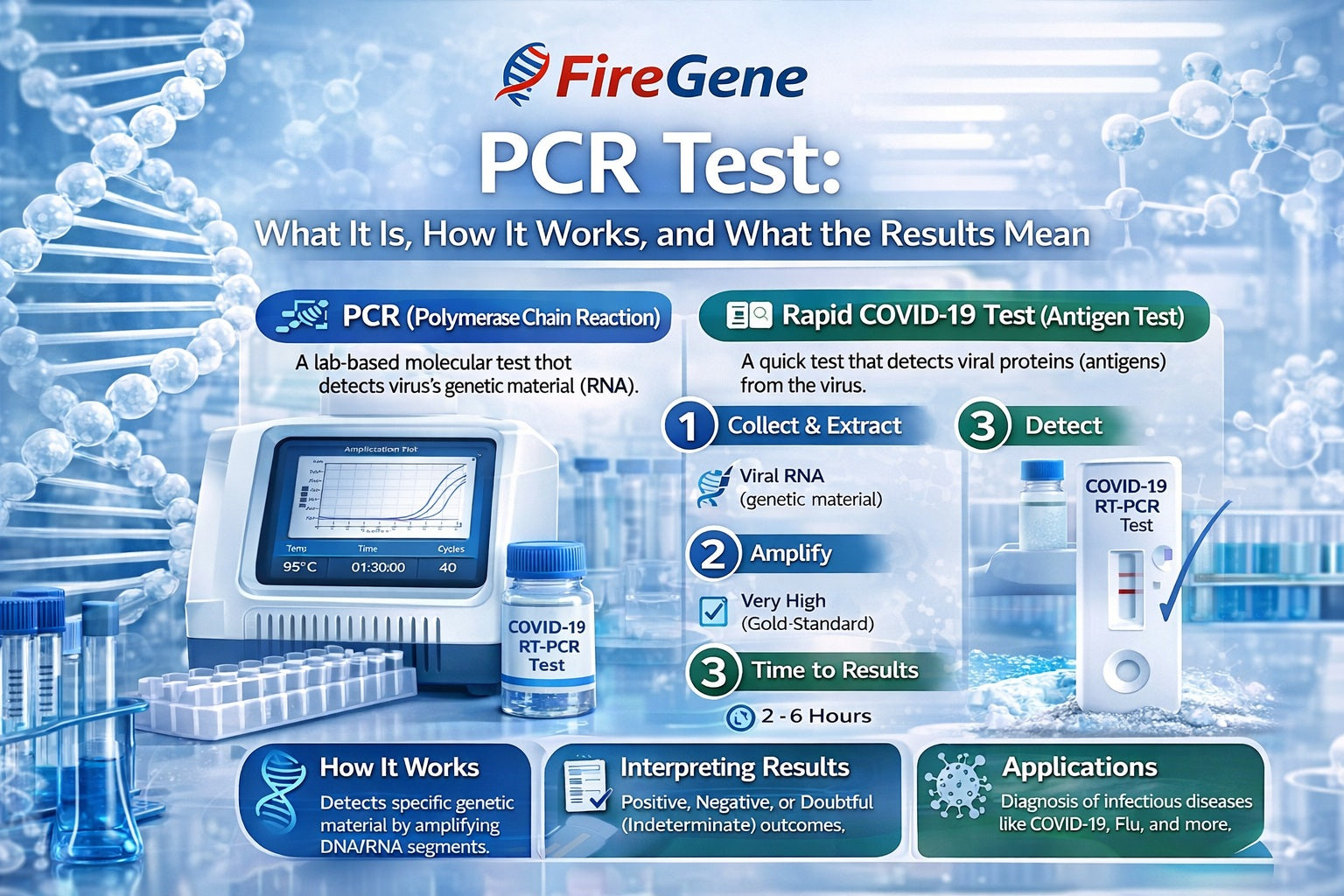
A PCR test is one of the most widely used methods for detecting infections and analyzing genetic material. It plays an important role in healthcare, molecular diagnostics, research, and disease detection because it can identify very small amounts of target DNA or RNA with high sensitivity. If you have ever wondered what a PCR test is and how it works, the answer is simple: it is a laboratory method that looks for specific genetic material by making many copies of it so it is easier to detect.
What Is a PCR Test?
A PCR test is a molecular test used to detect specific genetic material from a virus, bacterium, or other biological target. PCR stands for Polymerase Chain Reaction. It is a scientific process that amplifies tiny amounts of DNA so they can be identified more easily in a laboratory. When the target organism contains RNA rather than DNA, an additional step is required to convert the RNA to DNA before amplification begins. This is common in many viral tests. In simple terms, PCR helps labs detect a target that may be present at very low levels.
PCR Test Meaning
The meaning of the PCR test is directly tied to amplification. A PCR test does not simply look at a sample once and try to spot the target. Instead, it copies the target genetic sequence repeatedly via DNA amplification. This repeated copying makes it much easier for lab instruments to detect the target. That is why PCR is considered a highly sensitive testing method.
What Is Polymerase Chain Reaction?
Polymerase Chain Reaction is the scientific method behind a PCR test. It is a lab technique designed to amplify a selected piece of DNA. If the target sequence is present in the sample, the reaction creates many copies of it. This amplified signal allows laboratory professionals to determine whether the target genetic material is present.
Why Polymerase Chain Reaction Matters
PCR is valuable because many infections or biological markers may be present at very low levels, especially early in a condition or in carefully prepared lab samples. Without amplification, those small amounts might be difficult to detect.
What Is a Nucleic Acid Amplification Test?
A Nucleic Acid Amplification Test is a broader category of tests that detect DNA or RNA by amplifying nucleic acids. A PCR test is one of the best-known examples of a Nucleic Acid Amplification Test.
So, while the terms are related, they are not always identical in every technical context:
- The Nucleic Acid Amplification Test is the larger category
- A PCR test is one specific method within that category
This distinction is useful in diagnostic and laboratory settings where multiple amplification technologies may be discussed.
What Is a PCR Test and How Does It Work?
To understand what a PCR test is and how it works, it helps to break the process into simple steps.
1. Sample Collection
A sample is collected from the area or material being tested.
Depending on the purpose of the test, this may come from:
- Nasal or throat swab
- Blood sample
- Saliva sample
- Tissue or fluid sample
- Laboratory-prepared biological material
The sample should be collected and handled properly to support accurate results.
2. Extraction of Genetic Material
Once the sample reaches the lab, technicians isolate the relevant genetic material. This may include DNA directly, or RNA if the target organism is RNA-based. In RNA testing, the RNA is first converted into complementary DNA before amplification.
3. DNA Amplification
This is the core step of the PCR process. During DNA amplification, the reaction repeatedly copies the target sequence through multiple cycles. Each cycle increases the amount of detectable material. This is why PCR is so effective at finding very small amounts of target material.
4. Detection and Analysis
After amplification, the lab analyzes the results. If the target sequence is present, it is detected after amplification. If it were not present, the result would remain negative for that specific target.
How DNA Amplification Works in PCR
DNA amplification happens through repeated temperature-controlled steps.
These steps are designed to:
- Separate the DNA strands
- Allow short primers to bind to the target sequence
- Enable an enzyme to build new copies of DNA
This cycle repeats many times, which creates millions of copies if the target is present. That is the reason PCR can be so sensitive compared with simpler detection methods.
What Does a PCR Test Detect?
A PCR test can detect specific genetic material associated with a target organism or marker.
Depending on the application, PCR may be used for:
- Infectious disease detection
- Viral testing
- Bacterial testing
- Genetic mutation analysis
- Research applications
- Molecular diagnostic workflows
This makes PCR useful in hospitals, public health labs, research centers, and diagnostic companies.
Why PCR Tests Are Considered Accurate
PCR tests are widely valued because they are sensitive and specific when properly designed and performed.
Reasons PCR Is Considered Highly Reliable
- It detects target genetic sequences directly
- It uses amplification to identify low-level targets
- It can support early and precise detection
- It is widely used in molecular diagnostics
However, as with any lab method, the quality of the results also depends on sample collection, assay design, timing, and laboratory handling.
PCR Test Results Meaning: Detected vs Not Detected
One of the most common questions people ask is about PCR test results, meaning detected vs not detected. These terms are usually straightforward, but they should still be understood carefully.
Detected
A detected result generally means the test found the target genetic material in the sample. This suggests that the specific organism or marker being tested for was present in a measurable form.
Not Detected
A not-detected result generally means the test did not find the target genetic sequence in the sample. This usually suggests that the target was not present at the level detectable by the assay at the time of testing.
Important Note About Result Interpretation
Although detected and not detected sound simple, test interpretation still depends on context.
Factors that can influence results include:
- Sample quality
- Timing of collection
- Amount of target material present
- Proper transport and storage
- Assay sensitivity
That is why test results should always be interpreted in the correct clinical, laboratory, or technical context.
Can a PCR Test Ever Miss a Target?
PCR is highly sensitive, but no test is perfect.
A target may not be detected if:
- The sample was collected too early or too late
- The sample did not contain enough target material
- Collection quality was poor
- Extraction was incomplete
- The target degraded before analysis
This does not mean PCR is unreliable. It means that proper testing conditions are important for optimal performance.
Real-World Example of PCR in Use
Imagine a laboratory is testing a respiratory sample for a viral infection. The amount of viral material in the sample may be very low. A standard visual method would not be enough to detect it. But through Polymerase Chain Reaction, the lab can amplify the target sequence until it becomes measurable. This is the practical strength of PCR. It turns low-level target material into a detectable signal.
Common Uses of PCR Testing
PCR has a wide range of real-world applications.
Healthcare and Diagnostics
- Infectious disease detection
- Viral and bacterial testing
- Molecular diagnostic panels
- Confirmatory laboratory analysis
Research and Biotechnology
- Gene expression studies
- Target sequence detection
- Quality control testing
- Molecular assay development
Life Science Manufacturing
- Reagent performance evaluation
- Validation workflows
- Product development support
For companies active in diagnostics and life sciences, including FireGene, PCR-related content is especially valuable because it connects scientific understanding with real diagnostic applications.
PCR vs Other Types of Tests
A PCR test differs from simpler rapid tests because it amplifies genetic material rather than relying on visible markers or protein-only detection.
PCR Test Advantages
- High sensitivity
- Strong molecular specificity
- Useful for low-level target detection
- Trusted in laboratory-based diagnostics
PCR Test Limitations
- Requires laboratory equipment
- Takes longer than some rapid tests
- Needs trained handling and analysis
Even with these limitations, PCR remains one of the most important tools in modern molecular testing.
Why PCR Still Matters in Modern Diagnostics
As diagnostics become more precise, the value of Nucleic Acid Amplification Test methods continues to grow. PCR remains central because it enables laboratories to detect targets with high sensitivity and scientific confidence. It supports everything from routine testing to advanced molecular assay workflows. For organizations focused on molecular solutions, such as FireGene, PCR education also helps buyers, researchers, and end users better understand how modern diagnostic technologies work.
FAQ
What is a PCR test?
A PCR test is a molecular laboratory test that amplifies specific genetic material until it becomes easier to detect.
What does PCR stand for?
PCR stands for Polymerase Chain Reaction.
Is PCR a Nucleic Acid Amplification Test?
Yes. PCR is one of the most common types of nucleic acid amplification tests.
What does detected mean on a PCR test?
Detected usually means the target genetic material was found in the sample.
What does not detected mean on a PCR test?
Not detected usually means the target genetic material was not found at the detectable level in the sample tested.
Why is PCR considered accurate?
PCR is considered accurate because it directly detects target genetic sequences and amplifies even small amounts of material.
Conclusion
So, what is a PCR test and how does it work? A PCR test is a molecular method based on the Polymerase Chain Reaction that amplifies specific genetic material. It is one of the most important forms of Nucleic Acid Amplification Test used in modern diagnostics and research. If a result shows 'detected,' it usually means the target genetic sequence was found. If it says "not detected," it means the target was not detected at the level of detection in the sample tested.
Because of its sensitivity, specificity, and broad applicability, PCR remains a trusted method across healthcare, diagnostics, and biotechnology. If you want to learn more about molecular testing, PCR workflows, or diagnostic solutions, this topic is a strong starting point for deeper exploration.


