
Introduction
Cell and gene therapy (CGT) is reshaping modern medicine. From CAR-T cell therapies and adeno-associated virus (AAV) vectors to lentiviral gene therapies and CRISPR-based genome editing, these innovative products are transforming the treatment of cancer, inherited disorders, autoimmune diseases, and rare genetic conditions. As the number of approved advanced therapies continues to grow, manufacturers face increasingly stringent expectations for product quality, safety, and regulatory compliance.
Among the many quality attributes evaluated during manufacturing, bacterial endotoxin testing remains one of the most critical. Endotoxins—lipopolysaccharides (LPS) originating from the outer membrane of Gram-negative bacteria—can provoke fever, systemic inflammation, hypotension, and septic shock when introduced into patients. Even extremely low endotoxin levels may pose unacceptable risks because many cell and gene therapies are administered intravenously or directly into sensitive tissues.
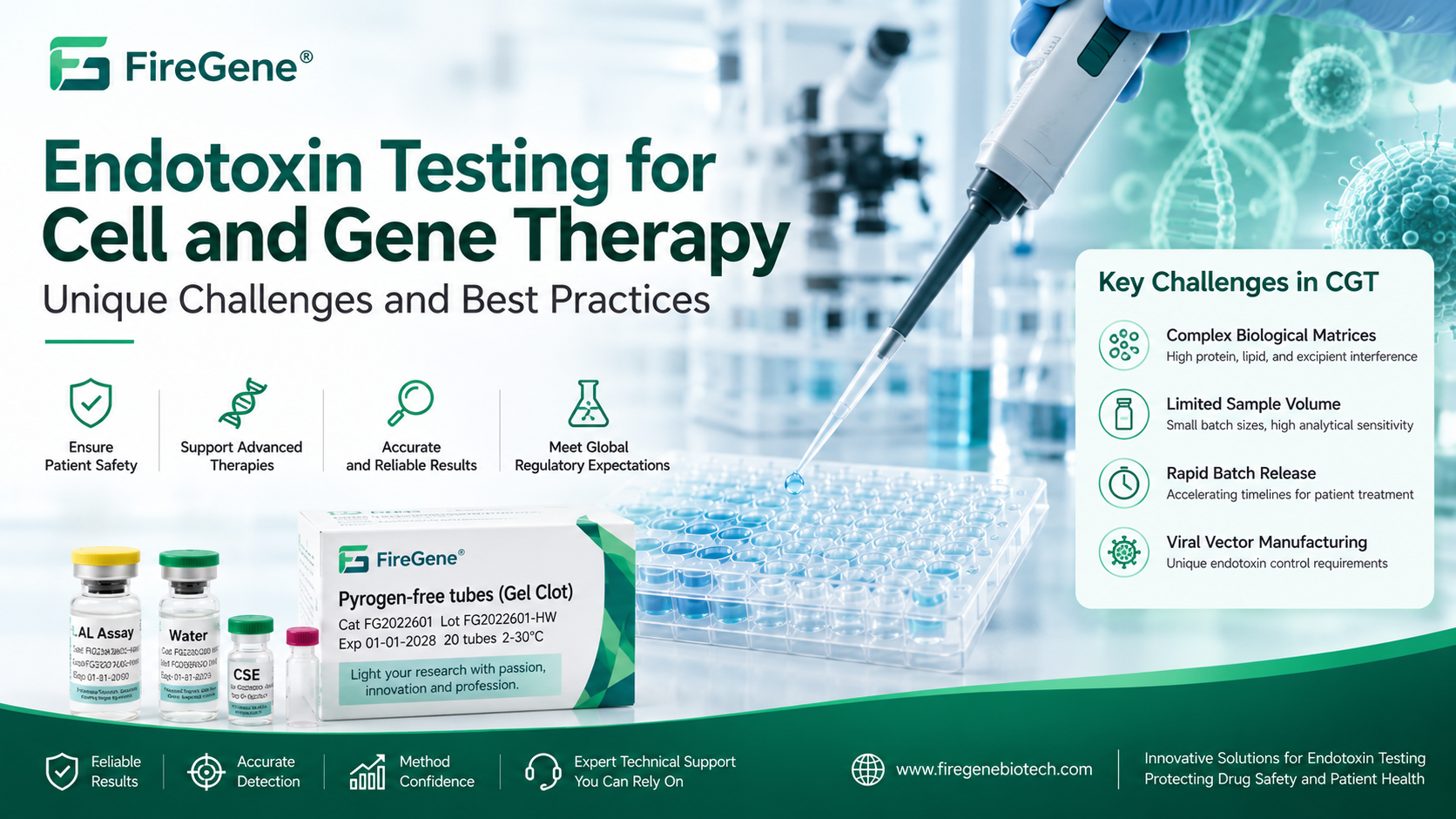
Unlike conventional injectable drugs, however, CGT products present unique analytical challenges. These products are often manufactured in very small batches, have limited sample volumes, contain complex biological matrices, and possess extremely short shelf lives. Standard endotoxin testing approaches that work well for traditional biologics may not be directly applicable to viral vectors, engineered immune cells, or gene-editing products.
As a result, endotoxin testing for advanced therapies requires more than simply following a compendial method. Laboratories must carefully evaluate matrix interference, validate method suitability, optimize sample preparation, and design testing workflows that support rapid batch release without compromising data quality.
This guide explores the unique challenges associated with endotoxin testing for cell and gene therapy products and outlines practical best practices for developing robust, compliant, and efficient quality control programs.
Why Endotoxin Control Is Critical for Cell and Gene Therapy
Cell and gene therapies differ fundamentally from conventional pharmaceuticals. Rather than delivering small chemical molecules, these products often contain living cells, viral vectors, or genetically modified biological materials that interact directly with the patient's immune system.
Because many CGT products cannot undergo terminal sterilization after manufacturing, contamination prevention becomes especially important. Endotoxin introduced during upstream processing, vector production, purification, formulation, or fill-finish operations cannot simply be removed at the end of manufacturing.
Potential consequences of endotoxin contamination include:
- Acute pyrogenic reactions
- Cytokine release and inflammatory responses
- Compromised therapeutic efficacy
- Patient safety risks
- Batch rejection
- Regulatory observations
- Delayed clinical manufacturing
- Increased production costs
For autologous therapies such as CAR-T products, where each batch may represent treatment for a single patient, a failed endotoxin test may also delay urgently needed therapy.
Why Cell and Gene Therapy Products Are Different
Traditional monoclonal antibodies or recombinant proteins are generally manufactured in relatively large batches using well-established analytical workflows.
Cell and gene therapies introduce several additional complexities.
Extremely Small Batch Sizes
Many autologous therapies are produced individually for each patient, leaving little material available for quality control testing. Laboratories must carefully balance analytical requirements with the need to preserve product for clinical use.
Limited Sample Volume
Unlike traditional pharmaceutical manufacturing, only a few milliliters—or even microliters—of sample may be available. Endotoxin testing methods must therefore maximize analytical sensitivity while minimizing sample consumption.
Short Shelf Life
Many advanced therapies must be released within hours or days after manufacturing. Conventional testing strategies that require lengthy investigations or repeated analyses may not be compatible with these rapid release timelines.
Complex Biological Matrices
Cell suspensions, viral vectors, lipid nanoparticles, proteins, nucleic acids, cryoprotectants, and specialized formulation buffers can all interfere with endotoxin assays, increasing the importance of method suitability testing.
Major Sources of Endotoxin During CGT Manufacturing
Unlike a single contamination event, endotoxin can enter the manufacturing process at multiple stages.
Common sources include:
Raw Materials
Growth media, cytokines, serum substitutes, enzymes, plasmid DNA preparations, and other biological reagents may all introduce endotoxin if supplier controls are inadequate.
Water Systems
Water for Injection (WFI) and process water remain among the most significant contamination risks throughout pharmaceutical manufacturing.
Viral Vector Production
AAV and lentiviral vector manufacturing involves numerous biological reagents, cell culture components, and purification steps that require rigorous contamination control.
Single-Use Systems
Disposable tubing, bags, connectors, and filtration devices reduce cleaning requirements but should still be sourced from qualified suppliers with documented endotoxin specifications.
Manual Processing
Many CGT manufacturing processes remain relatively labor-intensive. Operator interventions increase contamination risk compared with highly automated manufacturing systems.
Regulatory Expectations
Although cell and gene therapies present unique manufacturing challenges, regulatory expectations regarding endotoxin control remain stringent.
Manufacturers are expected to demonstrate compliance with applicable pharmacopeial requirements, including:
- USP <85> Bacterial Endotoxins Test
- European Pharmacopoeia 2.6.14
- Japanese Pharmacopoeia 4.01
- GMP regulations
- Risk-based Quality Management principles (ICH Q9)
In addition to final product testing, regulatory inspectors increasingly expect manufacturers to understand endotoxin risks throughout the entire manufacturing process and implement preventive quality systems rather than relying solely on end-product testing.
Unique Challenges in Endotoxin Testing for Cell and Gene Therapy Products
Compared with conventional injectable drugs and recombinant biologics, cell and gene therapy (CGT) products present a much more demanding analytical environment for bacterial endotoxin testing. Quality control laboratories must address challenges that extend beyond simply selecting an appropriate TAL/LAL reagent—they must ensure the analytical method is compatible with highly complex biological products while meeting aggressive manufacturing timelines.
Understanding these challenges is the foundation of a successful endotoxin testing strategy.
Challenge 1: Matrix Interference Is More Common Than Ever
One of the biggest obstacles in CGT endotoxin testing is matrix interference.
Unlike traditional pharmaceutical formulations, advanced therapies often contain multiple biological components capable of influencing the TAL/LAL reaction, including:
- Viral capsid proteins
- Cell membranes
- Lipid nanoparticles (LNPs)
- Human serum albumin
- Cryoprotectants such as DMSO
- Cytokines and growth factors
- High protein concentrations
- DNA and RNA molecules
- Surfactants such as Polysorbate 20 or Polysorbate 80
These materials may either inhibit the enzymatic cascade or enhance the reaction, producing inaccurate endotoxin measurements.
Consequently, method suitability testing becomes especially important for CGT products. Every formulation should be evaluated individually to demonstrate that endotoxin recovery remains within acceptable limits before routine batch release testing begins.
Challenge 2: Extremely Limited Sample Volume
Many advanced therapies simply do not provide enough material for repeated laboratory testing.
Unlike monoclonal antibody manufacturing, where liters of product may be available, autologous cell therapies frequently produce only a single patient-specific batch.
Every milliliter used for quality control reduces the therapeutic dose available for treatment.
Consequently, QC laboratories must carefully optimize:
- Sample volume
- Replicate design
- Dilution strategy
- Standard curve preparation
- Positive Product Controls
without compromising analytical confidence.
This often favors quantitative assays that maximize analytical information while minimizing sample consumption.
Challenge 3: Rapid Batch Release Requirements
Time is one of the defining characteristics of cell therapy manufacturing.
Many CAR-T products are infused into patients within only a few days—or even hours—after manufacturing.
Traditional laboratory workflows that involve multiple repeat tests, extended investigations, or prolonged data review may delay treatment for critically ill patients.
For this reason, manufacturers increasingly focus on:
- Streamlined analytical workflows
- Electronic data capture
- Automated result calculations
- Validated standard operating procedures
- Robust analyst training
- Minimized repeat testing
The objective is not simply faster testing—it is generating reliable results the first time.
Challenge 4: Viral Vector Manufacturing
Gene therapies introduce another layer of complexity through viral vector production.


AAV, lentiviral vectors, adenoviral vectors, and other delivery systems undergo multiple upstream and downstream processing steps, each presenting opportunities for endotoxin introduction.
Potential contamination sources include:
- Plasmid DNA production
- HEK293 cell culture
- Fermentation media
- Process buffers
- Chromatography columns
- Ultrafiltration systems
- Final formulation buffers
Although purification removes many process impurities, manufacturers should never assume that purification completely eliminates endotoxins.
Routine monitoring throughout manufacturing provides significantly greater process understanding than relying solely on final product testing.
Challenge 5: Regulatory Expectations Continue to Increase
As more advanced therapies receive regulatory approval, agencies have placed greater emphasis on pharmaceutical quality systems.
Today's inspectors expect manufacturers to demonstrate:
- Scientific understanding of endotoxin risks
- Risk assessments throughout manufacturing
- Validated analytical methods
- Method suitability studies
- Data integrity
- Investigation procedures
- Trending of analytical results
Rather than viewing endotoxin testing as a stand-alone laboratory assay, regulators increasingly evaluate how endotoxin control integrates into the overall Pharmaceutical Quality System (PQS).
Selecting the Right Endotoxin Testing Method
Several bacterial endotoxin testing methods are available, but not every method is equally suited for advanced therapy products.
Gel-Clot TAL/LAL Assay
The Gel-Clot method remains the pharmacopeial reference standard and is widely used for qualitative limit testing.
Advantages include:
- Simple workflow
- Minimal instrumentation
- Excellent robustness
- Straightforward validation
- Strong regulatory acceptance
It is particularly suitable when demonstrating compliance with established endotoxin limits.
Kinetic Chromogenic TAL/LAL Assay
For manufacturers producing multiple clinical batches or commercial CGT products, the Kinetic Chromogenic method often offers significant operational advantages.
Benefits include:
- Quantitative endotoxin measurement
- High analytical sensitivity
- Broad dynamic range
- Automated result calculation
- Electronic audit trails
- Improved laboratory efficiency
- Easier trend analysis
These characteristics make kinetic assays especially attractive for GMP quality control laboratories managing complex manufacturing operations.
Best Practices for Reliable Endotoxin Testing in Cell and Gene Therapy
Successfully implementing endotoxin testing within CGT manufacturing requires a combination of scientific understanding, validated procedures, and disciplined quality management.
Leading manufacturers typically follow several best practices.
Perform Comprehensive Risk Assessments
Evaluate every stage of manufacturing—from incoming raw materials to final product release—to identify potential endotoxin contamination sources.
Validate Method Suitability Early
Do not postpone method suitability until late-stage manufacturing.
Early validation helps identify matrix interference before it delays clinical production.
Use Qualified Suppliers
Raw material quality remains one of the strongest predictors of downstream manufacturing success.
Supplier qualification should include documentation review, quality audits, and risk-based incoming material testing.
Trend Endotoxin Results
Individual passing results provide limited information.
Long-term trending helps identify:
- Water system deterioration
- Supplier variability
- Seasonal contamination
- Process drift
- Equipment performance
before failures occur.
Standardize Laboratory Procedures
Detailed SOPs covering reagent preparation, sample handling, instrument operation, and investigation procedures improve reproducibility while reducing analyst-to-analyst variation.
Choose High-Quality TAL/LAL Reagents
Reliable endotoxin testing depends on consistent analytical reagents.
FireGene provides a comprehensive portfolio designed for pharmaceutical quality control laboratories, including:
- Gel-Clot TAL/LAL Reagents
- Kinetic Chromogenic Endotoxin Test Kits
- Control Standard Endotoxin (CSE)
- Endotoxin-Free Water
-
Pyrogen-Free Consumables
These solutions support method development, routine testing, process validation, and regulatory compliance across both traditional biologics and advanced therapy manufacturing.
Case Study: Optimizing Endotoxin Testing for a CAR-T Cell Therapy Manufacturing Process
A biotechnology company developing an autologous CAR-T cell therapy experienced repeated failures during endotoxin method suitability testing while preparing for Phase II clinical manufacturing. Although all environmental monitoring data, sterility testing, and equipment qualification records met predefined acceptance criteria, the laboratory consistently observed poor Positive Product Control (PPC) recovery during bacterial endotoxin testing.
Initial investigations focused on the most common laboratory variables. Analysts confirmed that the TAL/LAL reagents were within their expiration dates, Control Standard Endotoxin (CSE) had been prepared correctly, and the microplate reader had passed routine calibration. Repeat testing produced similar results, indicating that the analytical system itself was functioning properly.
The investigation then shifted toward the product matrix.
The CAR-T formulation contained human serum albumin, dimethyl sulfoxide (DMSO), proprietary cryoprotectants, and a relatively high concentration of engineered T cells. Scientists hypothesized that these formulation components were interfering with the enzymatic cascade of the endotoxin assay.
Rather than repeating the same procedure, the QC team performed a structured method optimization study. Multiple dilution factors were evaluated while remaining within the Maximum Valid Dilution (MVD), and additional method suitability experiments were conducted to assess PPC recovery under different analytical conditions.
Following optimization, the product consistently met pharmacopeial recovery requirements. The revised method was validated and successfully implemented for routine batch release testing.
This example highlights a common reality in cell and gene therapy manufacturing: failed method suitability studies are often caused by product-specific matrix interference rather than true endotoxin contamination. A systematic, science-based investigation can resolve analytical issues more effectively than repeated testing alone.
Future Trends in Endotoxin Testing for Advanced Therapies
As cell and gene therapies continue to evolve, endotoxin testing technologies and quality strategies are advancing alongside them.
Several emerging trends are expected to shape pharmaceutical quality control over the next decade.
Increased Automation
Automation is becoming increasingly important for reducing operator variability and improving laboratory efficiency. Automated liquid handling systems, integrated incubators, and laboratory information management systems (LIMS) help standardize testing workflows while improving data integrity.
Digital Quality Management
Modern pharmaceutical manufacturers are increasingly integrating endotoxin testing data into digital quality management platforms.
Real-time dashboards, electronic batch records, automated trending, and predictive analytics allow quality teams to identify potential contamination risks earlier and make faster, data-driven decisions.
Advanced Manufacturing Technologies
Closed-system manufacturing, modular cleanroom facilities, and continuous bioprocessing are reducing opportunities for environmental contamination.
Although these technologies cannot eliminate endotoxin risks entirely, they support stronger contamination control strategies when combined with validated analytical methods.
Greater Regulatory Focus on Risk Management
Global regulatory agencies continue to emphasize Quality by Design (QbD), Quality Risk Management (ICH Q9), and Pharmaceutical Quality Systems (ICH Q10).
Future inspections are likely to place even greater emphasis on demonstrating scientific understanding of endotoxin risks throughout the manufacturing lifecycle rather than relying exclusively on finished product testing.
Manufacturers that build proactive endotoxin control programs today will be better positioned to meet tomorrow's regulatory expectations.
Frequently Asked Questions (FAQ)
1. Why is endotoxin testing particularly important for cell and gene therapies?
Many cell and gene therapies are administered intravenously or directly into patients without terminal sterilization. Because these products often contain living cells or viral vectors, endotoxin contamination can present significant patient safety risks and may compromise therapeutic performance.
2. Which cell and gene therapy products require endotoxin testing?
Endotoxin testing is commonly performed for a wide range of advanced therapy medicinal products (ATMPs), including:
- CAR-T cell therapies
- CAR-NK cell therapies
- AAV-based gene therapies
- Lentiviral vector products
- CRISPR gene-editing therapies
- Stem cell therapies
- Ex vivo gene-modified cell products
- Oncolytic viral therapies
Specific testing strategies should always follow applicable regulatory guidance and product-specific risk assessments.
3. Why do CGT products often fail method suitability testing?
Complex biological formulations may interfere with TAL/LAL assays through inhibition or enhancement. High protein concentrations, lipid nanoparticles, cryoprotectants, nucleic acids, surfactants, and other formulation components may affect endotoxin recovery, making comprehensive method suitability testing essential.
4. Can endotoxins be removed during downstream purification?
Some purification steps may reduce endotoxin levels; however, no purification process should be assumed to eliminate endotoxins completely unless it has been specifically validated. Preventing contamination throughout manufacturing remains the most effective strategy.
5. What is the role of Positive Product Controls (PPCs)?
Positive Product Controls verify that the analytical method can accurately recover a known amount of endotoxin in the presence of the product matrix. PPC recovery is a key indicator of successful method suitability.
6. Which endotoxin testing method is most commonly used for CGT quality control?
Both Gel-Clot and Kinetic Chromogenic TAL/LAL assays are widely used. Gel-Clot assays provide a simple and robust qualitative approach, while Kinetic Chromogenic assays offer quantitative results, higher throughput, broader dynamic range, and easier electronic data management.
7. How can manufacturers reduce endotoxin contamination risks?
A comprehensive contamination control strategy should include:
- Qualified raw material suppliers
- Routine monitoring of Water for Injection (WFI) systems
- Validated cleaning and depyrogenation procedures
- Closed manufacturing systems where appropriate
- Standardized laboratory procedures
- Comprehensive staff training
- Continuous process monitoring and trend analysis
8. Should endotoxin testing only be performed on the final product?
No. While final product testing is essential, manufacturers should also monitor critical raw materials, pharmaceutical water systems, intermediate process steps, and manufacturing environments as part of a risk-based quality management strategy.
9. How does FireGene support endotoxin testing for advanced therapies?
FireGene offers a complete range of endotoxin testing solutions for pharmaceutical quality control laboratories, including Gel-Clot TAL/LAL Reagents, Kinetic Chromogenic Endotoxin Test Kits, Control Standard Endotoxin (CSE), Endotoxin-Free Water, and Pyrogen-Free Consumables. These products are designed to support reliable endotoxin testing during method development, validation, routine QC testing, and batch release.
10. What is the most effective strategy for successful endotoxin control?
The most effective strategy is prevention. Building a risk-based quality system that combines supplier qualification, validated manufacturing processes, comprehensive method suitability studies, routine monitoring, and high-quality analytical reagents provides the strongest protection against endotoxin contamination.
Key Takeaways
Successful endotoxin testing for cell and gene therapy products requires more than selecting a compendial assay—it demands a comprehensive understanding of the unique characteristics of advanced therapy manufacturing.
The most important lessons include:
- Cell and gene therapies present unique analytical challenges, including limited sample volumes, complex biological matrices, and accelerated batch release timelines.
- Method suitability testing is essential for identifying inhibition, enhancement, and matrix interference before routine quality control begins.
- Endotoxin contamination can occur throughout the manufacturing lifecycle, from raw material qualification and vector production to fill-finish operations and final product release.
- Risk-based quality management, combined with validated analytical methods and continuous process monitoring, helps reduce contamination risks while improving regulatory compliance.
- High-quality TAL/LAL reagents, standardized laboratory procedures, and qualified pyrogen-free consumables contribute to reliable, reproducible endotoxin testing.
- A proactive endotoxin control strategy supports faster batch release, fewer investigations, improved manufacturing efficiency, and enhanced patient safety.
Conclusion
As cell and gene therapies continue to redefine modern medicine, the expectations placed on pharmaceutical quality control are becoming increasingly rigorous. These innovative products offer unprecedented therapeutic potential, but they also introduce new manufacturing and analytical challenges that demand robust contamination control strategies.
Bacterial endotoxin testing remains one of the most important safeguards for ensuring product safety throughout the manufacturing lifecycle. Unlike conventional biologics, advanced therapies often involve highly complex formulations, limited sample volumes, rapid release timelines, and product-specific matrix effects that require carefully designed analytical methods and comprehensive method suitability studies.
Rather than relying solely on final product testing, manufacturers should integrate endotoxin control into every stage of production—from supplier qualification and pharmaceutical water management to upstream processing, downstream purification, aseptic filling, and batch release. Combining validated TAL/LAL assays with risk-based quality management, continuous monitoring, and thorough process understanding enables laboratories to generate reliable, reproducible results while meeting the expectations of USP <85>, global pharmacopeias, and GMP regulations.
As the advanced therapy industry continues to grow, organizations that invest in proactive endotoxin control today will be better equipped to improve manufacturing efficiency, accelerate product release, reduce costly investigations, and deliver safe, high-quality therapies to patients worldwide. This preventive, science-driven approach is fundamental to supporting the next generation of cell and gene therapy innovation.
FireGene Endotoxin Testing
Ready to run your endotoxin assay?
FireGene offers a complete endotoxin testing toolkit — from TAL reagents and CSE standards to pyrogen-free consumables and LAL reagent water. All products are aligned with USP <85>, EP 2.6.14, and JP 4.01.


