
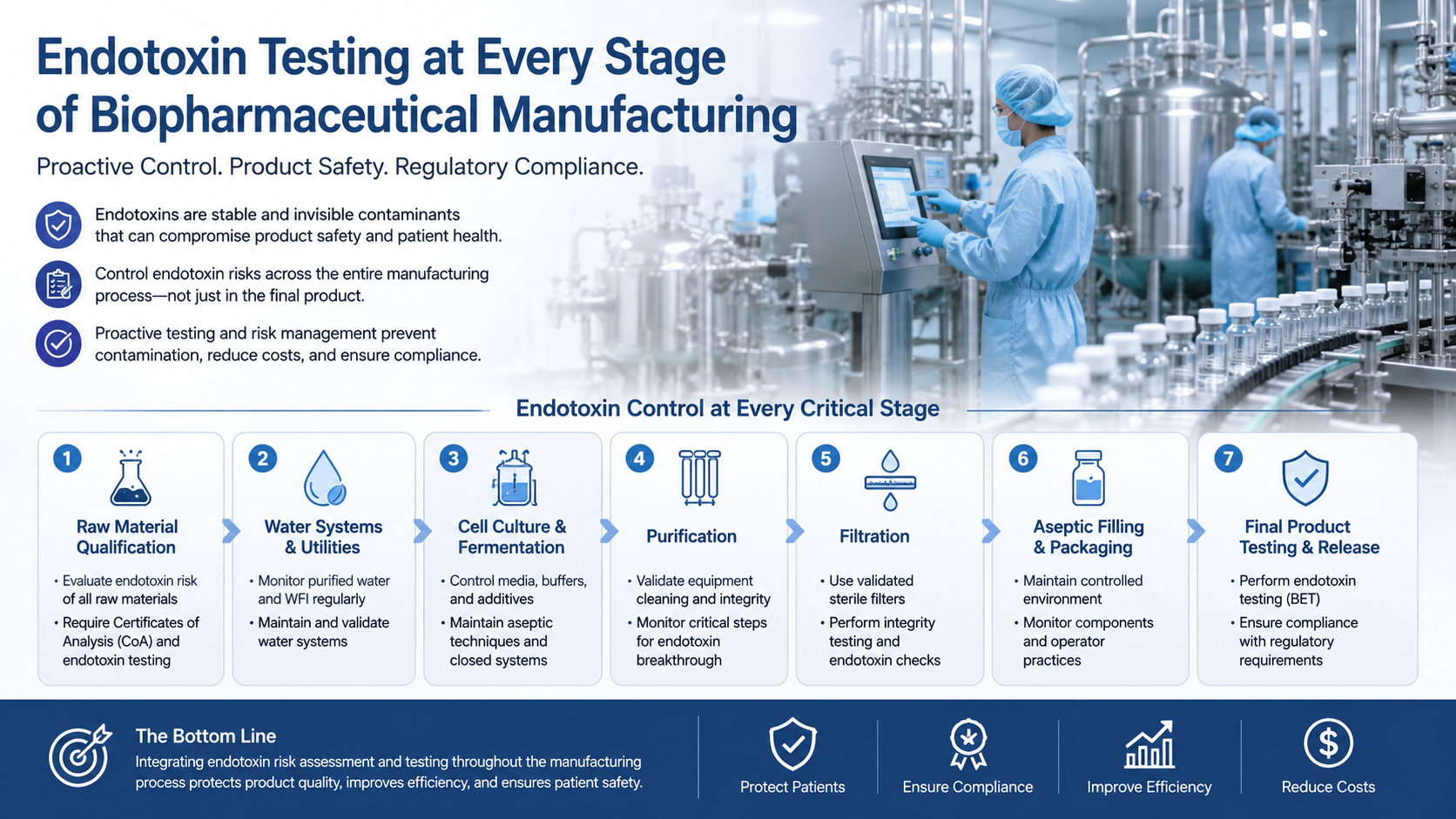
Introduction
The biopharmaceutical industry has experienced unprecedented growth over the past decade. Monoclonal antibodies, recombinant proteins, vaccines, antibody-drug conjugates (ADCs), cell therapies, gene therapies, and other advanced biologics are transforming the treatment of cancer, autoimmune diseases, rare genetic disorders, and infectious diseases. As these therapies become increasingly complex, so do the manufacturing processes required to produce them safely and consistently.
Unlike traditional small-molecule drugs synthesized through chemical reactions, biologics are manufactured using living cells and biological systems. Their production involves multiple stages—including cell culture, fermentation, purification, sterile filtration, aseptic filling, and final packaging—each of which introduces unique quality risks. Maintaining product purity throughout this process is essential because even trace levels of contamination can compromise product safety, efficacy, and regulatory compliance.
Among all potential contaminants, bacterial endotoxins remain one of the most challenging to control. Endotoxins are lipopolysaccharides (LPS) found in the outer membrane of Gram-negative bacteria. Even after bacteria are destroyed, endotoxins can remain biologically active due to their remarkable stability against heat and many conventional sterilization processes. If introduced into injectable drugs or biological products, endotoxins may trigger fever, inflammatory responses, hypotension, or even life-threatening septic shock.
For this reason, bacterial endotoxin testing (BET) has become an indispensable component of pharmaceutical quality assurance. Regulatory agencies worldwide—including the United States Pharmacopeia (USP <85>), the European Pharmacopoeia (EP 2.6.14), and the Japanese Pharmacopoeia (JP 4.01)—require manufacturers to demonstrate that products meet established endotoxin limits before commercial release.
However, successful endotoxin control does not begin in the quality control laboratory. Waiting until the finished product is tested means that any contamination introduced earlier in manufacturing has already affected valuable materials, production schedules, and potentially an entire batch. Instead, modern pharmaceutical quality systems emphasize proactive risk management by identifying critical control points throughout the manufacturing process.
This article explores how endotoxin testing supports every stage of biopharmaceutical manufacturing—from raw material qualification to final batch release—and provides practical recommendations for building a comprehensive endotoxin control strategy that improves product quality, regulatory compliance, and manufacturing efficiency.
Why Endotoxin Control Matters Throughout the Manufacturing Process
Many pharmaceutical professionals associate endotoxin testing primarily with finished product release. While final product testing remains essential, it represents only one component of a much broader contamination control strategy.
Biopharmaceutical manufacturing involves numerous materials, processing steps, equipment surfaces, and operator interactions that may introduce endotoxins. Once contamination occurs, removing endotoxins can be difficult, expensive, and sometimes impossible without compromising product quality.
Unlike microbial contamination, endotoxin contamination often remains invisible until analytical testing is performed. Products may appear perfectly sterile while still exceeding acceptable endotoxin limits.
The consequences extend far beyond failing a laboratory test. Elevated endotoxin levels may result in:
- Batch rejection
- Production delays
- Costly Out-of-Specification (OOS) investigations
- Additional validation studies
- Increased laboratory workload
- Regulatory observations during GMP inspections
- Product recalls
- Damage to manufacturer reputation
For manufacturers producing high-value biologics, a single rejected batch may represent millions of dollars in direct and indirect losses.
Consequently, leading pharmaceutical companies now integrate endotoxin risk assessment into every phase of manufacturing rather than relying exclusively on end-product testing.
Understanding Where Endotoxins Enter the Manufacturing Process
Gram-negative bacteria are widespread in natural environments, purified water systems, manufacturing equipment, and raw materials. Although properly designed GMP facilities minimize microbial contamination, endotoxins can still enter production through multiple pathways.
Common sources include:
- Raw materials
- Process water
- Manufacturing equipment
- Single-use assemblies
- Cleaning validation failures
- Laboratory consumables
- Personnel handling
- Environmental dust
- Inadequately depyrogenated glassware
- Packaging components
Because these contamination sources span the entire production process, endotoxin control must likewise be implemented as a comprehensive manufacturing strategy rather than an isolated laboratory procedure.
Critical Control Point 1: Raw Material Qualification
Every successful endotoxin control program begins long before manufacturing starts—with supplier selection and raw material qualification.
Biopharmaceutical manufacturing depends on hundreds of raw materials, including media components, amino acids, salts, buffers, enzymes, excipients, stabilizers, and biological materials. Any of these components can introduce endotoxins if suppliers lack adequate quality systems.
Particularly high-risk materials include:
- Fermentation-derived ingredients
- Animal-derived raw materials
- Biological extracts
- Process enzymes
- Water-based reagents
- Buffer concentrates
A robust supplier qualification program should evaluate:
Supplier Quality Systems
Manufacturers should assess supplier GMP compliance, contamination control procedures, quality documentation, and historical performance before approving vendors.
Incoming Material Testing
High-risk materials should undergo identity testing and, where appropriate, endotoxin testing before entering production.
Risk-Based Material Classification
Not every material carries the same contamination risk. Components that directly contact product or enter late-stage manufacturing generally require more stringent controls than auxiliary processing materials.
Documentation Review
Certificates of Analysis (CoA), change notifications, traceability records, and manufacturing history all contribute to comprehensive supplier qualification.
Preventing contaminated materials from entering manufacturing is considerably more cost-effective than investigating contamination after production has begun.
Critical Control Point 2: Pharmaceutical Water Systems
Water is often described as the most important raw material in pharmaceutical manufacturing—and one of the most overlooked sources of endotoxin contamination.
Purified Water (PW) and Water for Injection (WFI) are used throughout manufacturing for:
- Media preparation
- Buffer preparation
- Equipment cleaning
- Process rinsing
- Product formulation
- Final manufacturing operations
Although pharmaceutical water systems are carefully designed, they remain vulnerable to Gram-negative bacterial growth if maintenance is inadequate.
Once bacteria establish biofilms inside storage tanks or distribution loops, endotoxins may persist even after microbial populations have been reduced.
An effective pharmaceutical water monitoring program typically includes:
- Routine endotoxin testing
- Microbial enumeration
- Total Organic Carbon (TOC)
- Conductivity monitoring
- Temperature verification
- Sanitization validation
- Distribution loop inspection
- Historical trend analysis
Rather than evaluating individual test results in isolation, manufacturers should monitor long-term trends. Gradual increases in endotoxin levels often provide early warning signs before significant contamination events occur.
Water system monitoring is therefore not simply a regulatory requirement—it serves as one of the most effective preventive measures within an endotoxin control program.
Critical Control Point 3: Upstream Processing
Upstream processing encompasses cell banking, media preparation, seed train expansion, fermentation, and cell culture. These operations involve large volumes of aqueous solutions, making them particularly susceptible to endotoxin introduction.
Potential contamination sources include:
- Cell culture media
- Buffer preparation
- Process water
- Mixing vessels
- Single-use bioreactor bags
- Tubing assemblies
- Sampling ports
- Operator interventions
Although endotoxins do not necessarily kill cultured cells, they can significantly affect cell physiology.
Research has shown that endotoxin exposure may influence:
- Cell growth kinetics
- Protein expression
- Cytokine production
- Cellular metabolism
- Product consistency
Such effects may ultimately reduce manufacturing yields or introduce additional downstream purification challenges.
Preventive measures during upstream processing include:
- Qualified raw materials
- Endotoxin-free water
- Controlled media preparation
- Closed-system processing whenever possible
- Routine equipment cleaning verification
- Strict aseptic handling procedures
Establishing robust controls during upstream operations substantially reduces contamination risks before products reach more expensive downstream manufacturing stages.
Critical Control Point 4: Downstream Purification
Downstream processing removes host cell proteins, DNA, process impurities, aggregates, and other contaminants while concentrating the desired therapeutic product.
Many manufacturers assume purification steps automatically eliminate endotoxins. Unfortunately, this assumption can create unnecessary risk.
Chromatography, ultrafiltration, diafiltration, viral filtration, and other purification technologies may reduce endotoxin concentrations, but their effectiveness depends on product characteristics, process design, and validation data.
Potential contamination sources during downstream processing include:
- Preparation of chromatography buffers
- Filtration assemblies
- Transfer tubing
- Intermediate storage vessels
- Holding tanks
- Cleaning failures
- Equipment maintenance activities
Manufacturers should therefore monitor endotoxin levels not only in the finished product but also at selected intermediate process stages.
Routine in-process monitoring provides several advantages:
- Early identification of contamination events
- Faster root cause investigations
- Improved process understanding
- Reduced batch failure risk
- Stronger process validation data
Rather than relying on downstream purification to solve contamination problems, manufacturers should focus on preventing endotoxin introduction throughout every purification step.
Critical Control Point 5: Sterile Filtration and Fill-Finish Operations
Once purification is complete, products enter one of the most critical phases of manufacturing: sterile filtration and aseptic fill-finish.
At this stage, opportunities to remove contaminants become extremely limited. Any endotoxin introduced during filling, stoppering, or packaging may remain in the final drug product.
Common contamination risks include:
- Filling needles
- Product contact tubing
- Glass vials
- Syringes
- Rubber closures
- Stainless steel holding vessels
- Operator interventions
- Environmental contamination
Because fill-finish operations directly affect patient-ready products, manufacturers typically implement multiple layers of protection.
These include:
- Depyrogenated glass containers
- Pyrogen-free closures
- Qualified filling equipment
- Environmental monitoring
- Routine cleaning validation
- Strict gowning procedures
- Aseptic process simulations
- Preventive maintenance programs
Using certified pyrogen-free consumables during this stage further minimizes the likelihood of introducing endotoxins immediately before final packaging.
Critical Control Point 6: Final Batch Release Testing
Before any injectable drug, biologic, vaccine, or advanced therapy is released for commercial distribution, it must undergo rigorous quality control testing to demonstrate compliance with regulatory specifications. Bacterial endotoxin testing (BET) is one of the final and most critical release tests because it provides direct evidence that the finished product meets established pyrogen safety requirements.
Unlike in-process monitoring, which focuses on identifying contamination risks during manufacturing, final batch release testing confirms that the completed product is suitable for patient use.
Regulatory agencies expect manufacturers to perform endotoxin testing using validated methods that comply with pharmacopeial requirements such as USP <85>, EP 2.6.14, and JP 4.01. The selected analytical method should also be demonstrated to be suitable for the specific product through method suitability studies, ensuring that the product matrix neither inhibits nor enhances the endotoxin reaction.
Several analytical approaches are commonly used:
Gel-Clot Method
The Gel-Clot assay remains the compendial reference method for many laboratories because it is straightforward, reliable, and requires minimal instrumentation. It is particularly suitable for qualitative or limit testing where regulatory compliance is the primary objective.
Kinetic Chromogenic Method
For laboratories processing large numbers of samples, the Kinetic Chromogenic assay offers several advantages, including quantitative results, automated analysis, wider dynamic range, electronic data capture, and improved laboratory efficiency. These benefits make it the preferred option for many modern pharmaceutical QC laboratories.
Regardless of the analytical method selected, laboratories should incorporate appropriate controls into every assay, including:
- Negative Controls
- Control Standard Endotoxin (CSE)
- Positive Product Controls (PPC)
- Standard Curves
- Replicate Measurements where applicable
These controls help ensure analytical accuracy while demonstrating that the test system is functioning correctly.
Building a Risk-Based Endotoxin Control Strategy
Successful endotoxin management is not achieved through a single laboratory test—it requires a proactive quality system that identifies contamination risks before they become product failures.
Modern pharmaceutical manufacturers increasingly adopt Quality Risk Management (QRM) principles outlined in ICH Q9, integrating endotoxin control into the overall pharmaceutical quality system.
A risk-based strategy typically evaluates every stage of manufacturing by asking three key questions:
- Where could endotoxins be introduced?
- How likely is contamination to occur?
- What preventive controls can reduce that risk?
Instead of relying solely on corrective actions after an Out-of-Specification (OOS) result, manufacturers establish preventive controls throughout the product lifecycle.
Key components include:
Supplier Qualification
Work closely with qualified suppliers that maintain robust contamination control systems and provide complete quality documentation.
Water System Management
Continuously monitor Purified Water (PW) and Water for Injection (WFI) systems through microbial testing, endotoxin testing, conductivity, TOC analysis, and trend evaluation.
Process Validation
Demonstrate that manufacturing processes consistently produce products meeting endotoxin specifications under routine operating conditions.
Environmental Monitoring
Although environmental monitoring primarily targets microorganisms, maintaining clean manufacturing environments also reduces opportunities for endotoxin contamination.
Equipment Qualification
Cleaning validation, preventive maintenance, and periodic equipment qualification reduce contamination risks associated with reusable manufacturing equipment.
Personnel Training
Even highly automated manufacturing facilities depend on properly trained personnel. Consistent aseptic technique, standardized sampling procedures, and regular competency assessments significantly improve manufacturing consistency.
Common Challenges in Biopharmaceutical Endotoxin Control
Despite significant advances in manufacturing technology, endotoxin control continues to present several practical challenges.
Complex Product Matrices
Many modern biologics contain proteins, lipids, surfactants, or nanoparticles that may interfere with endotoxin assays. Proper method suitability testing is essential to identify potential inhibition or enhancement effects.
Increased Use of Single-Use Technologies
Disposable bioprocessing systems have reduced cleaning requirements and contamination risks; however, manufacturers should still evaluate single-use components for endotoxin compatibility and supplier quality.
Global Supply Chains
Biopharmaceutical manufacturing increasingly relies on globally sourced raw materials. Supplier variability, transportation conditions, and documentation quality all influence endotoxin risk management.
High-Value Products
Cell therapies, gene therapies, and personalized medicines often involve small batch sizes with exceptionally high product values. Even minor contamination events can result in substantial financial losses.
Recognizing these challenges enables manufacturers to develop more resilient quality systems capable of adapting to evolving manufacturing technologies.
Best Practices for Reducing Endotoxin Risks Throughout Manufacturing
Although every manufacturing process differs, several best practices consistently improve endotoxin control across facilities.
Start with Prevention
The most cost-effective contamination event is the one that never occurs. Invest in supplier qualification, raw material testing, and preventive maintenance rather than relying on corrective investigations.
Standardize Manufacturing Procedures
Clearly written SOPs reduce variability between operators and improve process consistency across manufacturing campaigns.
Monitor Trends Instead of Individual Results
Trend analysis often reveals gradual changes before they become significant quality issues. Monitoring endotoxin data over time provides valuable insights into water systems, manufacturing performance, and analytical consistency.
Validate Every Critical Process
Validation should extend beyond analytical methods to include cleaning procedures, depyrogenation cycles, filtration processes, and equipment qualification.
Maintain Comprehensive Documentation
Detailed documentation supports regulatory compliance, facilitates investigations, and strengthens data integrity throughout the product lifecycle.
Invest in Reliable Endotoxin Testing Reagents
High-quality reagents play an important role in achieving consistent analytical performance.
FireGene provides a comprehensive portfolio of endotoxin testing solutions for pharmaceutical quality control laboratories, including:
- Gel-Clot TAL/LAL Reagents
- Kinetic Chromogenic Endotoxin Test Kits
- Control Standard Endotoxin (CSE)
- Endotoxin-Free Water
- Pyrogen-Free Consumables
These products are designed to support reliable bacterial endotoxin testing while helping laboratories improve consistency, reduce analytical variability, and maintain regulatory compliance.
Embedding these links contextually strengthens topical authority and improves user navigation without interrupting the reading experience.
Conclusion
In biopharmaceutical manufacturing, endotoxin testing is far more than a regulatory requirement—it is an integral component of a comprehensive contamination control strategy. From supplier qualification and pharmaceutical water management to upstream processing, downstream purification, aseptic filling, and final batch release, every stage of manufacturing presents opportunities to either introduce or eliminate endotoxin risks.
Manufacturers that focus solely on finished product testing often overlook valuable opportunities to prevent contamination earlier in the production process. By adopting a risk-based approach, implementing robust quality systems, validating analytical methods, and continuously monitoring critical process parameters, pharmaceutical companies can significantly reduce contamination risks while improving manufacturing efficiency and regulatory confidence.
As biologics and advanced therapies continue to expand, expectations for product quality will only become more stringent. Organizations that invest in proactive endotoxin control today will be better positioned to accelerate batch release, reduce costly investigations, strengthen GMP compliance, and consistently deliver safe, high-quality medicines to patients around the world.
Ultimately, successful endotoxin control is not defined by a single passing test. It is built on a culture of prevention, scientific rigor, and continuous improvement—ensuring that every batch released reflects the highest standards of pharmaceutical quality and patient safety.
Frequently Asked Questions (FAQ)
1. Why is endotoxin testing essential in biopharmaceutical manufacturing?
Endotoxin testing ensures that injectable drugs, biologics, vaccines, and advanced therapies meet established safety standards before reaching patients. Endotoxins can trigger severe pyrogenic reactions, fever, inflammation, and septic shock even when viable bacteria are absent. Because endotoxins are highly heat-stable and difficult to eliminate once introduced into a manufacturing process, routine bacterial endotoxin testing is an essential component of pharmaceutical quality control and regulatory compliance.
2. At which stage of biopharmaceutical manufacturing should endotoxin testing begin?
Endotoxin control should begin long before final product testing. Manufacturers should assess endotoxin risks during raw material qualification, pharmaceutical water production, upstream processing, downstream purification, and fill-finish operations. Implementing preventive controls throughout manufacturing significantly reduces the likelihood of contamination and minimizes costly Out-of-Specification (OOS) investigations.
3. What are the most common sources of endotoxin contamination?
Common sources include contaminated raw materials, Purified Water (PW), Water for Injection (WFI), manufacturing equipment, process buffers, filtration systems, glass containers, rubber stoppers, laboratory consumables, and environmental contamination. Poor cleaning procedures, biofilm formation in water systems, and improper handling practices can also contribute to endotoxin introduction.
4. Can sterilization remove endotoxins?
Not always. Traditional sterilization methods are designed to destroy microorganisms but may not completely eliminate bacterial endotoxins. Since endotoxins are highly heat-stable, manufacturers often rely on validated depyrogenation processes, careful contamination prevention, and routine endotoxin testing rather than sterilization alone.
5. What is the difference between sterility testing and endotoxin testing?
Sterility testing determines whether viable microorganisms are present in a pharmaceutical product. Endotoxin testing measures lipopolysaccharides (LPS) released from Gram-negative bacteria, regardless of whether the bacteria remain alive. A product may successfully pass sterility testing while still exceeding acceptable endotoxin limits, making both tests essential for injectable products.
6. Which endotoxin testing method is most suitable for biopharmaceutical manufacturing?
The appropriate method depends on the application.
The Gel-Clot TAL/LAL method remains a trusted choice for qualitative limit testing and compendial compliance due to its simplicity and reliability.
The Kinetic Chromogenic TAL/LAL method is generally preferred for quantitative testing because it provides higher throughput, automated data analysis, greater sensitivity, and improved traceability. It is particularly well suited for pharmaceutical quality control laboratories managing routine batch release testing.
7. Why are Positive Product Controls (PPCs) important?
Positive Product Controls verify that the product matrix does not inhibit or enhance the endotoxin reaction. Consistent PPC recovery demonstrates that the analytical method is suitable for the product being tested and provides confidence that reported endotoxin results accurately reflect product quality rather than analytical interference.
8. How often should pharmaceutical water systems be monitored for endotoxins?
Monitoring frequency depends on the design of the water system, regulatory expectations, product risk, and the manufacturer's quality management program. Most facilities perform routine endotoxin testing alongside microbial monitoring, conductivity measurements, Total Organic Carbon (TOC) testing, and trend analysis to ensure continued control of Purified Water (PW) and Water for Injection (WFI) systems.
9. How can manufacturers reduce endotoxin-related batch failures?
Reducing batch failures requires a proactive, risk-based approach rather than relying solely on final product testing. Key strategies include:
- Qualifying suppliers and high-risk raw materials
- Maintaining well-controlled PW and WFI systems
- Validating cleaning and depyrogenation procedures
- Using certified pyrogen-free consumables
- Performing routine method suitability testing
- Trending endotoxin data over time
- Training personnel on standardized GMP procedures
- Investigating deviations thoroughly before repeating tests
By controlling endotoxin risks throughout manufacturing, companies can reduce analytical variability, improve batch release efficiency, and strengthen regulatory compliance.
10. How can FireGene support pharmaceutical endotoxin testing?
FireGene offers a comprehensive portfolio of endotoxin testing solutions designed for pharmaceutical quality control laboratories, including Gel-Clot TAL/LAL Reagents, Kinetic Chromogenic Endotoxin Test Kits, Control Standard Endotoxin (CSE), Endotoxin-Free Water, and Pyrogen-Free Consumables.
Combined with validated analytical methods and robust quality systems, these products help laboratories establish reliable bacterial endotoxin testing workflows that support USP <85> compliance, improve testing consistency, and enhance manufacturing efficiency.
FireGene Endotoxin Testing
Ready to run your endotoxin assay?
FireGene offers a complete endotoxin testing toolkit — from TAL reagents and CSE standards to pyrogen-free consumables and LAL reagent water. All products are aligned with USP <85>, EP 2.6.14, and JP 4.01.


