
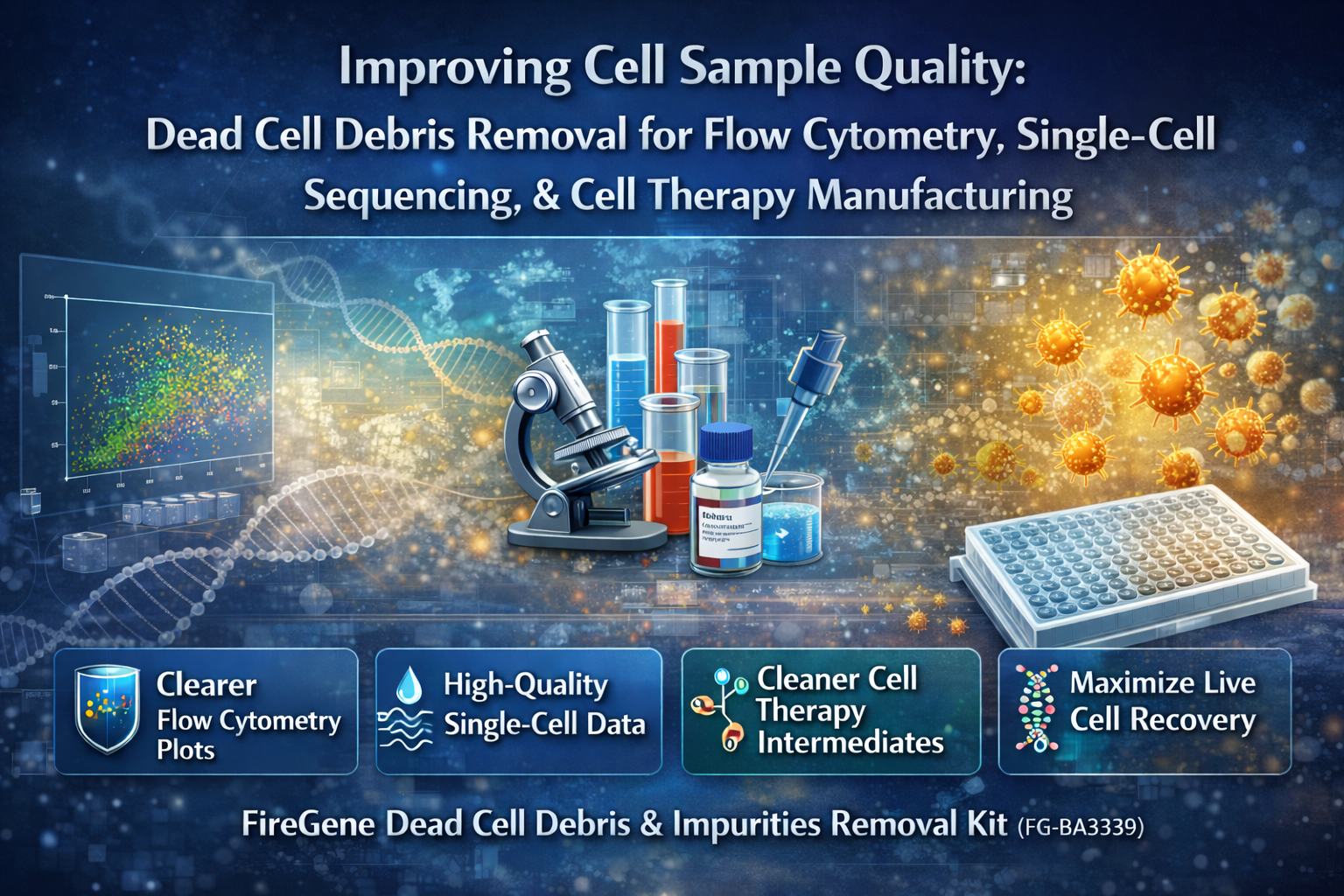
In modern cell-based research and biopharmaceutical development, scientists routinely focus on cell viability, proliferation, and phenotype. However, one critical factor is often underestimated: dead cells and cellular debris. These invisible contaminants can significantly compromise data quality, reduce experimental reproducibility, and introduce misleading background signals—especially in high-sensitivity downstream applications.
From flow cytometry and cell sorting to single-cell RNA sequencing, CAR-T manufacturing, and stem cell research, effective dead cell debris removal has become an essential step in high-quality sample preparation.
I. Why Dead Cells and Debris Are a Hidden Risk in Cell-Based Assays
Dead cells, apoptotic bodies, and fragmented cellular debris are unavoidable during cell isolation, culture, enzymatic digestion, cryopreservation, and transport. Unlike live cells, these components:
-
Generate high background noise in flow cytometry
-
Cause ambiguous gating and false-positive signals
-
Interfere with antibody binding and surface marker detection
-
Distort cell population clustering in single-cell sequencing
-
Reduce consistency in downstream analytical and functional assays
Traditional cleanup approaches—such as density gradients or harsh washing steps—often fail to selectively remove debris without damaging fragile live cells.
II. The Need for Gentle and Selective Dead Cell Removal
An ideal dead cell debris removal solution should achieve four critical goals:
-
Efficient elimination of dead cells and debris
-
High recovery and viability of live target cells
-
Preservation of cell surface antigens and functionality
-
Compatibility with diverse sample types and workflows
Meeting all four simultaneously has been a longstanding challenge in cell sample preparation.
III. FireGene Dead Cell Debris & Impurities Removal Kit (FG-BA3339)
To address this unmet need, FireGene developed the Dead Cell Debris & Impurities Removal Kit for Purified Cell Suspensions (Catalog No. FG-BA3339).
This ready-to-use solution is formulated with a selective and optimized chemistry that efficiently removes apoptotic cells, necrotic cells, and debris—while gently preserving live cell integrity, viability, and surface antigen expression.
Unlike raw materials or gradient media that require extensive optimization, FG-BA3339 is designed as a finished product, allowing researchers to integrate it seamlessly into existing workflows.
IV. Key Advantages That Directly Support Experimental Accuracy
The FireGene kit is engineered to align with real laboratory demands:
1. High Purity, High Viability
Efficient impurity removal with excellent live-cell recovery minimizes experimental bias and variability.
2. Gentle and Easy-to-Use Workflow
No specialized equipment required. The protocol is straightforward, time-efficient, and minimizes cellular stress.
3. Broad Sample Compatibility
Suitable for cultured cells, primary cells, blood-derived samples, and tissue-dissociated cell suspensions—making it compatible with common sample collection and extraction workflows.
4. Cleaner Data and Improved Reproducibility
Reduced background signals lead to clearer flow cytometry plots, more reliable sequencing data, and improved inter-experiment consistency.
V. Typical Applications Across Research and Bioprocessing
The FireGene Dead Cell Debris & Impurities Removal Kit is widely applicable in:
-
Flow cytometry and cell sorting sample preparation
-
CAR-T, stem cell, and other cell therapy intermediate and final product processing
-
Primary cell preparation prior to culture or functional assays
-
Single-cell sequencing and other high-resolution omics workflows
-
Any application requiring high-purity, high-quality live cell populations
VI. Supporting Reliable Results from the Very First Step
In both academic research and biotechnological development, data quality begins with sample quality. Removing dead cells and debris at the source is one of the most effective ways to safeguard downstream analyses, reduce variability, and improve confidence in results.
FireGene is committed to supporting scientists and manufacturers with reliable, reproducible, and application-focused cell processing solutions. The FG-BA3339 kit reflects this philosophy—helping researchers focus on meaningful biology, not experimental artifacts.
VII. Conclusion
Dead cells and debris may be easy to overlook, but their impact on experimental outcomes is profound. By incorporating a dedicated, gentle, and efficient dead cell debris removal step, laboratories can significantly enhance the clarity, accuracy, and reproducibility of their work.
With the FireGene Dead Cell Debris & Impurities Removal Kit (FG-BA3339), achieving cleaner cell suspensions is no longer a compromise between purity and viability—it’s a practical, dependable solution for modern cell-based science.
FireGene, light your research with passion, innovation, and profession.


