
Endotoxin testing is a critical quality control step in the development and manufacturing of pharmaceuticals, biologics, and medical devices. Even trace levels of endotoxins can trigger severe immune responses, making accurate detection essential.
Among the available detection methods, the Limulus Amebocyte Lysate (LAL) and Tachypleus Amebocyte Lysate (TAL) assays remain the most widely adopted due to their sensitivity, reliability, and regulatory acceptance.
In this guide, we provide a comprehensive step-by-step endotoxin testing protocol, along with practical tips to ensure accurate and reproducible results.
What Is Endotoxin and Why Is It Important?
Endotoxins are lipopolysaccharides (LPS) present in the outer membrane of Gram-negative bacteria. When introduced into the human body, they can cause:
- Fever
- Inflammation
- Septic shock
Because of these risks, endotoxin testing is required in:
- Injectable drugs
- Vaccines
- Medical devices
- Biopharmaceuticals
Overview of the LAL/TAL Assay
The LAL/TAL assay is based on a natural clotting reaction found in horseshoe crab blood. When endotoxin is present, it activates a cascade that leads to gel formation or measurable color/turbidity changes.
There are three main formats:
- Gel clot (qualitative)
- Chromogenic (quantitative)
- Turbidimetric (quantitative)
For many laboratories, the gel clot method remains the preferred starting point due to its simplicity and cost-effectiveness.
Materials Required
To perform endotoxin testing, the following materials are typically required:
- TAL/LAL reagent
- Endotoxin standard (CSE)
- Pyrogen-free water
- Reaction tubes or microplate
- Incubator or water bath (37°C ± 1°C)
- Micropipettes with endotoxin-free tips
👉 For simplified workflow, integrated solutions such as the
Gel Clot Endotoxin Test Kit (LAL/TAL Assay)
provide pre-validated components to reduce preparation errors.
Step-by-Step Endotoxin Testing Protocol
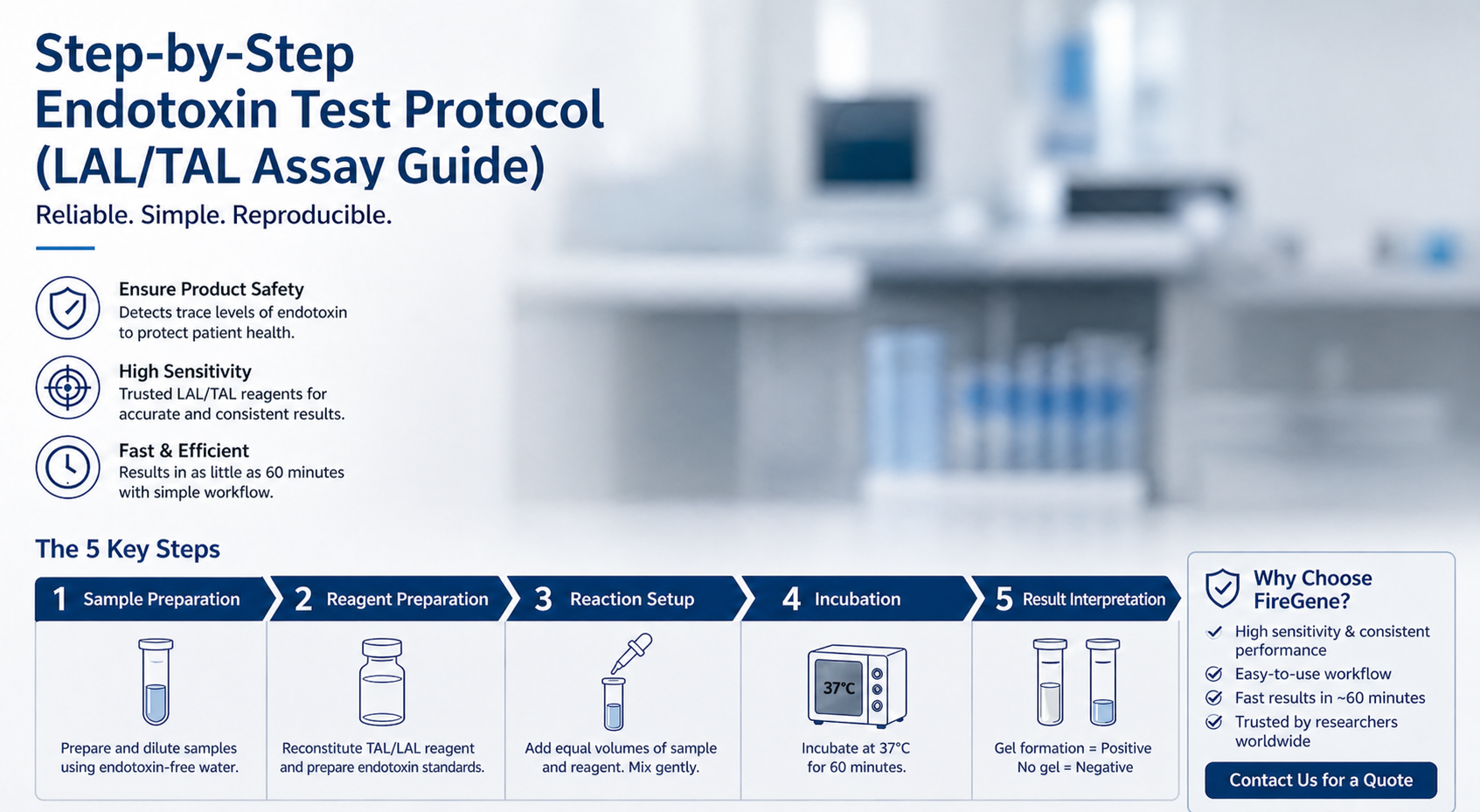
Step 1: Sample Preparation
Proper sample preparation is essential to avoid false results.
- Dilute samples with pyrogen-free water if necessary
- Avoid contamination from glassware or environment
- Ensure samples are within the assay’s detection range
Step 2: Reagent Reconstitution
- Reconstitute the LAL/TAL reagent according to instructions
- Prepare endotoxin standards for calibration
Consistency in reagent preparation is critical for reproducibility.
Step 3: Reaction Setup
- Add equal volumes of sample and reagent
- Mix gently without introducing air bubbles
Step 4: Incubation
- Incubate at 37°C for approximately 60 minutes
- Maintain stable temperature conditions
Step 5: Result Interpretation
For the gel clot method:
- Formation of a firm gel = positive
- No gel formation = negative
👉 This visual endpoint makes the gel clot method especially suitable for routine screening using kits like the
Gel Clot Endotoxin Test Kit (LAL/TAL Assay)
Common Problems and Troubleshooting
False Positives
Cause: contamination
Solution: use endotoxin-free materials
False Negatives
Cause: inhibition by sample matrix
Solution: perform dilution or spike recovery
Inconsistent Results
Cause: temperature fluctuation or pipetting error
Solution: standardize incubation and technique
Choosing the Right Endotoxin Testing Method
| Method | Type | Advantages | Limitations |
|---|---|---|---|
| Gel Clot | Qualitative | Simple, low cost | No quantification |
| Chromogenic | Quantitative | High sensitivity | Requires equipment |
| Turbidimetric | Quantitative | Real-time monitoring | Higher cost |
👉 For most laboratories starting endotoxin testing, gel clot assays offer the best balance of simplicity and reliability.
Practical Tips for Reliable Testing
- Always use endotoxin-free consumables
- Validate your method with controls
- Perform replicate testing for accuracy
- Maintain strict lab hygiene
🚀 Conclusion: Simplify Your Endotoxin Testing Workflow
Endotoxin testing does not have to be complex. With the right method and proper technique, laboratories can achieve reliable results efficiently.
For labs seeking a dependable and easy-to-use solution, the
Gel Clot Endotoxin Test Kit (LAL/TAL Assay)
offers:
- Consistent sensitivity
- Minimal equipment requirements
- Fast and reproducible results
👉 Contact us or request a quote to optimize your endotoxin testing workflow.
FireGene, light your research with passion, innovation, and profession.


