
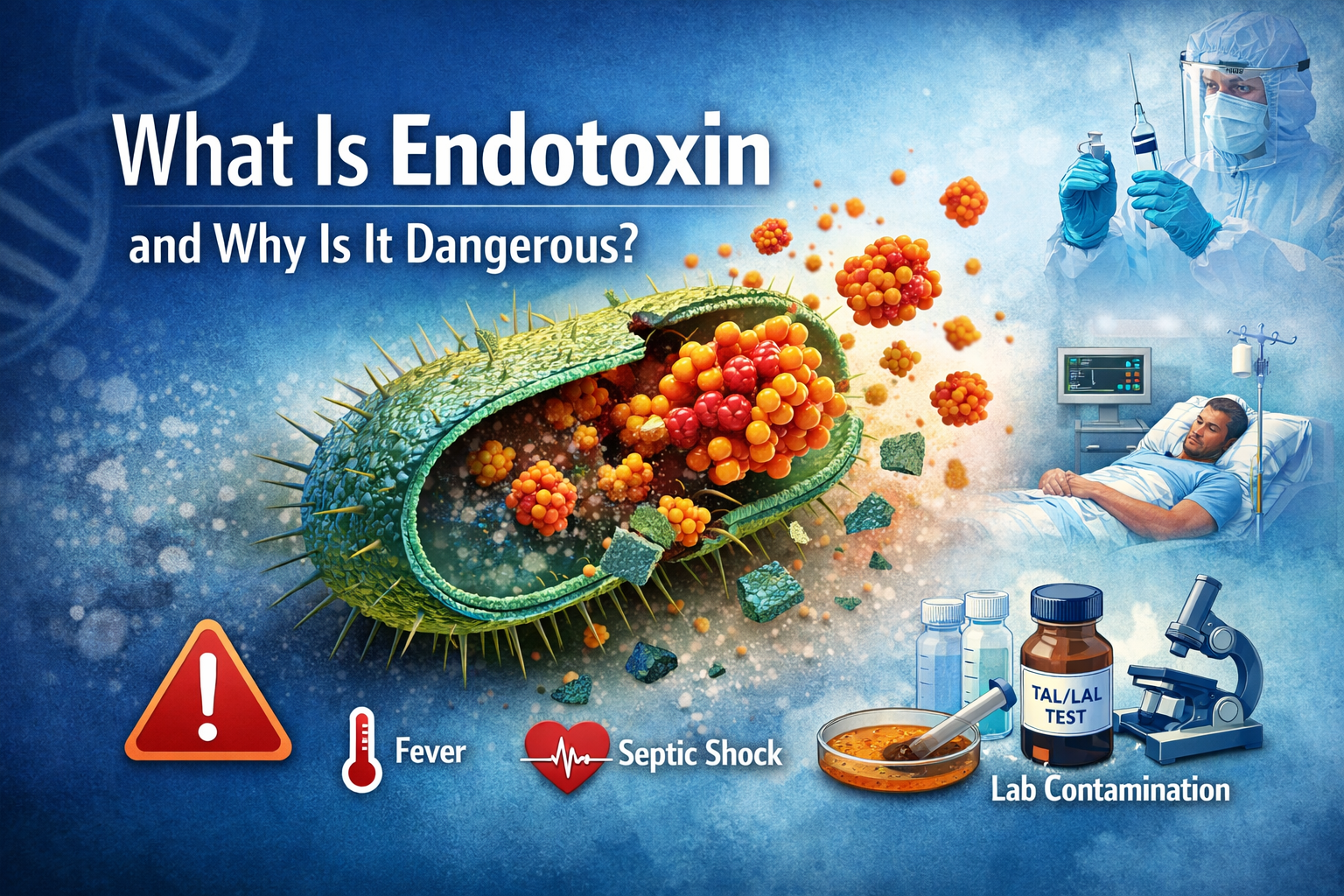
Endotoxin contamination is one of the most critical hidden risks in pharmaceutical manufacturing, biotechnology research, and medical device production. Even trace amounts can cause severe biological reactions, making endotoxin control a non-negotiable requirement for injectable drugs, implants, and laboratory reagents.
Understanding what endotoxin is, where it comes from, and why it is so dangerous is essential for anyone involved in life-science industries.
I. What Is Endotoxin?
Endotoxin is a toxic component found in the outer membrane of Gram-negative bacteria. Chemically, it is known as lipopolysaccharide (LPS).
Unlike many other contaminants, endotoxin is not secreted by living bacteria. Instead, it is released when bacterial cells die and break apart. This means that even sterile products can still contain endotoxin if proper controls are not in place.
Key characteristics of endotoxin include:
-
Extremely strong biological activity
-
High heat resistance (standard sterilization may not destroy it)
-
Ability to trigger immune responses at very low concentrations
Because of these properties, endotoxin contamination can be especially difficult to detect and eliminate.
II. Where Does Endotoxin Come From?
Endotoxin contamination can arise at many stages of production and handling.
Common sources include:
I. Raw materials derived from biological or water-based systems
II. Water for Injection (WFI) or purified water systems
III. Manufacturing equipment and pipelines
IV. Improperly cleaned containers, vials, or closures
V. Environmental exposure during filling or packaging
Once introduced, endotoxin can persist on surfaces and in solutions if strict depyrogenation procedures are not followed.
III. Why Is Endotoxin Dangerous?
The danger of endotoxin lies in how the human immune system reacts to it.
When endotoxin enters the bloodstream, it can trigger:
I. Fever and chills
II. Inflammation and cytokine release
III. Hypotension (low blood pressure)
IV. Septic shock in severe cases
Even very small amounts can produce serious adverse reactions, especially in vulnerable patients. This is why regulatory agencies strictly limit allowable endotoxin levels in injectable drugs and medical devices.
In laboratory and biopharmaceutical settings, endotoxin contamination can also:
-
Distort experimental results
-
Reduce cell viability
-
Invalidate quality control data
IV. Why Endotoxin Is Hard to Eliminate
One of the most challenging aspects of endotoxin control is its stability.
Endotoxin is:
I. Resistant to normal autoclaving
II. Stable across a wide pH range
III. Able to adhere strongly to glass, plastic, and metal surfaces
As a result, conventional sterilization alone is often insufficient. Specialized depyrogenation processes and validated testing methods are required to ensure safety.
V. How Is Endotoxin Detected?
The most widely accepted method for endotoxin detection is testing with TAL/LAL Reagent, which is derived from the blood cells of horseshoe crabs.
TAL/LAL Reagent reacts specifically with endotoxin, forming the basis of several standardized test formats, including gel clot, turbidimetric, and chromogenic methods. These assays are recognized by major pharmacopeias worldwide and remain the industry standard for bacterial endotoxin testing.
Reliable endotoxin detection is essential not only for regulatory compliance but also for patient safety and product integrity.
VI. The Importance of Reliable Endotoxin Control Solutions
As biologics, cell therapies, and injectable drugs continue to grow in complexity, endotoxin control has become more critical than ever.
This is where professional testing solutions and consistent reagent quality matter. FireGene focuses on providing stable, high-performance endotoxin testing products designed to support accurate results and regulatory compliance. With strict quality control and application-focused development, FireGene solutions help laboratories and manufacturers reduce risk while maintaining efficiency.
Rather than treating endotoxin testing as a final checkpoint, FireGene emphasizes integrating endotoxin awareness throughout the entire production and quality control workflow.
VII. Final Thoughts
Endotoxin is invisible, resilient, and extremely dangerous if left uncontrolled. Its ability to cause severe immune reactions, compromise research data, and threaten patient safety makes it one of the most critical contaminants in life-science industries.
By understanding what endotoxin is, where it comes from, and how it is detected using TAL/LAL Reagent, organizations can take proactive steps to minimize risk. Partnering with reliable testing solution providers like FireGene further strengthens endotoxin control strategies and supports long-term product safety.
Endotoxin may be microscopic, but its impact is anything but small.


