
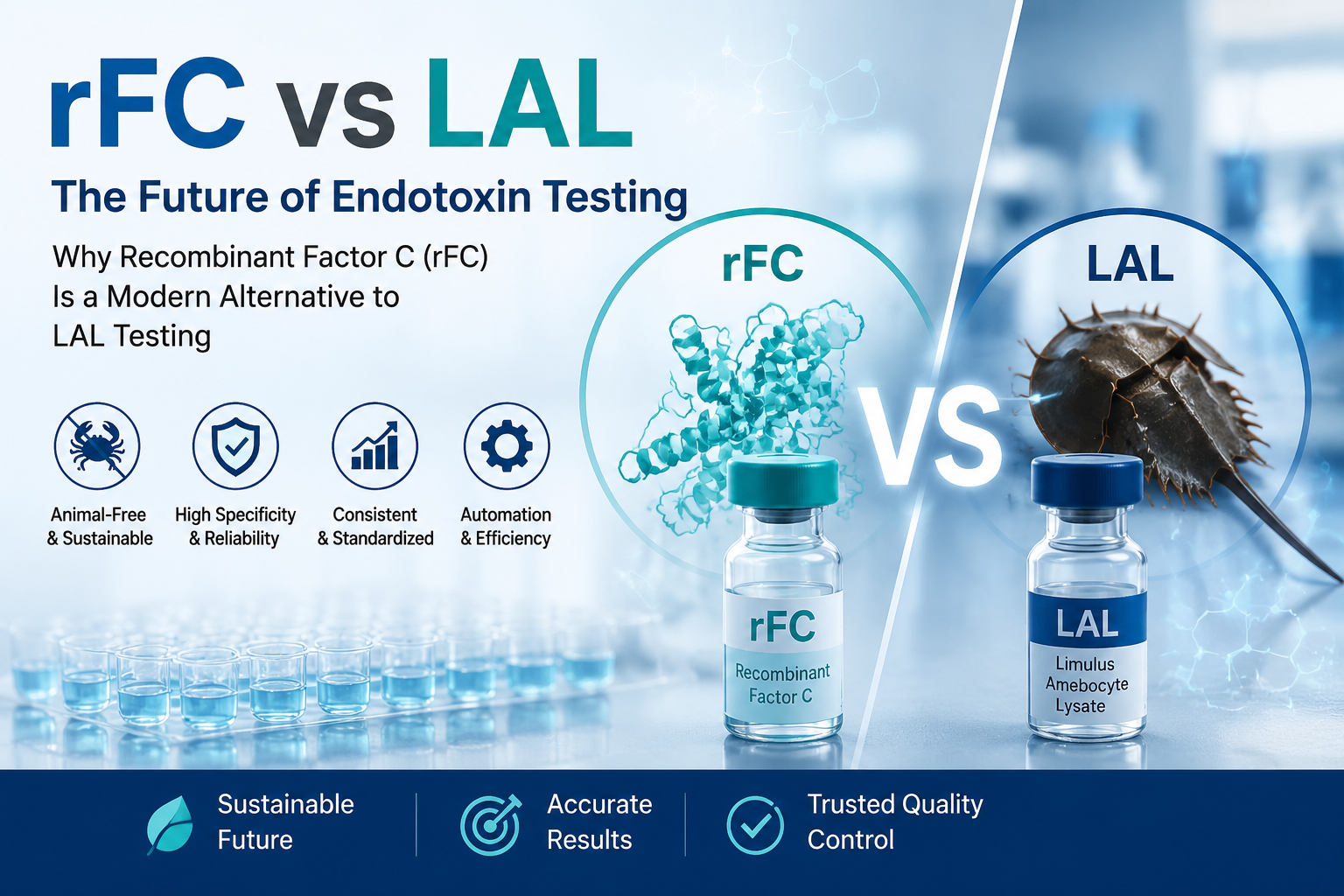
Introduction
Endotoxin testing is a critical quality control step in the pharmaceutical, biotechnology, and medical device industries. For decades, the Limulus Amebocyte Lysate (LAL) assay has been the gold standard method for detecting bacterial endotoxins. However, with increasing demand for sustainable, animal-free, and more standardized testing technologies, Recombinant Factor C (rFC) endotoxin testing has emerged as a modern alternative.
While rFC offers several advantages over traditional LAL assays, it has not completely replaced LAL testing worldwide. Instead, many organizations are adopting rFC as a validated alternative, complementary method, or preferred solution for specific applications.
This article explains why rFC is considered an alternative to LAL testing and whether rFC will eventually replace LAL as the primary endotoxin detection method.
Why Is rFC Considered an Alternative to LAL Testing?
Recombinant Factor C (rFC) is considered an alternative to LAL because it provides a more sustainable and standardized approach to endotoxin detection while addressing several limitations associated with traditional LAL assays.
Unlike LAL, which relies on naturally extracted horseshoe crab blood components, rFC uses a recombinant Factor C protein produced through biotechnology. Factor C is the first component activated in the horseshoe crab endotoxin detection pathway. By isolating and reproducing this key recognition protein, rFC can detect endotoxin through a simplified and highly specific reaction.
Key Advantages of rFC Compared with LAL Testing
1. Animal-Free and Sustainable Endotoxin Detection
One of the most significant advantages of rFC is that it does not require horseshoe crab harvesting.
Traditional LAL production depends on collecting blood from horseshoe crabs, which has raised concerns regarding:
· Long-term sustainability of horseshoe crab populations
· Animal welfare considerations
· Dependence on biological resources
rFC technology eliminates the need for horseshoe crab-derived lysate by using recombinant proteins manufactured through controlled production processes.
As the pharmaceutical industry increasingly focuses on sustainable laboratory practices, rFC provides an environmentally responsible alternative for endotoxin testing.
2. Improved Reagent Consistency and Batch-to-Batch Stability
LAL reagents are biological products derived from horseshoe crab amebocytes. Because of their natural origin, variations may occur between different reagent batches.
rFC offers improved consistency because:
· Recombinant proteins are produced under controlled conditions
· Manufacturing processes are highly standardized
· Lot-to-lot variability is minimized
This consistency helps laboratories achieve more reliable endotoxin testing results and improves long-term quality control performance.
3. Higher Specificity for Endotoxin Detection
The LAL assay involves a complex enzymatic cascade containing multiple biological components. Some LAL formats may be affected by non-endotoxin substances, such as certain β-glucans, which can potentially interfere with results.
rFC technology focuses on the endotoxin-activated Factor C pathway, providing a more direct detection mechanism.
Benefits include:
· Reduced interference from non-endotoxin substances
· Enhanced specificity
· More targeted endotoxin recognition
This makes rFC particularly attractive for complex pharmaceutical samples and advanced biotechnology products.
4. Easier Standardization and Automation
Modern pharmaceutical manufacturing requires highly standardized and efficient quality control workflows.
rFC assays are well suited for:
· Automated endotoxin testing platforms
· High-throughput screening
· Digital data management systems
· Standardized laboratory workflows
The simplified reaction mechanism of rFC can help laboratories achieve greater operational efficiency while maintaining reliable endotoxin detection performance.
Does rFC Completely Replace LAL Testing?
Not Yet.
Although rFC has become an increasingly recognized endotoxin detection technology, LAL remains the most widely used endotoxin testing method globally.
The transition from LAL to rFC is influenced by several factors, including regulatory acceptance, laboratory experience, and existing quality control systems.
Why Has LAL Not Been Completely Replaced?
1. Established Regulatory History
LAL has been used for decades and has extensive regulatory experience across pharmaceutical industries.
Many companies already have:
· Validated LAL testing procedures
· Regulatory-approved methods
· Historical product release data
Switching to rFC requires appropriate method validation and regulatory evaluation.
2. Existing Laboratory Infrastructure
Many quality control laboratories have already invested in:
· LAL testing instruments
· Trained personnel
· Established testing protocols
· Routine quality control systems
Replacing an established method requires time, resources, and technical evaluation.
3. Pharmacopoeial Acceptance and Regional Differences
The acceptance of rFC varies depending on country, regulatory authority, and pharmacopoeial requirements.
While rFC has gained increasing recognition, some organizations continue to rely on LAL due to:
· Existing compendial methods
· Internal quality standards
· Regulatory submission strategies
How Are Companies Using rFC Today?
Rather than completely replacing LAL, many companies currently adopt rFC in several ways:
1. Replacement Method After Validation
Some organizations transition from LAL to rFC after completing:
· Method comparison studies
· Product-specific validation
· Regulatory assessments
This allows companies to benefit from rFC technology while maintaining compliance.
2. Complementary Endotoxin Testing Platform
Some laboratories use both methods depending on application requirements.
For example:
· LAL may remain the established release testing method
· rFC may be used for research, development, or specific product testing
This hybrid approach provides flexibility during technology transition.
3. Preferred Method for Specific Applications
rFC may be particularly suitable for:
· Biologics
· Cell and gene therapy products
· Complex pharmaceutical formulations
· Research applications requiring sustainable testing solutions
Its high specificity and consistent performance make it an attractive option for next-generation endotoxin testing.
The Future of Endotoxin Testing: rFC and Beyond
The future of endotoxin detection is moving toward:
· Animal-free testing technologies
· More specific detection mechanisms
· Automated quality control workflows
· Sustainable laboratory practices
While LAL remains an important and widely used method, rFC represents a significant advancement in endotoxin testing technology.
Rather than an immediate replacement, the industry is experiencing a gradual transition where rFC complements and, in many cases, replaces LAL for suitable applications.
Conclusion
Recombinant Factor C (rFC) is considered a modern alternative to LAL endotoxin testing because it provides a sustainable, standardized, and highly specific approach to endotoxin detection.
Its major advantages include:
✔ No horseshoe crab harvesting
✔ Improved reagent consistency
✔ Reduced biological variability
✔ Enhanced specificity
✔ Better compatibility with automation
However, rFC has not completely replaced LAL due to regulatory history, established workflows, and regional acceptance differences.
As pharmaceutical and biotechnology industries continue to prioritize sustainability and innovation, rFC is expected to play an increasingly important role in the future of endotoxin testing.


