
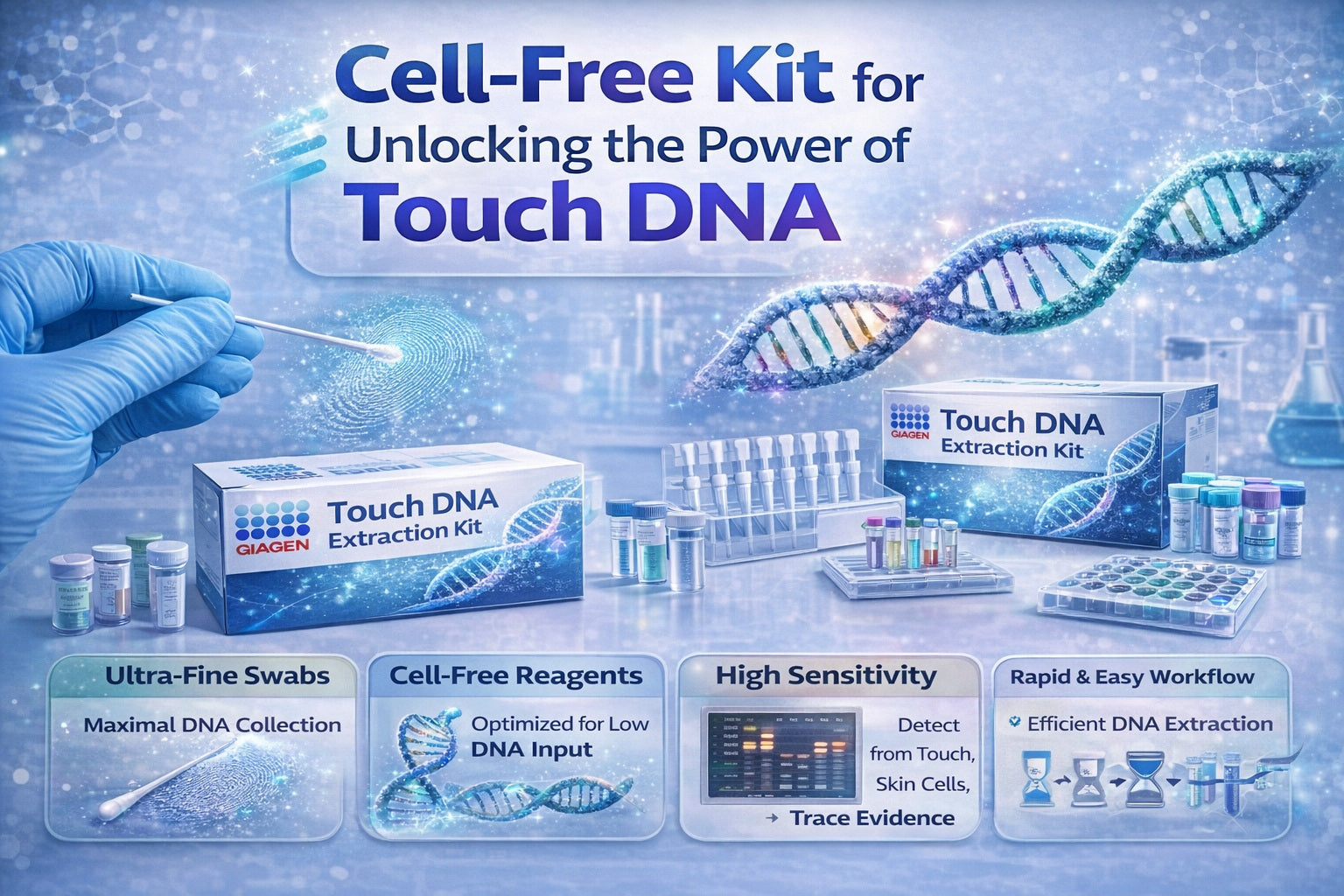
A fingerprint isn't the only thing we leave behind. Every day, people shed tiny biological traces, skin cells, microscopic fragments, and nucleic acid material onto objects they touch. That ultra-low-input material is often called Touch DNA, and it has become an exciting area in modern forensic DNA analysis because it can help link people, objects, and environments in a data-driven way.
What makes Touch DNA so interesting is also what makes it challenging: the signal is often small, variable, and mixed with inhibitors from the surface itself. This is where modern cell-free workflows shine. A well-designed cfDNA extraction kit (or a cell-free-style extraction workflow) can help labs efficiently recover nucleic acids and produce inputs that support clean downstream results.
What is Touch DNA?
Touch DNA refers to trace amounts of DNA collected from surfaces a person has touched, such as a phone, door handle, tool, fabric, or steering wheel. The DNA may come from:
- Shed skin cells
- Sweat and oils containing cellular material
- Microscopic biological fragments
Touch DNA is valuable because it can sometimes be collected even in the absence of visible biological stains. It also supports new investigative possibilities when handled with strong quality controls and careful interpretation.
What is Cell-free DNA (cfDNA) and why does it matter here?
Cell-free DNA (cfDNA) is DNA that exists outside intact cells. In medical testing, cfDNA is widely discussed for liquid biopsy. In trace evidence contexts, the idea is similar: you may be working with tiny DNA fragments that behave like cell-free material.
Touch DNA samples often contain:
- Low quantities of DNA
- Fragmented DNA
- Mixed DNA from multiple contributors
- Environmental inhibitors from the surface
A cell-free extraction workflow helps because it's designed to maximize recovery from low-input, fragmented material.
Why a cfDNA extraction kit approach is helpful for Touch DNA
A cfDNA extraction kit approach focuses on efficiently capturing small amounts of DNA and removing inhibitors that can interfere with downstream enzymes.
In Touch DNA workflows, a strong extraction approach supports:
- Better recovery from low-input samples
- Cleaner downstream amplification and profiling
- More consistent performance across surface types
- Improved readiness for advanced genomic analysis methods
This is especially valuable when you want repeatable results across many evidence items.
DNA purity: the quiet factor that boosts downstream success
In trace DNA work, DNA purity often matters as much as yield. That's because small amounts of inhibitors can have a bigger impact when the DNA input is low.
Purity supports:
- Stronger PCR/qPCR performance
- More stable profiling and genotyping signals
- Cleaner library preparation for sequencing-based workflows
- Higher reproducibility across replicates
A practical mindset is: when DNA is low, keeping the extract clean makes the signal feel clearer.
From surface to result: a practical Touch DNA workflow
Below is a beginner-friendly workflow that labs often adapt to their SOPs.
Step 1: Collection and contamination control
- Use gloves and sterile tools
- Collect with validated swabs or tapes
- Document surface type and handling conditions
- Include controls for contamination monitoring
Step 2: Lysis and DNA release
The goal is to release DNA from cells and trace material efficiently.
Step 3: Cell-free style DNA capture
This is where a cfDNA extraction kit-style workflow helps—capturing DNA effectively even when input is minimal.
Step 4: Inhibitor removal and clean elution
Clean extraction supports reliable enzymes and consistent analysis.
Step 5: Quantification and quality check
Quantify DNA and assess whether the sample is suitable for targeted amplification or sequencing.
Step 6: Genomic analysis
Depending on the lab, genomic analysis can include:
- STR profiling and forensic genotyping
- Targeted sequencing-based approaches
- Specialized assays for mixture interpretation
Strong upstream processing makes each downstream step easier to run and interpret.
How FFPE experience can help with challenging Touch DNA samples
At first glance, FFPE tissue and Touch DNA feel unrelated. Yet they share a valuable theme: both can be difficult inputs.
Working with DNA from FFPE tissue often involves:
- Fragmented DNA
- Crosslinks and inhibitors
- Variable yield from sample to sample
These challenges differ in cause but are similar in effect: they reward workflows that prioritize clean extraction, inhibitor removal, and fit-for-purpose QC. That's why labs that have strong habits for FFPE-style difficult samples often bring that same discipline to Touch DNA workflows—with excellent results.
DNA origami: why it's relevant to the future of trace DNA workflows
DNA origami is a branch of DNA nanotechnology where DNA strands fold into precise nanoscale structures. While it's not a standard forensic tool today, it's conceptually significant because it shows how programmable DNA can be used to build highly controlled systems.
In the long view, DNA origami-inspired thinking supports:
- More precise molecular capture and targeting
- Smarter nanoscale assay architectures
- New ways to stabilize or enrich low-input DNA
It's a reminder that molecular biology continues to evolve toward greater precision—especially for tiny samples like those in Touch DNA.
Where FireGene fits in Touch DNA and cell-free workflows
FireGene supports molecular workflows in which sample preparation and extraction quality are the foundation for dependable results.
FireGene-aligned touchpoints include:
Sample preparation for complex inputs
Touch DNA can include debris and surface contaminants. FireGene's Sample Preparation Kit category aligns with workflows designed to produce cleaner inputs.
Nucleic acid extraction for downstream testing
FireGene's Nucleic Acid Extraction portfolio aligns with projects that prioritize clean, enzyme-compatible DNA for amplification and sequencing.
A testing-ready mindset
Once DNA is recovered cleanly, labs can move more smoothly into PCR/qPCR or sequencing-based genomic analysis—especially in high-throughput or repeat-testing settings. This supports an efficient path from trace evidence to confident molecular data.
Best-practice tips that improve Touch DNA results
These practical habits often deliver noticeable gains.
1) Standardize collection methods
Use consistent swabbing pressure, pattern, and surface coverage.
2) Use controls every time
Include collection blanks and extraction controls to monitor background.
3) Minimize inhibitor carryover
Surface residues can inhibit enzymes. Strong cleanup steps help.
4) Optimize elution volume
Smaller elution volumes can increase concentration, which helps low-input samples.
5) Match the analysis method to the sample
Some samples are better suited to targeted profiling, while others can support broader sequencing-based approaches.
FAQ
What is Touch DNA?
Touch DNA is trace DNA collected from surfaces someone has touched, often originating from shed skin cells and microscopic biological material.
What is Cell-free DNA (cfDNA)?
Cell-free DNA (cfDNA) is DNA found outside intact cells. In trace workflows, low-input and fragmented DNA can behave like cell-free material.
Why would a cfDNA extraction kit approach help with Touch DNA?
A cfDNA extraction kit approach is designed to efficiently recover very small amounts of DNA while reducing inhibitors, thereby supporting reliable downstream amplification and sequencing.
Why is DNA purity important in forensic DNA analysis?
In forensic DNA analysis, DNA purity supports consistent enzyme performance and clearer results, especially when DNA amounts are low.
How does genomic analysis apply to Touch DNA?
Genomic analysis can include forensic profiling and sequencing-based approaches that interpret genetic signals from trace DNA samples.
What does DNA from FFPE tissue have in common with Touch DNA workflows?
Both can involve fragmented or challenging DNA. Techniques learned from extracting DNA from FFPE tissue—such as inhibitor removal and fit-for-purpose QC—can strengthen Touch DNA workflows.
What is DNA origami?
DNA origami is a method of folding DNA into nanoscale structures. It represents how DNA can be used as a programmable material and inspires future precision molecular tools.
CONCLUSION
Touch DNA is a powerful concept in trace evidence that benefits from modern low-input extraction strategies. Using a cell-free workflow similar to what you'd expect from a cfDNA extraction kit maximizes recovery, improves DNA purity, and enhances readiness for downstream genomic analysis in forensic DNA analysis settings. With consistent collection, clean extraction, and strong controls, Touch DNA workflows become more reproducible and informative—and ongoing innovation, including ideas inspired by DNA origami, continues to expand what's possible with tiny biological signals.


