
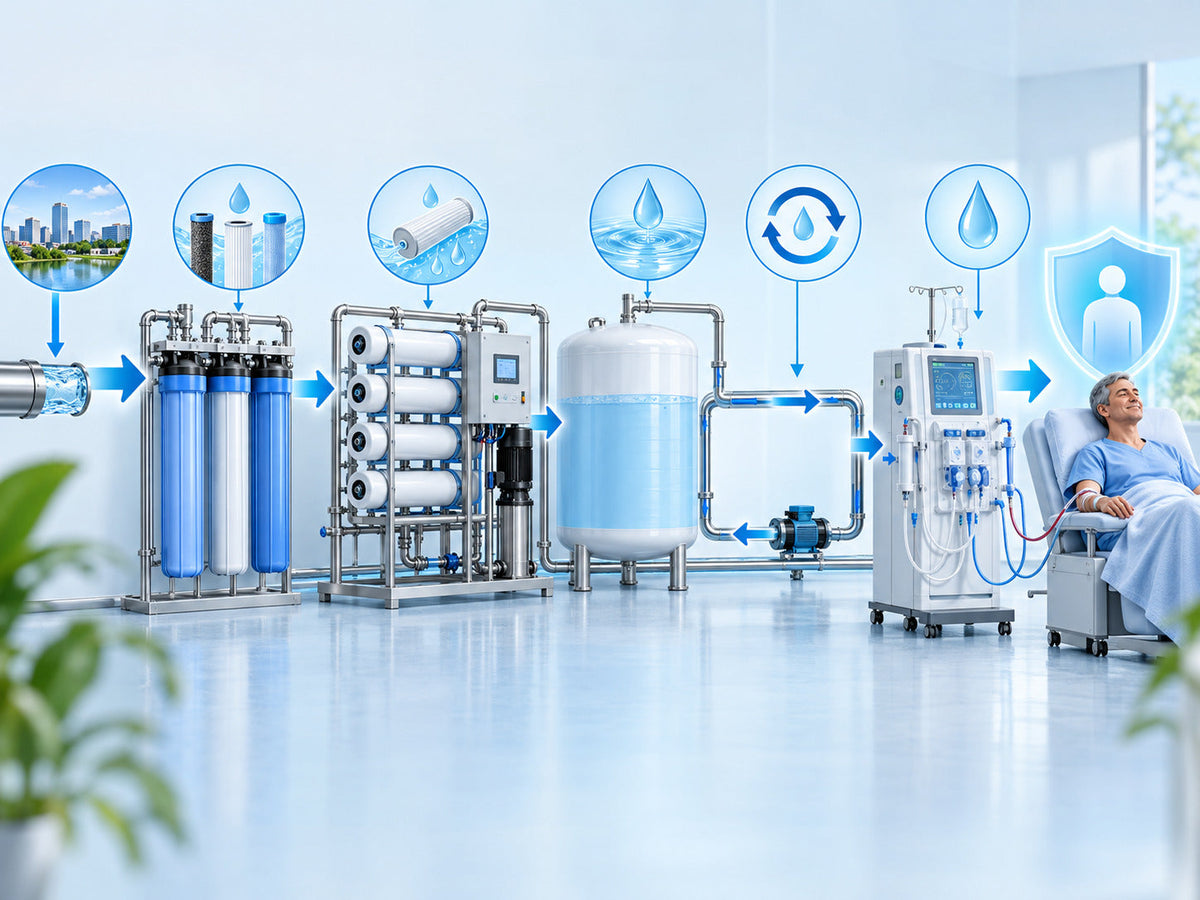
Endotoxin testing in dialysis water helps dialysis clinics verify water quality, support regulatory compliance and maintain a consistently controlled treatment environment for patients. Because hemodialysis uses substantial volumes of treated water, a dependable testing program is an essential part of patient safety and facility quality management.
Endotoxins are biologically active components associated with the outer membrane of Gram-negative bacteria. They may remain in a water system even when viable bacterial counts are low. For this reason, microbial testing and endotoxin detection answer different but complementary questions. A strong dialysis water quality program combines representative sampling, an appropriate Limulus Amebocyte Lysate test, documented action levels, preventive maintenance and timely corrective action. Together, these measures give clinical teams clear information about water-system performance.
Featured Low-Endotoxin Recombinant Proteins
Beta LifeScience offers low and ultra-low endotoxin recombinant proteins for sensitive cell-based assays, inflammation research, immunology, stem-cell studies and bioprocessing workflows. These products are tested using the LAL method and are intended as research reagents rather than dialysis-water testing kits.
|
Product |
CAT# |
Endotoxin specification |
Potential research application |
Action |
|
Recombinant Human TNF-alpha Protein, Animal-Free, Active |
BEP-0046UL |
<0.001 EU/μg |
Inflammation, immune signaling and cell-response assays |
|
|
Recombinant Human IL-13 Protein, Active |
BEP-0056UL |
<0.005 EU/μg |
Th2 signaling, cytokine-response and immune-cell studies |
|
|
Recombinant Mouse IL-6 Protein, Active |
BEP-0038UL |
<0.02 EU/μg |
Inflammation, hematopoiesis and immune-response research |
|
|
Recombinant Human PDGF-AA Protein, Active |
BEP-0058UL |
<0.02 EU/μg |
Cell proliferation, angiogenesis and tissue-repair studies |
|
|
Recombinant Human R-Spondin 3/RSPO3 Protein, Active |
BEP-0049UL |
<0.005 EU/μg |
Wnt signaling, stem-cell and organoid-culture research |
|
|
Recombinant Mouse Thrombopoietin/TPO Protein, Active |
BEP-0061UL |
<0.001 EU/μg |
Hematopoietic stem-cell and progenitor-cell research |
|
|
Recombinant DNA/RNA Nuclease, Active |
BEP-0036UL |
<0.001 EU/1,000 units |
Nucleic-acid removal and bioprocessing workflows |
Before ordering: Compare the species, biological activity, expression system, formulation, endotoxin specification and required quantity with your experimental workflow. The product specifications above are not dialysis-water limits because they use different units and apply to research reagents.

What Are Endotoxins?
Endotoxins are lipopolysaccharide molecules, commonly called LPS, found in the outer membrane of Gram-negative bacteria. They may enter a dialysis water system through incoming water, treatment components, storage tanks, distribution loops or microbial biofilms. When Gram-negative bacteria grow, divide or break down, endotoxin material can be released into the surrounding water. Because endotoxins are relatively heat-stable, controlling viable bacteria does not automatically confirm endotoxin removal.
A complete monitoring program therefore includes:
- Microbial testing to measure viable microorganisms
- Endotoxin testing to detect biologically active bacterial components
- Chemical testing to evaluate relevant dissolved contaminants
- Operational monitoring to confirm water-treatment performance
Together, these measurements provide a more complete picture of dialysis water quality.
Why Is Endotoxin Testing in Dialysis Water Important?
Routine dialysis water endotoxin testing gives facilities an early opportunity to identify changing conditions in the treatment and distribution system. It confirms whether preventive controls, circulation and disinfection practices are working effectively.
Supporting patient safety
During hemodialysis, the patient’s blood is separated from dialysis fluid by a semipermeable membrane. Maintaining high-quality water supports a controlled and dependable dialysis treatment environment. Endotoxin control is particularly important because exposure can stimulate inflammatory responses. Consistent testing helps teams recognize developing water-quality trends and respond according to approved facility procedures.
Verifying water-treatment performance
Reverse osmosis, ultrafiltration, system circulation and scheduled disinfection work together to produce suitable dialysis water. Testing provides measurable evidence that these processes continue to perform as intended. Results may also help identify where further assessment is useful. For example, changing results at the end of a distribution loop can guide more focused inspection, sampling or maintenance.
Strengthening documentation
Endotoxin testing records support:
- Routine quality reviews
- Long-term trend analysis
- System validation
- Staff accountability
- Corrective-action documentation
- Regulatory and accreditation inspections
The value of testing extends beyond an individual result. A well-maintained record demonstrates how consistently the complete water system is being managed.

Dialysis Water Endotoxin Limits and Standards
Dialysis clinics should follow the standards, regulations, manufacturer instructions and local requirements applicable to their operations. Requirements may differ according to jurisdiction, water type and dialysis-fluid category. ISO 23500-3:2019 addresses water used for preparing dialysis fluids and concentrates. It specifies a maximum allowable endotoxin concentration of less than 0.25 EU/mL for dialysis water. A commonly referenced action level is 0.125 EU/mL.
Related limits for dialysis fluid appear separately in ISO 23500-5. Dialysis water, standard dialysis fluid and ultrapure dialysis fluid are different categories and should not be treated as interchangeable.
|
Sample category |
Maximum endotoxin level commonly referenced |
Typical action level |
|
Dialysis water |
<0.25 EU/mL |
0.125 EU/mL |
|
Standard dialysis fluid |
<0.5 EU/mL |
0.25 EU/mL |
|
Ultrapure dialysis fluid |
<0.03 EU/mL |
Facility-defined below maximum |
An action level is an early-response threshold. Reaching it provides an opportunity to evaluate the system and take appropriate measures before the maximum allowable level is approached. U.S. facilities should also compare their procedures with applicable CMS regulations and adopt AAMI standards. The CDC’s dialysis water recommendations support endotoxin monitoring alongside microbiological testing. Standards can change, so each facility should verify the latest applicable editions and regulatory requirements.
How Does the LAL Test Work?
The Limulus Amebocyte Lysate assay, commonly called the LAL test, is an established bacterial endotoxin testing method. It uses a reagent that reacts with endotoxin, producing gel formation, turbidity or color development depending on the selected format.
Gel-clot LAL testing
The gel-clot method provides a qualitative or semi-quantitative result at a defined sensitivity. Formation of a firm gel indicates that endotoxin is present at or above the test threshold. This format can be suitable when the main objective is to determine whether a sample meets a specified limit.
Turbidimetric LAL testing
Turbidimetric methods monitor changes in sample clarity during the reaction. The response is compared with an endotoxin standard curve to calculate endotoxin concentration. The quantitative result is valuable for routine monitoring and trend analysis.
Chromogenic LAL testing
Chromogenic testing produces a measurable color response related to endotoxin activity. A compatible reader measures the signal, and the concentration is calculated using a standard curve. The preferred format depends on the required sensitivity, laboratory equipment, sample volume, throughput and validated procedure.

LAL Testing, Recombinant Factor C and Microbial Testing
LAL is widely used for endotoxin detection, while recombinant Factor C provides an animal-free detection alternative. Recombinant Factor C uses the endotoxin-sensitive initial component of the horseshoe-crab coagulation pathway and generally produces a fluorescent readout. Facilities should select a method validated for their sample type and accepted under the applicable quality framework.
Endotoxin testing does not replace microbial testing. The two methods measure different attributes:
|
Test |
What it measures |
Quality-management value |
|
Microbial culture |
Viable microorganisms |
Tracks microbial growth |
|
LAL test |
Bacterial endotoxin activity |
Confirms endotoxin control |
|
Recombinant Factor C |
Bacterial endotoxin activity |
Offers a recombinant detection method |
|
Chemical analysis |
Dissolved contaminants |
Confirms chemical water quality |
|
Conductivity monitoring |
Ionic content |
Supports treatment-system monitoring |
Where Should Dialysis Water Samples Be Collected?
Representative sampling is central to dependable water testing. A single convenient point may not reflect conditions throughout the complete system.
A sampling plan may include:
- Reverse-osmosis product-water outlet
- First outlet of the distribution loop
- Last outlet or loop-return point
- Outlets supplying dialysis machines
- Storage-tank outlet, when present
- Points supplying concentrate-preparation equipment
- Connections serving reuse equipment, where applicable
- Additional locations selected during troubleshooting
The end of the distribution loop is informative because it may represent a challenging location for circulation and microbial control. When results require investigation, sampling before and after treatment components can help identify where attention is needed.
Good sample-collection practices
Use validated endotoxin-controlled containers and follow the laboratory’s collection instructions. Sample-port preparation, flushing time, collection volume, storage conditions, and transport time should be standardized. Record the exact sampling location, date, time, collector, recent disinfection status and relevant system observations. Consistent documentation makes comparisons between testing periods more meaningful.

How Often Should Dialysis Water Be Tested?
Testing frequency should follow the facility’s governing requirements and approved procedures. CMS guidance has historically described bacteria and endotoxin monitoring of water distribution systems at least monthly. New or materially modified systems may require more frequent testing during initial validation.
Additional testing may be appropriate:
- After system installation or modification
- Following major maintenance
- After changes to disinfection procedures
- When an action level is reached
- Following a water-supply disruption
- After prolonged system downtime
- When historical results show an upward trend
A proactive schedule gives facilities more opportunities to confirm stable water-system performance.
How Should Endotoxin Results Be Interpreted?
A result should be assessed together with historical trends, microbial counts, sampling location and recent system events.
Below the action level
Document the result and continue routine monitoring. Even compliant results remain valuable for long-term trend analysis.
At or above the action level
Review the system according to the approved procedure. Confirm the result when appropriate, examine maintenance records, evaluate related sample points and implement timely preventive measures.
At or above the maximum allowable level
Follow the facility’s escalation and corrective-action policy promptly. Notify the responsible clinical, technical and quality personnel, assess the affected system and document each action. Follow-up testing should confirm that the system has returned to its approved operating condition.
Building a Reliable Dialysis Water Quality Program
An effective program connects laboratory results with operational decisions. Core elements include:
- A clearly mapped water-treatment and distribution system
- Approved sample points and collection procedures
- Defined alert, action and maximum limits
- Scheduled microbial and endotoxin testing
- Preventive maintenance and disinfection
- Staff training and competency assessment
- Result trending and management review
- Documented corrective-action procedures
- Follow-up testing to confirm effectiveness
Trend charts provide additional value. A gradual increase that remains below the maximum limit may still highlight an opportunity for preventive maintenance.
Endotoxin Control in Research Reagents
Endotoxin awareness also matters in laboratory research. Recombinant proteins used in cell signaling, immune-cell assays, inflammation studies and preclinical workflows may produce unintended background responses when endotoxin content is not aligned with assay sensitivity.
Beta LifeScience’s ultra-low endotoxin recombinant protein collection includes active cytokines, growth factors and other proteins with documented LAL-based endotoxin specifications. Researchers who require another target, expression host, construct, quantity, formulation or endotoxin specification can use the project evaluation form to request feasibility review and a customized quotation.
Frequently Asked Questions
Why is endotoxin testing important in dialysis water?
It helps confirm that treated water remains within applicable quality limits and enables facilities to recognize changing system conditions early.
What is the acceptable endotoxin level in dialysis water?
ISO 23500-3:2019 specifies less than 0.25 EU/mL as the maximum allowable endotoxin level for dialysis water. Facilities should confirm the requirements applicable to their jurisdiction.
Is microbial testing enough for dialysis water?
No. Microbial culture measures viable organisms, while an endotoxin assay measures bacterial endotoxin activity. Both provide complementary information.
How often should dialysis water be tested for endotoxins?
Routine monitoring is generally performed at least monthly under applicable CMS guidance, with additional testing during validation, following system changes or when results warrant further review.
Which LAL method is suitable for dialysis water?
Gel-clot, chromogenic and turbidimetric methods can support testing. Selection depends on sensitivity, quantitative requirements, equipment and the facility’s validated procedure.
What does EU/mL mean?
EU/mL means endotoxin units per milliliter. It expresses the biological endotoxin activity detected in a water or fluid sample.
Can recombinant proteins be used to test dialysis water?
The Beta LifeScience products featured here are low-endotoxin research reagents, not dialysis-water testing kits. Dialysis water should be evaluated using a validated endotoxin testing method and qualified reagents.
Conclusion
Endotoxin testing in dialysis water is a central part of a dependable water-quality program. Representative sampling, validated LAL testing, microbial monitoring, appropriate action levels and documented follow-up give dialysis clinics a clear framework for maintaining consistent system performance. For endotoxin-sensitive laboratory studies, explore Beta LifeScience’s low and ultra-low endotoxin recombinant proteins. For a different protein, format, quantity or QC requirement, submit a project for evaluation.


