
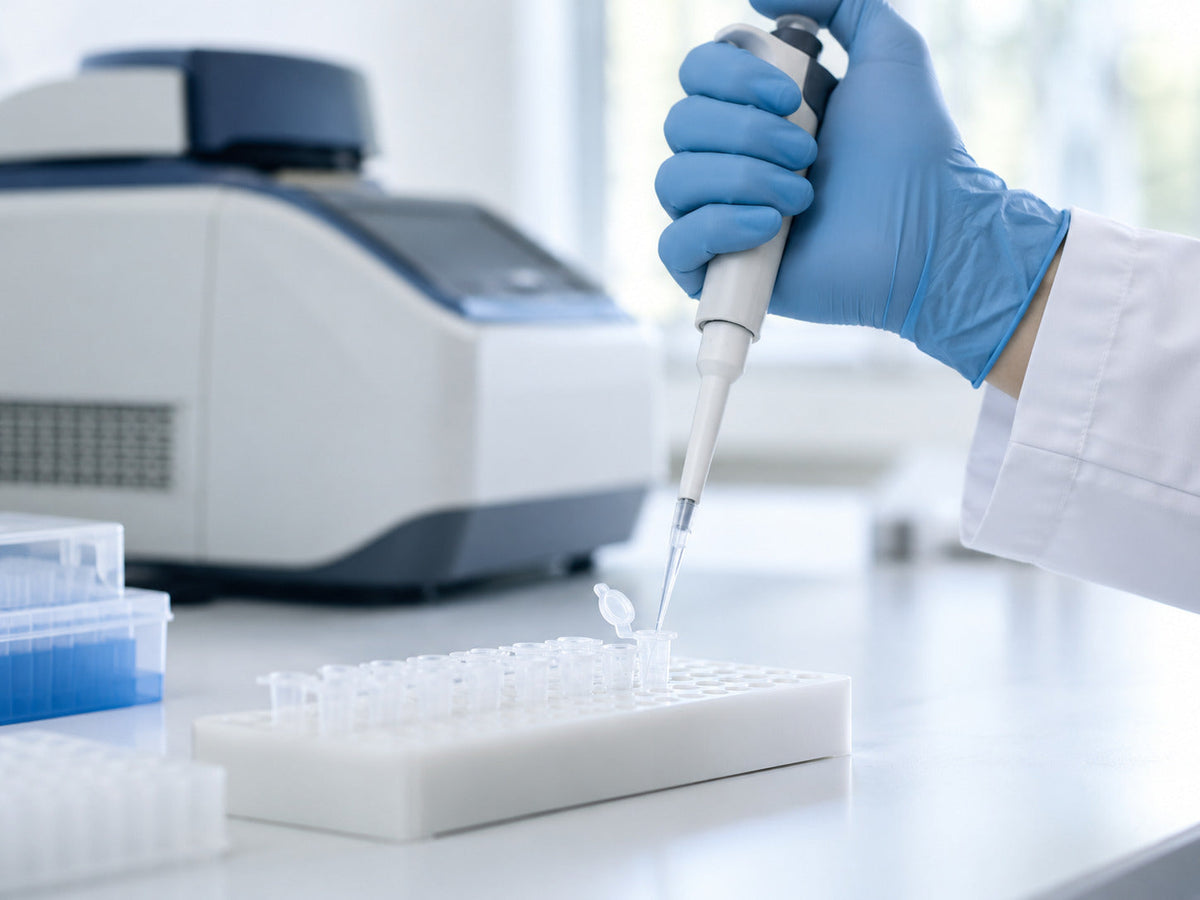
Choose a PCR enzyme by matching its sequence accuracy, amplification capabilities and specificity to your DNA target and downstream application. These three considerations help you select a polymerase that fits the experiment, whether you are checking a target on a gel, preparing a cloning insert or amplifying DNA for sequencing. A suitable reagent also needs to fit your laboratory’s routine. Reaction format, included components, protocol requirements and purchasing quantity all contribute to a practical choice. FireGene offers PCR reagents that researchers can compare around these needs. This guide explains three questions to ask before ordering, provides an application-based selection table and highlights a documented product option for fast, high-fidelity amplification.
Quick PCR Enzyme Selection Guide
Start with the intended use of the amplified DNA. Then compare the features needed to support that application.
|
Research requirement |
Features to prioritize |
What to review before ordering |
|
Routine endpoint PCR |
Suitable Taq-based amplification chemistry |
Supported template, target length and protocol |
|
Cloning or sequence-sensitive analysis |
High fidelity and appropriate product ends |
Proofreading characteristics and cloning compatibility |
|
Long-fragment amplification |
Documented target-length capability |
Separate limits for genomic and plasmid templates |
|
Faster PCR workflow |
Validated extension conditions |
Complete cycling program and amplicon requirements |
|
Specific target amplification |
Hot-start configuration |
Activation conditions and assay compatibility |
|
Repeated batch experiments |
Convenient reagent format |
Included components and usable reaction count |
|
Direct PCR |
Validated crude-sample compatibility |
Supported sample types and preparation instructions |
Manufacturers’ selection guides similarly organize PCR enzymes around application, fidelity, amplification characteristics and ease of use.Browse the DNA polymerases and PCR enzymes collection to compare the catalog with your requirements.
Question 1: How Important Is Sequence Accuracy?
The first question is what you will do with the PCR product. A routine presence-or-absence assay and a sequence-sensitive cloning experiment may require different priorities. Defining the endpoint helps you decide how much emphasis to place on fidelity.
Taq Polymerase for Routine PCR Amplification
Taq polymerase is commonly used for standard endpoint PCR. It offers a practical starting point for applications where the main objective is detecting an appropriately sized DNA product. For these workflows, selection should consider the target, template and established assay requirements. A familiar polymerase can be useful when the laboratory already has a suitable protocol.
High-Fidelity DNA Polymerase for Accurate DNA Amplification
A high-fidelity DNA polymerase is worth considering when preserving the amplified sequence is important. Proofreading polymerases can remove incorrectly incorporated bases through 3′–5′ exonuclease activity. This characteristic supports applications such as cloning, sequencing and site-directed mutagenesis. Fidelity figures are product-specific. Compare the documented measurement conditions rather than treating every “high-fidelity” label as an identical performance claim.
Match Product Ends to the Cloning Method
The amplification product also needs to fit the next step. Review whether the selected polymerase produces blunt-ended or A-tailed products and how those ends relate to the planned cloning method. This is a useful purchasing check before committing to a reagent. Manufacturer selection charts list resulting product ends alongside enzyme properties because they influence downstream compatibility.
Taq Polymerase vs High-Fidelity DNA Polymerase
|
Selection point |
Standard Taq polymerase |
Proofreading high-fidelity polymerase |
|
Typical priority |
Routine DNA amplification |
Sequence preservation |
|
Proofreading |
Standard Taq lacks 3′–5′ proofreading |
Commonly includes proofreading activity |
|
Useful applications |
Suitable endpoint detection assays |
Sequence-sensitive cloning and related workflows |
|
Product-end planning |
Review A-addition characteristics |
Review documented blunt-end characteristics |
|
Purchasing question |
Does it fit the established routine assay? |
Does it meet accuracy and downstream requirements? |
These broad distinctions provide a starting point; the individual product protocol remains the basis for use.

Question 2: What Does Your DNA Target Require?
Next, consider the DNA you want to amplify. Amplicon length, template type, sequence composition and sample preparation provide a more useful specification than simply asking for a “fast” enzyme.
Match the Enzyme to Amplicon Length
Record the expected product length before comparing PCR reagents. Also identify whether the template is genomic DNA, plasmid DNA or cDNA. A supplier may document different amplification limits for different template types. Those limits should be read together with the recommended input and cycling conditions. A simple requirement such as “approximately 8 kb from genomic DNA” gives a supplier a clearer basis for recommending a product than “long PCR.”
Understand Processivity and Extension Rate
Processivity describes how much synthesis an enzyme can perform during a binding event. Extension rate concerns the speed of DNA synthesis. Both can matter when evaluating long targets or shorter cycling programs. However, a useful comparison includes the complete reaction conditions, rather than relying on a single speed figure. Thermo Fisher’s selection guidance highlights processivity and extension rate when considering long templates and faster PCR workflows. videos.thermofisher.com
Plan for GC-Rich or Complex Templates
When a target has challenging sequence characteristics, review documented buffers and additive options. A compatible PCR buffer is part of the enzyme system. Use the selected formulation’s instructions when deciding whether an additional optimization step is appropriate. Your inquiry can include the target’s approximate GC content, length and previous amplification experience. These details help the supplier assess the application.
Include Template Preparation
For purified DNA, record the extraction method and available quality information. This creates a clearer connection between sample preparation and PCR amplification. You can review DNA extraction kits alongside the amplification reagents when planning the complete workflow. For direct PCR, choose a system documented for the relevant crude sample and preparation method. Direct PCR capability is a specific application feature, rather than something to assume from a general polymerase description.

Question 3: Which Features Support Specificity and Workflow Efficiency?
The third question brings together assay performance and everyday setup. Think about the specificity you need, how the reaction will be prepared and which reagent format fits your team.
Hot-Start PCR for Controlled Reaction Setup
Hot-start PCR uses a formulation that restricts polymerase activity during lower-temperature setup and activates it under specified conditions. This approach helps manage premature extension and supports more specific amplification. Follow the activation instructions supplied with the enzyme. Hot-start and high-fidelity describe different features. A product can combine both, allowing researchers to consider specificity and sequence accuracy together.
Standalone Enzyme or PCR Master Mix?
A standalone enzyme can suit workflows where researchers need access to individual reaction components. A PCR master mix provides a defined formulation that can simplify setup. Read the component list carefully: the materials still added by the researcher depend on the product.
|
Format |
Practical benefit |
Main purchasing consideration |
|
Standalone polymerase |
Access to individual components |
Identify the additional reagents required |
|
PCR master mix |
Defined formulation and simpler setup |
Review exactly what is included |
|
Mix with loading dye |
Convenient gel-oriented workflow |
Assess downstream dye compatibility |
|
Direct PCR system |
Sample preparation tailored to direct amplification |
Match the validated sample and procedure |
Manufacturer guidance discusses these formats as distinct workflow choices.
Review the Complete PCR Reaction
Create a list of what the laboratory must supply: template, primers, water and any additional components specified in the protocol. This is especially helpful when comparing products with similar names. A reaction mix containing buffer and nucleotides may still require added enzymes separately. The component list gives a more dependable purchasing picture than the product name alone.

A Documented FireGene Option for Fast, High-Fidelity PCR
For researchers evaluating fast amplification with proofreading and hot-start features, the following product provides a relevant starting point.
|
Product |
Catalog number |
Documented features |
Listed format |
Purchasing route |
|
FG-FG2104 |
Hot-start, high-fidelity PCR; blunt-ended products; listed applications include long-fragment amplification and complex templates |
Selected size: 250 units; enzyme supplied separately from a 2× reaction mix containing dNTPs |
View specifications, protocol and ordering options |
The product page lists genomic targets up to 15 kb and plasmid targets up to 20 kb under its stated conditions. It also provides a user manual download and currently displays an ordering option. Its protocol adds the polymerase separately to the reaction mix, so it should be evaluated as that specific component format.
Request Pricing & Application Guidance →

Which PCR Enzyme Fits Your Application?
Use the three questions to build a focused shortlist.
For Routine Detection
Begin with a suitable standard or hot-start Taq-based system. Evaluate it against the established target and readout requirements. The purchasing priority is a reagent that fits the assay and provides a clear, repeatable setup.
For Cloning and Sequencing
Prioritize sequence accuracy, compatible product ends and the intended downstream method. Record the cloning route before selecting the amplification enzyme. This connects the purchasing decision with the complete experiment.
For Long or Complex Targets
Prioritize documented template capability, buffer options and product-specific cycling instructions. When contacting a supplier, include the expected amplicon length and template type. These details help narrow the discussion to relevant products.
For Repeated Batch Work
Compare reagent format, required setup steps and the laboratory’s preferred reaction volume. A defined formulation may suit repeated work, while separate components may suit projects requiring more setup flexibility. Review the PCR, qPCR and amplification master mixes collection for additional format options.
Compare Value by the Planned Experiment
A meaningful cost comparison begins with the intended reaction.
Calculate the Usable Reaction Count
Review the recommended enzyme amount or mix volume for your chosen reaction size. Include controls, replicates and planned optimization experiments in the quantity estimate. A pack labelled in enzyme units should not automatically be compared with a pack labelled in reactions.
Include Supporting Materials
Consider any separately required reagents, such as nucleotides, buffer or loading materials. Comparing the complete setup helps you understand the purchasing requirement and prepare a realistic quotation request.
Evaluate the Full Workflow
For busy laboratories, setup time and protocol clarity are also useful selection criteria. Record the steps each option requires, then compare them with how your team actually works. This keeps the decision practical without assuming that one format is always preferable.
Before You Order: Prepare a Clear PCR Enzyme Inquiry
A concise inquiry helps the supplier understand the experiment.
Include:
- Template type and sample preparation method.
- Expected amplicon length.
- Approximate GC content, when relevant.
- Intended use of the PCR product.
- Preferred reaction volume.
- Number of samples, controls and replicates.
- Required documentation and delivery destination.
Ask for the relevant protocol and current quotation for the exact purchasing unit. If the assay includes modified nucleotides or another specialized requirement, include that information. Manufacturer charts show that properties such as dU tolerance differ between polymerases.
Evaluate a Candidate Before Routine Adoption
A small evaluation provides a practical bridge between the product description and your laboratory’s assay. Choose representative samples, the intended target and appropriate controls. Follow the candidate reagent’s instructions and define the acceptance criteria before starting. For gel-based work, your criteria might include the expected product size and a suitable amplification pattern. For sequence-sensitive work, include the downstream assessment required by the project. Keep the reagent, protocol and results together in the assay record. This makes future reordering and product comparisons easier to review.
Frequently Asked Questions
Which Enzyme Is Used in PCR?
PCR commonly uses a thermostable DNA polymerase. Taq is a widely used example, while other formulations offer features such as proofreading or hot-start activation.
How Do I Choose the Right PCR Enzyme?
Match fidelity to the downstream application, amplification capability to the DNA target, and specificity and format to the workflow.
Is High-Fidelity Polymerase Always the Preferred Choice?
High fidelity is especially relevant when sequence preservation matters. Routine detection may have different priorities, so the intended use should guide selection.
Can a Polymerase Be Both Hot-Start and High-Fidelity?
Yes. These are separate features, and some formulations combine them.
Is a PCR Master Mix the Same as a Standalone Enzyme?
A master mix contains a defined set of reaction components. A standalone enzyme is supplied as an individual component. Review the product list to establish what must be added.
Can an Endpoint PCR Enzyme Be Used for qPCR?
Select chemistry documented for the intended detection method. A reagent’s suitability for endpoint amplification does not by itself establish compatibility with a specific quantitative assay.
What Information Helps With Product Selection?
Template type, target length, downstream application, reaction volume and sample count provide a useful starting point for an inquiry.
Choose a PCR Enzyme Around Your Experiment
The three questions bring the decision into focus: what accuracy does the application need, what does the DNA target require, and which features fit the workflow?
FireGene’s product listings provide documented specifications and purchasing routes to support that comparison. Review the relevant protocol, identify your reaction requirements and request guidance for the exact application.


