

Description
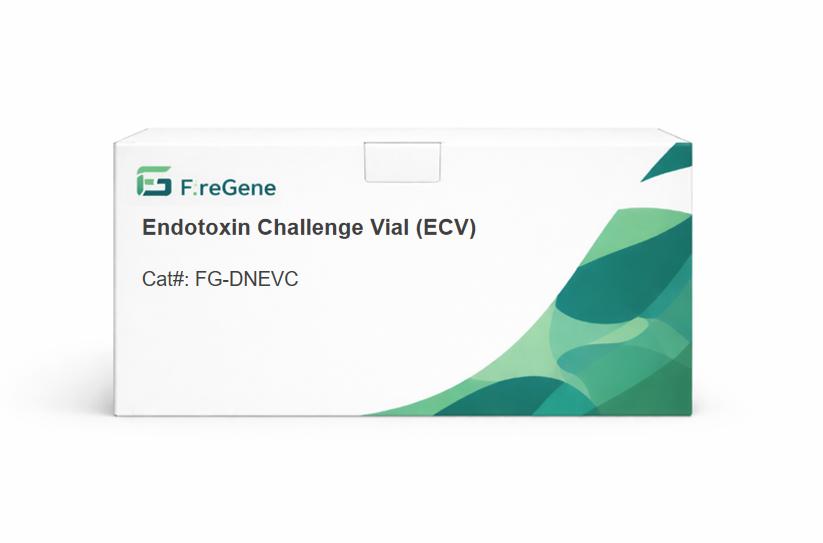
Endotoxin Challenge Vial (ECV) for Dry-Heat Depyrogenation Validation
A sterilization cycle that kills every viable microorganism can still leave a pyrogenic product behind. Endotoxin is heat-stable enough to survive standard autoclave and dry-heat cycles that are perfectly adequate for sterility — which is exactly why depyrogenation validation is a separate requirement from sterilization validation under GMP, and why a challenge vial loaded with a known endotoxin quantity, not a biological indicator, is the tool used to prove it.
The FireGene Endotoxin Challenge Vial (ECV) is a freeze-dried bacterial endotoxin preparation derived from Escherichia coli O111:B4, with potency calibrated against the national reference standard for bacterial endotoxin. Each vial is placed at the coldest point or most difficult-to-sterilize location within a dry-heat sterilization system, run through a complete cycle, and then assayed for residual endotoxin activity. The reduction — expressed as a log reduction value — is the data point that demonstrates whether the depyrogenation process actually works.
Where ECVs are used
Depyrogenation validation of glassware and utensils. Vials, ampoules, and other glass containers that will come into direct contact with injectable products must demonstrate effective endotoxin destruction during dry-heat processing — not just sterility. A minimum 3-log reduction in endotoxin activity is the generally accepted benchmark for adequate depyrogenation performance.
IQ/OQ/PQ qualification of new or modified equipment. When a dry-heat oven, tunnel sterilizer, or depyrogenation unit is installed or modified, ECVs placed at validated cold-spot locations provide the quantitative performance data required for qualification documentation.
Routine revalidation. Equipment performance can drift over time due to seal wear, airflow changes, or load configuration differences. Periodic ECV challenge testing confirms the system still meets its original validated performance.
How it differs from Control Standard Endotoxin (CSE)
CSE is used to verify your LAL/TAL reagent's sensitivity and to run interference testing on a sample matrix. The ECV is used to verify that a piece of equipment destroys endotoxin under heat. Both are E. coli O111:B4-derived endotoxin preparations calibrated against the same national standard, but they answer different validation questions — one belongs in your BET assay workflow, the other belongs in your sterilization/depyrogenation qualification protocol.
Specifications
| Parameter | Detail |
|---|---|
| Source | Escherichia coli O111:B4 |
| Calibration | Against national standard bacterial endotoxin |
| Potency Range | 2,000–10,000 EU/vial |
| Format | Lyophilized powder |
| Container | Glass vial |
| Pack Sizes | 2 mL/vial, 10 vials/box; 10 mL/vial, 10 vials/box |
| Storage | 2–8°C, sealed, before opening |
| Shelf Life | 24 months |
| Regulatory | For depyrogenation validation per GMP requirements |
Handling note: The container is glass and is susceptible to breakage from impact during shipping and handling. Inspect packaging on arrival and handle with care during use.
Companion products
- Control Standard Endotoxin (CSE) — for LAL/TAL reagent sensitivity recheck and interference testing
- Gel-Clot Endotoxin Test Kit — for assaying residual endotoxin after the challenge cycle
- Kinetic Chromogenic Endotoxin Test Kit — for quantitative log-reduction calculation
- Endotoxin Assay Water — for reconstitution and dilution
Product FAQ
Q: What's the difference between an ECV and CSE?
A: Both are E. coli O111:B4 endotoxin preparations calibrated against the same national reference standard, but they're used for different purposes. CSE verifies the sensitivity of your LAL/TAL reagent and supports interference testing within a BET assay. The ECV is placed inside sterilization equipment and subjected to an actual heat cycle, to verify that the equipment destroys endotoxin — it's a process validation tool, not an assay reagent.
Q: What log reduction value indicates successful depyrogenation?
A: A minimum 3-log reduction in endotoxin activity is the generally accepted benchmark for demonstrating adequate dry-heat depyrogenation performance, consistent with GMP expectations for glassware and equipment validation. Specific acceptance criteria should be defined in your validation protocol per your applicable regulatory guidance.
Q: Where should the ECV be placed during a validation run?
A: ECVs should be placed at the coldest point or the most difficult-to-sterilize location within the equipment or load configuration — typically identified through prior thermal mapping studies. This ensures the validation reflects worst-case conditions rather than the easiest point to sterilize.
Q: How do I measure the residual endotoxin after the heat cycle?
A: After the dry-heat cycle, reconstitute the ECV contents and assay residual endotoxin activity using a gel-clot or kinetic chromogenic LAL/TAL test. The FireGene Kinetic Chromogenic Endotoxin Test Kit is well-suited for this application since it provides the quantitative EU/mL data needed to calculate log reduction.
Q: Is the glass container fragile during shipping?
A: Yes. The ECV is supplied in a glass vial, which can break under impact during transport or handling. Inspect each box on arrival for visible damage, and handle vials with care during reconstitution.
Q: Can I use this for routine BET testing instead of CSE?
A: No. The ECV is formulated and packaged specifically for heat-challenge validation work, not for routine sensitivity recheck or interference testing in a BET assay. Use Control Standard Endotoxin (CSE) for those applications.
Files Download Links