

Description
Overview
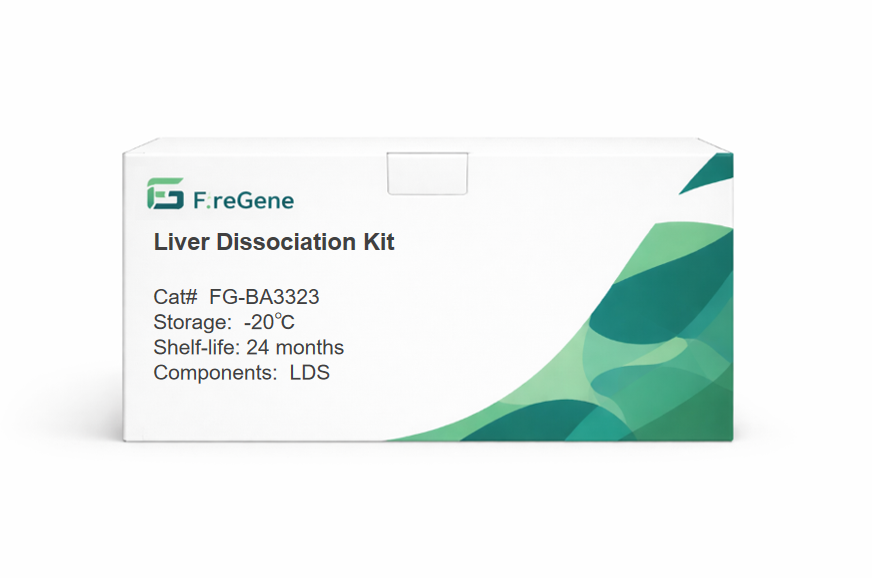
FireGene Liver Dissociation Kit provides a powerful enzymatic solution designed to dissociate liver tissue into single-cell suspensions for high-throughput applications. This kit enables researchers to study liver cellular heterogeneity with high viability and efficiency, supporting advanced liver disease research and drug development.
Background Information
-
Driven by Clinical and Scientific Research Needs:
- Single-cell analysis of liver tissue is key to understanding diseases like hepatitis, fibrosis, and liver cancer.
- Traditional dissociation methods often fail to preserve fragile liver cell subtypes or yield complete suspensions.
- This kit facilitates:
- Identification of diverse liver cell types, including hepatocytes, Kupffer cells, and stellate cells.
- Investigation of disease mechanisms, such as inflammation, fibrosis, and tumor progression.
- Discovery of biomarkers and therapeutic targets for liver-related pathologies.
-
Background of Technological Development:
- Overcomes limitations of cell damage and inefficiency in mechanical or chemical methods.
- FireGene leverages:
- Specially selected enzymes targeting liver extracellular matrix.
- Optimization of enzyme type, concentration, and incubation parameters.
- A high-yield workflow for producing viable, reproducible single-cell suspensions from liver tissue.
Detection Principle
- Operates on a two-step enzymatic digestion method:
- Liver tissue is cut into small fragments for uniform exposure.
- Enzyme reagents are applied under precisely controlled temperature and time conditions.
- The matrix and cellular junctions are enzymatically degraded.
- Final Result:
- A high-quality, viable single-cell suspension ready for applications such as scRNA-seq, immunophenotyping, or cell culture.
Specifications
| Applications | Single-cell sequencing, cell culture or other cell-related detections |
| Compatible Sample Types | Liver tissue |
| Supported Instruments | Water bath, horizontal centrifuge, cell counter |
| Storage | -20 °C |
| Shelf-life | 24 months |
Kit Components
10 Reactions
| Component | 10 Reactions/Kit |
| Liver DS (Liver Dissociation Solution) | 2 × 1.25 mL |
50 Reactions
| Component | 50 Reactions/Kit |
| Liver DS (Liver Dissociation Solution) | 10 × 1.25 mL |
Product FAQ
1. Q: During the dissociation process, brown oxidation spots are found on the liver tissue. Will this affect the subsequent cell viability? How to prevent tissue oxidation?
A: Brown oxidation spots are caused by the oxidation of hemoglobin or cytochromes in liver tissue. They will reduce the local cell viability by 15%-20% and may also interfere with enzymolysis efficiency. Prevention methods: ① Immediately place the tissue in PBS containing 1% ascorbic acid (not included in the kit, need to be prepared separately) after sampling to prevent oxidation; ② Control the time from sampling to adding the dissociation solution within 10 minutes to reduce the exposure time to air; ③ If a small number of oxidation spots have appeared, remove the oxidized area before mincing the tissue to avoid affecting the quality of the overall cell suspension.
2. Q: Can the dissociation solution in the kit be mixed with collagenase from other brands? What impact will mixing have on the enzymolysis effect?
A: Mixing is strictly prohibited. The enzymes in the dissociation solution of this kit have been precisely formulated at a 3:1 ratio and added with a liver tissue-specific stabilizer. Mixing with collagenase from other brands will disrupt the proportional balance of enzymes, which may lead to: ① Excessively strong enzyme activity, causing over-digestion of hepatocytes and reducing viability to below 40%; ② Enzyme activity antagonism, failing to degrade hepatic interstitial fibers, resulting in a tissue block residue rate of over 60%. Even if the dissociation solution of this kit is insufficient, a supplementary package of the same brand (product number: FG-BA3323) must be purchased separately; random replacement is not allowed.
3. Q: A large amount of transparent mucus-like substance appears in the cell suspension after enzymolysis. What causes this, and how to remove the mucus?
A: The transparent mucus-like substance is formed by the mixture of mucopolysaccharides (such as heparin) in liver tissue and enzymolysis products. It will wrap cells, leading to inaccurate counting, and may also block the cell sieve. Removal method: When filtering with a 70μm cell sieve, rinse the sieve repeatedly with PBS containing 2% FBS for 3 times to ensure the mucus flows out with the filtrate and avoid residue.
4. Q: After centrifugation, the cell pellet shows a layered state (pale yellow in the upper layer and dark red in the lower layer). How to collect the target hepatocytes? Does stratification mean low cell purity?
A: Stratification is caused by the density difference between hepatocytes (density: 1.05-1.07g/cm³) and red blood cells (density: 1.09g/cm³). The pale yellow upper layer is hepatocytes, and the dark red lower layer is red blood cells; this does not mean low purity. Collection method: ① Use a 1mL low-adhesion pipette tip close to the liquid surface to first aspirate the pale yellow pellet in the upper layer (accounting for about 60%-70% of the total pellet), which are high-purity hepatocytes (purity ≥85%); ② If a small number of hepatic sinusoidal endothelial cells need to be retained, the middle transition layer (about 10%) can be collected, but subsequent flow sorting is required for further purification to avoid red blood cell contamination, and red blood cell lysis buffer can also be used for treatment.
5. Q: After opening the kit, if some reagents (such as washing buffer) cannot be used up in a short time, how do the storage conditions and validity period change after opening?
A: The storage conditions and validity period of reagents need to be adjusted after opening: ① Dissociation solution: After opening, aliquot into 250μL/tube, store sealed at -20℃, and the validity period is shortened to 3 months from the opening date to avoid repeated freezing and thawing; ② Washing buffer: After opening, store at 4℃ in the dark, and the validity period is shortened from 2 years to 1 month. Tighten the cap immediately after each use to prevent microbial contamination; ③ Enzymolysis termination solution: After opening, store at 4℃, and the validity period is shortened to 2 months. If turbidity or flocculent precipitates appear, discard immediately and do not use.
6. Q: When dissociating liver tissue from juvenile mice (within 7 days of birth), cells tend to aggregate. What causes this, and how to adjust the operating parameters to reduce aggregation?
A: Hepatocytes from juvenile mice are small in size (about 1/3 of that from adult mice) and have fragile cell membranes, so they are prone to aggregation due to collision or uneven enzymolysis. Adjustment methods: ① When mincing the tissue, cut it into pieces smaller than 0.5mm³ (half the size of adult mouse tissue) to ensure sufficient enzymolysis; ② Reduce the enzymolysis rotation speed to 15-20 rpm (20-30 rpm for adult mice) to reduce cell collision; ③ After terminating enzymolysis, gently pipette 10 times with a 1mL pipette tip (avoid violent pipetting), then filter with a 40μm cell sieve (70μm for regular use) to remove tiny tissue blocks and reduce the aggregation rate.
7. Q: For downstream experiments requiring hepatocyte nucleus extraction, can nucleus extraction be performed directly after dissociation with this kit? If yes, after which step should the nucleus extraction operation be carried out?
A: Nucleus extraction can be performed directly, but it must be carried out after a specific step. Optimal timing: After Step 10 (after two washes) and before Step 11 (before resuspension). Specific operation: ① After discarding the supernatant in Step 10, add 1mL of nucleus extraction buffer (need to be prepared separately, such as NP-40 buffer), incubate on ice for 10 minutes to lyse the cell membrane; ② Centrifuge at 4℃, 500×g for 8 minutes (200×g higher than the regular centrifugation speed) to collect the nuclear pellet; ③ Resuspend the nuclear pellet with PBS containing 0.5% BSA, and follow the regular nucleus extraction steps for subsequent operations. Note: Nucleus extraction cannot be performed before or during enzymolysis, otherwise the enzymolysis solution will damage the nuclear structure.
8. Q: During enzymolysis, the temperature fluctuation of the water bath exceeds ±1℃ (e.g., set at 37℃, actual fluctuation between 36-38℃). What impact will this have on the enzymolysis effect? How to stabilize the water bath temperature?
A: Temperature fluctuation exceeding ±1℃ will cause unstable enzyme activity, which may lead to: ① Decreased enzyme activity during low-temperature periods (36℃), resulting in incomplete tissue dissociation and a 30% increase in cell clumping rate; ② Excessively strong enzyme activity during high-temperature periods (38℃), reducing hepatocyte viability by 25%. Methods to stabilize temperature: ① Use a water bath with constant temperature circulation function instead of a regular water bath; ② Turn on the water bath 30 minutes in advance to preheat, and place the sample only after the temperature stabilizes; ③ After placing the sample, check the temperature every 15 minutes. If the fluctuation exceeds ±0.5℃, adjust the water bath settings in time to ensure constant temperature.
9. Q: After dissociation, the cell viability meets the requirements (≥70%), but the adhesion rate after seeding on the culture plate is extremely low (<20%). What causes this, and how to improve the adhesion rate?
A: Low adhesion rate is mostly caused by the damage of adhesion molecules (such as integrins) on the hepatocyte surface during dissociation, or residual enzymolysis solution components in the cell suspension. Improvement methods: ① In the washing steps of Step 9 and Step 10, replace PBS with DMEM medium containing 5% fetal bovine serum, and extend the centrifugation time to 8 minutes (5 minutes for regular use) to fully remove residual enzymolysis solution; ② Before seeding, coat the culture plate with 10μg/cm² collagen (not included in the kit, need to be prepared separately), and incubate at 37℃ for 1 hour to enhance cell adhesion ability; ③ After seeding, place the culture plate in the incubator and let it stand for 4 hours. Avoid shaking too early to allow sufficient cell adhesion.
Files Download Links
Certificate of Analysis (COA)