
Introduction
In pharmaceutical manufacturing, ensuring that injectable products are free from bacterial endotoxins is just as important as maintaining sterility. While sterilization destroys microorganisms, it does not necessarily eliminate endotoxins—heat-stable pyrogens released from the cell walls of Gram-negative bacteria. If endotoxins remain on pharmaceutical containers or manufacturing equipment, they can trigger fever, inflammation, or even life-threatening reactions in patients.
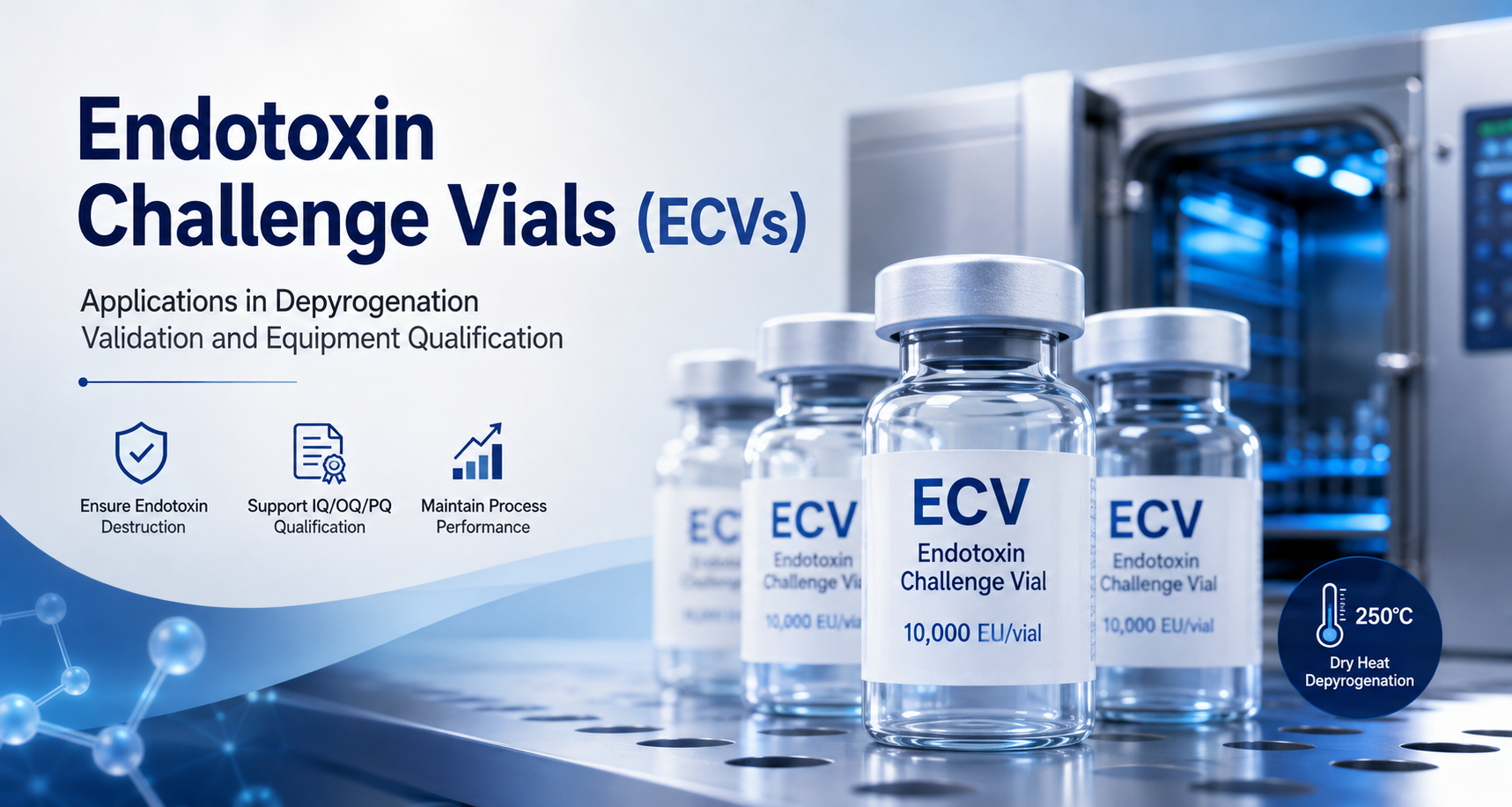
To demonstrate that depyrogenation processes effectively destroy endotoxins, manufacturers rely on Endotoxin Challenge Vials (ECVs). These standardized biological indicators provide measurable evidence that dry-heat depyrogenation equipment consistently achieves the required level of endotoxin reduction.
In this article, we'll explore what Endotoxin Challenge Vials are, where they are used, why they are important, and how they support pharmaceutical validation and regulatory compliance.
What Are Endotoxin Challenge Vials (ECVs)?
Endotoxin Challenge Vials are specially prepared glass vials containing a precisely quantified amount of purified bacterial endotoxin, typically derived from Escherichia coli. Unlike routine endotoxin testing reagents, ECVs are designed specifically for challenge studies that evaluate the effectiveness of depyrogenation processes.
Because each vial contains a certified endotoxin load, laboratories can accurately determine how much endotoxin remains after exposure to a depyrogenation cycle. This provides objective evidence of process performance rather than relying solely on temperature measurements.
ECVs are commonly manufactured with endotoxin loads such as:
· 1,000 EU/vial
· 10,000 EU/vial
· 20,000 EU/vial
· 50,000 EU/vial
The selected challenge level depends on the validation protocol, equipment type, and regulatory requirements.
Why Are Endotoxin Challenge Vials Important?
Dry-heat depyrogenation is widely used to remove endotoxins from pharmaceutical glassware. However, demonstrating that an oven reaches a target temperature is not enough.
Factors such as:
· Uneven airflow
· Cold spots inside equipment
· Load configuration
· Glass container placement
· Equipment aging
can all influence actual endotoxin destruction.
Endotoxin Challenge Vials provide direct biological evidence that these variables do not compromise depyrogenation performance.
Benefits include:
· Objective validation of endotoxin destruction
· Regulatory documentation
· Qualification of depyrogenation equipment
· Verification of worst-case conditions
· Long-term process monitoring
Where Are Endotoxin Challenge Vials Used?
1. Depyrogenation Validation of Glassware and Containers
One of the most common applications of ECVs is validating dry-heat depyrogenation cycles used for pharmaceutical glass containers.
Examples include:
· Injection vials
· Glass ampoules
· Syringes
· Cartridges
· Laboratory glassware
· Stainless-steel utensils
These components frequently come into direct contact with sterile drug products, making effective endotoxin removal essential.
Unlike sterilization, depyrogenation must demonstrate destruction of heat-stable endotoxins rather than simply killing microorganisms.
During validation, ECVs are placed throughout the load, particularly in areas expected to experience the least favorable heating conditions.
Following the depyrogenation cycle, residual endotoxin is measured using bacterial endotoxin testing methods.
The generally accepted performance criterion is a minimum 3-log (99.9%) reduction in endotoxin activity.
Successfully meeting this requirement confirms that the process effectively destroys endotoxins and supports compliance with pharmaceutical quality standards.
2. IQ/OQ/PQ Qualification of Depyrogenation Equipment
Endotoxin Challenge Vials are indispensable during equipment qualification.
Whenever new equipment is:
· Installed
· Relocated
· Repaired
· Modified
· Upgraded
manufacturers must demonstrate that it performs as intended.
ECVs are commonly used during:
Installation Qualification (IQ)
IQ confirms that equipment has been installed according to manufacturer specifications.
Operational Qualification (OQ)
OQ verifies that equipment consistently operates within predetermined parameters.
Performance Qualification (PQ)
PQ demonstrates that the system consistently performs under actual production conditions.
During qualification, ECVs are positioned at validated cold spots identified through temperature mapping studies.
Typical equipment includes:
· Dry-heat depyrogenation ovens
· Tunnel sterilizers
· Continuous depyrogenation tunnels
· High-temperature processing units
Residual endotoxin testing after the cycle provides quantitative evidence that the equipment consistently achieves the required endotoxin reduction.
This data becomes part of the qualification documentation required during GMP inspections.
3. Routine Revalidation and Ongoing Performance Monitoring
Successful initial qualification is only the beginning.
Over time, depyrogenation equipment can experience gradual performance changes caused by:
· Door seal wear
· Airflow variation
· Heating element aging
· Preventive maintenance
· Production load changes
· Mechanical adjustments
Because of these factors, regulatory agencies expect periodic revalidation.
Routine ECV challenge studies verify that previously validated equipment continues to achieve the required endotoxin reduction.
Regular monitoring helps manufacturers:
· Detect equipment drift early
· Confirm process consistency
· Maintain validated status
· Reduce contamination risks
· Support continuous GMP compliance
Routine revalidation also provides confidence that production batches continue to meet established quality standards throughout the equipment's lifecycle.
How Endotoxin Challenge Vials Are Used
A typical validation study includes the following steps:
Step 1: Select the Appropriate ECV
Choose the endotoxin load specified in the validation protocol.
Step 2: Identify Worst-Case Locations
Place ECVs in cold spots identified during thermal mapping.
Step 3: Run the Depyrogenation Cycle
Expose the challenge vials to the validated dry-heat process.
Step 4: Recover Residual Endotoxin
After processing, extract and measure any remaining endotoxin using a validated bacterial endotoxin test.
Step 5: Evaluate Results
Compare the measured endotoxin level with the original challenge to calculate the log reduction.
A successful study typically demonstrates at least a 3-log reduction in endotoxin activity.
Regulatory Considerations
Regulatory authorities expect manufacturers to provide scientific evidence that depyrogenation processes consistently remove bacterial endotoxins.
Validation programs using standardized Endotoxin Challenge Vials help support compliance with industry guidance and pharmacopeial expectations by:
· Demonstrating effective endotoxin destruction
· Supporting equipment qualification
· Verifying process consistency
· Providing documented validation evidence
· Reducing the risk of pyrogen contamination
Comprehensive documentation generated during ECV studies is often reviewed during internal audits and regulatory inspections.
Best Practices for Using Endotoxin Challenge Vials
To achieve reliable validation results, laboratories should follow several best practices:
· Use certified ECVs with traceable endotoxin values.
· Place challenge vials at identified worst-case locations.
· Follow validated endotoxin recovery procedures.
· Include appropriate positive and negative controls.
· Document all test conditions and results thoroughly.
· Perform periodic revalidation according to the facility's validation schedule.
· Train personnel in proper handling techniques to prevent contamination.
Implementing these practices improves reproducibility and strengthens confidence in depyrogenation validation results.
Conclusion
Endotoxin Challenge Vials are a critical tool for demonstrating the effectiveness of depyrogenation processes in the pharmaceutical and biotechnology industries. By providing a standardized and measurable endotoxin challenge, they enable manufacturers to validate glassware depyrogenation, qualify new equipment through IQ/OQ/PQ protocols, and verify ongoing performance during routine revalidation.
As regulatory expectations for injectable drug safety continue to evolve, the use of high-quality ECVs remains an essential part of a robust validation strategy. Proper application of Endotoxin Challenge Vials not only supports compliance with GMP requirements but also helps ensure patient safety by confirming that depyrogenation processes consistently achieve the required level of endotoxin destruction.


