
Introduction
GLP-1 receptor agonists have rapidly transformed the pharmaceutical industry, becoming one of the fastest-growing therapeutic classes worldwide. Originally developed for the treatment of type 2 diabetes, these injectable peptide drugs are now widely prescribed for obesity, cardiovascular risk reduction, and other chronic metabolic disorders. Products containing semaglutide, tirzepatide, liraglutide, and related peptide therapeutics continue to drive unprecedented investment in manufacturing capacity as global demand accelerates.
Unlike traditional small-molecule medicines, GLP-1 drugs are highly sophisticated injectable products. Their manufacture involves peptide synthesis or recombinant production, extensive purification, formulation with specialized excipients, sterile filtration, aseptic filling, and rigorous quality control before release. Because these products are administered by injection, maintaining microbiological quality is essential throughout the manufacturing lifecycle.
Among the most critical quality attributes is bacterial endotoxin control.
Endotoxins are lipopolysaccharides (LPS) originating from the outer membrane of Gram-negative bacteria. Even extremely low concentrations can trigger fever, inflammatory responses, hypotension, or severe pyrogenic reactions when introduced directly into the bloodstream or subcutaneous tissue. Sterility testing alone cannot detect endotoxins, making dedicated bacterial endotoxin testing an indispensable component of quality assurance for GLP-1 products.
At the same time, endotoxin testing for peptide therapeutics presents unique analytical challenges. High peptide concentrations, formulation buffers, preservatives, surfactants, and other excipients may influence assay performance. Manufacturers must therefore establish scientifically validated methods capable of demonstrating reliable endotoxin detection while meeting the requirements of USP <85>, the European Pharmacopoeia, and other international regulatory standards.
As GLP-1 manufacturing continues to expand in 2026, pharmaceutical companies are increasingly focused on strengthening endotoxin control strategies, reducing analytical variability, and improving manufacturing efficiency.
This guide explores the critical control points for endotoxin testing during GLP-1 drug manufacturing, discusses common analytical challenges, reviews current regulatory expectations, and presents practical best practices for developing robust, compliant, and efficient endotoxin testing programs.
Why Endotoxin Testing Is Critical for GLP-1 Drugs
GLP-1 receptor agonists are administered through subcutaneous injection or, in some cases, intravenous administration during clinical development. Unlike orally administered drugs, injectable peptide products bypass the body's natural gastrointestinal defense mechanisms, meaning that even trace levels of endotoxin contamination can pose significant risks to patients.
Potential consequences of endotoxin contamination include:
- Pyrogenic reactions
- Fever and chills
- Cytokine release
- Inflammatory responses
- Product recalls
- Batch rejection
- Manufacturing delays
- Regulatory observations
- Increased production costs
- Risks to patient safety
Importantly, sterile filtration removes viable microorganisms but does not remove endotoxins. Endotoxins may remain in the finished product even after bacteria have been eliminated, which is why bacterial endotoxin testing is required in addition to sterility testing.
As production volumes of GLP-1 therapies continue to increase, robust endotoxin control becomes increasingly important for ensuring both regulatory compliance and consistent product quality.
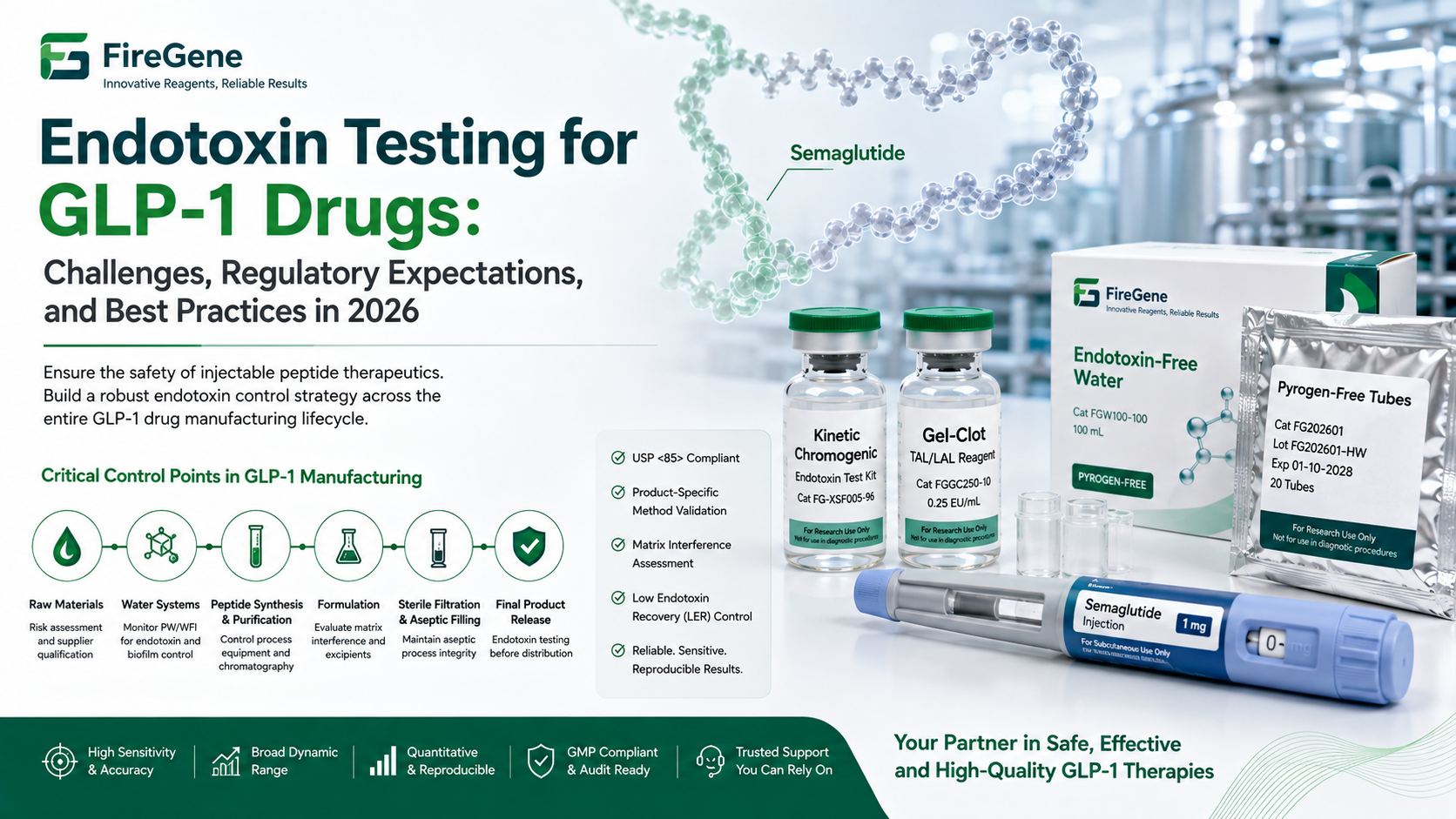
Critical Control Points Throughout GLP-1 Manufacturing
Successful endotoxin control begins long before the finished product reaches the quality control laboratory. Potential contamination sources exist throughout the manufacturing process, and each stage requires appropriate risk management.
Raw Materials
Many raw materials used in peptide manufacturing—including amino acids, synthesis reagents, excipients, formulation buffers, and pharmaceutical-grade water—may introduce endotoxins if supplier quality is not adequately controlled.
Best practices include:
- Supplier qualification
- Incoming material testing
- Vendor audits
- Risk-based raw material assessment
- Certificates of Analysis (CoAs) review
Peptide Synthesis and Purification
Whether peptides are produced by solid-phase peptide synthesis (SPPS) or recombinant expression systems, purification plays a critical role in reducing impurities.
Potential endotoxin sources include:
- Process water
- Equipment surfaces
- Chromatography systems
- Filtration assemblies
- Cleaning validation failures
Validated cleaning procedures and appropriate environmental controls help minimize contamination during this stage.
Pharmaceutical Water Systems
Water is extensively used during peptide synthesis, purification, equipment cleaning, formulation, and filling.
Poorly maintained Purified Water (PW) or Water for Injection (WFI) systems remain one of the most common sources of endotoxin contamination in pharmaceutical manufacturing.
Routine monitoring should include:
- Endotoxin testing
- Microbial monitoring
- Trending of water quality data
- Preventive maintenance and sanitization verification
Formulation Development
Modern GLP-1 formulations often contain carefully selected excipients that improve peptide stability, extend shelf life, and maintain biological activity.
These may include:
- Buffer systems
- Stabilizers
- Preservatives
- Tonicity agents
- Surfactants
Although essential for product performance, these formulation components may also influence endotoxin assay performance, making product-specific method validation particularly important.
Sterile Filtration and Aseptic Filling
During the final manufacturing stages, products undergo sterile filtration followed by aseptic filling into vials or injection pens.
Because endotoxins cannot be removed by sterile filtration, contamination introduced immediately before filling may remain in the finished product.
Consequently, validated depyrogenation procedures, aseptic process controls, and environmental monitoring remain essential throughout fill-finish operations.
Final Product Release
Before commercial release, GLP-1 drug products undergo comprehensive quality control testing that typically includes:
- Bacterial endotoxin testing
- Sterility testing
- Appearance
- Identity
- Potency
- Purity
- Particulate matter
- Stability assessments
Reliable endotoxin testing supports timely batch release while helping manufacturers meet regulatory expectations.
Common Analytical Challenges in GLP-1 Endotoxin Testing
Although bacterial endotoxin testing is well established, GLP-1 formulations can introduce product-specific analytical challenges.
The most common include:
Matrix Interference
Certain formulation components may inhibit or enhance the TAL/LAL enzymatic reaction, leading to inaccurate endotoxin measurements. Method suitability testing is essential to identify and mitigate these effects.
High Peptide Concentrations
Concentrated peptide formulations may increase viscosity or alter reaction conditions, affecting assay performance. Optimized dilution strategies within the Maximum Valid Dilution (MVD) help minimize these issues.
Low Endotoxin Recovery (LER)
Some peptide formulations containing surfactants or complex excipients may exhibit Low Endotoxin Recovery (LER), where measurable endotoxin decreases over time despite remaining physically present in the sample. Time-course recovery studies can help identify and manage this risk.
Method Validation
Each GLP-1 formulation should undergo product-specific validation, including method suitability testing, Positive Product Controls (PPCs), spike recovery studies, and verification of the Maximum Valid Dilution (MVD), rather than relying solely on previously validated methods.
Regulatory Expectations for Endotoxin Testing of GLP-1 Drugs
As the global demand for GLP-1 receptor agonists continues to rise, regulatory agencies are placing increasing emphasis on product quality, manufacturing consistency, and comprehensive risk management. Although no pharmacopeia contains a GLP-1-specific endotoxin chapter, injectable peptide products are expected to comply with the same bacterial endotoxin testing requirements that apply to other sterile injectable pharmaceuticals.
Manufacturers should establish endotoxin testing programs that are scientifically justified, product-specific, and fully documented throughout the product lifecycle.
Current regulatory expectations generally include:
- Compliance with USP <85> Bacterial Endotoxins Test
- Compliance with European Pharmacopoeia 2.6.14
- Product-specific method suitability testing
- Scientifically justified Maximum Valid Dilution (MVD)
- Positive Product Controls (PPCs)
- Method validation supported by recovery studies
- Investigation of unexpected or Out-of-Specification (OOS) results
- Ongoing monitoring through the Pharmaceutical Quality System (PQS)
Rather than relying solely on final product testing, regulators increasingly expect manufacturers to demonstrate effective endotoxin risk management throughout development, scale-up, process validation, and commercial manufacturing.
Choosing the Right Endotoxin Testing Method for GLP-1 Products
Selecting the most appropriate endotoxin testing method depends on product characteristics, manufacturing scale, laboratory throughput, and quality control objectives.
Gel-Clot TAL/LAL Method
The Gel-Clot assay remains the traditional compendial reference method for bacterial endotoxin testing.
Advantages include:
- Straightforward procedure
- Minimal instrumentation requirements
- Excellent regulatory acceptance
- Robust qualitative limit testing
- Cost-effective routine QC
For manufacturers performing relatively low testing volumes or pharmacopeial limit tests, Gel-Clot remains a practical option.
Kinetic Chromogenic TAL/LAL Method
As commercial production of GLP-1 drugs expands, many manufacturers are adopting Kinetic Chromogenic TAL/LAL assays because they offer several operational advantages.
Benefits include:
- Quantitative endotoxin determination
- High analytical sensitivity
- Broad dynamic range
- Automated data acquisition
- Reduced analyst subjectivity
- High-throughput 96-well plate analysis
- Improved data integrity for GMP laboratories
These characteristics make kinetic chromogenic assays particularly suitable for large-scale GLP-1 manufacturing facilities performing routine release testing and stability studies.
Best Practices for Reliable Endotoxin Testing in GLP-1 Manufacturing
Although manufacturing processes differ between peptide products, several best practices consistently improve analytical reliability and reduce laboratory investigations.
Perform Method Suitability Testing Early
Method suitability should be completed during analytical development rather than after commercial manufacturing begins.
Testing multiple dilution factors and evaluating Positive Product Controls (PPCs) allows laboratories to identify matrix interference before routine batch testing.
Validate Product-Specific Methods
Each GLP-1 formulation should undergo its own validation.
Even products containing the same active peptide may use different excipients, buffers, or stabilizers that influence endotoxin recovery.
Evaluate Low Endotoxin Recovery (LER)
Products containing surfactants or complex formulation systems should be evaluated for potential Low Endotoxin Recovery (LER).
Time-course recovery studies can identify gradual reductions in detectable endotoxin that may not be apparent during immediate spike recovery experiments.
Monitor Pharmaceutical Water Systems
Water remains one of the highest-risk sources of endotoxin contamination.
Routine monitoring of Purified Water (PW) and Water for Injection (WFI) systems should include:
- Endotoxin testing
- Microbial monitoring
- Trend analysis
- Sanitization verification
Maintaining high-quality pharmaceutical water significantly reduces contamination risk throughout manufacturing.
Standardize Laboratory Procedures
Reliable endotoxin testing depends on consistent laboratory execution.
Standard Operating Procedures should define:
- Reagent storage
- Sample preparation
- Pipetting technique
- Instrument qualification
- Plate layout
- Acceptance criteria
- Data review procedures
Regular analyst training and competency assessments further improve reproducibility.
Trend Data Continuously
Rather than investigating isolated analytical events, leading pharmaceutical manufacturers monitor long-term trends in:
- Positive Product Control recovery
- Spike recovery
- Standard curve performance
- Water system monitoring
- Environmental monitoring
- Product-specific endotoxin data
Trend analysis enables laboratories to identify emerging quality risks before they result in OOS investigations.
FireGene Solutions for GLP-1 Endotoxin Testing
Reliable bacterial endotoxin testing is essential throughout the development and commercial manufacturing of GLP-1 therapies. FireGene provides a complete portfolio of endotoxin testing solutions designed to support peptide manufacturers during analytical method development, validation, routine quality control, and regulatory compliance.
Our portfolio includes:
- Gel-Clot TAL/LAL Reagents for compendial qualitative testing
- Kinetic Chromogenic Endotoxin Test Kits for quantitative endotoxin analysis
- Control Standard Endotoxin (CSE) for recovery studies and Positive Product Controls
- Endotoxin-Free Water for reagent preparation and sample dilution
- Pyrogen-Free Tubes and Consumables to minimize laboratory contamination
Together, these products help laboratories improve analytical consistency, reduce repeat testing, and establish robust endotoxin testing workflows that support GMP manufacturing.
Technical Articles
- How to Validate an Endotoxin Test Method
-
Endotoxin Recovery Studies Explained
- Why Endotoxin Testing Fails During Method Suitability Testing
- Endotoxin Testing in Biopharmaceutical Manufacturing
- Endotoxin Testing for Monoclonal Antibody Manufacturing
Case Study: Optimizing Endotoxin Testing for a GLP-1 Drug Candidate
A pharmaceutical company developing a long-acting GLP-1 receptor agonist experienced inconsistent Positive Product Control (PPC) recovery during analytical validation. While system suitability criteria were consistently met, several product batches showed variable spike recovery after dilution.
The quality control laboratory initiated a structured investigation that included:
- Verification of reagent preparation and instrument calibration
- Review of pipetting procedures and analyst technique
- Evaluation of multiple dilution factors within the validated MVD
- Assessment of formulation components for potential matrix interference
- Additional recovery studies using freshly prepared and stored samples
The investigation identified formulation-specific matrix effects rather than reagent failure. By optimizing the sample dilution strategy and expanding method suitability testing, the laboratory achieved consistent recovery across validation batches.
The revised method supported successful validation and became the routine release assay for commercial manufacturing.
This case demonstrates that product-specific optimization is often the key to reliable endotoxin testing for peptide therapeutics.
Frequently Asked Questions (FAQ)
1. Why is endotoxin testing required for GLP-1 drugs?
GLP-1 receptor agonists are administered by injection, which means they bypass many of the body's natural defense mechanisms. Even trace amounts of bacterial endotoxins can trigger fever, inflammatory responses, hypotension, or other pyrogenic reactions. Therefore, bacterial endotoxin testing is an essential quality control requirement to ensure patient safety before product release.
2. What are the major sources of endotoxin contamination during GLP-1 manufacturing?
Potential sources of endotoxin contamination exist throughout the manufacturing process and may include:
- Raw materials and excipients
- Purified Water (PW) and Water for Injection (WFI)
- Peptide synthesis equipment
- Chromatography systems
- Filtration assemblies
- Manufacturing equipment surfaces
- Aseptic filling operations
- Laboratory consumables
A comprehensive contamination control strategy should address each of these potential risk points.
3. Can sterile GLP-1 products still contain endotoxins?
Yes.
Sterility testing confirms the absence of viable microorganisms, whereas endotoxin testing detects lipopolysaccharides (LPS) released from Gram-negative bacteria. A sterile product may still contain endotoxins if bacterial contamination occurred earlier in the manufacturing process or if endotoxins were introduced through raw materials or equipment.
4. What analytical challenges are unique to GLP-1 drugs?
Compared with conventional injectable drugs, GLP-1 formulations may present several analytical challenges, including:
- High peptide concentrations
- Complex formulation buffers
- Matrix interference
- Low Endotoxin Recovery (LER)
- Surfactant-containing formulations
- Product-specific recovery variability
These factors make comprehensive method validation and method suitability testing particularly important.
5. Why is method suitability testing important for peptide therapeutics?
Method suitability testing demonstrates that the selected TAL/LAL assay can accurately detect endotoxins in the presence of a specific product formulation. It verifies that inhibition or enhancement caused by the product matrix has been adequately addressed before routine quality control testing begins.
6. Should GLP-1 manufacturers evaluate Low Endotoxin Recovery (LER)?
Yes.
Although not every peptide formulation exhibits Low Endotoxin Recovery, products containing surfactants, stabilizers, or other complex excipients should be assessed for potential endotoxin masking during analytical method development. Time-course recovery studies can help identify product-specific LER risks.
7. Which endotoxin testing method is most suitable for GLP-1 manufacturing?
Both compendial methods are widely used.
- Gel-Clot TAL/LAL assays are appropriate for qualitative endotoxin limit testing and laboratories with lower testing volumes.
- Kinetic Chromogenic TAL/LAL assays provide quantitative endotoxin measurements, higher analytical sensitivity, automated calculations, and greater throughput, making them well suited for commercial GLP-1 manufacturing and routine QC laboratories.
The appropriate method should be selected based on product characteristics, laboratory workflow, and regulatory requirements.
8. How can manufacturers reduce endotoxin testing failures?
Several best practices can significantly improve testing reliability:
- Perform product-specific method validation
- Complete comprehensive method suitability testing
- Conduct endotoxin recovery studies
- Monitor Positive Product Controls (PPCs)
- Evaluate potential Low Endotoxin Recovery (LER)
- Standardize laboratory procedures
- Maintain pharmaceutical water systems
- Use qualified TAL/LAL reagents and endotoxin-free consumables
Together, these measures reduce analytical variability and minimize unnecessary repeat testing.
9. How often should endotoxin testing methods be reviewed?
Endotoxin methods should be re-evaluated whenever significant changes occur, including:
- Formulation modifications
- Manufacturing process changes
- Raw material changes
- Equipment replacement or qualification
- New analytical instrumentation
- Unexpected analytical trends or OOS investigations
Periodic review as part of lifecycle management helps ensure continued method suitability.
10. How does FireGene support GLP-1 manufacturers?
FireGene offers a complete bacterial endotoxin testing portfolio—including Gel-Clot TAL/LAL Reagents, Kinetic Chromogenic Endotoxin Test Kits, Control Standard Endotoxin (CSE), Endotoxin-Free Water, and Pyrogen-Free Consumables—to support method development, validation, recovery studies, routine quality control, and regulatory compliance throughout peptide drug manufacturing.
Key Takeaways
As GLP-1 receptor agonists continue to reshape the treatment of diabetes and obesity, manufacturers face increasing expectations to maintain the highest standards of product quality and patient safety. Because these therapies are administered by injection, reliable bacterial endotoxin control remains a critical component of every manufacturing and quality assurance program.
The key lessons from this guide include:
- Endotoxin risk should be managed throughout the entire GLP-1 manufacturing lifecycle, from raw material qualification to final product release.
- Product-specific method suitability testing is essential for identifying matrix interference before routine quality control testing begins.
- Recovery studies and Positive Product Controls (PPCs) help verify analytical accuracy and demonstrate reliable endotoxin detection.
- Manufacturers should evaluate the potential for Low Endotoxin Recovery (LER), particularly for formulations containing surfactants or other complex excipients.
- Routine monitoring of pharmaceutical water systems, validated cleaning procedures, and standardized laboratory practices significantly reduce contamination risk.
- Selecting high-quality TAL/LAL reagents and implementing continuous performance trending improve assay reproducibility, reduce Out-of-Specification (OOS) investigations, and strengthen GMP compliance.
By incorporating these best practices into daily operations, manufacturers can build robust endotoxin testing programs that support efficient production, regulatory compliance, and long-term product quality.
Conclusion
The rapid growth of GLP-1 receptor agonists has transformed injectable peptide manufacturing into one of the most dynamic areas of the pharmaceutical industry. Alongside increasing production capacity comes a greater responsibility to ensure that every product released to patients meets the highest standards for safety, quality, and consistency.
Effective bacterial endotoxin testing is a cornerstone of this effort. It requires far more than routine compendial testing—it demands a thorough understanding of potential contamination sources, formulation-specific analytical challenges, validated testing methods, and continuous quality monitoring. From pharmaceutical water systems and raw material qualification to method suitability testing, recovery studies, and lifecycle performance trending, every stage of the manufacturing process contributes to reliable endotoxin control.
As peptide formulations become increasingly sophisticated and regulatory expectations continue to evolve, manufacturers that adopt a proactive, science-based approach to endotoxin management will be better positioned to improve manufacturing efficiency, reduce analytical variability, accelerate batch release, and maintain global regulatory compliance.
With validated TAL/LAL methods, standardized laboratory workflows, and high-quality endotoxin testing reagents, pharmaceutical companies can establish a resilient quality control strategy that supports both commercial success and, most importantly, the delivery of safe and effective GLP-1 therapies to patients worldwide.
FireGene Endotoxin Testing
Ready to run your endotoxin assay?
FireGene offers a complete endotoxin testing toolkit — from TAL reagents and CSE standards to pyrogen-free consumables and LAL reagent water. All products are aligned with USP <85>, EP 2.6.14, and JP 4.01.


