
A Practical Guide to TAL/LAL Reagent Testing for Reliable Cell Culture, Immunology, and Protein Research
Recombinant proteins have become indispensable tools in modern life science research. Every day, laboratories around the world use recombinant cytokines, growth factors, enzymes, antibodies, and signaling proteins to investigate disease mechanisms, evaluate therapeutic candidates, and understand cellular responses.
From basic academic research to pharmaceutical development, recombinant proteins are widely used in applications such as:
- Cell culture
- Stem cell research
- Immunology
- Cancer biology
- Neuroscience
- Regenerative medicine
- Drug discovery
- Gene and cell therapy research
Researchers typically devote significant attention to protein purity, concentration, activity, and stability before beginning an experiment. Surprisingly, however, one critical quality attribute is often overlooked:
Endotoxin contamination.
Even trace amounts of bacterial endotoxin can profoundly alter cellular behavior, leading to misleading experimental results, poor reproducibility, and incorrect biological conclusions. In many cases, researchers attribute unexpected findings to protein function when the true cause is endotoxin introduced during recombinant protein production or purification.
As concerns over experimental reproducibility continue to grow, routine endotoxin testing has become an essential quality control step for laboratories working with recombinant proteins.
Whether performing macrophage activation studies, cytokine screening, T-cell assays, organoid culture, or stem cell differentiation, verifying endotoxin levels before introducing recombinant proteins into cell-based experiments is increasingly recognized as a scientific best practice.
The Hidden Variable Behind Many Cell-Based Assays
Imagine this scenario.
A laboratory purchases a recombinant cytokine from a reputable supplier. The certificate confirms high purity by SDS-PAGE, acceptable protein concentration, and verified biological activity.
The protein performs well in biochemical assays.
However, once added to cultured macrophages, the researchers observe:
- Unexpected cytokine secretion
- Increased inflammatory signaling
- NF-κB activation
- Elevated TNF-α expression
- Strong IL-6 production
The immediate conclusion may be that the recombinant protein possesses previously unknown biological activity.
But in reality, another explanation is often far more likely:
Endotoxin contamination.
Because many immune cells respond to picogram-to-nanogram quantities of endotoxin, even minimal contamination can dramatically influence experimental outcomes.
Without routine endotoxin testing, distinguishing genuine protein activity from endotoxin-induced responses becomes extremely difficult.
What Is Endotoxin?
Endotoxin, also known as lipopolysaccharide (LPS), is a structural component of the outer membrane of Gram-negative bacteria.
During bacterial growth, stress, or cell lysis, endotoxin is released into the surrounding environment.
Unlike living bacteria, endotoxin:
- Cannot be detected by sterility testing alone
- Remains biologically active after bacterial death
- Is highly resistant to heat
- Can survive many common laboratory purification procedures
Because recombinant proteins are frequently expressed in bacterial systems such as Escherichia coli, endotoxin contamination represents one of the most common quality concerns during protein production.
Even proteins purified to high chemical purity may still contain biologically significant levels of endotoxin.
Why Recombinant Proteins Are Particularly Vulnerable
Many recombinant proteins used in research are produced using bacterial expression systems because they offer:
- High protein yield
- Rapid production
- Low manufacturing cost
- Straightforward genetic manipulation
Among these, E. coli remains the most widely used host organism.
However, bacterial expression introduces an inherent challenge.
Since endotoxin is an integral component of the bacterial outer membrane, recombinant proteins can become contaminated during:
- Cell disruption
- Protein extraction
- Affinity purification
- Chromatographic separation
- Buffer exchange
- Final formulation
Although manufacturers employ endotoxin removal strategies, complete elimination is not always achieved.
Consequently, endotoxin testing should never be assumed unnecessary simply because a recombinant protein exhibits high analytical purity.
Why Protein Purity Does Not Guarantee Biological Purity
One of the most common misconceptions in research laboratories is that high protein purity automatically indicates suitability for sensitive cell-based assays.
In reality, analytical purity and biological purity measure entirely different characteristics.
For example:
A recombinant protein may demonstrate:
-
95% purity by SDS-PAGE
- Correct molecular weight
- High enzymatic activity
- Excellent chromatographic profile
Yet still contain endotoxin concentrations sufficient to activate immune signaling pathways.
Traditional protein characterization methods cannot detect endotoxin.
Only dedicated endotoxin testing using validated TAL/LAL Reagents can accurately determine whether a recombinant protein is suitable for endotoxin-sensitive applications.
For this reason, many research laboratories now include endotoxin testing as a routine quality control step before introducing recombinant proteins into any cell-based experiment.
Researchers seeking reliable Research Reagents often prioritize suppliers that provide endotoxin testing data alongside conventional protein characterization.
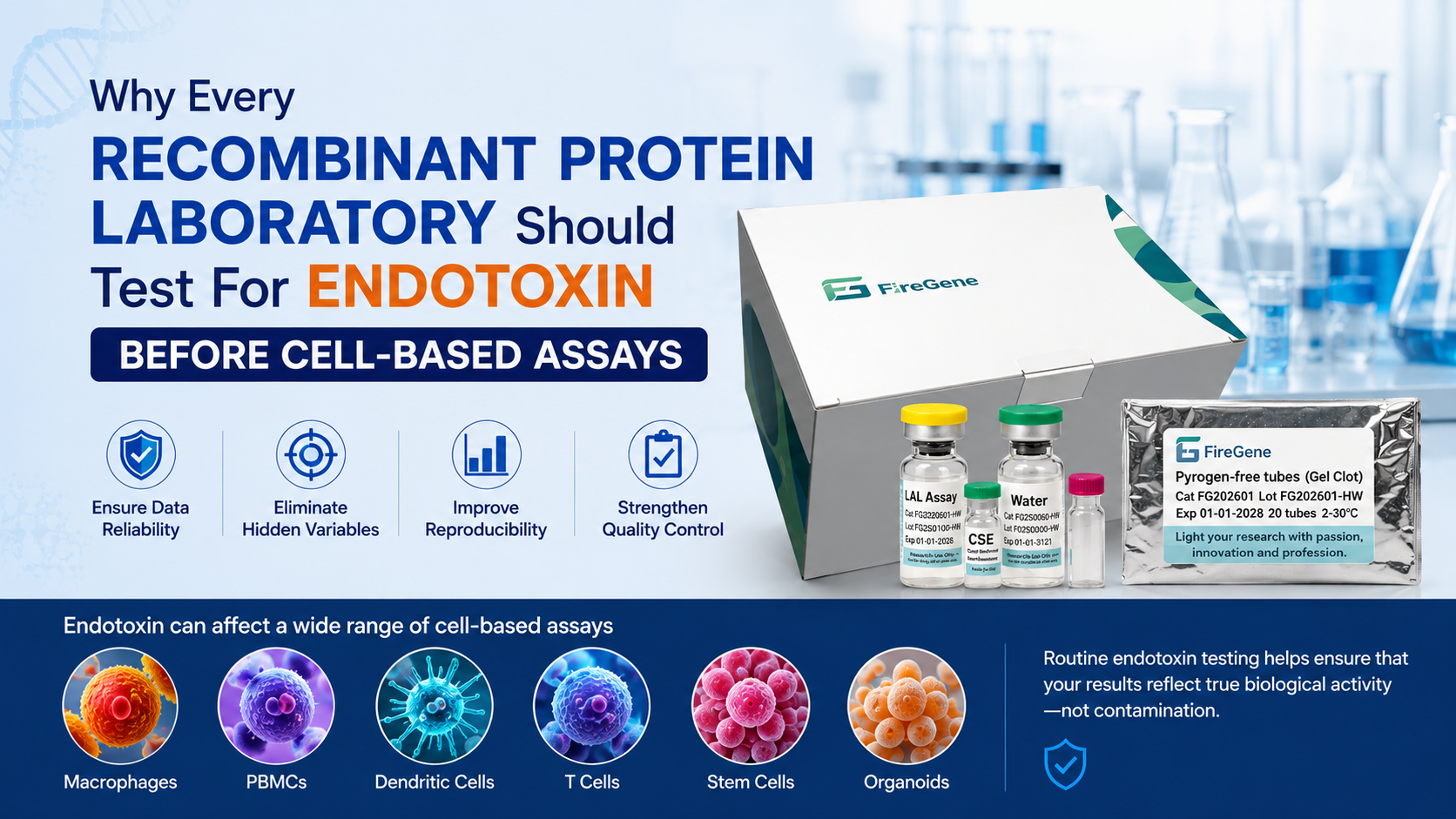
For laboratories requiring dependable endotoxin detection, FireGene offers a comprehensive portfolio of TAL/LAL Reagents, control standards, and supporting reagents designed for research and quality control applications.
Why Experimental Reproducibility Depends on Endotoxin Testing
In recent years, scientific journals have devoted increasing attention to the issue of experimental reproducibility.
Studies that cannot be reproduced waste valuable time, research funding, and biological materials.
Among the numerous variables contributing to irreproducible results—including cell line authentication, mycoplasma contamination, reagent variability, and culture conditions—endotoxin contamination has emerged as one of the most underrecognized factors.
Unlike visible contamination, endotoxin is invisible to the naked eye and cannot be identified through routine microscopy or standard microbiological culture.
Nevertheless, its biological effects can be profound.
Even extremely low endotoxin concentrations may influence:
- Cellular proliferation
- Apoptosis
- Cytokine production
- Immune activation
- Signal transduction
- Gene expression
- Protein phosphorylation
- Cellular differentiation
Without verifying endotoxin levels, researchers may unknowingly attribute these responses to the recombinant protein itself rather than to contaminating bacterial endotoxin.
This risk becomes even greater when comparing results across laboratories, where differences in recombinant protein suppliers, purification methods, or quality control standards may introduce varying endotoxin levels despite apparently identical experimental designs.
Why Routine Endotoxin Testing Is Becoming Standard Practice
Increasingly, leading research institutions, core facilities, and biotechnology companies now recommend routine endotoxin screening before recombinant proteins are used in sensitive biological assays.
Rather than viewing endotoxin testing as a regulatory requirement reserved for pharmaceutical manufacturing, many laboratories now recognize it as an essential component of good experimental design.
By incorporating TAL/LAL Reagent testing into routine quality control workflows, researchers can improve confidence in their data, reduce experimental variability, and generate findings that are more reproducible across studies and institutions.
How Endotoxin Alters Cell-Based Assays
One of the primary reasons endotoxin testing is essential before using recombinant proteins is that endotoxin itself is a highly potent biological stimulant.
Unlike many experimental compounds that require relatively high concentrations to elicit measurable effects, endotoxin can activate immune signaling pathways at extremely low levels. As a result, even trace contamination may influence experimental outcomes, particularly in assays involving immune or primary cells.
This creates a significant challenge for researchers.
When a recombinant protein induces cytokine release, activates inflammatory pathways, or alters cellular behavior, it can be difficult to determine whether these effects arise from the protein itself or from contaminating endotoxin.
Routine endotoxin testing helps eliminate this uncertainty and strengthens confidence in downstream biological conclusions.
Macrophages: The Cell Type Most Sensitive to Endotoxin
Macrophages are among the most widely used cell types in immunology, inflammation, infectious disease, and biomaterials research.
They are also among the most sensitive to endotoxin.
Lipopolysaccharide (LPS) is recognized by the TLR4–MD-2–CD14 receptor complex, rapidly activating intracellular signaling pathways that culminate in the nuclear translocation of NF-κB and activation of MAPK pathways. This signaling cascade drives the production of numerous pro-inflammatory mediators.
Typical responses include increased expression of:
- TNF-α
- IL-1β
- IL-6
- IL-12
- CXCL8
- MCP-1
- Nitric oxide synthase (iNOS)
If a recombinant cytokine or growth factor contains residual endotoxin, researchers may mistakenly conclude that the protein possesses immunostimulatory activity when the observed response is actually mediated by LPS.
This issue is particularly important when studying:
- Macrophage polarization (M1/M2)
- Innate immune activation
- Inflammatory signaling
- Biomaterial biocompatibility
- Vaccine adjuvant research
Without confirming endotoxin levels, experimental interpretations can easily become misleading.
PBMC Assays Are Equally Vulnerable
Peripheral blood mononuclear cells (PBMCs) remain one of the most frequently used primary cell models in translational research.
Because PBMC populations include monocytes, lymphocytes, dendritic cells, and other immune cells, they respond rapidly to bacterial endotoxin.
Common readouts influenced by endotoxin include:
- Cytokine secretion
- Cell proliferation
- Immune activation markers
- Flow cytometry phenotyping
- ELISA measurements
- Transcriptomic profiling
Researchers investigating novel recombinant proteins often attribute elevated cytokine production to the biological activity of the target molecule.
However, numerous publications have demonstrated that residual endotoxin—even at very low concentrations—can substantially alter PBMC responses.
Routine TAL/LAL Reagent testing provides a straightforward means of identifying this hidden variable before cell-based experiments begin.
Dendritic Cell Maturation Can Be Misinterpreted
Dendritic cells serve as professional antigen-presenting cells and play a central role in initiating adaptive immune responses.
Many laboratories evaluate recombinant proteins by measuring their ability to induce dendritic cell maturation.
Typical endpoints include:
- CD80 expression
- CD86 expression
- MHC II upregulation
- Cytokine secretion
- T-cell activation capacity
Unfortunately, endotoxin itself is a well-established inducer of dendritic cell maturation.
If recombinant proteins are not tested for endotoxin contamination, investigators may incorrectly conclude that a candidate therapeutic protein possesses immune-modulating properties.
This issue has become increasingly important in studies involving:
- Therapeutic antibodies
- Cancer immunotherapy
- Vaccine antigen development
- Cell therapy products
T Cell Studies May Also Be Affected
Although T lymphocytes do not respond to endotoxin as directly as macrophages, they are strongly influenced by accessory cells activated through endotoxin signaling.
Indirect effects may include:
- Altered T-cell proliferation
- Changes in cytokine production
- Modified activation marker expression
- Skewed helper T-cell differentiation
- Enhanced inflammatory responses
Consequently, endotoxin contamination can influence experiments involving:
- CAR-T research
- T-cell activation assays
- Immune checkpoint studies
- Adoptive cell therapy
- Autoimmune disease models
When recombinant cytokines such as IL-2, IL-7, IL-15, or IL-21 are used, confirming low endotoxin levels is considered good laboratory practice.
Stem Cell and Organoid Research Demand Even Greater Control
Stem cells are exceptionally sensitive to changes in their microenvironment.
Residual endotoxin may influence:
- Cell survival
- Self-renewal
- Differentiation efficiency
- Gene expression
- Morphological development
Similarly, organoid cultures often require prolonged incubation periods, during which even low endotoxin concentrations may produce cumulative biological effects.
As stem cell-derived organoids become increasingly important for disease modeling and drug discovery, many laboratories now routinely verify endotoxin levels before introducing recombinant growth factors into culture systems.
Which Recombinant Proteins Should Always Be Tested?
Although any bacterially expressed protein may contain residual endotoxin, certain categories deserve particular attention because they are frequently used in highly sensitive cell-based assays.
These include:
- Cytokines
- Growth factors
- Recombinant enzymes
- Chemokines
- Fc fusion proteins
- Recombinant antibodies
- Cas proteins used in gene editing
- Signaling proteins
- Extracellular matrix proteins
Whenever these proteins are intended for use with immune cells, stem cells, primary cells, or organoids, endotoxin testing should be considered a routine quality control step rather than an optional verification.
For laboratories seeking reliable Endotoxin Assay Reagents from a trusted Research Supplier, standardized TAL/LAL Reagent workflows provide a sensitive and widely accepted approach for detecting bacterial endotoxin before valuable biological experiments are performed.
Common Sources of Endotoxin During Recombinant Protein Production
Many researchers assume endotoxin contamination occurs only during bacterial expression. In reality, endotoxin may be introduced—or persist—throughout multiple stages of protein production.
Potential sources include:
Expression Host
Most recombinant proteins are produced in E. coli, where endotoxin is naturally present as part of the bacterial outer membrane.
Cell Lysis
Mechanical disruption or chemical lysis releases large amounts of endotoxin into the protein lysate.
Purification Process
Although affinity chromatography and other purification methods remove many contaminants, endotoxin molecules may remain associated with proteins through hydrophobic and electrostatic interactions.
Laboratory Consumables
Non-pyrogen-free tubes, pipette tips, water, or buffers may introduce additional endotoxin during sample preparation.
Storage and Handling
Repeated handling under non-controlled conditions may increase the risk of endotoxin contamination over time.
Because contamination can arise from multiple sources, relying solely on manufacturing processes is insufficient. Independent verification using validated endotoxin assays provides an additional layer of confidence before proteins are used in sensitive biological applications.
For this reason, many laboratories now incorporate TAL/LAL Reagent testing into their standard incoming quality control procedures for recombinant proteins purchased from commercial suppliers.
Acceptable Endotoxin Levels for Common Cell-Based Assays
One of the most common questions researchers ask is:
"What endotoxin level is considered acceptable for recombinant proteins used in cell-based assays?"
The answer is not as straightforward as many expect.
Unlike pharmaceutical products, which are evaluated against pharmacopoeial endotoxin limits based on patient exposure, research applications do not have a universal endotoxin specification. The acceptable level depends on multiple experimental variables, including:
- Cell type
- Protein concentration
- Exposure time
- Experimental endpoint
- Sensitivity of the signaling pathway being investigated
- Intended biological application
For this reason, researchers should avoid relying on a single "acceptable" endotoxin value for all recombinant proteins.
Instead, endotoxin levels should be evaluated within the context of the specific biological assay.
Different Cell Types Respond Differently to Endotoxin
One of the biggest challenges in recombinant protein research is that cellular sensitivity to endotoxin varies dramatically between experimental models.
Some cell types respond to extremely low endotoxin concentrations, while others exhibit little measurable response under similar conditions.
For example:
| Cell Type | Relative Sensitivity to Endotoxin | Typical Recommendation |
|---|---|---|
| Macrophages | Very High | Verify endotoxin levels before every experiment. |
| PBMCs | Very High | Routine endotoxin testing is strongly recommended. |
| Dendritic Cells | Very High | Endotoxin testing should be considered essential. |
| Monocytes | Very High | Confirm low endotoxin before functional assays. |
| Stem Cells | High | Minimize endotoxin to reduce effects on differentiation. |
| Organoids | Moderate to High | Test recombinant growth factors before long-term culture. |
| Fibroblasts | Moderate | Evaluate based on experimental objectives. |
| HEK293 / CHO Cell Lines | Generally Lower | Testing remains good practice, particularly for signaling studies. |
Rather than applying a single threshold across all experiments, researchers should consider the biological sensitivity of their specific model system.
Why a "Safe" Endotoxin Level Does Not Exist
A recombinant protein containing an endotoxin concentration that produces no measurable response in one experimental model may still alter results in another.
For example:
- A recombinant growth factor may perform normally in a robust immortalized cell line but induce measurable inflammatory signaling in primary macrophages.
- Residual endotoxin that has little effect during a short-term proliferation assay may influence gene expression during a multi-day stem cell differentiation experiment.
- Long-term organoid cultures may accumulate subtle biological changes following repeated exposure to recombinant proteins containing low levels of endotoxin.
These examples illustrate why there is no universally "safe" endotoxin concentration for research applications.
Instead, the acceptable endotoxin level should always be determined in relation to:
- The sensitivity of the target cell type
- The concentration of recombinant protein used
- The duration of exposure
- The biological endpoint under investigation
- Internal laboratory quality standards
Build Endotoxin Specifications Around Your Experimental Goals
Rather than asking,
"What endotoxin level is acceptable?"
a more useful question is:
"What endotoxin level can my experimental system tolerate without influencing the biological outcome?"
For highly endotoxin-sensitive studies—including macrophage activation, PBMC stimulation, dendritic cell maturation, stem cell differentiation, and organoid culture—many laboratories adopt stringent internal quality control procedures and routinely verify recombinant proteins before use.
This approach reduces experimental variability, improves reproducibility, and helps ensure that observed biological responses reflect the activity of the recombinant protein itself rather than unintended endotoxin contamination.
For laboratories performing routine quality control, validated TAL/LAL Reagents provide a reliable and widely accepted method for evaluating endotoxin levels before recombinant proteins are introduced into sensitive cell-based assays.
Select Recombinant Protein
│
▼
Identify Target Cell Type
│
▼
Assess Endotoxin Sensitivity
│
▼
Perform TAL/LAL Endotoxin Testing
│
▼
Evaluate Results Based on Experimental Context
│
▼
Proceed with Cell-Based Assays
Why Routine Endotoxin Testing Should Be Part of Every Recombinant Protein QC Workflow
Many research laboratories invest considerable effort in validating recombinant proteins before experimental use. Typical quality control parameters include:
- Protein purity
- Molecular weight
- Protein concentration
- Biological activity
- Sterility
- Storage stability
However, endotoxin testing is still omitted in many research workflows, particularly in academic laboratories where regulatory requirements may not apply.
This represents a significant gap in experimental quality control.
Unlike pharmaceutical manufacturing, research laboratories often purchase recombinant proteins from multiple suppliers. Even when two products are labeled as identical, differences in expression systems, purification strategies, and manufacturing quality controls can result in markedly different endotoxin levels.
Routine TAL/LAL Reagent testing helps standardize incoming quality control, ensuring that recombinant proteins meet acceptable endotoxin specifications before they are introduced into sensitive cell-based assays.
Rather than serving as a regulatory requirement, endotoxin testing should be viewed as a practical strategy for improving data reliability and reducing experimental variability.
When Should Recombinant Proteins Be Tested?
Although not every experiment requires endotoxin testing, several situations warrant routine screening.
Endotoxin testing is strongly recommended before recombinant proteins are used in:
- Primary immune cell cultures
- PBMC assays
- Macrophage activation studies
- Dendritic cell experiments
- Stem cell differentiation
- Organoid culture
- Cytokine screening
- Gene editing workflows
- Cell therapy research
- Animal injection studies
For experiments involving robust immortalized cell lines that are relatively insensitive to endotoxin, the impact may be less pronounced. However, as research increasingly focuses on primary cells and physiologically relevant models, verifying endotoxin levels becomes progressively more important.
Choosing the Right TAL/LAL Reagent for Research Applications
Several validated methods are available for bacterial endotoxin detection. The most appropriate assay depends on the sensitivity requirements, sample throughput, and laboratory workflow.
Gel-Clot TAL/LAL Assay
The Gel-Clot method remains one of the most widely recognized qualitative endotoxin assays.
Advantages include:
- Simple workflow
- No specialized instrumentation required
- Cost-effective
- Suitable for routine laboratory screening
- Pharmacopoeia-recognized methodology
This approach is particularly useful for laboratories performing incoming quality control on recombinant proteins before routine cell culture experiments.
Kinetic Chromogenic TAL/LAL Assay
For laboratories requiring quantitative endotoxin measurements, the Kinetic Chromogenic assay provides higher sensitivity and broader analytical capability.
Typical advantages include:
- Quantitative results
- Wide dynamic range
- Automated data acquisition
- Higher throughput
- Excellent reproducibility
It is well suited for:
- Biotechnology companies
- Core facilities
- Contract research organizations (CROs)
- Pharmaceutical development laboratories
- Research groups processing large numbers of recombinant protein samples
Selecting the appropriate TAL/LAL Reagent allows laboratories to match assay performance with experimental requirements while maintaining confidence in downstream biological data.
For laboratories establishing standardized endotoxin testing procedures, FireGene provides a complete portfolio of Endotoxin Assay Reagents & Kits, including Gel-Clot and Kinetic Chromogenic formats, together with supporting reagents such as Control Standard Endotoxin (CSE), Endotoxin Assay Water, and pyrogen-free consumables.
A Practical Endotoxin Testing Workflow for Recombinant Protein Laboratories
Implementing endotoxin testing does not need to complicate existing laboratory procedures. A straightforward quality control workflow can substantially improve confidence in experimental results.
Receive Recombinant Protein
           │
           ▼
Review COA and Storage Conditions
           │
           ▼
Prepare Sample Under Pyrogen-Free Conditions
           │
           ▼
Perform Endotoxin Testing
(Gel-Clot or Kinetic Chromogenic TAL/LAL Assay)
           │
           ▼
Evaluate Endotoxin Level
           │
     ┌─────┴─────┐
     │           │
Acceptable   Above Specification
     │           │
     ▼           ▼
Proceed to   Re-purify, Replace,
Cell-Based   or Reject Sample
Assays
This workflow is especially valuable when laboratories receive recombinant proteins from new suppliers or compare proteins produced in different expression systems.
Best Practices for Reducing Endotoxin-Related Experimental Variability
In addition to routine testing, several practical measures can further reduce the risk of endotoxin-related artifacts.
Purchase Research Reagents from Reputable Suppliers
Choose suppliers that provide transparent quality documentation, including endotoxin specifications whenever possible.
Handle Samples Using Pyrogen-Free Materials
Use certified endotoxin-free water, tubes, pipette tips, and other consumables to minimize the risk of introducing contamination during sample preparation.
Avoid Repeated Freeze–Thaw Cycles
While freeze–thawing does not destroy endotoxin, repeated handling increases opportunities for sample contamination and may compromise protein stability.
Test New Lots
Even when purchasing the same recombinant protein from the same supplier, endotoxin levels may vary between production batches. Testing representative samples from each new lot helps maintain consistency.
Document Endotoxin Results
Recording endotoxin measurements alongside protein concentration, activity, and storage information creates a more complete quality control record and simplifies troubleshooting if unexpected experimental results occur.
Why FireGene Supports Reliable Endotoxin Testing
Reliable endotoxin testing depends not only on the assay itself but also on the consistency of the reagents used.
FireGene's Endotoxin Assay Reagents & Kits are designed to support laboratories performing bacterial endotoxin testing across research and quality control applications. The collection includes:
- TAL/LAL Reagents for Gel-Clot assays
- Kinetic Chromogenic TAL/LAL Reagents
- Control Standard Endotoxin (CSE)
- Endotoxin Assay Water
- Pyrogen-free consumables
- Supporting accessories for routine endotoxin analysis
Whether your laboratory is evaluating recombinant cytokines, therapeutic antibodies, growth factors, enzymes, or other research proteins, incorporating a validated endotoxin testing workflow can improve experimental reproducibility and strengthen confidence in biological conclusions.
Frequently Asked Questions (FAQ)
1. Why should recombinant proteins be tested for endotoxin before cell-based assays?
Even highly purified recombinant proteins may contain residual endotoxin originating from bacterial expression systems or introduced during purification and handling. Endotoxin can activate inflammatory signaling pathways, alter gene expression, and affect cell viability, potentially leading to misleading experimental conclusions. Routine endotoxin testing helps ensure that observed cellular responses are attributable to the recombinant protein itself rather than contaminating bacterial endotoxin.
2. Which recombinant proteins are most susceptible to endotoxin contamination?
Any bacterially expressed recombinant protein may contain endotoxin. However, testing is particularly important for:
- Recombinant cytokines
- Growth factors
- Chemokines
- Recombinant antibodies
- Enzymes
- Fc fusion proteins
- CRISPR-associated proteins
- Signaling proteins
- Extracellular matrix proteins
These proteins are frequently used in highly endotoxin-sensitive biological assays.
3. Which cell types are most sensitive to endotoxin?
Several commonly used experimental models exhibit strong responses to endotoxin exposure, including:
- Macrophages
- Peripheral blood mononuclear cells (PBMCs)
- Dendritic cells
- Monocytes
- Microglia
- Stem cells
- Organoids
Because these cells readily activate inflammatory signaling pathways, even low endotoxin concentrations may influence experimental outcomes.
4. Is sterility testing sufficient to detect endotoxin contamination?
No.
Sterility testing determines whether viable microorganisms are present but does not detect bacterial endotoxin. Endotoxin may remain biologically active even after bacteria have been eliminated.
Dedicated bacterial endotoxin testing using validated TAL/LAL Reagents is required to determine endotoxin levels accurately.
5. Which endotoxin testing method is recommended for recombinant proteins?
The appropriate assay depends on laboratory requirements.
- Gel-Clot TAL/LAL Assays are well suited for routine qualitative screening and incoming quality control.
- Kinetic Chromogenic TAL/LAL Assays provide quantitative measurements with greater sensitivity and are ideal for higher-throughput laboratories or projects requiring precise endotoxin quantification.
6. Can endotoxin influence non-immune cell experiments?
Yes.
Although immune cells exhibit the strongest responses, endotoxin may also affect:
- Stem cell differentiation
- Fibroblast behavior
- Endothelial cells
- Organoid development
- Neuronal cultures
- Mesenchymal stem cells
The extent of these effects depends on both endotoxin concentration and cell type.
7. Should every new recombinant protein lot be tested?
Whenever feasible, yes.
Endotoxin levels may vary between manufacturing batches due to differences in expression, purification, and handling. Testing representative samples from each new lot improves consistency and reduces experimental variability.
8. Why are TAL/LAL Reagents still considered the gold standard for bacterial endotoxin testing?
Pharmacopoeial TAL/LAL Reagent methods remain among the most widely accepted approaches for bacterial endotoxin detection because they offer:
- High sensitivity
- Excellent specificity
- Standardized methodologies
- Broad acceptance in research and pharmaceutical quality control
These characteristics make them valuable tools for laboratories seeking reliable endotoxin detection before performing sensitive biological experiments.
Conclusion
Recombinant proteins have become fundamental tools in modern biomedical research, supporting discoveries across immunology, oncology, neuroscience, regenerative medicine, and drug development.
Yet even the highest-quality recombinant protein can generate misleading experimental results if endotoxin contamination is overlooked.
Residual endotoxin has the potential to activate inflammatory signaling, alter immune cell behavior, influence stem cell differentiation, and confound transcriptomic, proteomic, and functional analyses. These unintended biological effects contribute to experimental variability and may ultimately compromise the reproducibility of published research.
Fortunately, this hidden variable is both measurable and manageable.
By incorporating routine endotoxin testing into recombinant protein quality control workflows, laboratories can identify contamination before valuable experiments begin. Whether using qualitative Gel-Clot assays or quantitative Kinetic Chromogenic assays, validated TAL/LAL Reagents provide researchers with a practical and reliable approach to verifying sample quality.
As the scientific community places increasing emphasis on reproducibility and data integrity, endotoxin testing should no longer be viewed solely as a pharmaceutical quality control requirement. Instead, it should be recognized as a fundamental component of good laboratory practice for any research involving recombinant proteins and cell-based assays.
FireGene Endotoxin Assay Reagents & Kits
FireGene offers a comprehensive portfolio of Endotoxin Assay Reagents & Kits designed to support reliable bacterial endotoxin testing across research laboratories, biotechnology companies, CROs, and pharmaceutical quality control environments.
Our product portfolio includes:
- Gel-Clot TAL/LAL Reagents
- Kinetic Chromogenic TAL/LAL Reagents
- Control Standard Endotoxin (CSE)
- Endotoxin Assay Water
- Pyrogen-Free Consumables
- Complete Endotoxin Testing Solutions
Whether your laboratory performs routine recombinant protein quality control, evaluates biologics, develops cell therapies, or conducts immunological research, FireGene provides dependable endotoxin testing solutions to help improve experimental reproducibility and confidence in biological data.
Learn more about FireGene's Endotoxin Assay Reagents & Kits:
https://firegene.com/collections/endotoxin-assay-reagents-and-kits
References
- Petsch D, Anspach FB. Endotoxin removal from protein solutions. Journal of Biotechnology. 2000;76(2–3):97–119. https://doi.org/10.1016/S0168-1656(99)00185-6
- Magalhães PO, et al. Methods of endotoxin removal from biological preparations: a review. Journal of Pharmacy & Pharmaceutical Sciences. 2007;10(3):388–404.
- Rietschel ET, et al. Bacterial endotoxin: molecular relationships of structure to activity and function. FASEB Journal. 1994;8(2):217–225.
- Lu YC, Yeh WC, Ohashi PS. LPS/TLR4 signal transduction pathway. Cytokine. 2008;42(2):145–151.
- Park BS, Lee JO. Recognition of lipopolysaccharide pattern by TLR4 complexes. Experimental & Molecular Medicine. 2013;45:e66.
- USP General Chapter <85> Bacterial Endotoxins Test. United States Pharmacopeia.
- European Pharmacopoeia 2.6.14. Bacterial Endotoxins.
- FDA Guidance for Industry: Pyrogen and Endotoxins Testing—Questions and Answers. U.S. Food and Drug Administration.
- Rosano GL, Ceccarelli EA. Recombinant protein expression in Escherichia coli: advances and challenges. Frontiers in Microbiology. 2014;5:172.
- Current Protocols in Protein Science. Endotoxin Detection and Removal in Recombinant Protein Preparations. (Current Protocols series; consult the latest edition for updated methods.)
FireGene Endotoxin Testing
Ready to run your endotoxin assay?
FireGene offers a complete endotoxin testing toolkit — from TAL reagents and CSE standards to pyrogen-free consumables and LAL reagent water. All products are aligned with USP <85>, EP 2.6.14, and JP 4.01.


