
Introduction: The Growing Need for Efficient Mouse PBMC Isolation
In modern immunology and biomedical research, high-quality immune cell preparation is essential for obtaining reliable experimental results. Mouse models remain one of the most widely used platforms for studying immune responses, inflammation, cancer biology, infectious diseases, and therapeutic development. However, isolating peripheral blood mononuclear cells (PBMCs), especially lymphocyte populations, from mouse blood can be challenging due to limited sample volume, low circulating immune cell numbers, and the complexity of blood components.
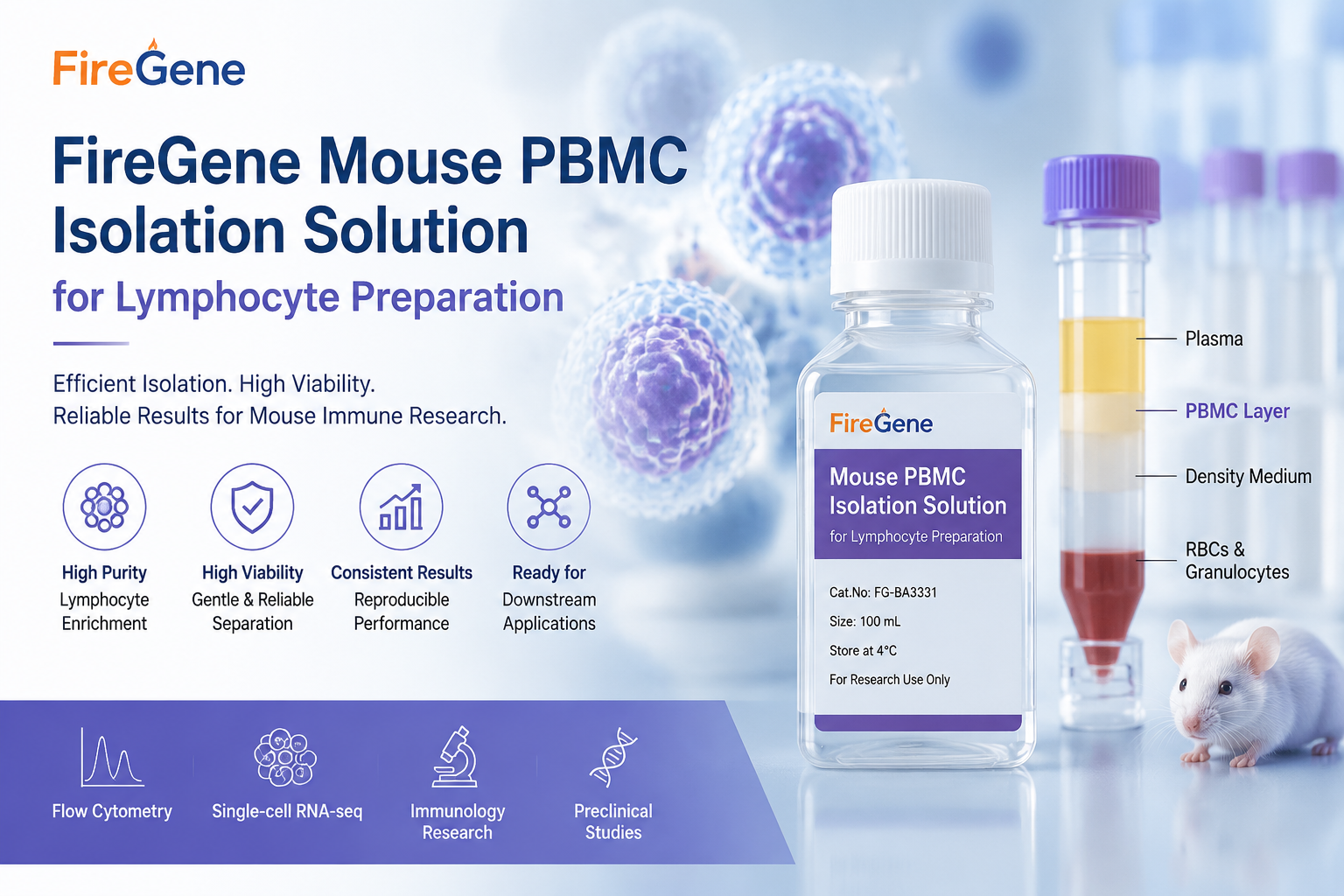
The FireGene Mouse PBMC Isolation Solution is designed to simplify mouse lymphocyte preparation by providing an efficient density-based separation method for obtaining viable, purified mononuclear cell populations. This solution enables researchers to prepare high-quality mouse PBMC samples suitable for flow cytometry, single-cell RNA sequencing (scRNA-seq), immune profiling, and other downstream applications.
As research increasingly moves toward precision immunology and single-cell analysis, standardized and reliable mouse PBMC isolation methods are becoming critical tools in laboratories worldwide.
What Are Mouse PBMCs and Why Are They Important?
Peripheral blood mononuclear cells (PBMCs) are blood cells containing a single round nucleus. In mice, PBMC populations primarily include:
T lymphocytes
B lymphocytes
Natural killer (NK) cells
Monocytes
Other immune-related mononuclear cell subsets
These cells play essential roles in immune surveillance, inflammation regulation, and disease progression.
Mouse PBMC isolation is widely used in research areas such as:
Cancer immunology
Autoimmune disease studies
Vaccine development
Infection models
Immunotherapy research
Drug response evaluation
Single-cell immune profiling
Obtaining a clean and viable PBMC population is the first step toward accurate immune characterization.
Challenges in Mouse Lymphocyte Preparation
Although PBMC isolation is a common laboratory procedure, mouse blood samples present unique challenges compared with human blood.

1. Limited Blood Volume
Laboratory mice provide relatively small blood samples compared with human donors. Low sample availability makes it important to maximize cell recovery while minimizing cell loss during preparation.
2. Low Frequency of Circulating PBMCs
Compared with humans, mice often have lower levels of circulating mononuclear cells. Efficient separation technology is therefore needed to enrich immune cell populations effectively.
3. Complex Blood Composition
Whole blood contains multiple cell types, including:
Red blood cells (RBCs)
Granulocytes
Platelets
Lymphocytes
Monocytes
Removing unwanted components while maintaining immune cell viability is essential for downstream analysis.
4. Sensitivity of Single-Cell Applications
Modern technologies such as scRNA-seq require high-quality single-cell suspensions. Poor sample preparation can lead to:
Increased cell debris
Reduced viability
Lower sequencing quality
Difficult data interpretation
A reliable mouse PBMC isolation solution helps overcome these challenges.
How FireGene Mouse PBMC Isolation Solution Works
FireGene Mouse PBMC Isolation Solution utilizes a density-based separation principle to separate blood components according to their different densities.
During centrifugation, blood components naturally separate into layers:
Plasma layer
Mononuclear cell layer containing lymphocytes and monocytes
Density medium layer
Red blood cells and granulocytes
The enriched PBMC layer can then be collected, washed, and prepared for experimental analysis.
This approach provides researchers with a convenient method for generating mouse lymphocyte-enriched cell suspensions while reducing contamination from unwanted blood components.
Key Features of FireGene Mouse PBMC Isolation Solution
1. Optimized for Mouse Immune Cell Isolation
Mouse blood differs significantly from human blood in cellular composition and immune characteristics. FireGene Mouse PBMC Isolation Solution is developed specifically for mouse samples, helping researchers achieve consistent lymphocyte preparation results.
2. High-Quality Cell Preparation
The solution supports the preparation of:
Viable lymphocyte populations
Mononuclear immune cell fractions
Clean single-cell suspensions
High-quality cell preparation improves the reliability of downstream experiments.
3. Compatible with Multiple Research Applications
Prepared mouse PBMCs can be used for various applications, including:
Flow Cytometry
Researchers can analyze:
T-cell subsets
B-cell populations
NK cells
Immune activation markers
Surface protein expression
Single-Cell RNA Sequencing
High-quality PBMC isolation is essential for:
Immune cell clustering
Gene expression profiling
Cell-type identification
Immune pathway analysis
Cell Culture and Functional Assays
Isolated immune cells can support:
Stimulation experiments
Cytokine analysis
Immune response studies
Preclinical Drug Research
Mouse PBMC preparation helps evaluate:
Immunomodulatory drug effects
Treatment-induced immune changes
Disease-associated immune alterations
Applications of Mouse PBMC Isolation in Biomedical Research

Cancer Immunology Research
The tumor microenvironment is strongly influenced by immune cell interactions. Mouse PBMC isolation enables researchers to investigate:
Circulating immune changes during tumor development
Immune activation after therapy
Immune checkpoint responses
Cancer vaccine strategies
Autoimmune Disease Studies
Many autoimmune disorders involve abnormal immune regulation. Mouse lymphocyte preparation supports research into:
T-cell activation pathways
B-cell responses
Cytokine signaling
Inflammatory mechanisms
Infectious Disease Models
Mouse PBMC analysis provides insights into:
Host immune responses
Immune cell recruitment
Pathogen-induced inflammation
Immunotherapy Development
With the expansion of immunotherapies, researchers increasingly require accurate immune profiling tools. Mouse PBMC isolation helps evaluate immune responses during:
Antibody therapy studies
Cellular therapy research
Immune checkpoint inhibitor development
Advantages of Using FireGene Mouse PBMC Isolation Solution
Compared with traditional manual separation methods, FireGene Mouse PBMC Isolation Solution offers several benefits:
Standardized Workflow
A consistent isolation method reduces experimental variation between researchers and experiments.
Improved Sample Quality
Efficient separation helps maintain cell integrity and supports reliable downstream analysis.
Broad Compatibility
The isolated cells can be applied across multiple platforms, from conventional immunology experiments to advanced single-cell technologies.
Time-Efficient Preparation
A streamlined workflow allows researchers to focus more on biological analysis rather than troubleshooting cell preparation.
Supporting the Future of Single-Cell Immune Research
Single-cell technologies are transforming biomedical research by allowing scientists to examine immune cells at unprecedented resolution. However, successful single-cell analysis depends heavily on the quality of the starting material.
High-quality mouse PBMC isolation enables researchers to:
Identify rare immune cell populations
Discover new immune signatures
Understand disease mechanisms
Develop targeted therapies
As demand for precision immune profiling continues to grow, reliable mouse lymphocyte preparation solutions will remain essential components of research workflows.
Conclusion
The FireGene Mouse PBMC Isolation Solution for Lymphocyte Preparation provides researchers with an efficient and reliable approach for isolating mouse peripheral blood mononuclear cells. By supporting the generation of high-quality immune cell suspensions, this solution enables advanced applications including flow cytometry, single-cell RNA sequencing, immunology studies, and preclinical research.
For laboratories conducting mouse immune research, cancer studies, autoimmune investigations, or drug development programs, a dependable PBMC isolation workflow is a critical foundation for generating accurate and reproducible scientific data.


