
Introduction: Understanding the Role of Endotoxins in Microbiology
Endotoxins are among the most important biological components studied in microbiology, immunology, pharmaceutical research, and biotechnology. These molecules are closely associated with Gram-negative bacteria and play a critical role in bacterial physiology, host–microbe interactions, inflammation, and immune responses.
In microbiological research, endotoxins are not only considered markers of bacterial contamination but also valuable tools for studying microbial pathogenicity, immune activation, and therapeutic safety. Understanding endotoxin detection methods and endotoxin removal strategies is essential for researchers working with bacterial cultures, recombinant proteins, vaccines, cell-based assays, and biopharmaceutical products.
This article explores the significance of endotoxins in microbiology, commonly used endotoxin detection techniques, and approaches for effective endotoxin removal.
What Are Endotoxins?
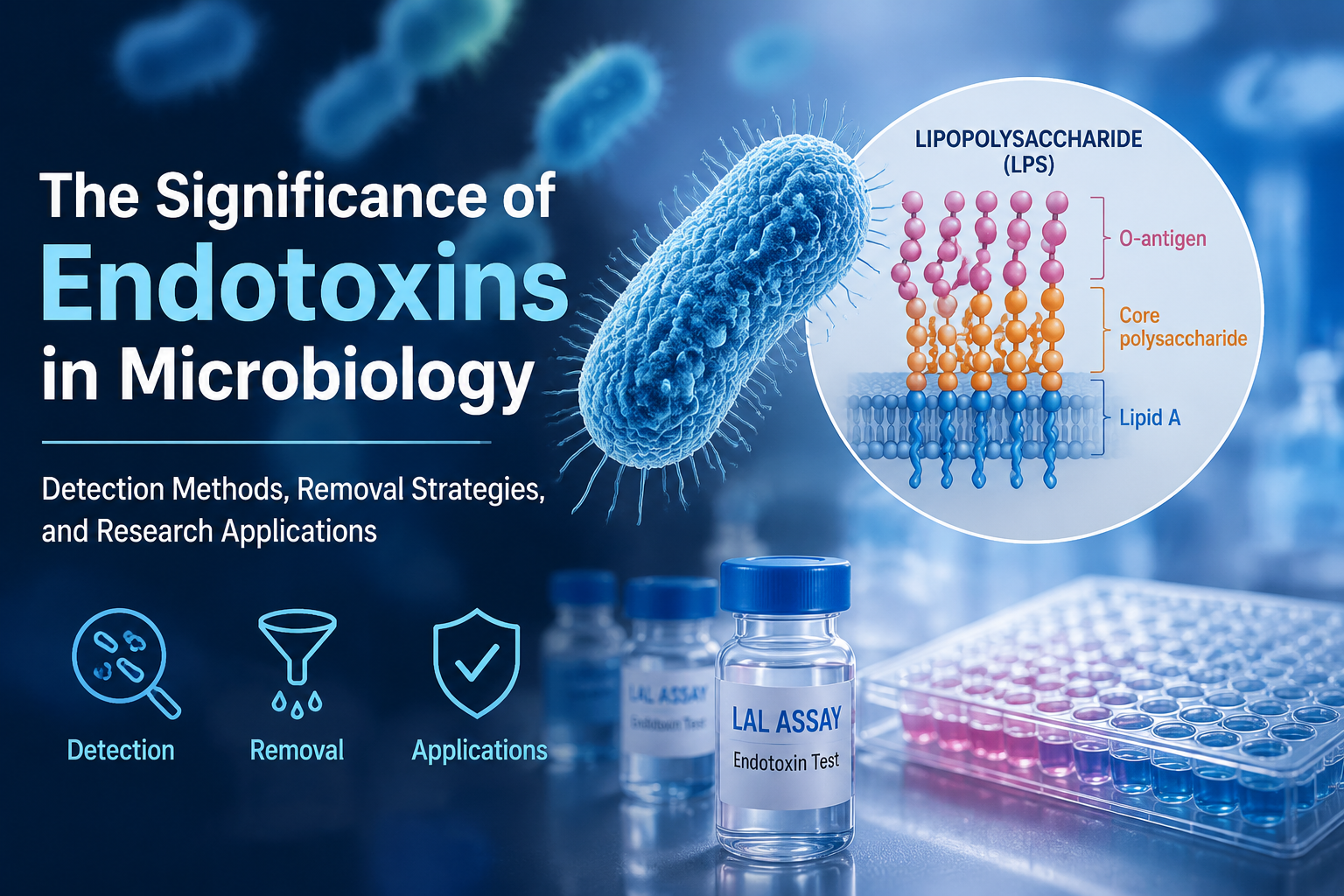
Endotoxins are lipopolysaccharides (LPS) located in the outer membrane of Gram-negative bacteria. Unlike exotoxins, which are actively secreted bacterial proteins, endotoxins are structural components released primarily when bacterial cells undergo lysis or membrane disruption.
An endotoxin molecule consists of three major regions:
· Lipid A: The biologically active component responsible for immune stimulation
· Core polysaccharide: A conserved region connecting lipid A and O-antigen
· O-antigen: A variable polysaccharide region contributing to bacterial strain diversity
When endotoxins enter mammalian systems, they can activate immune pathways through Toll-like receptor 4 (TLR4) signaling, leading to the production of inflammatory cytokines such as:
· Tumor necrosis factor-alpha (TNF-α)
· Interleukin-1β (IL-1β)
· Interleukin-6 (IL-6)
At high concentrations, endotoxins may cause severe inflammatory responses, fever, septic shock, and tissue damage.
Why Are Endotoxins Important in Microbiology?
1. Understanding Bacterial Pathogenesis
Endotoxins are fundamental to understanding how Gram-negative bacteria interact with their hosts.
Many clinically important bacteria produce endotoxins, including:
· Escherichia coli
· Salmonella species
· Pseudomonas aeruginosa
· Klebsiella pneumoniae
· Neisseria meningitidis
Microbiologists study endotoxins to investigate:
· Bacterial virulence mechanisms
· Host immune responses
· Inflammatory pathways
· Disease progression
By analyzing endotoxin activity, researchers can better understand bacterial infection mechanisms and develop improved antimicrobial strategies.
2. Monitoring Microbial Contamination
Endotoxin detection is widely used as an indicator of bacterial contamination.
Even after bacterial cells are eliminated through sterilization, endotoxins may remain because LPS molecules are relatively heat-stable. Therefore, detecting endotoxins provides information beyond traditional microbial culture testing.
Important applications include:
· Pharmaceutical quality control
· Vaccine production
· Cell therapy manufacturing
· Laboratory reagent testing
· Medical device safety evaluation
3. Ensuring Safety of Biopharmaceutical Products
In biotechnology and pharmaceutical manufacturing, endotoxin contamination is a major concern.
Products that require strict endotoxin control include:
· Recombinant proteins
· Monoclonal antibodies
· Injectable drugs
· Gene therapy products
· Cell culture reagents
Even trace amounts of endotoxin can affect:
· Cell viability
· Experimental reproducibility
· Immune response studies
· Clinical safety
Therefore, endotoxin testing has become an essential quality control step in modern microbiology and biotechnology.
Common Methods for Endotoxin Detection
Several analytical methods have been developed to detect and quantify endotoxins. The choice of method depends on sample type, sensitivity requirements, and research objectives.
1. Limulus Amebocyte Lysate (LAL) Assay
The Limulus Amebocyte Lysate (LAL) assay is the most widely used endotoxin detection method.
The principle is based on the immune response of horseshoe crab blood cells (Limulus polyphemus) to bacterial endotoxin.
When endotoxin is present, it activates a coagulation cascade that produces measurable signals.
Three major LAL formats are available:
Gel-Clot Method
The gel-clot assay is a qualitative or semi-quantitative method.
Advantages:
· Simple operation
· Low equipment requirements
· High reliability
Limitations:
· Lower sensitivity compared with quantitative methods
· Provides limited numerical information
Turbidimetric LAL Assay
This method measures changes in solution turbidity caused by endotoxin-induced clot formation.
Advantages:
· Quantitative measurement
· Suitable for automated analysis
· Useful for larger sample volumes
Chromogenic LAL Assay
The chromogenic method detects endotoxin by measuring color development produced during enzymatic reactions.
Advantages:
· High sensitivity
· Quantitative results
· Suitable for pharmaceutical applications
2. Recombinant Factor C (rFC) Assay
The recombinant Factor C assay is a newer endotoxin detection technology based on a synthetic version of the horseshoe crab coagulation pathway.
Benefits include:
· No dependence on animal-derived materials
· High specificity for endotoxin
· Improved sustainability
· Reduced interference from some samples
The rFC assay is increasingly used in microbiology and pharmaceutical quality testing.
3. Mass Spectrometry-Based Detection
Advanced analytical techniques such as mass spectrometry can identify LPS structures and lipid A components.
Applications include:
· Bacterial classification
· Structural analysis of endotoxins
· Research on bacterial evolution
· Host–pathogen interaction studies
Although highly powerful, these methods generally require specialized equipment and technical expertise.
4. Cell-Based Endotoxin Detection Assays
Cell-based assays evaluate biological activity rather than only endotoxin concentration.
Examples include:
· Macrophage activation assays
· Cytokine release assays
· TLR4 reporter systems
These methods are valuable for studying:
· Immune activation mechanisms
· Inflammatory signaling
· Biological effects of endotoxins
Challenges in Endotoxin Detection
Although endotoxin detection technologies are advanced, several challenges remain.

1. Sample Interference
Certain substances can affect endotoxin assays, including:
· Proteins
· Detergents
· Buffers
· Chelating agents
Proper sample preparation is essential to avoid false results.
2. Low-Level Detection Requirements
Many biological products require extremely low endotoxin levels. Therefore, highly sensitive detection methods are necessary.
3. Differentiating Endotoxin Activity
Different bacterial species may produce structurally different LPS molecules, which can influence biological activity.
Understanding endotoxin structure remains an important research area.
Endotoxin Removal Strategies
Removing endotoxins is essential in microbiology, recombinant protein purification, and pharmaceutical development.
Several approaches are commonly used.
1. Ultrafiltration
Ultrafiltration separates endotoxin molecules based on size differences.
Advantages:
· Simple operation
· Scalable
· Compatible with many biological samples
Limitations:
· May not completely remove endotoxins
· Possible loss of target proteins
2. Chromatographic Removal
Chromatography is one of the most effective endotoxin removal methods.
Common approaches include:
Anion Exchange Chromatography
Endotoxin molecules carry strong negative charges, allowing separation based on charge interactions.
Affinity Chromatography
Specialized endotoxin-binding materials selectively capture LPS molecules.
Advantages:
· High removal efficiency
· Suitable for protein purification
3. Activated Carbon and Adsorption Methods
Adsorbent materials can bind endotoxins through hydrophobic and electrostatic interactions.
Applications include:
· Water purification
· Buffer preparation
· Laboratory reagent cleaning
4. Detergent-Based Removal
Nonionic detergents can disrupt endotoxin structures and improve removal efficiency.
This method is sometimes used during purification processes but requires careful optimization to prevent damage to target molecules.
5. Endotoxin Removal Kits
Commercial endotoxin removal kits are widely used in research laboratories.
They are designed for:
· Recombinant protein purification
· DNA preparation
· Antibody production
· Cell culture applications
Advantages:
· Easy operation
· High reproducibility
· Suitable for small-scale experiments
The Role of Endotoxin Control in Modern Microbiology
Effective endotoxin control improves the accuracy and reliability of microbiological research.
In Cell Biology Research
Endotoxin contamination can alter:
· Cell signaling pathways
· Gene expression profiles
· Cytokine production
· Cell differentiation
Therefore, endotoxin-free reagents are essential for cell culture experiments.
In Molecular Biology
DNA and protein preparations from bacterial systems may contain endotoxin residues.
Removing endotoxin improves:
· Transfection efficiency
· Protein activity analysis
· Downstream experimental accuracy
In Vaccine and Drug Development
Endotoxin testing ensures that biological products meet safety requirements before clinical application.
It supports:
· Regulatory compliance
· Product quality control
· Patient safety
Future Perspectives of Endotoxin Research
As microbiology continues to advance, endotoxin research is expanding into new areas:
Microbiome Studies
Researchers are investigating how bacterial LPS influences:
· Gut microbiota interactions
· Immune regulation
· Chronic inflammation
Immunotherapy Research
Endotoxin signaling pathways provide insights into:
· Immune activation
· Cancer immunology
· Inflammatory diseases
Advanced Biotechnology
New endotoxin detection platforms are being developed with:
· Higher sensitivity
· Faster analysis
· Improved sustainability
Conclusion
Endotoxins are a central topic in microbiology because they connect bacterial biology, immune responses, biotechnology, and pharmaceutical safety. As components of Gram-negative bacterial membranes, endotoxins provide important insights into microbial structure and pathogenic mechanisms.
Accurate endotoxin detection methods, including LAL assays, recombinant Factor C assays, and advanced analytical technologies, allow researchers to monitor contamination and study biological activity. Meanwhile, effective endotoxin removal strategies, such as chromatography, ultrafiltration, adsorption, and specialized purification kits, help maintain experimental reliability and product safety.
With the continued growth of biotechnology, immunology, and microbiome research, endotoxin analysis and control will remain essential tools in modern microbiological research.


