
Introduction
Accurate endotoxin testing is one of the most critical quality control activities in pharmaceutical manufacturing. Whether producing injectable drugs, biologics, vaccines, medical devices, or cell therapy products, manufacturers must demonstrate that their products meet regulatory endotoxin limits before release.
However, one common misconception persists in many laboratories:
Purchasing a validated endotoxin test kit does not automatically validate the test method for your product.
Every pharmaceutical formulation has a unique composition. Buffers, surfactants, preservatives, proteins, salts, excipients, and even the manufacturing process itself can interfere with the Limulus Amebocyte Lysate (LAL) or Tachypleus Amebocyte Lysate (TAL) reaction. Without verifying that the analytical method performs correctly in the presence of the sample matrix, laboratories risk reporting false-negative or false-positive results.
For this reason, USP <85> Bacterial Endotoxins Test requires laboratories to perform Method Suitability Testing (also known as inhibition/enhancement testing) before routine endotoxin testing begins. The purpose is simple: to demonstrate that the selected assay accurately detects endotoxin in the specific product being tested.
A properly validated endotoxin test method provides confidence that:
- The product matrix does not inhibit the LAL/TAL reaction.
- The sample does not artificially enhance the response.
- The assay can recover known amounts of endotoxin within acceptable limits.
- Routine release testing generates reliable and reproducible results.
Failure to validate the method can lead to unnecessary investigations, batch delays, regulatory observations, and, in the worst cases, the release of contaminated products.
This guide explains the complete validation workflow required under USP <85>, including how to perform Method Suitability Testing, interpret Positive Product Control (PPC) results, identify common causes of validation failure, and implement practical troubleshooting strategies. Whether your laboratory uses the Gel-Clot, Kinetic Chromogenic, or Kinetic Turbidimetric method, the principles discussed here apply to all compendial bacterial endotoxin testing methods.
Why Method Validation Is Required
One of the most important concepts in endotoxin testing is that the analytical method is validated for the sample—not merely for the reagent.
Commercial TAL/LAL reagents undergo extensive quality control before release. Manufacturers verify reagent sensitivity, endotoxin potency, linearity, and performance according to pharmacopeial requirements. Nevertheless, these characteristics only demonstrate that the reagent functions correctly under standardized conditions.
Real pharmaceutical samples present a much greater analytical challenge.
Different formulations may contain:
- Surfactants such as polysorbates
- Chelating agents including EDTA or citrate
- High concentrations of proteins
- Organic solvents
- Highly acidic or alkaline buffers
- High ionic strength solutions
- Viscous biological matrices
Each of these components can alter the enzymatic cascade responsible for endotoxin detection. Some suppress the clotting or chromogenic reaction, while others accelerate it, producing artificially elevated results.
As a result, USP <85> requires evidence that the analytical procedure performs accurately in the presence of the product matrix before routine testing is performed.
Method validation answers one essential question:
Can this assay accurately detect endotoxin in this specific pharmaceutical product?
If the answer is yes, the laboratory can proceed confidently with routine testing. If not, adjustments such as dilution, pH modification, or alternative sample preparation must be implemented before release testing.
Understanding USP <85> Method Suitability Testing
Method Suitability Testing is the cornerstone of endotoxin method validation. It is sometimes referred to as:
- Product interference testing
- Inhibition/enhancement testing
- PPC validation
- Recovery testing
Although the terminology varies, the objective remains identical: demonstrate that the sample neither inhibits nor enhances endotoxin detection.
The basic strategy is straightforward.
First, the laboratory analyzes the product without adding endotoxin. This establishes the background endotoxin level present in the sample.
Next, an identical aliquot of the product is spiked with a known amount of Control Standard Endotoxin (CSE). If the assay is functioning correctly, the measured endotoxin concentration should closely match the amount added.
According to USP <85>, the recovery of the added endotoxin should generally fall within 50% to 200% of the expected value. Recovery within this range indicates that the sample matrix does not significantly interfere with the assay.
Results outside this range suggest inhibition or enhancement and require investigation before the method can be considered suitable for routine testing.
Unlike routine product testing, Method Suitability Testing is not designed to determine whether a batch passes or fails endotoxin specifications. Instead, it demonstrates that the analytical method itself is capable of producing accurate measurements.
In other words:
Routine Testing asks: "Is endotoxin present?"
Method Suitability asks: "Can this assay accurately detect endotoxin if it is present?"
These are fundamentally different questions, and confusing the two is one of the most common causes of failed endotoxin investigations.
Step 1: Determine the Endotoxin Limit (EL)
Before selecting an assay or preparing samples, laboratories must establish the Endotoxin Limit (EL) for the product. This limit defines the maximum allowable endotoxin concentration based on the product's intended clinical use and route of administration.
Under USP <85>, the endotoxin limit is generally calculated using:
EL = K / M
Where:
- K is the threshold pyrogenic dose defined by pharmacopeial guidance for the specific route of administration.
- M is the maximum dose of product administered per kilogram of body weight within one hour.
The calculated EL serves as the foundation for all subsequent validation activities. It is used to determine the Maximum Valid Dilution (MVD), establish assay sensitivity requirements, and evaluate whether measured endotoxin levels are acceptable for product release.
Because EL depends on clinical dosing and administration route, it is product-specific. A method validated for one injectable formulation cannot automatically be applied to another product with a different dosage regimen or composition.
Step 2: Calculate the Maximum Valid Dilution (MVD)
Once the Endotoxin Limit (EL) has been established, the next critical step is determining the Maximum Valid Dilution (MVD).
The MVD defines the greatest allowable dilution at which a product can still be tested while remaining capable of detecting endotoxin at the required regulatory limit. In practice, it provides laboratories with the flexibility to dilute samples to reduce matrix interference without compromising the assay's sensitivity.
This concept is especially important because dilution is the simplest and most effective strategy for overcoming product inhibition. However, excessive dilution may reduce endotoxin concentrations below the assay's detection capability, leading to false-negative results.
USP <85> defines the MVD using the following equation:
MVD = (Endotoxin Limit × Sample Concentration) ÷ λ
Where:
- Endotoxin Limit (EL) is the maximum allowable endotoxin concentration for the product.
- Sample Concentration is the concentration of the product as tested.
- λ (Lambda) is the labeled sensitivity of the TAL/LAL reagent.
For example, if a product has an endotoxin limit of 5 EU/mL and the laboratory uses a kinetic chromogenic reagent with a sensitivity of 0.05 EU/mL, the maximum valid dilution is 100-fold. This means the sample may be diluted up to 1:100 while still allowing the assay to detect endotoxin at the required limit.
Understanding MVD is essential for two reasons:
- It defines the highest permissible dilution during routine testing.
- It helps laboratories optimize sample preparation when interference is encountered.
Many laboratories mistakenly assume that if inhibition is observed, they can continue increasing the dilution indefinitely until acceptable recoveries are achieved. This approach is not compliant with USP <85>. Any dilution used during method validation or routine testing must remain at or below the calculated MVD.
Whenever possible, laboratories should identify the lowest dilution that eliminates interference while maintaining acceptable recovery. Lower dilution factors generally provide better analytical sensitivity and reduce the likelihood of missing low-level endotoxin contamination.
Step 3: Select the Appropriate Endotoxin Test Method
USP <85> recognizes three primary compendial methods for bacterial endotoxin testing:
- Gel-Clot Method
- Kinetic Chromogenic Method
- Kinetic Turbidimetric Method
Each method detects endotoxin through the same biological clotting cascade but differs in how the reaction is measured.
Gel-Clot Method
The Gel-Clot assay is the original compendial endotoxin test and remains widely accepted for routine quality control. It provides a simple positive-or-negative result based on clot formation after incubation.
Advantages include:
- Lowest equipment requirements
- Straightforward validation
- Excellent robustness
- Suitable for low-throughput laboratories
However, because the endpoint is visual rather than quantitative, Gel-Clot testing is less suitable when precise endotoxin concentrations are required.
Kinetic Chromogenic Method
The Kinetic Chromogenic assay measures the enzymatic cleavage of a synthetic chromogenic substrate, producing a yellow color that is monitored continuously at 405 nm.
Compared with Gel-Clot testing, this method offers:
- Higher sensitivity
- Broad quantitative range
- Automated analysis
- Objective data interpretation
- Higher sample throughput
For modern pharmaceutical quality control laboratories, particularly those performing routine release testing of biologics, vaccines, and injectable drugs, kinetic chromogenic assays have become one of the most widely adopted methods.
Kinetic Turbidimetric Method
The Kinetic Turbidimetric assay monitors increasing turbidity as the clotting reaction progresses.
It provides quantitative results similar to chromogenic assays but is generally more susceptible to interference from naturally turbid or opaque samples.
Choosing the Right Method
The optimal method depends on several factors:
- Regulatory requirements
- Product type
- Expected endotoxin concentration
- Sample clarity
- Laboratory throughput
- Available instrumentation
Regardless of the analytical platform selected, the same method suitability requirements apply. Every product must demonstrate acceptable recovery before routine testing can begin.
Step 4: Prepare Controls for Method Suitability Testing
Accurate validation depends on carefully prepared controls. Controls verify not only the performance of the reagent but also the integrity of the entire analytical procedure.
A typical validation experiment includes the following components.
Negative Water Control
The Negative Water Control consists of endotoxin-free water processed exactly like the test samples.
Its purpose is to verify that:
- Glassware is pyrogen-free.
- Pipettes are not contaminated.
- Reagents remain free from environmental endotoxin.
- Laboratory technique has not introduced contamination.
Any detectable endotoxin in the negative control invalidates the test and requires investigation before proceeding.
Product Sample
The unspiked product sample establishes the background endotoxin level naturally present in the formulation.
This result serves as the baseline when interpreting recovery in the Positive Product Control.
Positive Water Control (PWC)
The Positive Water Control contains endotoxin-free water spiked with a known amount of Control Standard Endotoxin (CSE).
This control demonstrates that:
- The reagent is functioning correctly.
- The endotoxin standard has been prepared accurately.
- Instrument performance is acceptable.
- The calibration curve is valid.
Poor recovery in the Positive Water Control usually indicates problems with reagent preparation, pipetting accuracy, or standard dilution rather than product interference.
Positive Product Control (PPC)
The Positive Product Control is the most important component of method validation.
It consists of:
Product Sample + Known Endotoxin Spike
The PPC answers one critical question:
Can this specific product recover a known amount of endotoxin?
After analysis, the measured endotoxin concentration is compared with the expected value.
USP <85> generally considers recoveries between 50% and 200% acceptable.
Values below 50% suggest inhibition.
Values above 200% suggest enhancement.
Because the PPC directly evaluates product interference, it forms the scientific basis for determining whether the analytical method is suitable for routine testing.
Step 5: Perform Method Suitability Testing
Once all controls have been prepared, the laboratory can begin Method Suitability Testing.
Although specific operating procedures differ depending on whether Gel-Clot, Kinetic Chromogenic, or Kinetic Turbidimetric assays are used, the overall validation workflow remains essentially the same.
A typical validation process includes the following steps:
1. Prepare the Endotoxin Standard
Reconstitute the Control Standard Endotoxin (CSE) according to the manufacturer's instructions.
Mix thoroughly without excessive vortexing, which may introduce bubbles and affect pipetting accuracy.
Prepare all serial dilutions using endotoxin-free water and calibrated pipettes.
Serial dilution should always be performed stepwise rather than by making a single large dilution. Improper dilution technique is one of the most common causes of failed validation experiments.
2. Prepare Product Dilutions
Dilute the product as required while remaining within the calculated Maximum Valid Dilution (MVD).
If the product is expected to exhibit inhibition, multiple dilution levels (for example, 1:2, 1:5, 1:10, and 1:20) may be evaluated during method development to determine the minimum dilution that eliminates interference.
3. Spike the Positive Product Control
Add the appropriate endotoxin spike to the designated PPC sample.
The spike concentration should comply with USP <85> recommendations and be appropriate for the sensitivity of the assay being used.
Careful pipetting technique is essential, as even small volumetric errors can significantly affect recovery calculations.
4. Run the Assay
Perform the endotoxin assay according to the manufacturer's validated instructions.
For kinetic chromogenic assays, ensure that:
- The microplate reader is maintained at 37 ± 1°C.
- Absorbance is monitored at 405 nm.
- Kinetic readings are collected at the recommended intervals.
- Calibration standards meet acceptance criteria before sample results are interpreted.
For Gel-Clot assays, strict adherence to incubation time and careful interpretation of clot formation are equally important to ensure reliable results.
5. Calculate Recovery
After the assay is complete, compare the measured endotoxin concentration in the PPC with the known amount of endotoxin added.
Recovery is typically calculated using the following equation:
Recovery (%) = (Measured Spike Recovery ÷ Expected Spike Value) × 100
This recovery value determines whether the product matrix interferes with endotoxin detection and ultimately establishes whether the analytical method is suitable for routine use.
At this stage, the validation process reaches its most critical decision point: interpreting recovery results. Understanding whether a recovery value indicates acceptable performance, inhibition, or enhancement is essential for ensuring compliance with USP <85> and will be discussed in the next section.
Step 6: Interpret Recovery Results Correctly
Completing the assay is only half of the validation process. The true objective of Method Suitability Testing is to determine whether the assay accurately detects endotoxin in the presence of the product matrix.
This evaluation is based primarily on the Positive Product Control (PPC) recovery.
During the PPC experiment, a known amount of Control Standard Endotoxin (CSE) is added to the product sample. After testing, the laboratory compares the measured endotoxin concentration with the amount originally spiked into the sample.
The recovery percentage reflects how effectively the assay detects endotoxin in that specific product formulation.
According to USP <85>, the recovered endotoxin should generally fall within 50% to 200% of the expected spike value. Recovery within this range indicates that the product matrix does not significantly interfere with the assay, and the method can be considered suitable for routine endotoxin testing.
It is important to understand that the 50–200% criterion is not an arbitrary acceptance limit. It acknowledges the inherent biological variability of lysate-based assays while ensuring that the method remains sufficiently accurate for pharmaceutical quality control.
Recovery values should be interpreted as follows:
Recovery Between 50% and 200%
This is the desired outcome.
It demonstrates that:
- The sample matrix does not significantly inhibit the TAL/LAL reaction.
- No meaningful enhancement of the enzymatic cascade is observed.
- The analytical method is suitable for routine testing of the product.
- Routine batch release testing may proceed using the validated procedure.
No further corrective action is typically required unless other system suitability criteria fail.
Recovery Below 50% — Evidence of Inhibition
Recovery below 50% indicates that less endotoxin was detected than was actually present. This suggests that one or more components of the sample matrix are suppressing the TAL/LAL reaction.
This is the most common reason for Method Suitability Test failure.
Typical causes include:
- Chelating agents (e.g., EDTA, citrate)
- High concentrations of proteins
- Surfactants such as polysorbate 20 or polysorbate 80
- High salt concentrations
- Extreme pH conditions
- Organic solvents
- Certain antimicrobial preservatives
Inhibition is particularly concerning because it can produce false-negative results, potentially allowing endotoxin-contaminated products to pass release testing undetected.
Recovery Above 200% — Evidence of Enhancement
Although less common, recovery values exceeding 200% indicate that the assay is detecting more endotoxin than was actually added.
Enhancement may result from:
- Matrix components accelerating the enzymatic cascade
- Optical interference in chromogenic assays
- Turbid or colored samples affecting absorbance measurements
- Sample constituents that increase reaction kinetics
Enhancement can produce false-positive results, leading to unnecessary investigations, batch rejection, and increased manufacturing costs.
Why Recovery Matters More Than the Measured Endotoxin Value
One of the most common misconceptions among new analysts is assuming that a low measured endotoxin concentration automatically means the product passes testing.
In reality, a low endotoxin result has little value if the method itself cannot reliably detect endotoxin in that product.
Consider the following example:
A biologic formulation contains surfactants that inhibit the TAL/LAL reaction. The laboratory measures an endotoxin level below the specification limit and initially concludes that the batch passes. However, the PPC recovery is only 28%.
This result demonstrates that more than 70% of the spiked endotoxin was not detected because of matrix interference. Under these conditions, the apparently acceptable endotoxin result cannot be trusted, and the method must be optimized before the product can be released.
For this reason, regulatory agencies place significant emphasis on method suitability rather than simply reviewing final endotoxin values.
Common Reasons Method Validation Fails
A failed Method Suitability Test does not necessarily indicate poor reagent quality. In most cases, the underlying issue lies in sample preparation, product characteristics, or laboratory technique.
Understanding the most common causes of validation failure can help laboratories resolve problems more efficiently and reduce costly repeat testing.
1. Product Matrix Inhibition
This is by far the most frequent cause of failed validation.
Many pharmaceutical formulations contain ingredients that interfere with the enzymatic cascade responsible for endotoxin detection.
Examples include:
- Monoclonal antibodies
- Plasma-derived proteins
- Lipid nanoparticles
- Liposomal formulations
- Vaccines
- Cell and gene therapy products
- Highly concentrated protein solutions
As biologic therapies become increasingly complex, matrix inhibition has become one of the greatest challenges in endotoxin testing.
2. Incorrect Sample Dilution
Dilution is often used to minimize interference, but it must be applied carefully.
Common mistakes include:
- Exceeding the calculated Maximum Valid Dilution (MVD)
- Using inconsistent dilution factors between validation and routine testing
- Preparing inaccurate serial dilutions
- Skipping intermediate dilution steps
These errors can reduce assay sensitivity or introduce significant variability, compromising the reliability of recovery data.
3. Improper Preparation of Control Standard Endotoxin (CSE)
The endotoxin standard is the foundation of the entire validation process.
Problems frequently arise when:
- The CSE is not fully reconstituted.
- Serial dilutions are prepared incorrectly.
- Standards are stored beyond the recommended time.
- Pipetting errors occur during preparation.
- Standards are mixed too vigorously, creating bubbles and affecting volume accuracy.
Even small inaccuracies in CSE preparation can significantly alter recovery calculations and lead to false conclusions about method suitability.
4. Poor Pipetting Technique
Endotoxin assays require exceptionally precise liquid handling.
Common operator errors include:
- Pipetting volumes too quickly
- Inconsistent pipetting angles
- Failure to pre-wet pipette tips
- Reusing tips when not appropriate
- Inadequate mixing after dilution
- Using uncalibrated pipettes
Because the assay often measures endotoxin at picogram-equivalent levels, even minor volumetric deviations can noticeably impact recovery results.
5. Temperature Control Issues
All compendial TAL/LAL assays depend on a carefully controlled enzymatic reaction.
The recommended incubation temperature is typically 37 ± 1°C.
Poor temperature control can slow or accelerate the clotting cascade, resulting in altered reaction times, reduced reproducibility, and inconsistent recovery values.
Laboratories should routinely verify incubator or microplate reader temperature performance as part of their equipment qualification program.
6. Contaminated Laboratory Consumables
Environmental endotoxin contamination remains a persistent source of analytical error.
Potential contamination sources include:
- Non-pyrogen-free tubes
- Standard laboratory glassware
- Pipette tips not certified as endotoxin-free
- Reagent reservoirs
- Water systems
- Airborne dust in uncontrolled laboratory environments
Using certified endotoxin-free consumables is essential for minimizing background contamination and ensuring reliable validation results.
7. Instrument-Related Problems
For kinetic chromogenic and kinetic turbidimetric assays, instrument performance is just as important as reagent quality.
Potential issues include:
- Incorrect wavelength settings
- Poor optical calibration
- Inadequate temperature regulation
- Dirty microplate optics
- Software configuration errors
- Delayed kinetic measurements
Routine instrument qualification, preventive maintenance, and performance verification should be integrated into every laboratory's quality management system.
Troubleshooting Guide: How to Fix Failed Method Suitability Tests
Even experienced pharmaceutical quality control laboratories occasionally encounter failed Method Suitability Tests. Fortunately, most validation failures can be resolved through a systematic investigation rather than by repeating the assay multiple times.
The key is to identify why the recovery falls outside the acceptable range before making changes to the testing procedure.
A structured troubleshooting approach not only saves time and resources but also demonstrates good laboratory practice during regulatory inspections.
Below is a practical workflow commonly used in pharmaceutical QC laboratories.
Step 1: Confirm That the Assay System Is Performing Properly
Before investigating the product itself, verify that the assay system is functioning correctly.
Review the following:
- Did the standard curve meet all acceptance criteria?
- Was the Negative Water Control free of detectable endotoxin?
- Did the Positive Water Control recover within the expected range?
- Were the reagents within their expiration date?
- Were the TAL/LAL reagents reconstituted according to the manufacturer's instructions?
- Were Control Standard Endotoxin (CSE) solutions prepared correctly using stepwise serial dilutions?
- Were pipettes calibrated and functioning properly?
If any of these system suitability criteria fail, repeating the experiment with fresh reagents and properly prepared standards is usually the first corrective action.
Only after confirming that the analytical system is performing correctly should the laboratory investigate product-specific interference.
Step 2: Determine Whether the Problem Is Inhibition or Enhancement
The recovery result provides the first clue.
Recovery Below 50%
This almost always indicates sample inhibition.
The product matrix is preventing endotoxin from fully activating the TAL/LAL enzymatic cascade.
Common inhibitory components include:
- Chelating agents (EDTA, citrate)
- High protein concentrations
- Detergents
- Organic solvents
- High ionic strength buffers
- Extreme pH
Recovery Above 200%
This generally indicates sample enhancement.
Possible causes include:
- Optical interference
- Colored formulations
- Turbid suspensions
- Matrix components accelerating the enzymatic reaction
- Improper blank correction
Understanding whether the issue is inhibition or enhancement allows laboratories to select the most appropriate corrective action instead of relying on trial and error.
Step 3: Increase Sample Dilution (Within the MVD)
For most products, sample dilution is the single most effective strategy for reducing matrix interference.
Dilution decreases the concentration of inhibitory substances while preserving the ability to detect endotoxin, provided that the dilution does not exceed the calculated Maximum Valid Dilution (MVD).
A practical approach is to evaluate several dilution levels, such as:
- 1:2
- 1:5
- 1:10
- 1:20
The goal is to identify the lowest dilution that consistently produces acceptable PPC recovery.
Choosing the minimum effective dilution offers several advantages:
- Better assay sensitivity
- Improved quantitative accuracy
- Reduced risk of false-negative results
- Greater consistency during routine batch testing
It is important to emphasize that dilution should not be increased indefinitely. Testing beyond the calculated MVD may reduce endotoxin concentrations below the assay's detection limit, resulting in non-compliant testing.
Step 4: Evaluate Sample pH
The TAL/LAL clotting cascade functions optimally within a relatively narrow pH range.
Highly acidic or alkaline formulations may suppress enzyme activity and reduce endotoxin recovery.
Whenever recovery remains poor after dilution, laboratories should verify the sample pH before testing.
If necessary, adjust the pH using validated procedures while ensuring that the adjustment itself does not introduce additional interference.
Because pH modification changes the sample preparation process, any adjusted procedure should be appropriately documented and verified during method validation.
Step 5: Investigate Matrix Components
If dilution and pH adjustment do not resolve the problem, examine the product formulation in detail.
Consider whether the product contains ingredients known to interfere with endotoxin detection.
Examples include:
Surfactants
- Polysorbate 20
- Polysorbate 80
- Triton X-100
These compounds may alter protein interactions and affect the TAL/LAL enzymatic cascade.
Chelating Agents
- EDTA
- Citrate
These substances bind divalent cations required for normal enzyme activity.
High Protein Concentrations
Monoclonal antibodies, recombinant proteins, plasma proteins, and enzyme formulations may physically mask endotoxin or interfere with the reaction kinetics.
Lipid-Based Drug Delivery Systems
Liposomes and lipid nanoparticles (LNPs) can bind endotoxin or alter its accessibility, making recovery more challenging.
Modern biologics and nucleic acid therapeutics frequently require additional optimization because of their complex formulations.
Step 6: Rule Out Low Endotoxin Recovery (LER)
One of the most overlooked aspects of endotoxin method validation is Low Endotoxin Recovery (LER).
LER should not be confused with ordinary inhibition.
Although both conditions result in reduced endotoxin recovery, their underlying mechanisms differ significantly.
Ordinary Product Inhibition
The product interferes directly with the TAL/LAL enzymatic reaction during testing.
Increasing the sample dilution often improves recovery because the concentration of inhibitory substances decreases.
Low Endotoxin Recovery (LER)
LER occurs before the assay begins.
In certain formulations, endotoxin becomes masked during storage through interactions with surfactants, chelating agents, or other formulation components.
Once masked, endotoxin may no longer be detected efficiently, even though it remains biologically present.
Unlike ordinary inhibition, increasing the dilution often does not restore recovery.
Recognizing this distinction is essential, particularly when validating formulations containing:
- Polysorbates
- Citrate buffers
- Biopharmaceutical proteins
- Monoclonal antibodies
- Gene therapy products
- Lipid nanoparticles
If LER is suspected, additional studies specifically designed to evaluate endotoxin masking may be required.
Note: FireGene has published a dedicated technical article discussing the mechanisms, regulatory considerations, and mitigation strategies for Low Endotoxin Recovery. Laboratories working with biologics or advanced therapies are encouraged to review this resource alongside USP <85> validation requirements.
Step 7: Repeat the Validation Using the Optimized Method
Once the source of interference has been identified and appropriate corrective actions have been implemented, the Method Suitability Test should be repeated.
The optimized procedure should demonstrate:
- Acceptable system suitability
- Reliable standard curve performance
- Negative controls free of contamination
- Positive Water Control within acceptance criteria
- Positive Product Control recovery between 50% and 200%
- Consistent results across replicate analyses
Only after these criteria have been met should the method be approved for routine quality control testing.
Any modifications introduced during troubleshooting—such as revised dilution factors, pH adjustments, or alternative sample preparation steps—should be fully documented in the laboratory's validation report and incorporated into the approved standard operating procedure (SOP).
Best Practices for Successful Endotoxin Method Validation
Although every product presents unique analytical challenges, laboratories that consistently achieve successful validations tend to follow a common set of best practices.
These recommendations help improve reproducibility, minimize investigations, and support long-term compliance with USP <85> and GMP expectations.
Always Perform Method Suitability Before Routine Testing
A validated reagent does not guarantee a validated method. Every new product, formulation, or significant manufacturing change should undergo Method Suitability Testing before release testing begins.
Use Certified Endotoxin-Free Consumables
Employ only certified pyrogen-free tubes, pipette tips, microplates, and reagent reservoirs. Environmental contamination remains one of the most preventable causes of invalid assays.
Prepare CSE Carefully
Control Standard Endotoxin should be reconstituted and diluted exactly as specified by the manufacturer. Always perform stepwise serial dilutions rather than making a single large dilution, and use freshly prepared standards whenever recommended.
Maintain Instrument Qualification
Regularly verify the performance of incubators, microplate readers, pipettes, and associated software. Small deviations in temperature, wavelength, or liquid handling can significantly impact assay accuracy.
Trend Recovery Data
Rather than evaluating PPC recovery as a one-time acceptance criterion, laboratories should monitor recovery values over time. Trending can reveal gradual shifts in assay performance, operator technique, or product characteristics before they develop into significant quality issues.
Investigate Unexpected Changes Promptly
Sudden changes in recovery, even if still within the acceptable range, may indicate formulation modifications, reagent variability, equipment drift, or emerging matrix effects. Early investigation helps prevent future validation failures.
By combining robust validation practices with routine performance monitoring, laboratories can build a reliable endotoxin testing program that supports product quality, regulatory compliance, and patient safety.
FireGene Solutions for USP <85> Endotoxin Method Validation
Successful method validation depends on more than following the correct procedure. Reliable results also require high-quality reagents, consistent consumables, and well-designed workflows.
FireGene offers a comprehensive portfolio of endotoxin testing products that support every stage of USP <85> method validation, from initial Method Suitability Testing to routine batch release.
Our product portfolio includes:
- Gel-Clot TAL/LAL Reagents for simple qualitative endotoxin detection and compendial compliance.
- Kinetic Chromogenic Endotoxin Test Kits for quantitative analysis, high-throughput workflows, and automated data collection.
- Control Standard Endotoxin (CSE) for preparing calibration standards and Positive Product Controls (PPCs).
- Endotoxin-Free Water for reagent reconstitution, serial dilutions, and sample preparation.
- Pyrogen-Free Reaction Tubes and Consumables to minimize environmental contamination during testing.
Together, these products provide laboratories with a complete solution for developing, validating, and maintaining endotoxin testing methods in accordance with USP <85>, EP 2.6.14, JP 4.01, and other internationally recognized pharmacopeial standards.
Whether your laboratory performs routine quality control, process validation, or method development for complex biologics, selecting high-quality reagents and following validated procedures are essential for achieving reliable, reproducible results.
Frequently Asked Questions (FAQ)
1. What is Method Suitability Testing in USP <85>?
Method Suitability Testing is a validation procedure used to demonstrate that a specific product does not inhibit or enhance the TAL/LAL assay. It confirms that the analytical method can accurately detect endotoxin in the presence of the product matrix before routine testing begins.
2. What recovery is acceptable for a Positive Product Control (PPC)?
According to USP <85>, the recovery of the endotoxin spike should generally fall between 50% and 200% of the expected value. Recovery within this range indicates that the product matrix does not significantly interfere with endotoxin detection.
3. What causes a PPC recovery below 50%?
Recoveries below 50% usually indicate product inhibition.
Common causes include:
- Surfactants
- Chelating agents
- High protein concentrations
- Extreme pH
- Organic solvents
- High salt concentrations
Inhibition can produce false-negative endotoxin results and should be investigated before routine testing proceeds.
4. What causes recovery above 200%?
Recoveries greater than 200% typically indicate enhancement.
Potential causes include optical interference, colored formulations, turbid samples, matrix components that accelerate the enzymatic reaction, or incorrect blank correction.
5. Can I validate one endotoxin method for multiple products?
Not necessarily.
Method validation is product-specific because different formulations may contain different components that affect endotoxin recovery. Products with significantly different compositions generally require separate Method Suitability Testing.
6. How often should endotoxin methods be revalidated?
Revalidation should be considered whenever significant changes occur, including:
- New formulations
- Changes in excipients
- Manufacturing process modifications
- New sample preparation procedures
- Changes in analytical instruments
- Significant shifts in recovery trends
Routine periodic review of method performance is also recommended as part of a laboratory's quality system.
7. Is sample dilution always the best solution for inhibition?
Dilution is often the first and most effective approach because it reduces the concentration of interfering substances. However, dilution must remain within the calculated Maximum Valid Dilution (MVD). If acceptable recovery cannot be achieved within the MVD, additional optimization—such as pH adjustment or alternative sample preparation—may be necessary.
8. Is Low Endotoxin Recovery (LER) the same as product inhibition?
No.
Although both result in reduced endotoxin recovery, they arise from different mechanisms. Product inhibition interferes with the TAL/LAL reaction during the assay, whereas LER involves endotoxin masking before analysis, making the endotoxin less detectable even though it remains present.
Understanding this distinction is particularly important for biologics, vaccines, gene therapies, and lipid nanoparticle formulations.
9. Which endotoxin test method is best for quantitative analysis?
Among the compendial methods described in USP <85>, the Kinetic Chromogenic Method is widely preferred for quantitative endotoxin testing because it offers:
- High sensitivity
- Broad dynamic range
- Automated analysis
- Objective data interpretation
- Excellent suitability for medium- and high-throughput laboratories
The most appropriate method should ultimately be selected based on product characteristics, regulatory requirements, laboratory workflow, and available instrumentation.
10. Can a validated TAL/LAL reagent eliminate the need for Method Suitability Testing?
No.
A validated reagent demonstrates that the reagent itself performs according to specification. It does not prove that the analytical method is suitable for a particular pharmaceutical product. USP <85> requires laboratories to verify that the specific product matrix does not interfere with endotoxin detection before routine testing.
Conclusion
Method validation is far more than a regulatory requirement—it is the foundation of reliable bacterial endotoxin testing.
Even the most advanced TAL/LAL reagent cannot compensate for a product matrix that inhibits or enhances the assay. Without demonstrating method suitability, laboratories cannot be confident that their endotoxin results accurately reflect the true quality of the product.
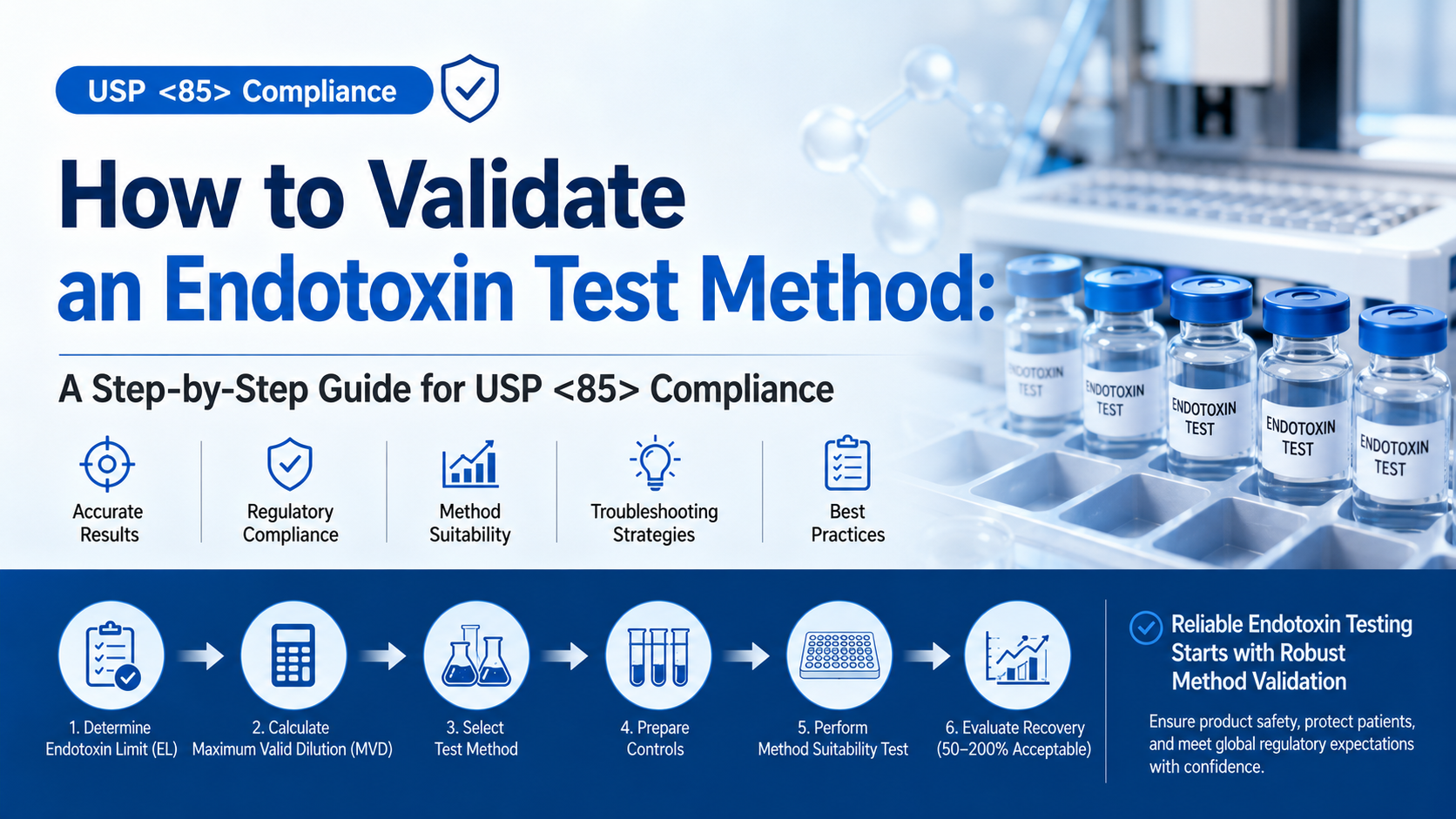
By following the structured workflow outlined in this guide—determining the Endotoxin Limit (EL), calculating the Maximum Valid Dilution (MVD), selecting an appropriate analytical method, performing Method Suitability Testing, interpreting Positive Product Control recovery, and systematically troubleshooting interference—QC laboratories can establish robust, reproducible endotoxin testing procedures that meet the expectations of USP <85> and global regulatory agencies.
As pharmaceutical formulations become increasingly complex, particularly in biologics, cell and gene therapies, vaccines, and lipid nanoparticle-based products, method validation will continue to play a critical role in ensuring analytical accuracy and patient safety.
Investing time in a scientifically sound validation strategy today can prevent costly investigations, batch delays, and regulatory observations tomorrow.
FireGene Endotoxin Testing
Ready to run your endotoxin assay?
FireGene offers a complete endotoxin testing toolkit — from TAL reagents and CSE standards to pyrogen-free consumables and LAL reagent water. All products are aligned with USP <85>, EP 2.6.14, and JP 4.01.


