
Neuroscience research has changed dramatically over the last decade. Technologies such as single-cell RNA sequencing (scRNA-seq), spatial transcriptomics, brain organoid modeling, and neuroimmune profiling are allowing researchers to study the human brain with a level of precision that was almost impossible only a few years ago.
However, despite rapid progress in downstream analytical technologies, many laboratories continue to encounter the same upstream bottleneck: preparing high-quality single-cell suspensions from human brain tissue.
For research teams working with fragile neural tissues, sample preparation is no longer just a routine laboratory step. It directly determines sequencing quality, cell viability, experimental reproducibility, and ultimately the reliability of published data.
This is one reason why search terms such as “Human Brain Dissociation Kit Supplier,” “Purchase Brain Tissue Dissociation Reagents,” and “Neural Tissue Processing Solution for scRNA-seq” have become increasingly common among neuroscience researchers worldwide.
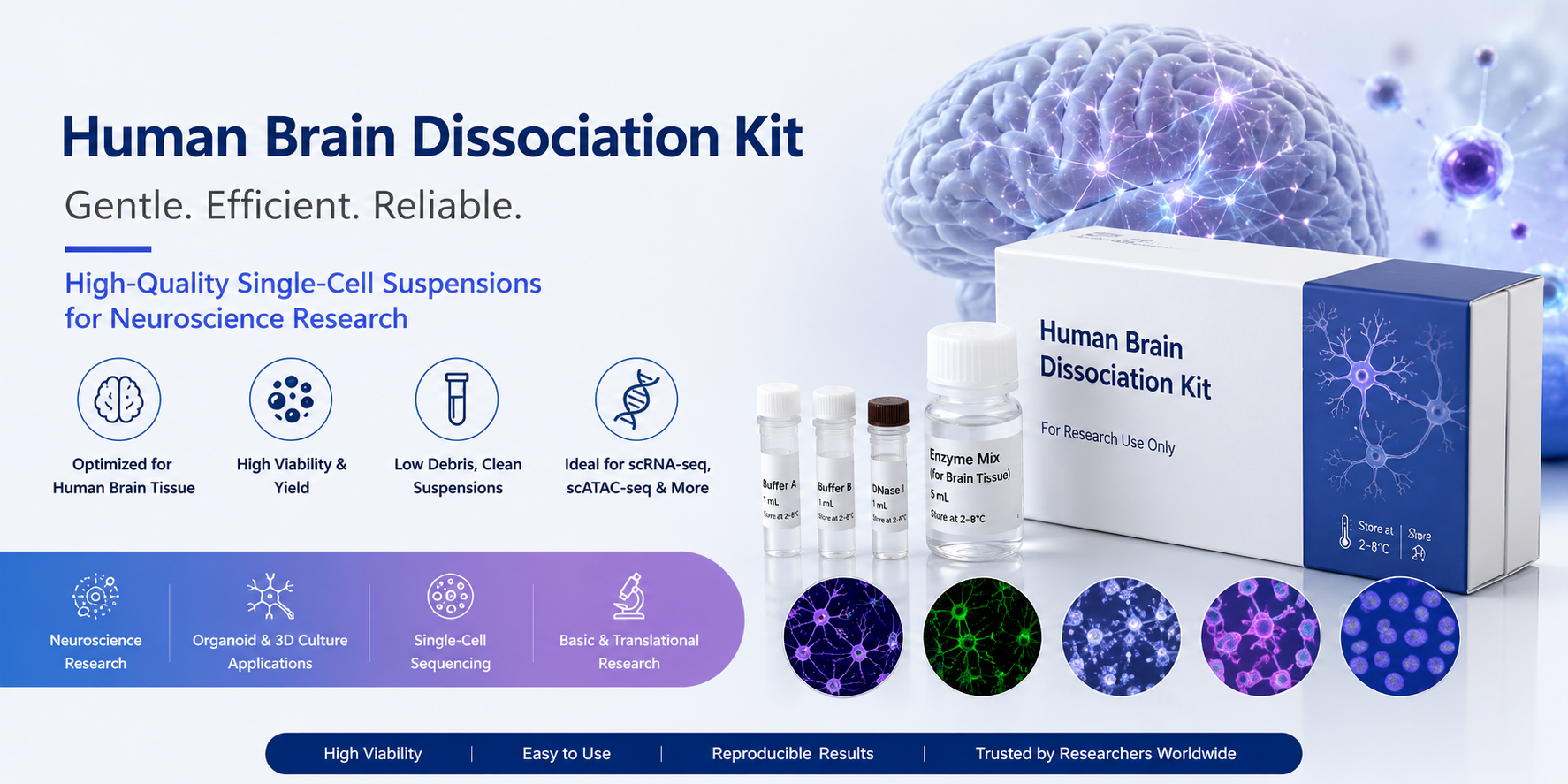
The FireGene Human Brain Dissociation Kit was developed specifically to address these modern neuroscience workflow challenges. Designed for efficient yet gentle neural tissue processing, the kit supports the preparation of high-quality single-cell suspensions suitable for advanced downstream applications.
Researchers working with cortical tissue, hippocampus samples, brain organoids, neurodegenerative disease models, and CNS tumor specimens often require dissociation systems capable of balancing digestion efficiency with cell preservation.
In sequencing core facilities, one commonly observed issue is that fragile neuronal populations may rapidly lose viability during extended room-temperature handling, even before enzymatic digestion officially begins. This is particularly relevant for aged cortical tissue, partially frozen clinical samples, and low-input human specimens.
Researchers processing astrocytes, microglia, oligodendrocytes, and rare neuronal subpopulations often prioritize workflows that help maintain transcriptomic integrity while reducing post-filtration aggregation and tissue debris. Aggressive enzyme systems may increase yield but frequently compromise viability and RNA integrity. On the other hand, insufficient digestion can leave excessive aggregates and reduce usable cell recovery.
The goal of optimized neural dissociation is not simply to break tissue apart. It is to preserve biologically meaningful cellular information.
For laboratories exploring advanced neuroscience workflows, the FireGene Human Brain Dissociation Kit provides a research-focused solution designed specifically for delicate neural tissues: https://firegene.com/products/human-brain-dissociation-kit-fg-ba3326?variant=47833516474580
Why Human Brain Tissue Dissociation Often Fails in scRNA-seq Workflows
Human brain tissue is among the most complex and fragile biological materials handled in modern research laboratories.
Unlike relatively simple tissue types, neural tissues contain:
- Highly interconnected neuronal structures
- Dense extracellular matrix components
- Fragile membrane systems
- Multiple glial cell populations
- Sensitive immune microenvironments
- Rare neural stem and progenitor cells
In many sequencing laboratories, researchers notice that overly aggressive tissue digestion frequently causes a sudden drop in neuronal viability after filtration steps, especially when processing aged cortical tissue or partially frozen clinical samples.
Traditional mechanical dissociation methods often generate excessive stress, resulting in:
- Reduced viable cell recovery
- RNA degradation
- Increased debris contamination
- Loss of sensitive neuronal populations
- Aggregation and clumping
- Reduced sequencing performance
These problems become even more significant when processing limited clinical samples.
Researchers involved in glioblastoma studies, Alzheimer’s disease research, Parkinson’s disease models, or developmental neuroscience frequently cannot afford sample loss caused by inconsistent tissue digestion.
This growing need for workflow consistency is one of the reasons optimized commercial dissociation systems have become increasingly important in neuroscience research.
Why Single-Cell Sequencing Results Depend on Tissue Dissociation Quality
Single-cell sequencing technologies have fundamentally changed the way scientists study the brain.
Instead of analyzing bulk tissue averages, researchers can now investigate:
- Rare neural populations
- Cell-type heterogeneity
- Disease-associated transcriptional changes
- Immune interactions within CNS tissues
- Developmental trajectories
- Spatial cellular relationships
However, high-quality sequencing data depends heavily on sample preparation quality.
In real sequencing workflows, poor tissue preparation often becomes obvious only after library QC begins. Many researchers initially assume the sequencing platform is responsible for inconsistent data quality, while the actual issue originates from upstream tissue processing.
Poor dissociation workflows often lead to:
- High ambient RNA contamination
- Increased doublet rates
- Reduced sequencing depth
- Stress-induced transcriptional artifacts
- Low viability metrics
- Reduced droplet capture efficiency
- Increased dead-cell contamination
- Uneven cell population recovery
In practice, sequencing failures are frequently linked to upstream sample handling rather than sequencing instruments themselves.
For this reason, many sequencing facilities now place strong emphasis on standardized tissue preparation workflows.
The FireGene Human Brain Dissociation Kit was designed to support these advanced sequencing applications by helping researchers obtain cleaner and more reproducible single-cell suspensions from neural tissue samples.
Many laboratories working with droplet-based sequencing workflows report that reducing debris and minimizing aggregation before library preparation can significantly improve downstream consistency.
One detail researchers sometimes overlook is that neural tissue continues degrading during prolonged handling, particularly when multiple centrifugation and filtration steps are involved. Gentle and standardized tissue processing workflows therefore become increasingly important for maintaining viable neuron recovery and preserving meaningful transcriptomic signals.
Researchers looking for reliable human brain dissociation workflows can explore the full product details here: https://firegene.com/products/human-brain-dissociation-kit-fg-ba3326?variant=47833516474580
Brain Organoid Dissociation: A Common Bottleneck in Translational Neuroscience
Brain organoid technology has become one of the fastest-growing areas in neuroscience research.
Today, organoids are widely used for:
- Neurodevelopment studies
- Drug discovery
- Viral infection research
- Autism spectrum disorder models
- Neurotoxicity testing
- Precision medicine applications
Yet organoid analysis frequently requires efficient conversion of 3D structures into high-quality single-cell suspensions.
This step is technically challenging because organoids contain delicate neural networks that can easily be damaged during digestion.
In practice, many laboratories report that prolonged digestion times may increase debris levels significantly, while insufficient digestion often leaves large aggregates that interfere with downstream single-cell capture systems.
Researchers working with brain organoids are therefore constantly balancing three competing factors:
- Dissociation efficiency
- Cell viability
- RNA integrity
In practical workflows, researchers also frequently monitor whether digestion conditions affect downstream cell capture efficiency or alter sensitive neural transcriptional profiles.
Because organoid structures vary significantly between batches, standardized dissociation conditions are increasingly preferred in translational neuroscience laboratories.
Researchers searching for “Brain Organoid Dissociation Kit Supplier” or “Purchase Neural Tissue Digestion Reagents” are typically looking for systems capable of maintaining both viability and reproducibility.
The FireGene Human Brain Dissociation Kit supports organoid workflows by combining gentle tissue processing with optimized enzymatic digestion conditions suitable for sensitive neural structures.
As organoid-based neuroscience research continues expanding, scalable and standardized dissociation workflows will become increasingly important for cross-study comparison and reproducibility.
Why Neuroscience Laboratories Are Moving Toward Standardized Dissociation Workflows
Reproducibility remains one of the biggest concerns in life science research.
Small differences in tissue processing protocols can create major variability between experiments. Factors such as enzyme preparation, incubation timing, temperature control, and mechanical handling all influence final cell quality.
This is particularly important for:
- Core sequencing facilities
- Pharmaceutical neuroscience teams
- CRO laboratories
- Translational medicine centers
- Multi-site collaborative projects
Many research groups initially attempt to optimize tissue dissociation protocols manually using general-purpose enzymes. However, protocol optimization can take months and often varies between operators.
Commercially optimized dissociation kits help laboratories reduce variability by simplifying workflow parameters.
Advantages often include:
- More stable lot-to-lot performance
- Simplified protocol execution
- Faster onboarding of laboratory personnel
- Reduced troubleshooting time
- Improved cross-project consistency
- More stable sequencing QC metrics
- Reduced optimization burden for new personnel
For many research groups, standardized tissue processing has become essential not only for experimental quality, but also for publication reproducibility.
Researchers interested in standardized neural tissue preparation workflows can review the FireGene Human Brain Dissociation Kit here: https://firegene.com/products/human-brain-dissociation-kit-fg-ba3326?variant=47833516474580
Common Troubleshooting Problems During Brain Tissue Dissociation
Even experienced neuroscience laboratories frequently encounter technical problems during neural tissue processing.
Some of the most common issues include:
Excessive Cell Clumping
This often occurs when tissue is under-digested or mechanically disrupted too aggressively.
Low Viability After Filtration
Neurons are highly sensitive to temperature fluctuations and prolonged handling times.
High Debris Levels in Sequencing QC
Overdigestion can release excessive cellular fragments that interfere with downstream library preparation.
Loss of Fragile Neural Populations
Rare neuronal subtypes and sensitive glial populations may be disproportionately lost during harsh digestion conditions.
Inconsistent Results Between Operators
Manual workflows frequently introduce variability in incubation timing and mechanical handling.
The demand for optimized neural tissue dissociation continues growing rapidly in disease-focused neuroscience research.
Common applications include:
Alzheimer’s Disease Research
Single-cell sequencing is increasingly used to investigate neuronal loss, glial activation, and inflammatory signaling pathways associated with neurodegeneration.
Parkinson’s Disease Models
Researchers require reliable neural cell isolation methods to analyze dopamine-related neuronal populations and disease-associated transcriptomic changes.
Glioblastoma Microenvironment Studies
Tumor heterogeneity research depends heavily on accurate recovery of immune, stromal, and tumor-associated cell populations.
Neuroinflammation Research
CNS immune profiling workflows require gentle dissociation systems capable of preserving sensitive immune cell signatures.
Across these applications, poor tissue preparation can significantly compromise downstream analytical quality.
The FireGene Human Brain Dissociation Kit was developed to help support high-quality cell isolation workflows suitable for modern neuroscience research applications.
For many laboratories transitioning toward larger-scale single-cell and spatial biology workflows, maintaining consistent tissue preparation standards has become increasingly important for both internal reproducibility and publication-quality data generation.
FAQ: Questions Researchers Commonly Ask About Brain Dissociation Workflows
Why does brain tissue dissociation affect sequencing quality?
Poor tissue preparation can increase ambient RNA contamination, reduce viable cell recovery, and alter transcriptional profiles before sequencing even begins.
How can researchers reduce debris during neural tissue dissociation?
Gentle enzymatic digestion, optimized incubation conditions, and minimizing excessive mechanical stress can help reduce debris formation.
Why are neurons difficult to preserve during tissue digestion?
Neurons are highly sensitive to enzymatic overexposure, temperature fluctuations, and prolonged processing times.
What causes aggregation after brain tissue dissociation?
Incomplete digestion, extracellular matrix retention, and excessive tissue loading can contribute to cell aggregation.
Common Recommendations Before Brain Tissue Dissociation
- Keep tissue samples cold before enzymatic digestion begins
- Minimize unnecessary centrifugation steps
- Avoid excessive mechanical disruption
- Process fragile cortical tissue as quickly as possible
- Filter cell suspensions promptly after digestion
These practical workflow adjustments are commonly used to help preserve viable neuron recovery and improve downstream sequencing consistency.
Why are standardized dissociation kits becoming more popular?
Standardized workflows help reduce operator variability and improve reproducibility between experiments.
The Future of Neural Tissue Dissociation Technologies
The neuroscience field is moving rapidly toward increasingly complex analytical platforms.
Emerging technologies include:
- Spatial transcriptomics
- Multiomics integration
- AI-assisted biology
- High-throughput screening
- Automated tissue processing
- Precision neurology
As these workflows evolve, sample preparation quality will become even more critical.
Future neural dissociation technologies will likely focus on:
- Reducing stress-related artifacts
- Preserving fragile cell populations
- Improving automation compatibility
- Supporting spatial biology workflows
- Increasing scalability for large research projects
Researchers searching for long-term neuroscience workflow solutions increasingly prioritize suppliers capable of supporting both current and future research needs.
This trend is especially visible among:
- Single-cell sequencing core facilities
- Translational neuroscience laboratories
- Brain organoid research groups
- Neurodegenerative disease research teams
- Biotechnology startups focused on CNS therapeutics
For laboratories building scalable single-cell and neural tissue processing workflows, FireGene continues focusing on research-driven solutions designed for modern neuroscience applications: https://firegene.com/products/human-brain-dissociation-kit-fg-ba3326?variant=47833516474580
Looking for a Research-Grade Human Brain Dissociation Kit Supplier?
As neuroscience workflows continue evolving, many laboratories are searching for scalable and reproducible neural tissue preparation solutions suitable for:
- Single-cell sequencing
- Brain organoid studies
- Neurodegenerative disease research
- CNS tumor analysis
- Translational neuroscience
The FireGene Human Brain Dissociation Kit was developed specifically for modern neuroscience applications requiring efficient neural tissue dissociation while helping preserve viability and cellular integrity.
FireGene also supports research laboratories seeking:
- Research-use-only neural tissue dissociation solutions
- Bulk research supply support
- Technical consultation for tissue processing workflows
- Global research shipping support
- Evaluation opportunities for neuroscience applications
Researchers interested in learning more about the workflow, requesting technical details, or evaluating the product for research applications can explore the product page here: https://firegene.com/products/human-brain-dissociation-kit-fg-ba3326?variant=47833516474580
About FireGene Research Workflows
Written by the FireGene Research Team
Research Focus Areas:
- Neural tissue dissociation
- Single-cell sequencing workflows
- Brain organoid processing
- Neuroscience sample preparation
- Research-use-only tissue dissociation technologies
Conclusion
High-quality tissue dissociation is no longer a secondary laboratory step in neuroscience research. It has become one of the most important determinants of downstream experimental success.
Whether working with brain organoids, neurodegenerative disease models, CNS tumors, or single-cell sequencing workflows, researchers require dissociation systems capable of balancing efficiency with cellular preservation.
The FireGene Human Brain Dissociation Kit provides a research-focused solution for laboratories seeking reliable neural tissue processing, improved cell viability, and reproducible single-cell preparation workflows.
As neuroscience technologies continue advancing, optimized sample preparation will remain essential for generating meaningful and reproducible biological insights.
Researchers looking for a reliable Human Brain Dissociation Kit supplier or scalable neural tissue dissociation workflow can learn more about the FireGene solution here: https://firegene.com/products/human-brain-dissociation-kit-fg-ba3326?variant=47833516474580
Why High-Quality Brain Dissociation Matters in Modern Neuroscience Research
Neuroscience research has rapidly evolved over the last decade, especially with the rise of single-cell sequencing, spatial biology, brain organoid studies, neurodegenerative disease modeling, and precision neurology research. One critical step shared by nearly all advanced neuroscience workflows is the preparation of high-quality single-cell suspensions from delicate neural tissue.
Researchers working with human brain tissue frequently encounter major challenges during tissue processing. Brain tissue is highly sensitive, structurally complex, and vulnerable to mechanical stress. Conventional enzymatic digestion approaches often reduce cell viability, damage neuronal morphology, or generate excessive debris that interferes with downstream analysis.
For this reason, optimized neural tissue dissociation solutions have become essential tools in neuroscience laboratories worldwide.
The FireGene Human Brain Dissociation Kit was developed to support efficient and gentle dissociation of human brain tissue while preserving cell viability and cellular integrity. The kit is particularly suitable for workflows involving:
- Single-cell RNA sequencing (scRNA-seq)
- Neural stem cell research
- Brain organoid analysis
- Neurodegenerative disease studies
- Primary neuron isolation
- Tumor microenvironment research
- Immunological profiling in CNS tissues
Compared with traditional digestion methods, modern dissociation systems focus on balancing digestion efficiency with minimal cellular damage.
Key Challenges in Human Brain Tissue Dissociation
Human brain tissue contains highly interconnected neuronal networks, extracellular matrix proteins, glial populations, and fragile membrane structures. Improper dissociation can easily cause:
- Reduced cell viability
- Excessive dead-cell contamination
- RNA degradation
- Loss of rare neural populations
- Aggregation and clumping
- Poor reproducibility between experiments
In many research laboratories, inconsistent dissociation quality is one of the primary reasons for poor sequencing outcomes.
Researchers searching for terms such as “human brain dissociation kit supplier,” “purchase neural tissue dissociation enzymes,” or “brain tissue single-cell preparation kit” are typically looking for solutions that improve consistency while simplifying protocol complexity.
The FireGene Human Brain Dissociation Kit was designed specifically with these challenges in mind.
Features of the FireGene Human Brain Dissociation Kit
The FireGene Human Brain Dissociation Kit integrates optimized enzymatic components and carefully balanced digestion conditions for sensitive neural tissues.
Key advantages include:
Gentle Neural Tissue Processing
The kit minimizes excessive enzymatic stress while maintaining effective tissue digestion. This helps preserve neuron morphology and supports downstream molecular analysis.
High Cell Viability
Maintaining viability is essential for single-cell sequencing and primary culture workflows. The kit supports efficient tissue dissociation while reducing cellular damage.
Reduced Debris Formation
Optimized digestion chemistry helps minimize cellular debris and aggregation.
Broad Research Compatibility
The kit is suitable for multiple applications including:
- Human cortex research
- Brain tumor studies
- Brain organoid preparation
- Neuroimmune profiling
- Stem cell workflows
- CNS disease modeling
Research Workflow Standardization
Standardized reagent formulations improve reproducibility between batches and experiments.
Supporting Single-Cell Sequencing Workflows
Single-cell sequencing has transformed neuroscience research by enabling the characterization of individual cell populations within the human brain.
However, sequencing quality is heavily dependent on sample preparation.
Poor dissociation often results in:
- Low cell recovery
- High ambient RNA contamination
- Increased doublet rates
- Biased population recovery
- Poor sequencing depth
Using optimized tissue dissociation kits can significantly improve sequencing outcomes.
Many researchers combine tissue dissociation workflows with cell preservation solutions to stabilize samples before downstream processing.
For laboratories handling valuable clinical or primary samples, cryopreservation solutions such as the FireGene Universal Cell Freezing Kit can help maintain sample quality during transportation and storage.
Internal Link Example: Explore the FireGene Universal Cell Freezing Kit for stable post-isolation cell preservation: https://firegene.com/products/universal-cell-freezing-kit-fg-ba3309?_pos=1&_sid=ef3cf7666&_ss=r
Applications in Brain Organoid Research
Brain organoids have become essential models for studying:
- Neurodevelopment
- Drug screening
- Neurotoxicity
- Genetic disorders
- Viral infection mechanisms
Efficient dissociation of organoids into single cells is critical for downstream assays.
The FireGene Human Brain Dissociation Kit supports organoid workflows by providing controlled digestion conditions suitable for delicate neural structures.
Researchers often require reproducible dissociation methods when processing multiple organoid batches for comparative studies.
Improving Reproducibility in Neuroscience Laboratories
Reproducibility remains a major challenge in biological research.
Differences in digestion time, enzyme quality, temperature control, and mechanical handling frequently lead to inconsistent results.
Commercially optimized dissociation kits provide:
- Better lot-to-lot consistency
- Simplified protocols
- Reduced optimization time
- Faster training for new personnel
- Improved data comparability
These advantages are especially important for:
- CRO laboratories
- Translational research centers
- Pharmaceutical neuroscience teams
- Academic sequencing facilities
Why Researchers Search for Reliable Brain Dissociation Suppliers
Researchers frequently search online using commercial and technical phrases such as:
- Research-grade brain dissociation kit supplier
- Purchase neural tissue digestion kit
- Human brain tissue isolation reagent
- Single-cell brain preparation kit
- CNS tissue dissociation solution
This reflects a growing market demand for reliable neuroscience sample preparation systems.
FireGene focuses on providing research-use-only solutions designed for modern neuroscience applications.
Future Trends in Neural Tissue Dissociation Technologies
The future of tissue dissociation research is moving toward:
- Higher viability preservation
- Reduced transcriptional artifacts
- Automated workflows
- AI-assisted protocol optimization
- Spatial multiomics compatibility
- Gentle enzyme systems for rare cell recovery
As neuroscience research becomes increasingly data-driven, high-quality sample preparation will remain one of the most critical factors for successful experiments.
Conclusion
The FireGene Human Brain Dissociation Kit provides researchers with an optimized solution for preparing high-quality single-cell suspensions from human neural tissue.
Whether used for sequencing, organoid studies, primary cell isolation, or disease modeling, the kit supports efficient tissue digestion while helping preserve cellular integrity and experimental reproducibility.
For laboratories seeking reliable neuroscience research suppliers and scalable tissue dissociation workflows, FireGene offers a practical solution designed for modern brain research applications.
For long-term cell storage after dissociation workflows, researchers may also explore the FireGene Universal Cell Freezing Kit: https://firegene.com/products/universal-cell-freezing-kit-fg-ba3309?_pos=1&_sid=ef3cf7666&_ss=r


