
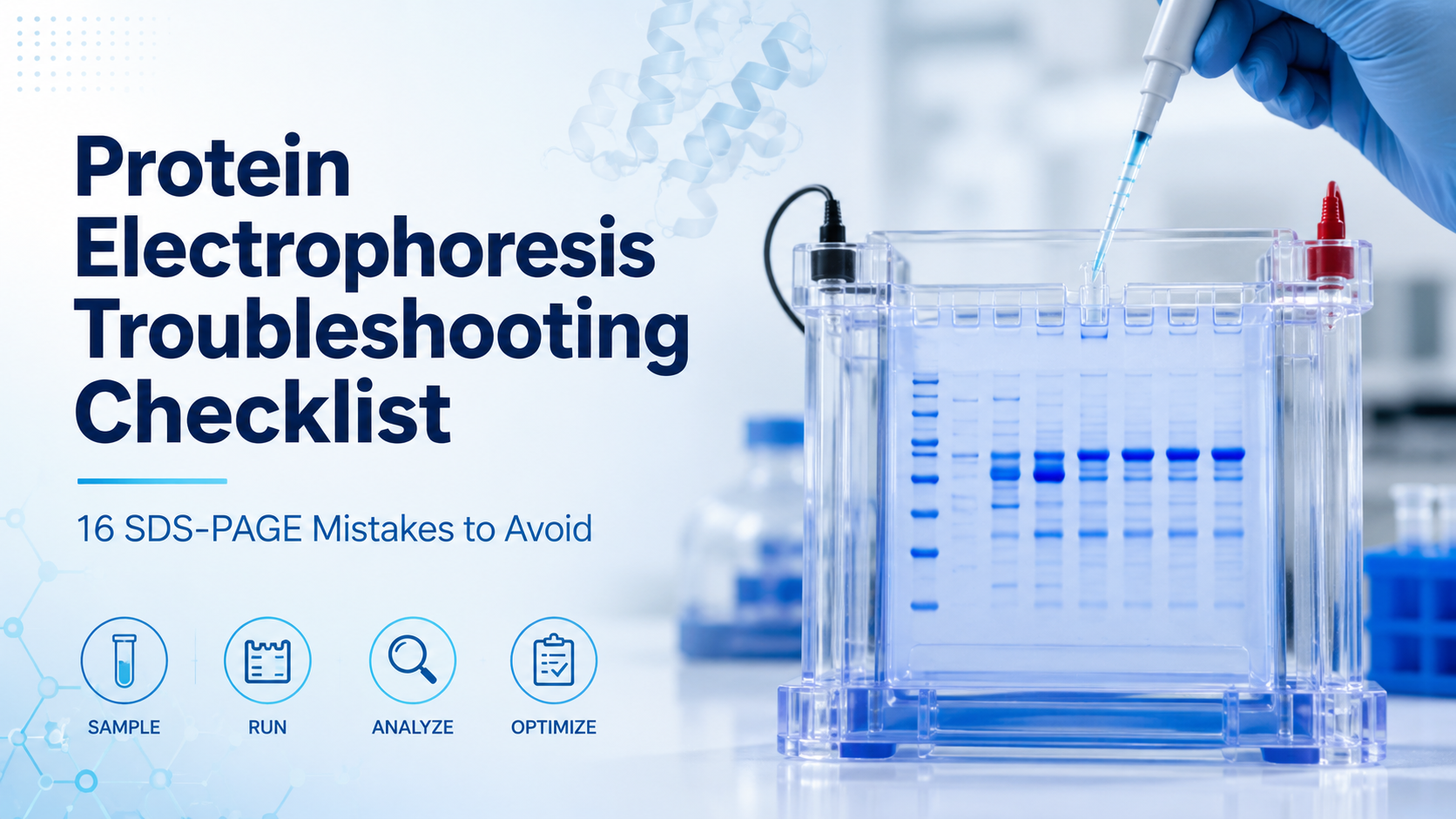
Protein Electrophoresis Troubleshooting Checklist
Protein electrophoresis, especially SDS-PAGE, is a routine but detail-sensitive technique in protein analysis and Western blot workflows. Small mistakes during gel preparation, sample treatment, buffer preparation, or electrophoresis setup can cause unclear bands, lane streaking, poor resolution, uneven migration, overheating, or failed downstream transfer.
This checklist summarizes key precautions researchers should review before and during protein electrophoresis to improve gel quality, band sharpness, and experimental reproducibility.
1. Confirm the Molecular Weight of the Target Protein
Identify the expected molecular weight of the target protein before preparing the gel.
Select the correct acrylamide gel percentage.
Use lower-percentage gels for larger proteins.
Use higher-percentage gels for smaller proteins.
Avoid using one gel percentage for all protein sizes without optimization.
Why it matters
Gel percentage determines pore size. An inappropriate gel concentration can cause poor separation, compressed bands, slow migration, or proteins running off the gel too quickly.
2. Clean Glass Plates, Combs, and Spacers Before Casting
Wash glass plates thoroughly before use.
Remove dust, detergent residue, oil, and previous gel fragments.
Clean combs and spacers carefully.
Dry all components before assembly.
Check that the glass plates are free of greasy or hydrophobic spots.
Why it matters
Contaminated glass plates can trap bubbles, interfere with gel adhesion, and cause uneven polymerization. Oil-like residues are a common reason for bubbles forming between the gel and the glass plate.
3. Bring Gel Reagents to Room Temperature
Do not use gel reagents directly from the refrigerator.
Allow acrylamide solution, gel buffer, and other components to equilibrate to room temperature.
Mix the main gel solution first, then add initiators last.
After pouring the gel, gently tap the casting frame to release trapped bubbles.
Why it matters
Cold solutions contain more dissolved gas. During polymerization, gas may escape and form bubbles inside the gel, affecting protein migration and band quality.
4. Control Gel Polymerization Speed
Adjust polymerization conditions according to room temperature.
In cold conditions, warm the gel casting setup if polymerization is too slow.
In hot conditions, reduce accelerator amount if polymerization is too fast.
Avoid vigorous mixing that introduces excess oxygen.
Add APS and TEMED only when ready to pour the gel.
Why it matters
Polyacrylamide polymerization is affected by temperature and oxygen. Too slow, too fast, or incomplete polymerization can lead to soft gels, irregular wells, and poor protein separation.
5. Prevent Oxygen Exposure Around the Wells
Make sure the comb fits correctly.
Avoid using damaged or mismatched combs.
Check whether the comb teeth sit evenly between the plates.
Ensure the gel solution fully surrounds the comb teeth.
Replace old or deformed casting accessories.
Why it matters
Oxygen inhibits acrylamide polymerization. If air enters around the comb, the gel near the wells may fail to polymerize properly, causing deformed or fragile sample wells.
6. Create a Flat Resolving Gel Interface
Add water or alcohol overlay slowly.
Do not pipette the overlay liquid forcefully.
Keep the casting stand level.
Do not move or tilt the gel before polymerization is complete.
Remove the overlay only after a clear refractive line appears.
Why it matters
A flat interface between the resolving gel and stacking gel helps proteins enter the resolving gel evenly. A disturbed interface can cause uneven bands and distorted migration.
7. Check for Gel Leakage During Casting
Inspect the glass plate assembly before pouring gel.
Make sure the bottom seal is tight.
Confirm that the casting frame is properly locked.
Watch for slow leakage after adding gel solution.
Reassemble if liquid level drops unexpectedly.
Why it matters
Gel leakage leads to uneven gel height, poor interface formation, and inconsistent lane migration. Even minor leakage can compromise SDS-PAGE results.
8. Store Prepared Gels Correctly
Use freshly prepared gels whenever possible.
If storage is necessary, keep gels moist.
Wrap gels with plastic film after moistening with running buffer.
Store gels at 4°C in the dark.
Use stored gels within two to three days.
Why it matters
Dry or aged gels may deform, lose resolution, or produce inconsistent bands. Fresh gels generally provide better reproducibility.
9. Denature Protein Samples Properly
Mix protein samples with loading buffer at the recommended ratio.
Commonly use 5× loading buffer at a 4:1 sample-to-buffer ratio.
Heat samples at 95–100°C for 5–15 minutes.
Preheat the heating block or water bath before use.
Briefly centrifuge samples before loading.
Why it matters
Proper denaturation allows proteins to bind SDS and migrate mainly according to molecular weight. Incomplete denaturation may cause abnormal migration or unclear bands.
10. Remove Insoluble Material Before Loading
Check whether the sample is fully dissolved.
Centrifuge samples at high speed before loading.
Avoid loading visible precipitates.
Consider using solubilizing agents such as urea when necessary.
Optimize lysis and denaturation conditions for difficult samples.
Why it matters
Poorly dissolved protein samples can cause streaking, smearing, or rough-looking lanes. Removing insoluble debris improves band clarity.
11. Reduce High Salt Interference
Avoid loading samples with excessive salt.
Keep NaCl concentration as low as practical.
Aim to keep NaCl below approximately 100 mM when possible.
Desalt, dilute, or dialyze high-salt samples before loading.
Use compatible lysis buffers for SDS-PAGE.
Why it matters
High salt concentration can broaden lanes, distort protein migration, and reduce band sharpness. Salt control is especially important for complex lysates and concentrated protein samples.
12. Reduce DNA Contamination in Lysates
Check whether the lysate is viscous.
Avoid loading highly viscous samples directly.
Use sonication to shear genomic DNA.
Consider nuclease treatment when appropriate.
Centrifuge samples after DNA reduction treatment.
Why it matters
DNA contamination increases sample viscosity and can interfere with pipetting and migration. This often causes vertical streaks, uneven lanes, or distorted protein bands.
13. Use Fresh Running Buffer
Prepare fresh 1× Tris-Glycine-SDS running buffer.
Do not repeatedly reuse old running buffer.
Clean the electrophoresis tank before use.
Remove crystallized salts from electrodes.
Make sure the electrodes are properly connected.
Why it matters
Old or contaminated running buffer can affect current stability, increase staining background, and reduce gel reproducibility. Fresh buffer supports cleaner SDS-PAGE separation.
14. Prevent Inner Chamber Leakage
Assemble the electrophoresis tank carefully.
Check the seal between the gel cassette and gasket.
Fill the inner chamber and monitor the buffer level.
Make sure the inner chamber buffer stays above the short glass plate.
Stop the run if the inner buffer level drops.
Why it matters
If the inner chamber leaks, electrophoresis may slow down or stop. Uneven leakage can cause tilted, curved, or partially migrated bands.
15. Avoid Overfilling the Outer Chamber
Fill the outer chamber according to the instrument instructions.
Do not allow the outer buffer to directly connect with the inner chamber across the short plate.
Watch for abnormal heat generation during the run.
Use recommended voltage and running time.
Stop the run if the buffer becomes excessively hot.
Why it matters
Overfilling can create an electrical short circuit, generating excessive heat. Overheating may distort bands, weaken protein marker signals, or damage proteins.
16. Load Equal and Appropriate Protein Amounts
Quantify protein concentration before loading.
Normalize all samples to the same protein concentration.
Load equal protein amounts across comparison groups.
Avoid overloading each well.
Optimize loading amount based on target abundance and detection method.
Why it matters
Unequal loading makes protein bands difficult to compare, while overloading causes thick bands, smearing, poor resolution, and unreliable Western blot normalization.
17. Inspect Sample Wells Before Loading
Check each well before adding samples.
Remove residual transparent gel fragments if present.
Avoid damaging the well while cleaning.
Make sure the comb was inserted correctly during gel casting.
Use compatible glass plates and combs.
Why it matters
Residual gel in the well can block sample entry and cause uneven loading. This may result in missing, distorted, or irregular bands.
18. Start Electrophoresis Immediately After Loading
Load samples carefully and consistently.
Begin electrophoresis soon after loading.
Avoid long delays after sample addition.
Monitor the dye front during the run.
Proceed to transfer promptly after electrophoresis if performing Western blot.
Why it matters
Proteins can diffuse if samples sit too long in the wells or gel. Delayed electrophoresis or delayed transfer may reduce band sharpness and signal quality.
Quick SDS-PAGE Troubleshooting Table

Final Pre-Run Checklist
Before starting SDS-PAGE, confirm the following:

Conclusion
Protein electrophoresis troubleshooting is often about controlling small experimental details. Clean gel casting, proper polymerization, good sample preparation, fresh buffer, correct chamber assembly, and consistent protein loading all contribute to sharp, reproducible SDS-PAGE bands.
For Western blot experiments, these details are even more important because gel quality directly affects transfer efficiency, antibody detection, and final data interpretation. Using this checklist before each run can help researchers reduce failed experiments, improve reproducibility, and obtain cleaner protein electrophoresis results.


