
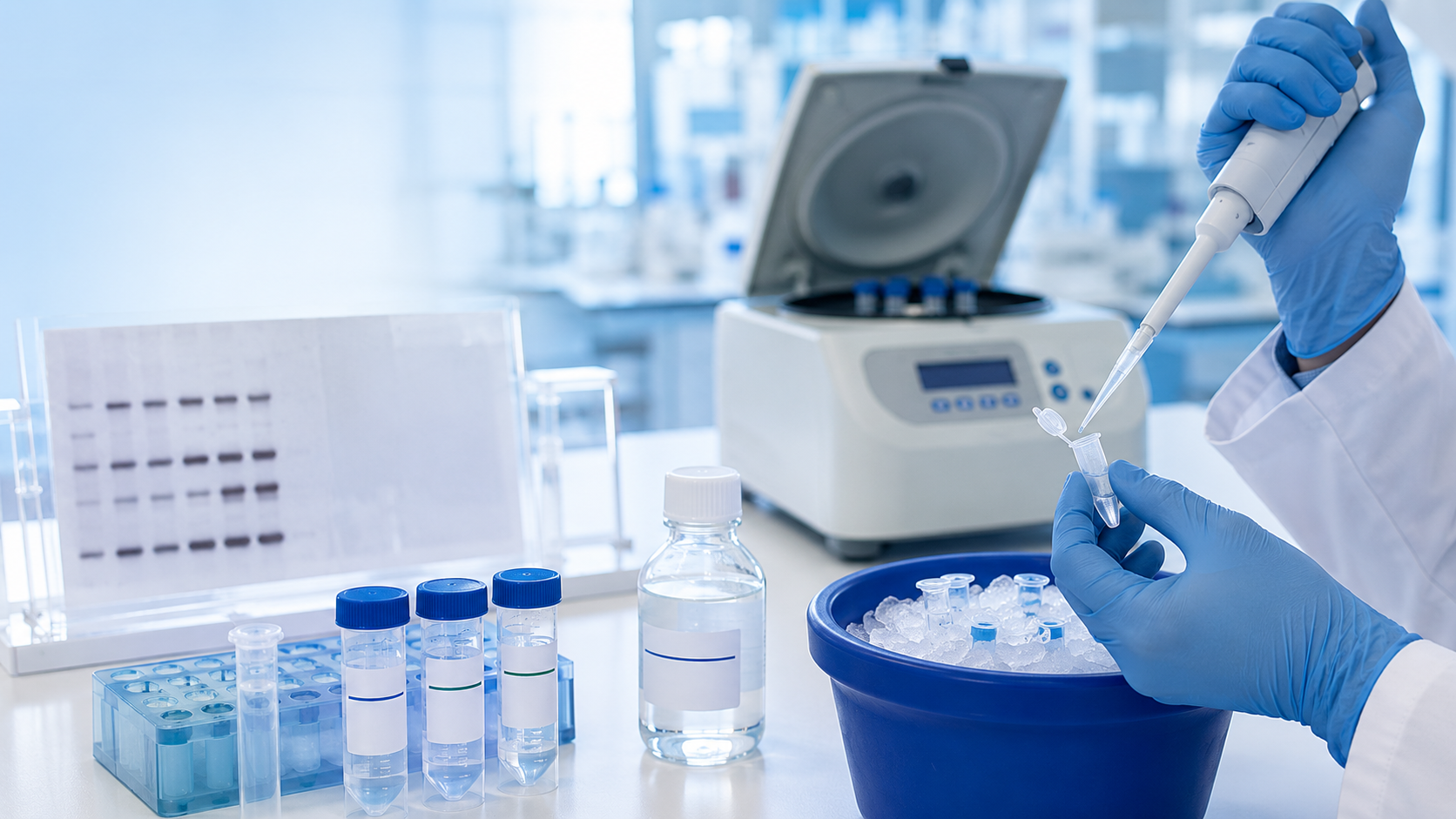
Western blotting is one of the most widely used techniques for detecting and analyzing specific proteins in biological samples. Whether researchers are studying signaling pathways, validating antibody specificity, comparing disease models, or measuring treatment-induced changes in protein expression, the quality of the Western blot result depends heavily on one critical upstream step: protein lysis.
Protein lysis is the process of breaking open cells or tissues to release proteins into solution. For Western blot experiments, this step must be carefully controlled to preserve protein integrity, prevent degradation, and ensure that the extracted protein sample accurately represents the biological condition being studied. Poor lysis can lead to weak bands, inconsistent loading, high background, protein degradation, or loss of important post-translational modifications such as phosphorylation.
This article explains what is needed for protein lysis in Western blotting, how to choose the right lysis buffer, why protease inhibitors are essential, and what practical steps can improve reproducibility.
What Is Protein Lysis in Western Blot?
In Western blot workflows, protein lysis refers to the extraction of proteins from cells, tissues, or other biological materials. The goal is to disrupt cellular membranes and release proteins while keeping them soluble and stable for downstream analysis.
A typical Western blot workflow includes sample preparation, protein extraction, protein quantification, SDS-PAGE separation, membrane transfer, antibody incubation, and signal detection. Among these steps, protein lysis is especially important because it determines the quality and composition of the protein sample loaded onto the gel.
For most Western blot applications, researchers need three essential components for protein lysis:
Lysis buffer, protease inhibitors, and low-temperature centrifugation.
These three elements work together to extract proteins efficiently, protect them from enzymatic degradation, and remove insoluble debris before analysis.
Key Components Required for Protein Lysis
1. Lysis Buffer
The lysis buffer is the main reagent used to disrupt cells and solubilize proteins. It usually contains detergents, salts, buffering agents, and sometimes chelators or denaturing agents. The choice of lysis buffer depends on the sample type and the target protein.
For Western blot experiments, RIPA buffer is one of the most commonly used lysis buffers. RIPA buffer is relatively strong and can extract cytoplasmic, membrane-associated, and nuclear proteins. It typically contains detergents such as NP-40 or Triton X-100, sodium deoxycholate, and SDS, making it suitable for total protein extraction.
However, not every experiment requires such a strong buffer. If the target protein is sensitive, part of a protein complex, or being studied under native-like conditions, a milder NP-40 or Triton X-100-based lysis buffer may be preferred. For standard Western blot detection of total protein expression, RIPA buffer is often a reliable starting point.
2. Protease Inhibitors
Once cells are lysed, intracellular proteases are released together with the proteins of interest. These proteases can quickly degrade target proteins, especially during sample handling. To prevent this, protease inhibitors should be added freshly to the lysis buffer before use.
Common protease inhibitor options include PMSF and commercial protease inhibitor cocktails. PMSF is frequently used to inhibit serine proteases, while inhibitor cocktails provide broader protection against multiple classes of proteases.
Protease inhibitors are particularly important when working with tissue samples, primary cells, or proteins that are naturally unstable. Without inhibitors, Western blot bands may appear faint, smeared, or inconsistent because the protein has been partially degraded before analysis.
3. Phosphatase Inhibitors for Phosphorylated Proteins
If the Western blot experiment is designed to detect phosphorylated proteins, phosphatase inhibitors are also necessary. Phosphatases can remove phosphate groups from proteins after lysis, causing false-negative or underestimated phosphorylation signals.
Common phosphatase inhibitors include sodium fluoride, sodium orthovanadate, beta-glycerophosphate, and commercial phosphatase inhibitor cocktails. These inhibitors should be added freshly to the lysis buffer, especially when studying signaling pathways such as MAPK, AKT, AMPK, JAK/STAT, or receptor tyrosine kinase pathways.
For phosphorylation Western blotting, maintaining cold conditions and minimizing processing time are just as important as adding inhibitors.
Why Low Temperature Matters
Protein lysis for Western blot should generally be performed on ice or at 4°C. Low temperature helps slow enzymatic activity, including protease and phosphatase activity. It also helps preserve protein structure and reduce unwanted sample degradation.
In practice, researchers usually pre-chill the lysis buffer, keep samples on ice during incubation, and perform centrifugation at 4°C. This is especially important when processing multiple samples, because delays at room temperature can introduce variability.
Low-temperature handling is a simple but powerful way to improve Western blot reproducibility.
General Workflow for Cell Protein Lysis
For cultured cells, protein lysis is usually straightforward. A typical protocol includes the following steps.
First, remove the culture medium and wash the cells gently with cold PBS to remove serum proteins and residual medium. Then add pre-chilled lysis buffer containing freshly added protease inhibitors. The amount of buffer depends on the size of the culture dish or cell pellet.
Next, incubate the cells on ice for 10 to 30 minutes. During this period, occasional gentle mixing can help improve lysis efficiency. Some samples may require scraping, pipetting, or brief sonication to enhance disruption.
After lysis, centrifuge the sample at high speed at 4°C to pellet insoluble debris. The clear supernatant contains the extracted protein and can be transferred to a new tube. The protein concentration should then be measured using a BCA, Bradford, or similar protein assay before loading samples for SDS-PAGE.
Finally, samples are mixed with loading buffer, heated if appropriate, and prepared for Western blot analysis.
Protein Lysis from Tissue Samples
Tissue samples are more complex than cultured cells because they contain extracellular matrix, connective tissue, blood components, and different cell types. Efficient tissue lysis usually requires mechanical disruption before or during chemical lysis.
Common methods include homogenization, grinding in liquid nitrogen, bead-based disruption, or sonication. The tissue should be kept cold throughout the process. For dense tissues, complete homogenization is essential to obtain consistent protein extraction.
After homogenization in lysis buffer, the sample is incubated on ice and then centrifuged at 4°C. The supernatant is collected for protein quantification and Western blotting.
For tissue Western blot experiments, using sufficient lysis buffer and complete mechanical disruption can greatly improve yield and consistency.
Choosing the Right Lysis Buffer for Western Blot
The best lysis buffer depends on the target protein and experimental goal.
For general total protein extraction, RIPA buffer is commonly used. It is effective for many cytoplasmic, nuclear, and membrane-associated proteins.
For fragile proteins or protein interaction studies, milder buffers based on NP-40 or Triton X-100 may be preferred. Although Western blot usually uses denaturing SDS-PAGE, preserving protein solubility before loading can still be important.
For nuclear proteins, specialized nuclear extraction buffers may improve enrichment and detection. For membrane proteins, stronger detergents or optimized membrane protein extraction reagents may be necessary.
Researchers should also consider compatibility with downstream protein assays. Some detergents and reducing agents can interfere with BCA or Bradford assays, so it is important to choose a quantification method compatible with the lysis buffer composition.
Common Problems Caused by Poor Protein Lysis
Poor protein lysis can affect the entire Western blot result. Some common issues include weak target bands, uneven loading, excessive background, smeared bands, or unexpected molecular weight patterns.
Weak bands may occur when protein extraction is incomplete or when the target protein is degraded. Smearing may indicate degradation, overloading, high salt concentration, or incomplete sample preparation. Inconsistent results between replicates may come from variable lysis efficiency, unequal sample handling time, or inaccurate protein quantification.
If the target protein is absent or unexpectedly low, researchers should first check whether the lysis buffer is appropriate for the protein’s cellular location. For example, membrane proteins and nuclear proteins may require stronger or specialized extraction conditions.
Best Practices for Western Blot Protein Lysis
To improve sample quality, always prepare lysis buffer fresh or add inhibitors immediately before use. Keep all reagents and samples cold. Use the same lysis time and buffer volume across comparable samples. Avoid repeated freeze-thaw cycles of protein lysates, as this can degrade proteins and reduce signal consistency.
After lysis and centrifugation, collect only the clear supernatant and avoid disturbing the pellet. Quantify protein concentration before loading to ensure equal protein input across lanes.
For phosphorylated proteins, use both protease and phosphatase inhibitors, process samples quickly, and avoid leaving lysates at room temperature.
For long-term storage, protein lysates are commonly stored at -80°C. Aliquoting samples can help prevent repeated freeze-thaw damage.
Conclusion
Protein lysis is a foundational step in Western blot sample preparation. High-quality lysis ensures that proteins are efficiently extracted, protected from degradation, and suitable for accurate downstream detection. For most Western blot experiments, the essential requirements are a suitable lysis buffer, freshly added protease inhibitors, and low-temperature centrifugation.
RIPA buffer is a common choice for total protein extraction, while milder or specialized buffers may be needed for sensitive proteins, protein complexes, nuclear proteins, or membrane proteins. When detecting phosphorylated targets, phosphatase inhibitors are essential to preserve phosphorylation status.
By optimizing lysis conditions and maintaining consistent sample handling, researchers can improve Western blot reliability, reduce variability, and obtain clearer, more interpretable protein expression data.
FireGene, light your research with passion, innovation, and profession.


