
Introduction
Few events create more concern in a pharmaceutical quality control laboratory than an unexpected endotoxin result.
A routine sample that previously met specifications suddenly fails. An in-process sample exceeds acceptance criteria. A batch release is delayed pending investigation. Yet when analysts review the data, everything appears normal:
- Standard curve passes
- Positive Product Control (PPC) passes
- Instrument performance is acceptable
- TAL/LAL Reagent performance is within specifications
So what happened?
In many cases, the root cause is not the assay itself but contamination introduced somewhere within the testing workflow.
As bacterial endotoxin testing becomes increasingly important for biologics, cell therapies, gene therapies, vaccines, and mRNA-based products, laboratories must pay close attention to hidden sources of endotoxin contamination that can compromise data integrity and trigger unnecessary investigations.
This article explores the most common contamination sources encountered in QC laboratories, explains why false positive endotoxin results occur, and discusses the critical role of Pyrogen-Free Vials in USP <85> testing workflows.
Understanding False Positive Endotoxin Results
A false positive endotoxin result occurs when detected endotoxin does not accurately reflect contamination originating from the product itself.
Instead, endotoxin may be introduced during:
- Sample collection
- Sample preparation
- Sample storage
- Dilution procedures
- Transfer operations
- Laboratory handling
Because modern TAL/LAL Reagents are capable of detecting extremely low endotoxin concentrations, even trace contamination can influence analytical outcomes.
This sensitivity is essential for patient safety but also means that seemingly insignificant contamination sources may have measurable effects.
Why Endotoxin Contamination Is Different from Microbial Contamination

Many laboratory professionals assume that sterile conditions automatically eliminate endotoxin concerns.
Unfortunately, endotoxins behave differently.
Endotoxins are lipopolysaccharides (LPS) originating from the outer membrane of Gram-negative bacteria.
Unlike living microorganisms, endotoxins:
- Remain biologically active after bacterial death
- Can persist on surfaces and materials
- May survive sterilization procedures
- Are detectable at extremely low concentrations
As a result, a material may be:
✓ Sterile
✓ Free of viable microorganisms
✓ Visually clean
Yet still contain measurable endotoxin contamination.
This distinction is fundamental to endotoxin control strategies.
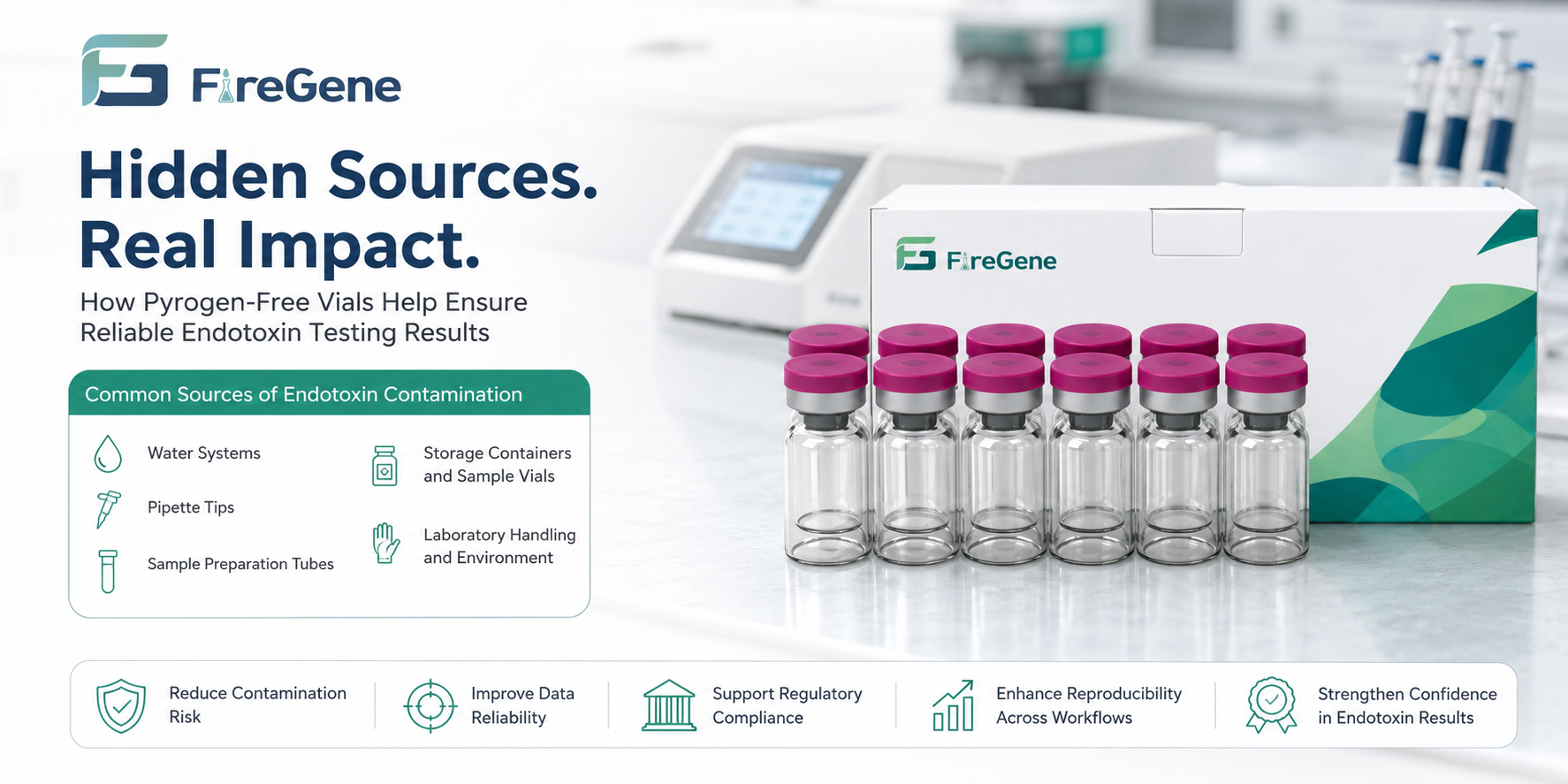
Common Sources of Endotoxin Contamination in QC Laboratories
1. Water Systems
Water is used throughout bacterial endotoxin testing workflows.
Applications include:
- Standard preparation
- Sample dilution
- Recovery studies
- PPC preparation
- Method validation
Poorly controlled water quality can introduce contamination into multiple testing stages simultaneously.
For this reason, laboratories performing USP <85> testing typically utilize certified Pyrogen-Free Water specifically manufactured for endotoxin-sensitive applications.
2. Pipette Tips and Transfer Devices
Every sample transfer introduces risk.
Potential contamination sources include:
- Manufacturing residues
- Packaging materials
- Environmental exposure
- Improper storage conditions
Even low levels of contamination may affect results when testing products with very low endotoxin limits.
Many laboratories therefore standardize the use of certified endotoxin-free consumables throughout the testing process.
3. Sample Preparation Tubes
Sample preparation tubes are heavily utilized during:
- Routine QC testing
- Method validation
- Recovery studies
- Hold-time studies
- LER investigations
When contamination is introduced at this stage, determining the true source of variability becomes considerably more difficult.
This challenge is particularly relevant when investigating Low Endotoxin Recovery (LER), where analysts are attempting to distinguish formulation-related effects from laboratory-introduced variability.
4. Storage Containers and Sample Vials
Among all laboratory consumables, storage vials are frequently one of the most overlooked contamination sources.
Yet they participate in nearly every stage of endotoxin testing.
Common applications include:
- Control Standard Endotoxin (CSE) preparation
- Endotoxin stock solution storage
- Sample retention
- Standard dilutions
- Recovery studies
- Hold-time evaluations
Because samples may remain in containers for extended periods, vial quality can directly influence analytical reliability.
Case Study: When the Assay Wasn't the Problem
A biologics manufacturer observed repeated endotoxin results exceeding internal release specifications.
The investigation team first evaluated the most obvious possibilities.
System suitability testing demonstrated:
| Parameter | Result |
|---|---|
| Standard Curve | Pass |
| PPC Recovery | Pass |
| Instrument Qualification | Pass |
| TAL/LAL Reagent Performance | Pass |
Repeated testing continued to produce elevated endotoxin readings.
Further investigation eventually identified background endotoxin contamination associated with non-qualified sample storage containers used during preparation.
When certified Pyrogen-Free Vials were introduced, results returned to expected levels.
The lesson was straightforward:
Even when analytical systems perform perfectly, contamination introduced during sample handling can still compromise results.
Sterile Does Not Mean Pyrogen-Free
One of the most common misconceptions in pharmaceutical laboratories is that sterile containers are automatically suitable for endotoxin testing.
This is not necessarily true.
Sterilization and depyrogenation serve different purposes.

| Characteristic | Sterile Vial | Pyrogen-Free Vial |
| Removes Viable Microorganisms | Yes | Yes |
| Removes Endotoxins | Not Always | Yes |
| Suitable for Endotoxin Testing | Not Always | Yes |
| Recommended for USP <85> Applications | Limited | Yes |
A sterile vial may contain no living microorganisms while still containing endotoxin residues capable of affecting bacterial endotoxin testing.
Depyrogenation vs Sterilization: Understanding the Difference
Sterilization
Sterilization is designed to eliminate viable microorganisms.
Examples include:
- Steam sterilization
- Ethylene oxide sterilization
- Gamma irradiation
Depyrogenation
Depyrogenation is specifically designed to reduce endotoxin levels.
Because endotoxins are significantly more heat stable than many microorganisms, removing them requires specialized processing conditions.
Validated pharmaceutical depyrogenation processes commonly utilize dry heat treatment capable of achieving substantial endotoxin reduction.
This distinction explains why depyrogenated containers are often preferred for endotoxin-sensitive applications.
Why Pyrogen-Free Vials Matter in USP <85> Testing
USP <85> Bacterial Endotoxins Test requires reliable and reproducible analytical conditions.

Pyrogen-Free Vials help support multiple critical testing activities.
Control Standard Endotoxin Preparation
Standards should be prepared using containers that minimize external endotoxin contributions.
Positive Product Controls (PPCs)
Accurate recovery assessments depend upon tightly controlled conditions.
Method Validation
Validation studies require reproducible performance and defensible data.
Recovery Studies
Recovery investigations can be complicated by contamination introduced from laboratory consumables.
Hold-Time Studies
Extended storage periods increase the importance of container quality and consistency.
Why Pyrogen-Free Vials Are Especially Important During LER Investigations
Low Endotoxin Recovery (LER) has become one of the most discussed challenges in modern endotoxin testing.
When laboratories investigate declining endotoxin recovery, potential causes may include:
- Endotoxin masking
- Formulation effects
- Sample storage conditions
- Recovery study design
- Consumable-related variability
If contamination sources are not controlled, determining the true cause becomes significantly more difficult.
For this reason, many laboratories conducting LER investigations standardize the use of:
- Pyrogen-Free Water
- Endotoxin-Free Consumables
- Pyrogen-Free Vials
- Validated TAL/LAL Reagents
to minimize external variables.
Endotoxin Testing Troubleshooting Checklist
When unexpected endotoxin results occur, laboratories should systematically investigate the entire workflow.
Unexpected Endotoxin Result
           │
           ▼
Check Water Quality
           │
           ▼
Check Pipette Tips
           │
           ▼
Check Sample Containers
           │
           ▼
Check Storage Conditions
           │
           ▼
Check Recovery Studies
           │
           ▼
Check TAL/LAL Reagent Performance
           │
           ▼
Root Cause Investigation
Focusing solely on the assay may overlook contamination introduced earlier in the process.
Common Applications of Pyrogen-Free Vials
Pyrogen-Free Vials are commonly used in:
Endotoxin Standard Preparation
Preparation of Control Standard Endotoxin solutions.
CSE Storage
Storage of endotoxin standards prior to testing.
Recovery Studies
Evaluation of endotoxin recovery during validation activities.
Hold-Time Studies
Assessment of sample stability over time.
Method Validation
Support of qualification and validation protocols.
Cell and Gene Therapy Testing
High-value products often require strict endotoxin control.
Biologics Quality Control
Routine QC testing for recombinant proteins, monoclonal antibodies, and advanced therapeutics.
Best Practices for Preventing Endotoxin Contamination
To improve reliability and reproducibility, laboratories should:
Use Certified Pyrogen-Free Water
Reduce contamination risk during sample preparation.
Standardize Endotoxin-Free Consumables
Improve consistency throughout testing workflows.
Utilize Pyrogen-Free Vials
Particularly for standards, validation studies, and sample storage.
Document Consumable Qualification
Include container qualification within laboratory quality systems.
Investigate Unexpected Results Holistically
Evaluate the complete workflow rather than focusing exclusively on analytical reagents.
Frequently Asked Questions
Can glass vials contain endotoxins?
Yes. Standard laboratory glassware may contain endotoxin residues unless specifically processed and qualified for endotoxin-sensitive applications.
Are sterile vials automatically pyrogen-free?
No. Sterility and pyrogen-free status are different concepts.
How are pyrogen-free vials manufactured?
Pyrogen-free vials typically undergo validated depyrogenation processes designed to reduce endotoxin levels.
Can storage conditions affect endotoxin testing results?
Yes. Sample handling and storage conditions can influence analytical outcomes and recovery studies.
Are pyrogen-free vials required for USP <85> testing?
Requirements depend on laboratory procedures, but pyrogen-free containers are widely recommended for endotoxin-sensitive applications.
Can contaminated consumables cause false positive endotoxin results?
Yes. Background endotoxin contamination introduced from consumables may influence measured results.
Final Thoughts
When endotoxin investigations begin, laboratories often focus on TAL/LAL Reagents, instrumentation, and analytical procedures.
Yet many contamination events originate much earlier in the testing workflow.
Water systems, transfer devices, sample preparation materials, and storage containers all contribute to overall data quality.
Among these factors, Pyrogen-Free Vials represent one of the simplest and most effective tools for reducing hidden contamination risks.
As pharmaceutical products become increasingly complex and endotoxin limits continue to tighten, robust endotoxin control strategies must extend beyond the assay itself.
By combining high-quality TAL/LAL Reagents, certified Pyrogen-Free Water, validated endotoxin-free consumables, and Pyrogen-Free Vials, laboratories can improve reproducibility, strengthen regulatory compliance, and maintain confidence in endotoxin testing results.
References
- USP <85> Bacterial Endotoxins Test
- USP <1085.1> Endotoxins and Pyrogen Testing
- European Pharmacopoeia 2.6.14 Bacterial Endotoxins
- FDA Guidance for Industry: Pyrogen and Endotoxins Testing
- PDA Technical Report No. 82: Low Endotoxin Recovery
- Williams KL. Endotoxins: Pyrogens, LAL Testing and Depyrogenation
- Reich J, Lang P, Grallert H. Low Endotoxin Recovery and Endotoxin Masking in Biopharmaceutical Products
- ICH Q9 Quality Risk Management
- ISO 11737 Sterilization of Medical Devices
- FDA Guidance for Industry: Sterile Drug Products Produced by Aseptic Processing
FireGene Endotoxin Testing
Ready to run your endotoxin assay?
FireGene offers a complete endotoxin testing toolkit — from TAL reagents and CSE standards to pyrogen-free consumables and LAL reagent water. All products are aligned with USP <85>, EP 2.6.14, and JP 4.01.


