
Introduction
The endotoxin test is one of the most critical quality control procedures in the pharmaceutical, biotechnology, and medical device industries. Bacterial endotoxins, mainly lipopolysaccharides from Gram-negative bacteria, can trigger severe inflammatory reactions in humans. Because of this risk, regulatory agencies such as the United States Pharmacopeia require reliable endotoxin test methods for injectable drugs, biologics, and implantable medical devices.
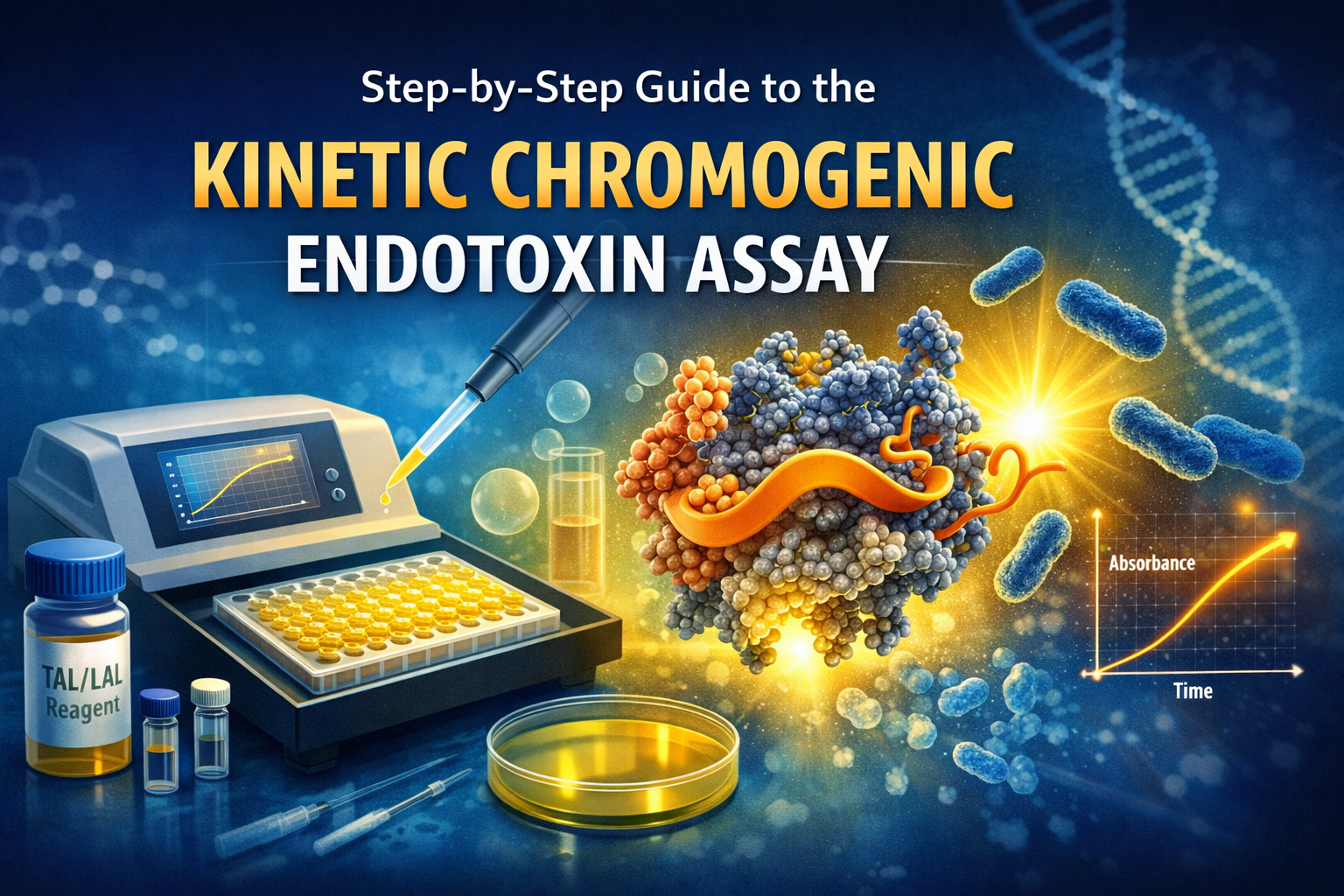
Among modern detection techniques, the kinetic chromogenic endotoxin test using TAL/LAL Reagent has become one of the most widely adopted quantitative methods. This assay combines high sensitivity, dynamic monitoring, and automated data analysis, making it ideal for laboratories performing high-throughput endotoxin test workflows.
In this article, we provide a step-by-step guide to performing a kinetic chromogenic endotoxin test, explaining the principles, preparation steps, workflow, and practical considerations for research and quality control laboratories.
I. Principle of the Kinetic Chromogenic Endotoxin Test
The kinetic chromogenic endotoxin test is based on the enzymatic cascade triggered when endotoxin interacts with TAL/LAL Reagent.
When endotoxin is present in a sample:
I. Endotoxin activates Factor C in the TAL/LAL enzyme system
II. Activated Factor C triggers Factor B activation
III. Factor B activates the proclotting enzyme
IV. The enzyme hydrolyzes a chromogenic substrate
V. The reaction releases p-nitroaniline, generating a color signal
In the kinetic chromogenic endotoxin test, the microplate reader measures the rate of absorbance change, typically at 405 nm. The reaction time correlates with endotoxin concentration, enabling accurate quantitative analysis.
Laboratories using modern endotoxin detection solutions such as the FireGene kinetic chromogenic kit can achieve rapid and reproducible results in routine endotoxin test workflows.
For detailed product information, see
https://firegene.com/products/kinetic-chromogenic-endotoxin-test-kit-tal-assay
II. Required Materials for the Endotoxin Test
Before performing the endotoxin test, ensure that all reagents and equipment meet pyrogen-free standards.
Essential materials include:
I. TAL/LAL Reagent
II. Chromogenic endotoxin substrate system
III. Endotoxin standard (CSE)
IV. Pyrogen-free water
V. Microplate reader capable of kinetic measurement
VI. Depyrogenated pipette tips and tubes
High-quality endotoxin test kits help minimize variability and improve assay reproducibility.
FireGene provides optimized TAL/LAL reagent systems specifically designed for kinetic chromogenic endotoxin test applications:
https://firegene.com/products/kinetic-chromogenic-endotoxin-test-kit-tal-assay
III. Step-by-Step Workflow for the Kinetic Chromogenic Endotoxin Test
I. Preparation of the Endotoxin Standard Curve
Accurate quantification in an endotoxin test requires a reliable standard curve.
Typical endotoxin concentrations include:
10 EU/mL
1 EU/mL
0.1 EU/mL
0.01 EU/mL
Serial dilution should be performed using pyrogen-free water while vortexing each step thoroughly. The standard curve allows the system to correlate reaction time with endotoxin concentration.
II. Sample Preparation
Proper sample preparation is essential for a reliable endotoxin test.
Consider the following:
I. Determine the endotoxin limit for the product
II. Calculate the Maximum Valid Dilution (MVD)
III. Dilute samples using endotoxin-free water
IV. Maintain depyrogenated laboratory conditions
Correct sample preparation helps eliminate interference and ensures accurate endotoxin test results.
III. Microplate Reaction Setup
The next step in the endotoxin test workflow is setting up the reaction plate.
Typical procedure:
I. Add 100 µL of endotoxin standard or test sample into each well
II. Add 100 µL of TAL/LAL reagent
III. Gently mix the plate
IV. Immediately place the plate into the microplate reader
Many laboratories rely on ready-to-use reagent systems to streamline endotoxin test operations.
FireGene provides reliable solutions designed for this workflow:
https://firegene.com/products/kinetic-chromogenic-endotoxin-test-kit-tal-assay
IV. Kinetic Measurement
The microplate reader monitors absorbance changes dynamically.
Typical assay conditions:
Temperature: 37°C
Wavelength: 405 nm
Detection time: approximately 60–90 minutes
The instrument records the reaction time required to reach a defined absorbance threshold, which is then used to calculate endotoxin concentration.
V. Data Analysis
Data analysis in a kinetic chromogenic endotoxin test involves establishing a logarithmic standard curve.
The relationship between endotoxin concentration and reaction time follows the equation:
Log T = a + b log C
Using this equation, laboratories can determine endotoxin concentrations in unknown samples with high precision.
IV. Common Challenges in the Endotoxin Test
Although the kinetic chromogenic method is highly reliable, laboratories may encounter certain issues.
Common factors affecting the endotoxin test include:
I. Sample interference
II. Improper reagent storage
III. Contamination from laboratory materials
IV. Incorrect dilution strategy
V. Inadequate temperature control
Careful validation and standardized procedures are essential for maintaining accurate endotoxin test performance.
V. Why Many Laboratories Choose Kinetic Chromogenic Endotoxin Tests
The kinetic chromogenic endotoxin test offers several advantages compared with traditional gel clot methods.
Key benefits include:
I. Quantitative endotoxin measurement
II. High sensitivity
III. Automated data acquisition
IV. Suitable for high-throughput laboratories
V. Excellent reproducibility
These advantages make the method particularly valuable in pharmaceutical manufacturing and biotechnology research.
Researchers seeking reliable endotoxin detection tools can explore FireGene's kinetic chromogenic endotoxin test kit:
https://firegene.com/products/kinetic-chromogenic-endotoxin-test-kit-tal-assay
Conclusion
The kinetic chromogenic endotoxin test has become a gold-standard analytical method for detecting bacterial endotoxins in pharmaceuticals, biologics, and medical devices. By combining the sensitivity of TAL/LAL Reagent with kinetic spectrophotometric detection, laboratories can achieve accurate and reproducible endotoxin analysis.
Following a structured workflow—from reagent preparation to data interpretation—ensures reliable endotoxin test results.
For laboratories seeking high-performance endotoxin detection solutions, FireGene offers validated TAL/LAL reagent kits designed for modern endotoxin test workflows.
Learn more about FireGene endotoxin detection solutions:
https://firegene.com/products/kinetic-chromogenic-endotoxin-test-kit-tal-assay


