
Introduction
Sensitivity is one of the most critical parameters in endotoxin testing. In pharmaceutical manufacturing, biotechnology production, and medical device development, the ability to detect extremely low levels of endotoxins is essential for ensuring product safety and regulatory compliance.
Endotoxins, which originate from the outer membrane of Gram-negative bacteria, are highly potent contaminants. Even minute quantities can trigger severe immune responses in humans, including fever, inflammation, septic shock, and in extreme cases, life-threatening complications. Because of these risks, regulatory agencies worldwide require strict bacterial endotoxin test procedures for injectable drugs, biologics, and medical devices.
For laboratories performing routine endotoxin test assays, understanding sensitivity levels is essential for selecting the appropriate testing method and reagents. A highly sensitive endotoxin testing system ensures that even trace endotoxin contamination can be detected before products reach patients.
In this article, we will explore what sensitivity means in the context of endotoxin testing, why it is important for modern pharmaceutical manufacturing, the factors that influence bacterial endotoxin test sensitivity, and how FireGene’s TAL/LAL Reagents support high-performance endotoxin detection.
I. What Is Sensitivity in Endotoxin Testing?
In the context of an endotoxin test, sensitivity refers to the smallest concentration of endotoxin that can be reliably detected by the assay. The higher the sensitivity of an endotoxin testing method, the lower the endotoxin concentration it can detect.
For example, certain bacterial endotoxin test reagents are capable of detecting endotoxin concentrations as low as 0.03 EU/mL, while others may detect levels down to 0.005 EU/mL or lower, depending on the test method used.
Sensitivity is particularly important in pharmaceutical applications where products are administered directly into the bloodstream. Even extremely small endotoxin concentrations can trigger biological responses in patients.
High-sensitivity endotoxin testing provides several advantages:
-
Early detection of endotoxin contamination
-
Improved product safety
-
Compliance with regulatory requirements
-
Reliable quality control during manufacturing
Because endotoxins are highly stable molecules that resist heat and many sterilization processes, sensitive bacterial endotoxin test systems are required to detect contamination before final product release.
II. Why Sensitivity Matters in Endotoxin Testing
Sensitivity plays a crucial role in ensuring the effectiveness of an endotoxin test and protecting patient safety.
In industries such as pharmaceuticals, biologics manufacturing, and medical device production, even trace endotoxin contamination can cause serious health risks. When contaminated products enter the human body, endotoxins can activate immune cells and trigger inflammatory responses.
Possible reactions caused by endotoxin exposure include:
-
Fever and chills
-
Inflammation
-
Septic shock
-
Organ failure
-
Cardiovascular complications
For this reason, strict bacterial endotoxin test requirements have been established by international regulatory organizations such as:
-
United States Pharmacopeia (USP <85>)
-
European Pharmacopeia (EP 2.6.14)
-
Japanese Pharmacopeia (JP)
-
FDA regulatory guidelines
These regulatory frameworks require manufacturers to conduct validated endotoxin testing procedures throughout product development and manufacturing.
Highly sensitive endotoxin test methods help manufacturers detect contamination early in the process, preventing costly product recalls, regulatory violations, and potential harm to patients.
In biologics manufacturing, where products such as monoclonal antibodies, vaccines, and cell therapies are produced using living systems, maintaining high sensitivity in endotoxin testing is particularly important.
III. Factors Affecting Sensitivity in a Bacterial Endotoxin Test
Several technical and procedural factors can influence the sensitivity of an endotoxin test. Understanding these factors is essential for laboratories performing routine endotoxin testing.
1. Quality of TAL/LAL Reagents
The most widely used bacterial endotoxin test methods rely on TAL/LAL Reagents derived from horseshoe crab blood cells. These reagents contain enzymes that react specifically with endotoxins and initiate a coagulation cascade.
The quality and purity of the TAL/LAL reagent significantly influence the sensitivity of the endotoxin test. High-quality reagents ensure that endotoxin detection remains accurate even at extremely low concentrations.
2. Choice of Testing Method
Different endotoxin testing methods offer different levels of sensitivity. The most commonly used bacterial endotoxin test methods include:
-
Kinetic Chromogenic Method
While the Gel Clot endotoxin test provides reliable qualitative detection, kinetic methods often provide higher sensitivity and quantitative measurement of endotoxin levels.
Selecting the appropriate method is essential for achieving optimal endotoxin testing performance.
3. Sample Matrix Effects
The composition of the sample being tested can influence the sensitivity of the bacterial endotoxin test.
Some biological samples contain substances such as:
-
Proteins
-
Lipids
-
Buffers
-
Salts
These components may interfere with the endotoxin detection reaction and reduce the sensitivity of the endotoxin test.
Proper sample preparation and validation studies are necessary to ensure accurate endotoxin testing results.
4. Laboratory Technique and Handling
Even with highly sensitive reagents, improper laboratory practices can affect the outcome of an endotoxin test. Factors such as pipetting accuracy, mixing procedures, incubation temperature, and contamination control all influence the reliability of endotoxin testing.
Maintaining a clean laboratory environment and following validated bacterial endotoxin test protocols are essential for consistent results.
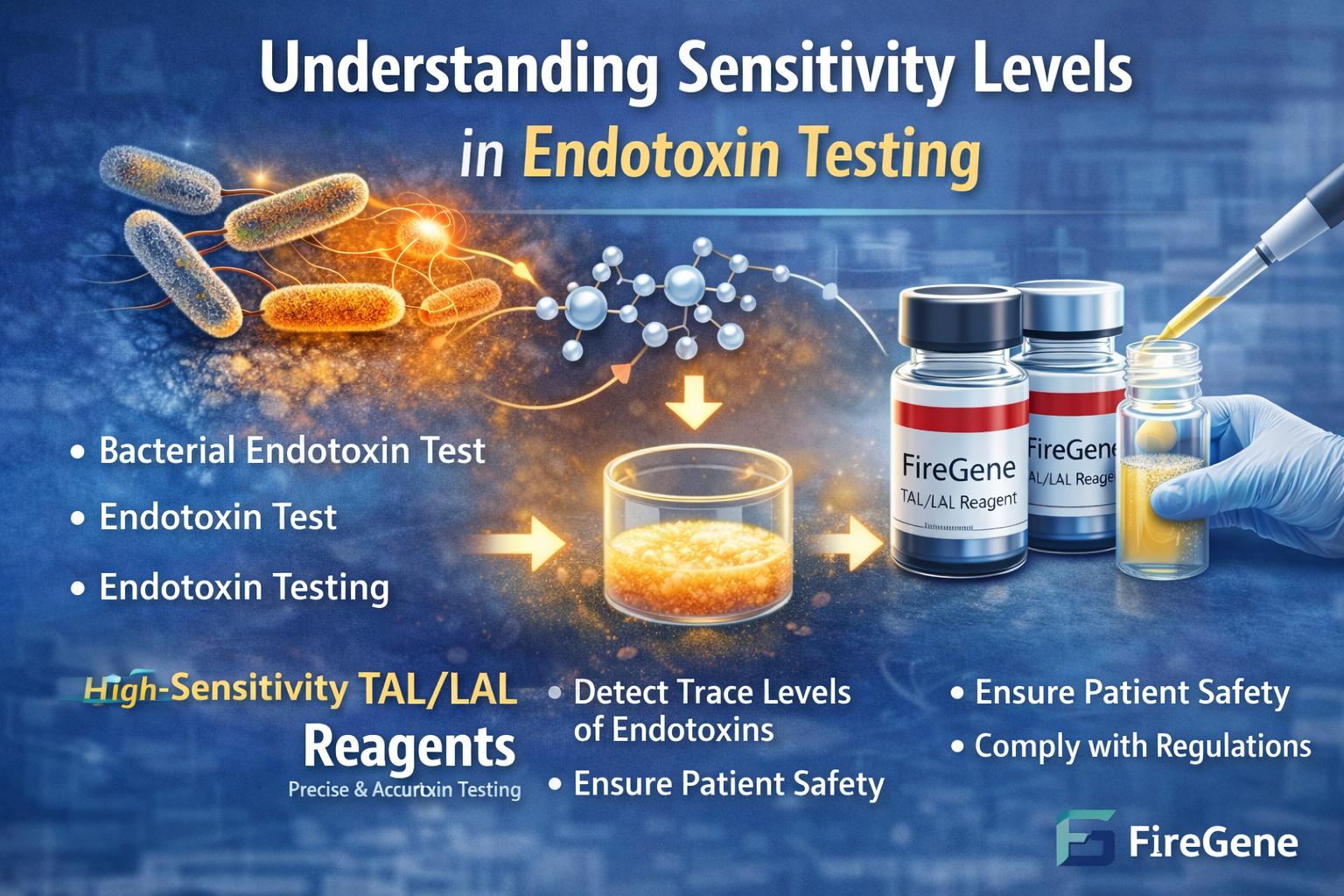
IV. FireGene’s High-Sensitivity TAL/LAL Reagents
As global demand for reliable endotoxin testing continues to grow, laboratories require reagents that provide both high sensitivity and consistent performance.
FireGene’s TAL/LAL Reagents are specifically designed to support accurate and dependable bacterial endotoxin test procedures. Our reagents are optimized for use in multiple endotoxin test methods, including:
Key advantages of FireGene TAL/LAL Reagents include:
-
High sensitivity for detecting trace endotoxin levels
-
Excellent reproducibility across repeated endotoxin tests
-
Compatibility with various sample matrices
-
Compliance with global bacterial endotoxin test standards
By providing high-performance reagents for endotoxin testing, FireGene helps laboratories maintain strict quality control throughout pharmaceutical and biotechnology manufacturing processes.
Whether performing routine endotoxin test procedures or advanced biologics quality control, FireGene’s TAL/LAL Reagents support accurate detection of endotoxin contamination.
Conclusion
Sensitivity is a fundamental factor in any endotoxin test. Detecting extremely low endotoxin concentrations is essential for ensuring patient safety, regulatory compliance, and product quality.
Effective endotoxin testing requires high-quality reagents, validated laboratory procedures, and appropriate testing methods. By understanding the factors that influence sensitivity in the bacterial endotoxin test, laboratories can improve detection accuracy and reduce the risk of endotoxin contamination.
With advanced TAL/LAL Reagent technology and reliable performance, FireGene provides powerful solutions for modern endotoxin testing applications.
As pharmaceutical innovation continues to grow, high-sensitivity endotoxin test systems will remain essential for protecting patients and maintaining the highest standards of product safety.
FireGene, light your research with passion, innovation, and profession.


