
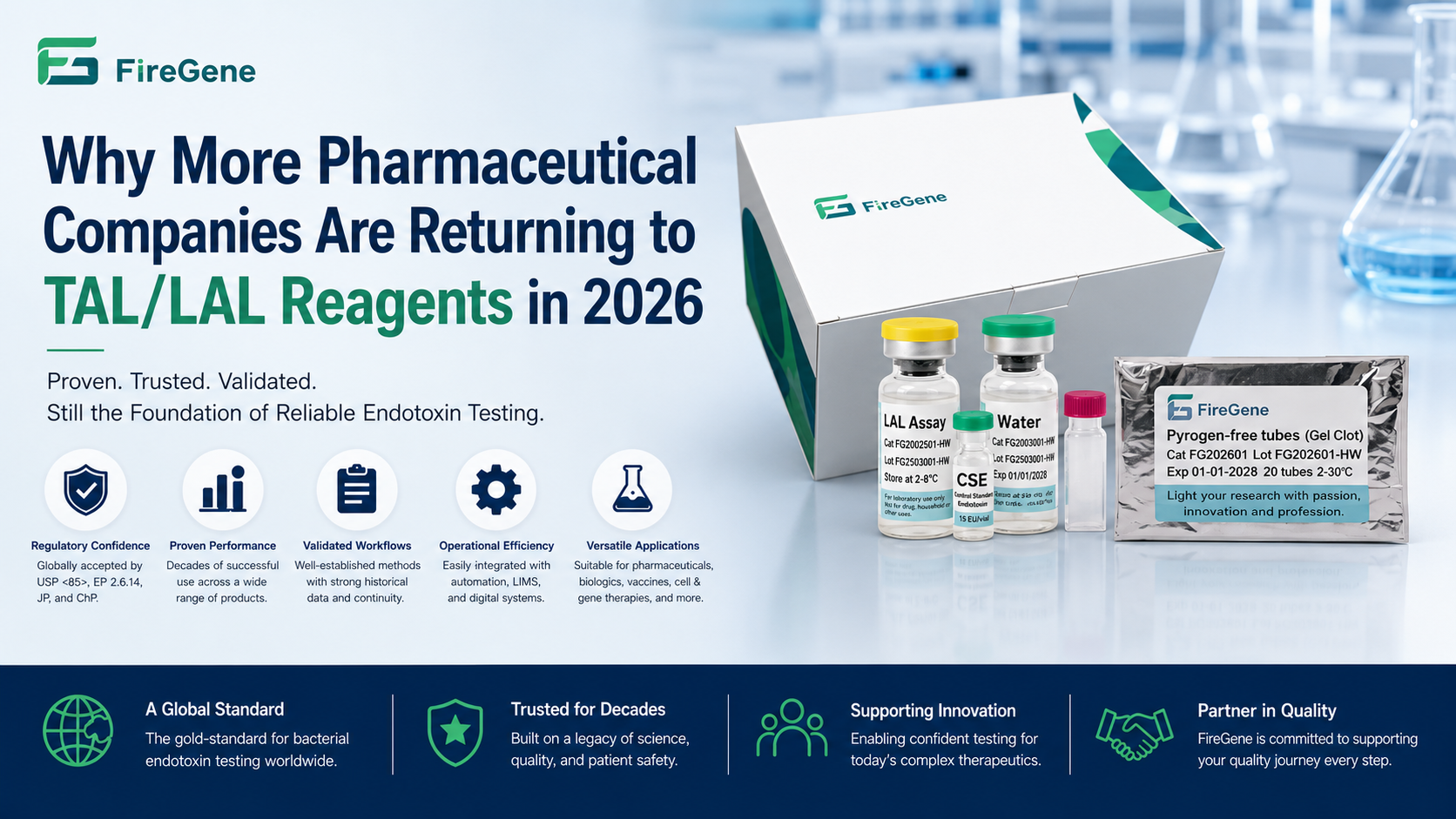
The Unexpected Trend in Endotoxin Testing
For years, conversations surrounding bacterial endotoxin testing have focused on one theme: what comes next.
New recombinant technologies, digital laboratory automation, artificial intelligence, and increasingly sophisticated quality systems have all reshaped how pharmaceutical manufacturers think about analytical testing. Industry conferences, scientific publications, and regulatory discussions frequently highlight emerging technologies designed to improve laboratory efficiency and sustainability.
Against this backdrop, many expected traditional TAL/LAL reagents to gradually become less prominent.
Instead, the opposite has happened.
Across pharmaceutical manufacturing, biotechnology, medical device production, and contract development and manufacturing organizations (CDMOs), many laboratories are continuing to invest in validated TAL/LAL-based workflows. Some organizations that evaluated alternative technologies have even decided to retain—or return to—their established TAL/LAL methods for routine quality control.
At first glance, this may seem surprising. Why would an industry built on scientific innovation continue to rely on a technology that has served as the foundation of endotoxin testing for decades?
The answer is remarkably practical.
Pharmaceutical quality control has never been about using the newest analytical technology. It is about using the technology that consistently delivers reliable, reproducible, and defensible results.
Every batch released to patients represents a commitment to safety. Every analytical result must withstand internal quality review, customer audits, and regulatory inspections. When the consequences of analytical error include product recalls, manufacturing delays, or patient risk, reliability often outweighs novelty.
That philosophy explains why TAL/LAL reagents continue to play such an important role in modern pharmaceutical quality systems.
Rather than being replaced by innovation, they have evolved alongside it.
Endotoxin Testing Has Become More Important—Not Less
The pharmaceutical industry has changed dramatically over the past decade.
Manufacturers are producing increasingly complex products, including:
- Monoclonal antibodies
- Recombinant proteins
- Cell therapies
- Gene therapies
- Viral vector products
- mRNA-based therapeutics
- Lipid nanoparticle formulations
- Antibody-drug conjugates (ADCs)
- Implantable medical devices
- Combination products
While these therapies represent extraordinary advances in medicine, they also introduce increasingly complex manufacturing processes and analytical challenges.
One challenge has remained constant throughout every technological advancement:
Bacterial endotoxins remain one of the most critical contaminants that pharmaceutical manufacturers must control.
Endotoxins are lipopolysaccharides (LPS) found in the outer membrane of Gram-negative bacteria. Unlike living microorganisms, endotoxins can remain biologically active even after bacteria have been destroyed through sterilization.
Their remarkable stability makes them particularly challenging.
Endotoxins may survive conditions that eliminate viable bacteria, contaminate purified water systems, adhere to production equipment, or persist within raw materials used during manufacturing. Even extremely small quantities introduced into injectable or implantable products can trigger fever, severe inflammatory responses, hypotension, septic shock, or life-threatening complications in patients.
For this reason, bacterial endotoxin testing is not simply another quality control procedure—it is one of the most critical safeguards protecting patient safety throughout pharmaceutical manufacturing.
As drug products become more sophisticated, the need for dependable endotoxin testing has only increased.
Why Are Pharmaceutical Companies Returning to TAL/LAL Reagents?
Although every organization has unique manufacturing requirements, conversations with quality professionals across the pharmaceutical industry reveal a consistent pattern.
The renewed confidence in TAL/LAL reagents is rarely driven by a single factor. Instead, it reflects a combination of scientific, regulatory, operational, and economic considerations.
In most cases, six practical reasons explain why companies continue to rely on—or return to—validated TAL/LAL assays.
1. Decades of Regulatory Confidence
Few analytical methods have accumulated as much regulatory experience as TAL/LAL-based bacterial endotoxin testing.
For decades, pharmaceutical manufacturers have successfully used these assays to support:
- Product release testing
- Raw material qualification
- Water system monitoring
- Process validation
- Cleaning validation
- Medical device testing
- Biopharmaceutical manufacturing
- Stability programs
Because regulators around the world have reviewed enormous volumes of data generated using TAL/LAL methods, quality organizations understand exactly how these assays fit within established GMP expectations.
That familiarity reduces uncertainty during inspections and simplifies regulatory communication.
2. Extensive Validation History
Changing an endotoxin testing method is rarely as simple as purchasing a new reagent.
For an approved pharmaceutical product, replacing an established analytical platform may require:
- New inhibition/enhancement studies
- Method suitability testing
- Comparative performance evaluations
- Revised standard operating procedures
- Additional analyst training
- Updated validation documentation
- Internal change-control approval
- Potential regulatory submissions
For organizations manufacturing products across multiple global facilities, these activities represent months of work—not days.
When an existing TAL/LAL assay already demonstrates excellent analytical performance, many companies conclude that maintaining a validated method represents the lower-risk decision.
3. Analytical Reliability Built Through Experience
Quality control laboratories value methods that behave predictably.
One reason TAL/LAL assays continue to inspire confidence is that scientists understand them exceptionally well.
Over decades of routine use, laboratories have developed comprehensive best practices covering:
- Sample preparation
- Positive product controls
- Inhibition and enhancement testing
- Standard curve verification
- Environmental monitoring
- Root cause investigations
- Method troubleshooting
When unexpected analytical results occur, experienced analysts already know where to begin investigating.
That accumulated operational knowledge represents an advantage that cannot be developed overnight.
4. Global Standardization
Large pharmaceutical companies rarely manufacture products for a single market.
A single injectable product may be distributed across North America, Europe, Asia-Pacific, the Middle East, and Latin America.
Using one globally standardized endotoxin testing strategy simplifies:
- Laboratory training
- Technology transfer
- Supplier qualification
- Documentation management
- Internal audits
- Cross-site investigations
- Manufacturing harmonization
For multinational organizations, maintaining consistency across dozens of manufacturing facilities often provides greater value than introducing unnecessary analytical variation.
5. Lower Operational Risk
Imagine a quality control laboratory responsible for releasing more than 400 batches of sterile injectable products every month.
The laboratory has accumulated ten years of endotoxin testing data using a validated kinetic chromogenic TAL/LAL assay. Analysts understand the workflow, historical trends are well established, and deviations are investigated using procedures refined through years of experience.
Replacing that workflow does not simply introduce a different reagent.
It affects documentation, training, historical trending, validation, software configuration, quality agreements, and manufacturing schedules.
When viewed through the lens of operational risk, maintaining a proven analytical method often becomes the more conservative—and more economical—decision.
6. Continued Technological Improvement
Perhaps the greatest misconception surrounding TAL/LAL reagents is the belief that they have remained unchanged for decades.
In reality, today's pharmaceutical-grade TAL/LAL reagents are manufactured under significantly more rigorous quality systems than earlier generations.
Modern manufacturers have continuously improved:
- Raw material qualification
- Manufacturing consistency
- Lot-to-lot reproducibility
- Stability testing
- Documentation quality
- Certificate of Analysis (COA) traceability
- Technical support
- Global supply chain reliability
As a result, today's TAL/LAL assays offer performance characteristics that are considerably more robust than many laboratories experienced twenty years ago.
Innovation has not bypassed TAL/LAL technology.
Instead, it has strengthened it.
Regulatory Confidence Still Drives Pharmaceutical Decision-Making
If you ask a pharmaceutical quality manager why their laboratory continues to use a validated TAL/LAL assay, the answer is rarely, "Because we've always done it this way."
Instead, the conversation usually begins with a different question:
"What level of risk does changing the method actually reduce?"
In pharmaceutical manufacturing, adopting a new analytical technology is never considered an improvement simply because it is newer. Every change must demonstrate measurable scientific, operational, and regulatory value while maintaining—or improving—patient safety.
This philosophy explains why TAL/LAL reagents continue to play such an important role in quality control laboratories worldwide.
For many manufacturers, maintaining a validated endotoxin testing workflow is not about resisting innovation. It is about protecting the integrity of a quality system that has been refined over many years.
When inspectors review a manufacturing site, they are interested in far more than whether a laboratory follows written procedures. They want evidence that the chosen analytical method is appropriate for its intended use, consistently performs as expected, and remains under effective control throughout its lifecycle.
A well-established TAL/LAL assay already satisfies these expectations in countless pharmaceutical facilities around the world.
That level of regulatory familiarity has real value.
A Validated Method Represents Years of Scientific Investment
Imagine a facility producing sterile injectable antibiotics.
Every commercial batch released over the past twelve years has undergone bacterial endotoxin testing using the same validated kinetic chromogenic TAL/LAL assay.
During those twelve years, the laboratory has accumulated:
- thousands of individual endotoxin test results
- seasonal performance trends
- analyst qualification records
- instrument performance histories
- reagent lot evaluations
- investigation reports
- environmental monitoring correlations
Taken together, these records form an exceptionally valuable body of scientific knowledge.
When analysts notice a subtle shift in recovery rates or positive product control performance, they can compare today's results against years of historical data. Small analytical changes become easier to detect because the laboratory understands exactly what "normal" looks like.
Changing the testing platform interrupts that continuity.
Even if a new method ultimately produces comparable results, the historical trend becomes more difficult to interpret because two different analytical systems now contribute to the same dataset.
For quality organizations committed to continuous improvement, preserving analytical consistency is often just as important as improving analytical sensitivity.
Changing an Endotoxin Method Is Far More Complex Than Changing a Reagent
Outside the pharmaceutical industry, replacing a laboratory reagent may seem straightforward.
Inside a GMP-regulated manufacturing facility, however, changing an endotoxin testing method is considered a controlled quality event.
Before a new assay can be implemented, quality teams typically need to complete a comprehensive change-control process.
This may include:
- Product-specific method suitability studies
- Inhibition and enhancement testing
- Accuracy and precision evaluations
- Robustness studies
- Analyst qualification
- Updated SOPs
- Revised training programs
- Software verification
- Instrument qualification
- Quality risk assessments
- Regulatory impact assessments
- Documentation updates
If the product is marketed internationally, the workload becomes even greater.
Large pharmaceutical companies frequently manufacture a single product for distribution across multiple regulatory jurisdictions, each with its own documentation expectations.
Consequently, changing an established bacterial endotoxin testing procedure can require months of planning and cross-functional collaboration involving Quality Assurance, Quality Control, Regulatory Affairs, Manufacturing, and Validation teams.
When viewed in this broader context, many organizations conclude that maintaining a validated TAL/LAL assay is the more practical decision.
Regulatory Expectations Continue to Reward Well-Validated Methods
One misconception occasionally encountered in discussions about endotoxin testing is that regulatory agencies encourage laboratories to adopt newer analytical technologies whenever they become available.
In reality, regulatory authorities focus on something far more important:
Can the manufacturer demonstrate that the chosen method is scientifically appropriate for its intended use?
Whether a laboratory uses a gel-clot assay, a kinetic chromogenic assay, or another validated approach, inspectors expect to see clear evidence of:
- method suitability
- reproducibility
- documented validation
- effective change control
- analyst competency
- ongoing performance monitoring
From a regulatory perspective, consistency often carries significant value.
A laboratory with years of successful inspection history using a validated TAL/LAL assay already possesses an analytical system that regulators understand well.
That familiarity reduces uncertainty during audits and minimizes unnecessary regulatory questions.
Why Historical Data Matters More Than Ever
Modern pharmaceutical manufacturing generates enormous quantities of analytical data.
Today's quality systems are no longer limited to individual batch release decisions.
Instead, laboratories continuously monitor long-term trends to identify subtle manufacturing changes before they affect product quality.
Historical endotoxin testing data can support investigations involving:
- Water system performance
- Raw material variability
- Manufacturing process optimization
- Cleaning validation
- Equipment maintenance
- Environmental excursions
- Supplier qualification
Suppose a QC laboratory observes a gradual increase in positive product control recovery over six months.
Without historical data, the change might appear insignificant.
With ten years of analytical history available, however, quality scientists can recognize the trend early and investigate potential process changes before they become manufacturing problems.
This type of long-term process understanding represents one of the greatest strengths of established TAL/LAL workflows.
The Growth of Biologics Has Increased the Need for Reliable Endotoxin Testing
Ironically, one of the strongest reasons TAL/LAL assays remain widely used is that pharmaceutical products have become more complex.
Biologics, cell therapies, gene therapies, antibody-drug conjugates, and lipid nanoparticle formulations all introduce analytical challenges that were uncommon only a decade ago.
Unlike simple aqueous samples, these products may contain:
- high protein concentrations
- surfactants
- lipids
- polysaccharides
- stabilizers
- nanoparticles
- viral vectors
- serum-derived components
Each of these materials has the potential to interfere with endotoxin detection if the analytical method has not been properly validated.
This is precisely why inhibition and enhancement testing remains an essential component of bacterial endotoxin testing.
Fortunately, TAL/LAL methodologies have accumulated decades of practical experience handling complex pharmaceutical matrices.
Scientists understand where interference is most likely to occur, how dilution strategies affect recovery, and how positive product controls should behave under validated testing conditions.
This depth of knowledge continues to make TAL/LAL assays particularly attractive for biologics manufacturers.
FireGene Supports Both Routine QC and Complex Sample Validation
As pharmaceutical products become increasingly sophisticated, laboratories need more than reliable reagents—they need practical technical support throughout the validation process.
FireGene's endotoxin testing portfolio is designed to support applications ranging from routine injectable drug testing to challenging biologics and advanced therapy products.
For example:
- Laboratories performing qualitative compendial testing may benefit from the FireGene Gel-Clot TAL Assay, which provides a straightforward workflow aligned with routine BET applications.
- Facilities requiring quantitative endotoxin analysis and higher throughput can implement the FireGene Kinetic Chromogenic Endotoxin Test Kit, which is suitable for microplate-reader-based workflows and supports sensitive quantitative measurements.
When used together with properly validated inhibition/enhancement studies, these assays help laboratories establish robust and reproducible endotoxin testing workflows suitable for modern GMP environments.
The Hidden Cost of Switching Technologies
When organizations evaluate new analytical technologies, attention often focuses on the purchase price of the reagent.
In reality, the reagent itself is usually one of the smallest components of the total implementation cost.
The larger investment lies elsewhere.
Switching an endotoxin testing platform can involve:
- validation studies
- analyst retraining
- revised electronic records
- updated quality documentation
- software configuration
- internal audits
- supplier qualification
- inventory management
- cross-site harmonization
- regulatory communication
For multinational pharmaceutical companies operating dozens of manufacturing sites, these costs can quickly exceed the price of the analytical reagents themselves.
This explains why purchasing decisions within pharmaceutical quality control are rarely based solely on reagent pricing.
Instead, laboratories evaluate the total lifecycle cost of an analytical method.
Viewed from this perspective, a mature TAL/LAL workflow often represents the most economical long-term solution—not because it is inexpensive, but because it minimizes disruption across the entire quality system.
Modern TAL/LAL Reagents Have Evolved Alongside Pharmaceutical Manufacturing
One of the most persistent misconceptions about TAL/LAL reagents is that they represent an "older" technology that has remained unchanged for decades.
In reality, while the biological principle behind the assay has remained consistent, nearly every aspect of modern TAL/LAL reagent manufacturing has evolved.
Today's pharmaceutical laboratories operate under significantly higher expectations than they did twenty years ago. Manufacturers demand tighter quality specifications, greater lot-to-lot consistency, more comprehensive documentation, and stronger supply chain reliability. TAL/LAL reagent manufacturers have responded by continuously refining their production processes to meet these expectations.
Modern TAL/LAL reagents benefit from improvements in:
- Raw material qualification and traceability
- Manufacturing process control
- Lot-to-lot consistency
- Stability studies
- Certificate of Analysis (COA) documentation
- Endotoxin standardization
- Packaging designed to minimize contamination risk
- Global inventory management and distribution
For quality control laboratories, these improvements translate into something far more valuable than incremental technical upgrades—they deliver greater confidence in day-to-day testing.
When laboratories are releasing hundreds of batches every month, consistency is often more important than novelty.
TAL/LAL Assays Continue to Integrate with Modern Laboratory Automation
Another common misunderstanding is that TAL/LAL assays are incompatible with modern laboratory automation.
The reality is quite different.
Today's pharmaceutical QC laboratories increasingly combine proven TAL/LAL chemistry with advanced digital workflows that improve efficiency, traceability, and data integrity.
Depending on laboratory size and throughput, TAL/LAL assays can be integrated with:
- Automated microplate readers
- Robotic liquid handling systems
- Electronic Laboratory Notebooks (ELNs)
- Laboratory Information Management Systems (LIMS)
- Automated data processing software
- Barcode-based sample tracking
- Environmental monitoring databases
- Electronic batch record systems
Rather than replacing TAL/LAL assays, automation enhances them by reducing manual handling, improving repeatability, and streamlining data management.
For example, a kinetic chromogenic assay performed on a validated microplate reader can automatically calculate standard curves, monitor reaction kinetics, and generate electronic records that integrate directly into laboratory quality systems.
This combination of established assay chemistry and modern automation allows laboratories to improve productivity without sacrificing analytical confidence.
Why CDMOs Continue to Standardize Around TAL/LAL Testing
Contract Development and Manufacturing Organizations (CDMOs) occupy a unique position within the pharmaceutical industry.
Unlike a manufacturer producing only its own products, a CDMO may support dozens—or even hundreds—of clients, each with different formulations, manufacturing processes, regulatory requirements, and quality expectations.
Managing this diversity requires standardization wherever possible.
Endotoxin testing is one area where standardization delivers significant operational advantages.
Imagine a CDMO supporting:
- A monoclonal antibody manufacturer
- A vaccine developer
- A medical device company
- A cell therapy startup
- A sterile injectable manufacturer
Although each client produces a different product, all require dependable bacterial endotoxin testing.
Using a well-established TAL/LAL platform allows the laboratory to:
- Simplify analyst training
- Reduce instrument variability
- Harmonize SOPs
- Streamline inventory management
- Improve inter-laboratory consistency
- Support technology transfer between client projects
Because TAL/LAL assays are already familiar to most pharmaceutical companies and regulatory agencies, they often become the most practical choice for multi-client manufacturing environments.
The Importance of Choosing the Right TAL/LAL Method
Choosing to use TAL/LAL reagents is only the first step.
Selecting the appropriate assay format is equally important.
Different laboratories have different priorities, and no single method is ideal for every application.
The most widely used TAL/LAL methods include Gel-Clot and Kinetic Chromogenic assays, each offering distinct advantages.
Gel-Clot TAL Assay
The Gel-Clot method remains the original compendial bacterial endotoxin test and continues to serve as the referee method described in major pharmacopeias.
Its popularity stems from its simplicity.
The assay requires relatively little instrumentation, follows a straightforward workflow, and provides a clear qualitative endpoint based on clot formation.
Many laboratories continue to use Gel-Clot assays for:
- Raw material testing
- Water system monitoring
- Incoming material inspection
- Routine batch release
- Laboratories with lower testing volumes
- Facilities requiring a simple compendial method
For organizations seeking a reliable qualitative endotoxin test that is easy to implement and validate, Gel-Clot assays remain an excellent choice.
Kinetic Chromogenic TAL/LAL Assay
For laboratories requiring quantitative endotoxin measurements, higher throughput, or automated analysis, kinetic chromogenic assays have become one of the most widely adopted solutions.
Instead of relying on visual clot formation, kinetic chromogenic assays continuously monitor color development throughout the reaction.
This approach offers several advantages:
- Quantitative endotoxin measurement
- Excellent analytical sensitivity
- Broad dynamic range
- Automated result calculation
- Higher sample throughput
- Reduced subjectivity
- Easy integration with microplate readers
These characteristics make kinetic chromogenic assays particularly well suited for:
- Pharmaceutical QC laboratories
- Biologics manufacturing
- Water system validation
- Process validation studies
- High-volume routine testing
Common Myths About TAL/LAL Reagents
As endotoxin testing technologies continue to evolve, several misconceptions about TAL/LAL reagents continue to circulate within the industry.
Clarifying these misunderstandings helps laboratories make decisions based on scientific evidence rather than assumptions.
Myth 1: TAL/LAL Reagents Are Outdated
The biological mechanism underlying TAL/LAL assays has remained remarkably effective because bacterial endotoxins themselves have not changed.
What has changed is the quality of reagent manufacturing, analytical instrumentation, validation practices, and laboratory automation.
Modern TAL/LAL workflows are substantially more sophisticated than those used two decades ago.
Myth 2: Switching Methods Automatically Improves Compliance
Regulatory agencies do not evaluate laboratories based on whether they use the newest technology.
They evaluate whether the selected method has been properly validated, consistently controlled, and scientifically justified.
A well-validated TAL/LAL assay fully supports these expectations when implemented correctly.
Myth 3: Every Endotoxin Assay Produces Identical Results
Endotoxin detection depends not only on the assay itself but also on the characteristics of the sample being tested.
Proteins, surfactants, lipids, salts, and other formulation components may influence endotoxin recovery if inhibition or enhancement studies have not been performed.
Regardless of the testing technology selected, product-specific validation remains essential.
Myth 4: Endotoxin Testing Is Only Required for Injectable Drugs
While injectable pharmaceuticals remain one of the primary applications, bacterial endotoxin testing is also routinely performed for:
- Medical devices
- Dialysis products
- Biotechnology products
- Vaccine manufacturing
- Pharmaceutical-grade water
- Raw materials
- Cell and gene therapy manufacturing
- Combination products
As advanced therapies continue to expand, reliable endotoxin testing has become increasingly important across the life sciences industry.
FireGene: Supporting Reliable Endotoxin Testing from Validation to Routine QC
Reliable endotoxin testing depends on more than a high-quality reagent. Laboratories also require dependable documentation, technical support, and products that integrate seamlessly into validated quality systems.
FireGene has developed a comprehensive portfolio of endotoxin testing solutions designed to support pharmaceutical manufacturers, biotechnology companies, academic research laboratories, and medical device manufacturers throughout the entire testing workflow.
Our portfolio includes:
- Gel-Clot TAL Assays for compendial qualitative testing
- Kinetic Chromogenic Endotoxin Test Kits for quantitative analysis
- Control Standard Endotoxin (CSE) for calibration and method validation
- Endotoxin-Free Water for reagent preparation and dilution
- Pyrogen-Free Test Tubes and laboratory accessories to reduce contamination risk
Together, these products support applications ranging from routine batch release to method development, validation studies, and ongoing environmental monitoring.
Frequently Asked Questions (FAQ)
1. Why are pharmaceutical companies still using TAL/LAL reagents in 2026?
Despite the emergence of newer endotoxin detection technologies, TAL/LAL reagents remain the preferred choice for many pharmaceutical manufacturers because they combine decades of successful regulatory use with proven analytical performance.
Most commercial pharmaceutical products have been developed, validated, and released using TAL/LAL-based bacterial endotoxin tests. Maintaining these validated workflows helps laboratories preserve historical data continuity, simplify regulatory compliance, and reduce the operational risks associated with implementing new analytical methods.
For many organizations, the decision is not about choosing an "older" technology—it is about selecting the method that provides the highest level of confidence for routine product release.
2. Are TAL and LAL reagents different?
Both TAL (Tachypleus Amebocyte Lysate) and LAL (Limulus Amebocyte Lysate) reagents detect bacterial endotoxins through the same coagulation cascade triggered by endotoxin.
The primary distinction lies in the horseshoe crab species from which the lysate is derived. In practical pharmaceutical applications, both TAL and LAL reagents are widely used for bacterial endotoxin testing when manufactured and validated according to appropriate quality standards.
3. Are TAL/LAL reagents accepted by global regulatory agencies?
Yes.
Validated TAL/LAL assays remain widely accepted for bacterial endotoxin testing under the major pharmacopeias used by the global pharmaceutical industry, including USP <85>, European Pharmacopoeia (EP 2.6.14), Japanese Pharmacopoeia (JP), and the Chinese Pharmacopoeia (ChP).
Regardless of the specific assay selected, manufacturers are expected to demonstrate method suitability, product-specific validation, and ongoing analytical control as part of GMP compliance.
4. Which TAL/LAL method should I choose?
The best method depends on your application.
A Gel-Clot assay is often the preferred option when laboratories require a straightforward qualitative compendial method with minimal instrumentation.
A Kinetic Chromogenic assay is generally better suited for laboratories that need quantitative endotoxin measurements, higher sample throughput, automated data analysis, or integration with microplate readers.
Many pharmaceutical companies use both methods for different stages of product development and quality control.
5. Can TAL/LAL assays be used for biologics?
Yes.
Modern biologics—including monoclonal antibodies, recombinant proteins, vaccines, cell therapy support materials, and gene therapy manufacturing components—are routinely evaluated using validated TAL/LAL assays.
Because complex biological matrices may interfere with endotoxin detection, product-specific inhibition/enhancement testing remains an essential part of method validation regardless of the analytical platform used.
6. Why is method validation so important in endotoxin testing?
Validation demonstrates that an endotoxin testing method performs reliably for a specific product or sample matrix.
Even highly sensitive assays may produce misleading results if interference from formulation components has not been evaluated.
Comprehensive validation helps ensure analytical accuracy, reproducibility, and confidence in batch release decisions.
7. How can laboratories reduce the risk of endotoxin contamination?
Successful endotoxin control begins long before the assay itself.
Laboratories should implement comprehensive contamination control strategies that include:
- Using pyrogen-free consumables and certified endotoxin-free water
- Following validated sample handling procedures
- Preventing cross-contamination during reagent preparation
- Performing routine equipment cleaning and depyrogenation
- Training analysts in proper aseptic technique
- Monitoring environmental conditions where appropriate
- Verifying reagent storage and handling conditions according to the manufacturer's recommendations
A robust contamination control program helps improve both analytical reliability and long-term data consistency.
8. What should I consider when selecting a TAL/LAL reagent supplier?
A reagent supplier should offer more than a testing kit.
Key factors include:
- Consistent lot-to-lot quality
- Comprehensive Certificates of Analysis (COAs)
- Reliable product availability
- Technical support for validation and troubleshooting
- GMP-oriented manufacturing practices
- A complete portfolio of supporting reagents and accessories
- Responsive customer service
Selecting a supplier capable of supporting laboratories throughout the entire validation and testing lifecycle can significantly simplify routine quality control operations.
Conclusion
The conversation surrounding endotoxin testing has changed considerably over the past decade.
Rather than asking whether laboratories should adopt the newest technology available, pharmaceutical manufacturers are increasingly asking a more meaningful question:
Which analytical method provides the greatest confidence in protecting product quality and patient safety?
For many organizations, the answer continues to be TAL/LAL reagents.
This renewed confidence is not driven by tradition or resistance to innovation. Instead, it reflects the realities of modern pharmaceutical manufacturing. Quality control laboratories must balance scientific rigor with regulatory expectations, operational efficiency, and the responsibility of making reliable batch release decisions every day.
Validated TAL/LAL assays continue to deliver that balance.
Their strengths extend beyond analytical sensitivity alone. Decades of accumulated validation experience, well-established pharmacopeial guidance, extensive historical data, and broad regulatory familiarity make them one of the most dependable analytical tools available for bacterial endotoxin testing.
At the same time, TAL/LAL technology has continued to evolve. Improvements in reagent manufacturing, quality systems, automation, and laboratory workflows have enabled these assays to remain highly relevant in an era defined by biologics, advanced therapies, and increasingly complex pharmaceutical products.
Ultimately, the choice between endotoxin testing methods should never be framed as a competition between "traditional" and "modern" technologies. Instead, it should be based on scientific evidence, product requirements, and the ability of a validated method to consistently generate accurate, reproducible, and inspection-ready results.
For many pharmaceutical companies in 2026, that evidence continues to support TAL/LAL reagents as a trusted foundation of modern endotoxin testing.
How FireGene Helps Laboratories Build Confidence in Endotoxin Testing
At FireGene, we believe that dependable endotoxin testing requires more than high-quality reagents. It requires a complete quality-focused workflow supported by reliable products, clear documentation, and responsive technical expertise.
Our endotoxin testing portfolio is designed to help laboratories establish and maintain validated bacterial endotoxin testing programs across pharmaceutical manufacturing, biotechnology research, medical device production, and quality control laboratories.
Whether your laboratory is performing routine batch release, validating a new analytical method, monitoring pharmaceutical water systems, or developing advanced biologics, FireGene provides the tools needed to support reliable, reproducible endotoxin testing.
Explore our complete portfolio of endotoxin testing solutions, including:
- Gel-Clot TAL Assays
- Kinetic Chromogenic Endotoxin Test Kits
- Control Standard Endotoxin (CSE)
- Endotoxin-Free Water
- Pyrogen-Free Consumables
Our technical team is also available to assist with product selection, method suitability studies, and endotoxin testing questions, helping laboratories build confidence in every stage of the analytical process.
FireGene Endotoxin Testing
Ready to run your endotoxin assay?
FireGene offers a complete endotoxin testing toolkit — from TAL reagents and CSE standards to pyrogen-free consumables and LAL reagent water. All products are aligned with USP <85>, EP 2.6.14, and JP 4.01.


