
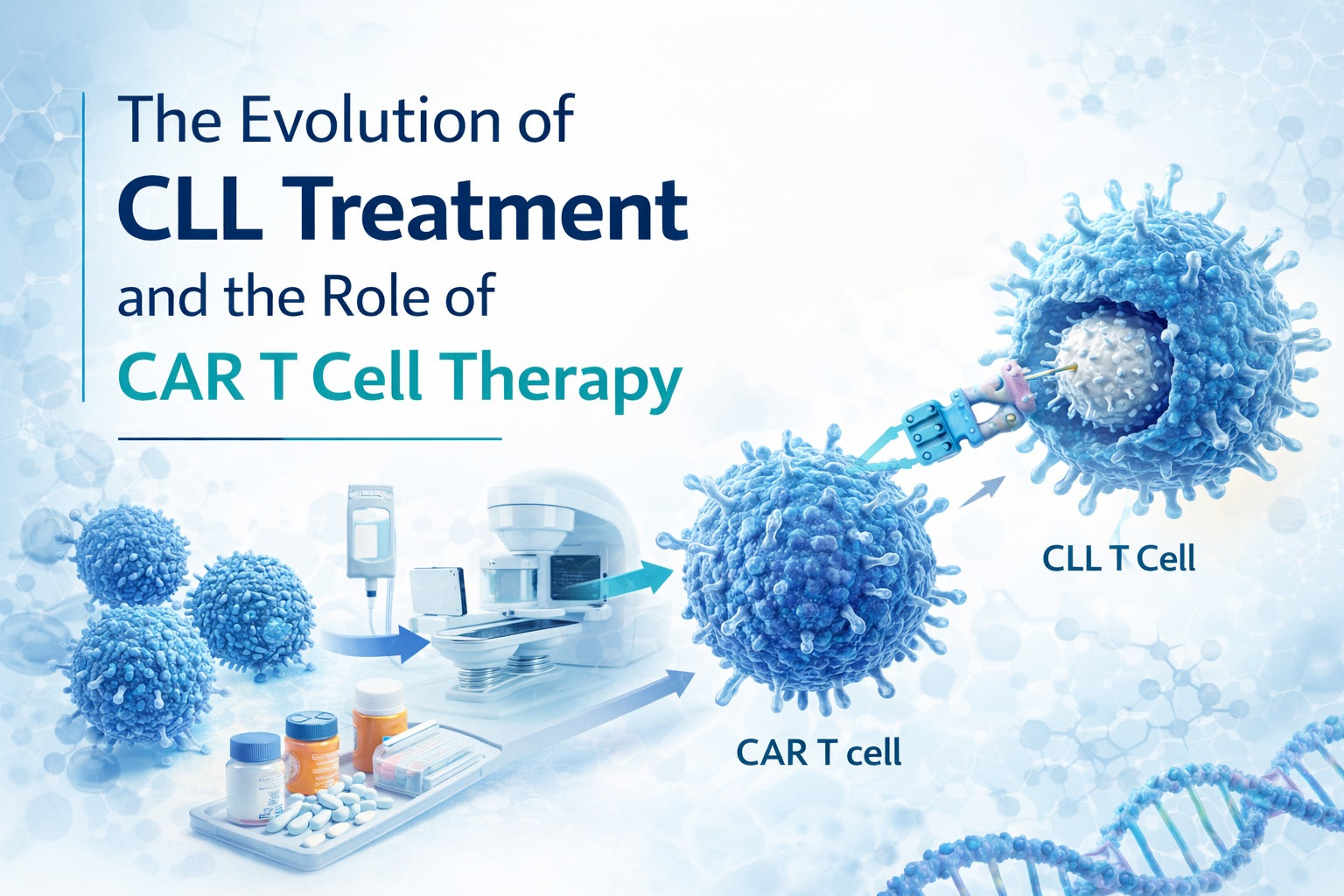
Chronic Lymphocytic Leukaemia has become one of the clearest examples of how cancer care can evolve through better biology, smarter targeting, and more personalised treatment strategies. Over time, the approach to CLL Treatment has shifted from broad traditional therapies to highly targeted options designed around disease pathways, patient needs, and immune-based innovations. Among the most exciting advances in this journey is CAR T cell therapy, which continues to expand the conversation around precision haematology and next-generation cell therapy.
Understanding Chronic Lymphocytic Leukaemia
Chronic Lymphocytic Leukaemia is a blood cancer that begins in lymphocytes, most commonly B cells. It usually develops gradually, which is why the word “chronic” is part of its name. In many patients, the disease course can vary, and symptoms, disease activity, patient fitness, and molecular features often guide treatment decisions.
A modern understanding of Chronic Lymphocytic Leukemia goes beyond simple diagnosis. It now includes disease biology, signalling pathways, genetic risk markers, immune dysfunction, and response to targeted therapy. This deeper understanding has driven steady improvements in CLL Treatment over the years.
Why has CLL become a model for treatment progress
CLL is often discussed as a model disease in haematology because treatment options have improved dramatically. The field has benefited from advances in targeted therapy, antibody-based strategies, and cellular immunotherapy.
This progress highlights how better science can lead to better care through:
- more precise disease monitoring
- stronger patient stratification
- more targeted therapeutic choices
- growing use of immune-based interventions
The importance of disease biology in treatment planning
Understanding the biology of CLL helps explain why treatment has become more individualised. Instead of relying on one standard pathway for all patients, modern care increasingly matches therapy to disease behavior and treatment goals.
The evolution of CLL Treatment
The history of CLL Treatment reflects a broader shift in oncology. Earlier treatment models relied more heavily on conventional chemotherapy-based approaches. Over time, the field moved toward chemoimmunotherapy, then further into targeted small molecules, monoclonal antibodies, and cellular therapies. This evolution has created a more hopeful treatment landscape, with more options and more strategic sequencing than ever before.
Early treatment approaches in CLL
Traditional treatment approaches helped establish the first practical management strategies for Chronic Lymphocytic Leukemia. These therapies played an important role in disease control and set the stage for later innovation.
The rise of targeted therapy in CLL Treatment
One of the biggest shifts in CLL Treatment came from therapies designed to interrupt specific pathways involved in leukaemia cell survival. This changed the field by shifting treatment from broad cytotoxicity toward mechanism-based precision.
Why has immune-based treatment become more important
As scientists learned more about tumour-immune interactions, it became clear that immune-directed strategies could offer important value in CLL. This led to increased interest in antibody therapies, immune modulation, and, eventually, CAR T cell therapy.
CAR T cell therapy in modern haematology
CAR T cell therapy is one of the most innovative developments in cancer treatment. In this approach, a patient’s T cells are collected, engineered to recognise a cancer-associated target, expanded, and returned to the patient to help the immune system attack malignant cells. In the context of Chronic Lymphocytic Leukaemia, CAR T cell therapy is a high-interest area because it combines personalised treatment, advanced cell engineering, and immune-driven cancer control.
What makes CAR T cell therapy unique
Unlike conventional therapies, CAR T cell therapy uses living immune cells as the treatment platform. This creates a highly specialised therapeutic model that depends on biology, manufacturing quality, and cell functionality.
Why CAR T cell therapy matters in CLL Treatment
The growing interest in CAR T cell therapy reflects its potential role in difficult-to-treat settings and its importance in the future of cell-based oncology. Even where treatment pathways continue to evolve, the Role of CAR T Cell Therapy remains a major focus in both research and clinical development.

The Role of CAR T Cell Therapy in CLL Treatment
The Role of CAR T Cell Therapy in CLL is closely linked to the broader evolution of precision medicine. It brings a personalised strategy into a disease area where durable control, immune engagement, and treatment sequencing all matter.
As cell therapy platforms advance, the role of CAR T is increasingly discussed in relation to patient selection, disease burden, immune fitness, manufacturing consistency, and combination strategy. This makes the Role of CAR T Cell Therapy important not only clinically, but also scientifically.
A bridge between immunology and oncology
One reason the Role of CAR T Cell Therapy is so compelling is that it connects two powerful fields: immunology and cancer treatment. By redirecting T cells with engineered specificity, CAR T therapy transforms immune biology into an active therapeutic tool.
Why the role keeps growing
The Role of CAR T Cell Therapy continues to grow as the field learns to improve targeting, enhance persistence, refine manufacturing, and optimise patient pathways. Each of these improvements supports the long-term promise of cell therapy.
T cell isolation as a critical first step
Before CAR T cells can be engineered, collected immune cells must be handled carefully. That makes T cell isolation an important early step in the cell therapy workflow. The quality of isolated cells can influence downstream processing, expansion, characterisation, and manufacturing performance.
Why T cell isolation matters
T cell isolation is more than a preparatory task. It is a quality-sensitive step that helps shape the biological starting material for the full cell therapy process. Cleaner, more viable, and more functionally relevant cell populations support stronger downstream consistency.
T cell isolation and workflow standardisation
As cell therapy research advances, T cell isolation is increasingly discussed alongside workflow standardisation, sample integrity, and analytical support. This is one reason the topic fits well with FireGene’s broader focus on laboratory workflow quality.
CAR T cell manufacturing: where biology meets process control
CAR T cell manufacturing is one of the most important parts of modern cell therapy development. It includes cell collection, activation, gene transfer or engineering, expansion, formulation, and release-oriented quality control. Because the treatment itself is cell-based, manufacturing quality directly influences therapeutic readiness. The rise of CAR T cell manufacturing has also increased the importance of reproducibility, controlled reagents, high-quality sample preparation, molecular testing, and process documentation.
What supports better CAR T cell manufacturing
High-quality CAR T cell manufacturing benefits from strong process design and laboratory consistency. Important workflow themes include:
- reliable input cell quality
- controlled handling conditions
- reproducible reagent performance
- supportive analytical workflows
- strong documentation and quality monitoring
Why CAR T cell manufacturing is central to future innovation
As cell therapy advances, CAR T cell manufacturing will remain a major innovation area, as improvements in process control can support scale, consistency, and broader accessibility.

Microbubble cell separation and emerging workflow innovation
Although Microbubble cell separation is still a niche phrase in search compared with broader cell processing terms, it reflects the kind of innovative thinking that continues to shape advanced therapy workflows. New separation approaches are being explored to improve cell enrichment, handling efficiency, and downstream usability. In research-focused conversations, Microbubble cell separation can be part of the broader discussion around how cell selection and sample preparation methods may evolve to support better manufacturing and analytical performance.
Why cell separation technologies matter
Cell separation quality can influence the starting condition of a therapy workflow. Whether the platform is highly established or emerging, the goal remains the same: generate cleaner, more useful input material for downstream steps.
Microbubble cell separation in the larger cell therapy landscape
Even when discussed as an emerging concept, Microbubble cell separation fits naturally into the wider innovation story around immune cell processing, manufacturing efficiency, and translational workflow design.
FireGene’s relevance to cell therapy and translational workflows
FireGene is not positioned as a direct provider of CAR T therapy. Still, its scientific portfolio aligns with many of the enabling workflows that matter in translational research and advanced laboratory settings. Through sample preparation solutions, molecular biology reagents and kits, nucleic acid extraction products, molecular diagnostic kits, life science buffers, and quality-oriented technical support, FireGene fits naturally into research environments where cell therapy development and molecular analysis intersect.
Cell therapy will remain part of the conversation.
Because the Role of CAR T Cell Therapy continues to expand, cell therapy is expected to remain an important part of the broader CLL innovation story. This makes supporting workflows, including T cell isolation and CAR T cell manufacturing, increasingly relevant in research and translational science.
Practical takeaway
The story of Chronic Lymphocytic Leukemia is also the story of how oncology has progressed from general treatment models to highly specialised strategies. CLL Treatment now includes a much richer range of tools than in the past, and CAR T cell therapy stands out as one of the most exciting developments in that journey.
At the same time, the field is teaching an important lesson: breakthrough therapies depend not only on clinical vision, but also on workflow quality. That includes careful cell handling, robust T cell isolation, dependable CAR T cell manufacturing, and continuous innovation in cell processing technologies such as Microbubble cell separation.
FAQs
What is Chronic Lymphocytic Leukaemia?
Chronic Lymphocytic Leukaemia is a type of blood cancer that usually begins in lymphocytes, most often B cells, and often develops gradually over time.
What is CAR T cell therapy?
CAR T cell therapy is a personalised treatment approach in which a patient’s T cells are collected, engineered to recognise cancer targets, expanded, and returned to the body to support immune attack against malignant cells.
Why is CAR T cell therapy important in CLL Treatment?
CAR T cell therapy is important in CLL Treatment because it represents a highly targeted immune-based strategy and continues to shape the future Role of CAR T Cell Therapy in hematologic oncology.
What is T cell isolation?
T cell isolation is the process of separating T cells from a patient sample for study, characterisation, or downstream cell therapy workflows.
Why is CAR T cell manufacturing so important?
CAR T cell manufacturing is essential because the quality, consistency, and functionality of the engineered cells depend on how well the process is designed and controlled.
What is Microbubble cell separation?
Microbubble cell separation is an emerging cell-processing concept that may enable cleaner, more efficient cell enrichment in research and advanced therapy workflows.
How does FireGene relate to this topic?
FireGene supports the research ecosystem around these topics through sample preparation tools, molecular biology reagents and kits, nucleic acid extraction products, molecular diagnostic kits, life science buffers, and workflow-oriented laboratory support.
Conclusion:
The evolution of CLL Treatment shows how far modern haematology has come. From traditional approaches to targeted therapy and now to CAR T cell therapy, the treatment journey for Chronic Lymphocytic Leukaemia reflects the power of scientific progress. The growing Role of CAR T Cell Therapy also highlights the importance of everything happening behind the scenes: T cell isolation, CAR T cell manufacturing, innovative separation technologies, and the laboratory workflows that make progress possible. For research-driven organisations and scientific audiences, this makes the topic both clinically meaningful and operationally relevant.


