
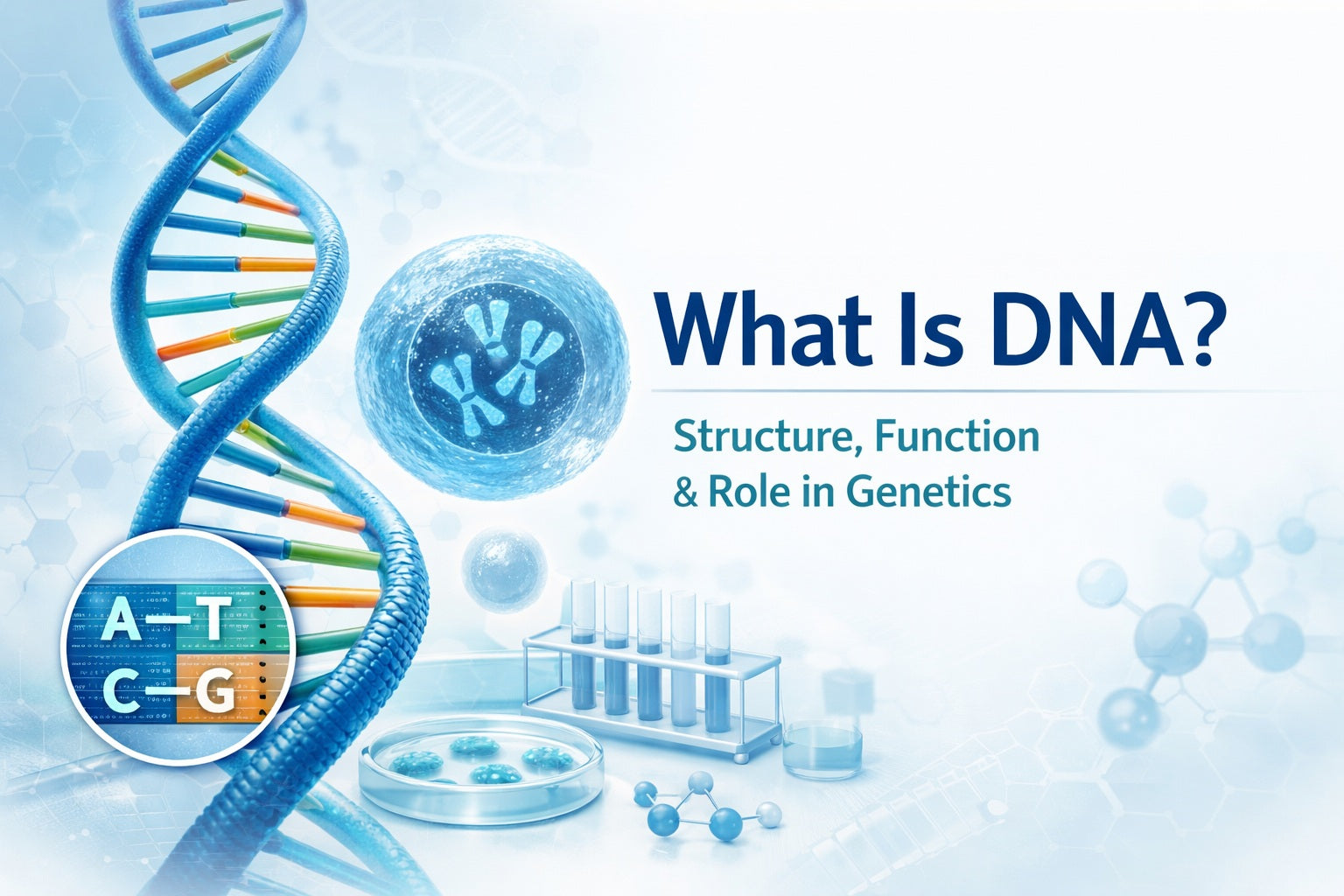
DNA is one of the most important molecules in biology because it carries the instructions that help living things grow, function, and pass traits from one generation to the next. When people ask what DNA is, they are usually referring to the foundation of heredity, cellular activity, and modern genetics. In simple terms, DNA stores biological information in a stable, organised form that cells can read and use.
A clear understanding of DNA basics helps students, researchers, and healthcare innovators connect core biology with real-world applications. From inheritance and gene expression to laboratory testing and molecular research, DNA stands at the centre of how life is studied and understood. That is why learning the definition, structure, function, and role of DNA in genetics is so valuable.
What is DNA?
The simplest definition of DNA is that it stands for deoxyribonucleic acid, a molecule that stores genetic information in almost all living organisms. These instructions guide how cells grow, divide, build proteins, and maintain normal biological processes.
When someone asks what DNA is, the answer can be kept simple: DNA is the body's long-term information storage system. It contains the code that helps determine inherited traits and supports the biological functions needed for life.
Why DNA matters so much
DNA matters because it helps organise life. Instead of each cell acting randomly, DNA provides structured instructions. These instructions support everything from eye colour and hair texture to enzyme production and immune responses.
DNA is important because it helps:
- store hereditary information
- guide protein production
- support cell growth and repair
- pass traits from parents to offspring
DNA basics in simple words
If you are learning the basics of DNA, think of it as a biological instruction manual. Every cell uses parts of that manual to do specific jobs. Some cells use DNA information to make structural proteins, while others use it to support signalling, metabolism, or defence.
DNA structure: how DNA is built
The DNA structure is often described as a double helix. This means DNA looks like a twisted ladder. The sides of the ladder are made of sugar and phosphate, while the rungs are made of paired nitrogen bases. This elegant structure is one reason DNA is so effective. It is compact enough to fit inside cells while still holding a huge amount of information.
The double helix explained.
The double helix has two strands that run in opposite directions and wrap around each other. Pairs of bases connect these strands:
- Adenine pairs with thymine
- Cytosine pairs with guanine
This pairing system helps DNA copy itself accurately during cell division, which is essential for growth and inheritance.
Why does DNA structure support stability
One of the most useful features of DNA structure is stability. The sugar-phosphate backbone protects the molecule, while complementary base pairing makes the stored information easier to copy with high fidelity. This stability is one reason DNA is so central to genetics, biotechnology, and molecular analysis.
Components of DNA
To fully understand the molecule, it helps to examine its components. DNA is made of smaller units called nucleotides. Each nucleotide contains three main parts:
- a sugar molecule called deoxyribose
- a phosphate group
- a nitrogenous base
These repeated units join together to form long chains, which then pair into the full DNA molecule.
The four bases in DNA
The nitrogen bases in DNA are:
- adenine (A)
- thymine (T)
- cytosine (C)
- guanine (G)
The sequence of these bases encodes the genetic information. Even small changes in the base sequence can affect how genes function.
Why the components of DNA matter
The components of DNA matter because each part contributes to the molecule's role. The sugar and phosphate create the structural framework, while the nitrogen bases store the code itself. Together, they allow DNA to be strong, readable, and biologically useful.

DNA function: what DNA does in living cells
The DNA function goes far beyond simple storage. DNA helps direct cellular activity by providing the instructions needed to build proteins and regulate biological processes. Proteins are essential because they support structure, metabolism, signalling, transport, and many other cell functions.
At a basic level, the DNA function can be understood in three main ways:
- storing genetic information
- transmitting that information during cell division
- helping guide protein production through gene expression
DNA functions in protein synthesis
One of the most important parts of DNA function is its role in protein synthesis. Cells read specific DNA sequences and convert that information into RNA, which then helps direct protein assembly. This process connects the genetic code to real biological activity.
DNA function in inheritance
DNA also supports inheritance by allowing traits to pass from parents to children. During reproduction, DNA is transmitted in a controlled way so the next generation receives genetic information that helps shape development and biological characteristics.

Role of DNA in genetics
The role of DNA in genetics is central because genetics is the study of genes, heredity, and variation. DNA is the molecule that carries genes, and genes are the functional units that encode traits and biological processes. Without DNA, there would be no reliable system for inheritance. Genetics depends on DNA because it provides the code that can be copied, studied, compared, and interpreted.
How DNA supports genes and heredity
Genes are segments of DNA that contain instructions for specific functions. Some genes help control physical traits, while others influence how cells behave. The role of DNA in genetics is to make genes storable, transferable, and usable across generations.
DNA and variation in genetics
DNA also supports genetic variation. Small differences in DNA sequences help explain how individuals can share many traits yet remain unique. This variation is essential in evolution, medical genetics, and biological diversity.
DNA basics and chromosomes
Another helpful part of DNA basics is understanding how DNA is packaged. In cells, DNA is not left loose. It is wrapped around proteins and organised into chromosomes. This packaging helps DNA stay compact, protected, and manageable during cell division.
Why chromosomes matter
Chromosomes allow large amounts of DNA to fit inside the nucleus of a cell. They also help ensure that genetic material is properly copied and distributed during cell division.
DNA, genes, and chromosomes together
A simple way to understand the relationship is this:
- DNA is the molecule
- Genes are specific segments of DNA
- Chromosomes are organised packages of DNA
This framework makes DNA basics easier for students and general readers to understand.
DNA in modern science and research
DNA is not only important in textbooks. It is also essential in modern research, diagnostics, and biotechnology. Scientists study DNA to understand disease mechanisms, identify pathogens, analyse genetic variation, and improve laboratory workflows.
This real-world importance connects naturally with FireGene's scientific focus. FireGene supports molecular research through nucleic acid extraction products, molecular diagnostic kits, molecular biology reagents and kits, sample preparation solutions, and related tools that help laboratories work more efficiently with DNA and RNA workflows.
How DNA is used in laboratories
DNA analysis supports many applications, including:
- genetic research
- pathogen detection
- molecular diagnostics
- sequencing workflows
- quality control in laboratory settings
Why DNA knowledge matters for modern innovation
A strong understanding of DNA helps researchers make smarter decisions in assay development, sample preparation, detection strategy, and workflow optimisation. That is why educational content about DNA remains valuable across biology, medicine, and laboratory science.
DNA replication: how DNA copies itself
A major reason DNA is so effective is that it can replicate. DNA replication is the process through which a cell makes a copy of its DNA before division. This ensures that new cells receive the genetic information they need.
Why accurate copying matters
Accurate replication supports healthy growth, tissue maintenance, and biological continuity. The pairing rules in DNA structure help make this copying process more reliable.
Replication connects structure and function
Replication is a great example of how DNA structure and DNA function work together. The structure enables copying, while the function ensures the information remains useful in the next generation of cells.
DNA vs RNA: a simple distinction
People learning the basics of DNA often compare it with RNA. Both are nucleic acids, but they have different roles.
Main differences between DNA and RNA
DNA is usually:
- double-stranded
- more stable
- used for long-term information storage
RNA is usually:
- single-stranded
- more temporary
- used in carrying and translating genetic instructions
Why both matter in molecular workflows
DNA and RNA work together in gene expression and modern molecular biology. Because FireGene supports both molecular diagnostics and molecular biology reagent workflows, this broader nucleic acid context fits naturally within the brand's scientific environment.
FAQs:
Is DNA found in every cell?
DNA is found in most cells of living organisms, although some specialised cells may contain less or no nuclear DNA depending on their maturity and function.
Is DNA the same as a gene?
Not exactly. DNA is the full molecule, while a gene is a specific segment of DNA with a defined biological role.
Why is DNA important in genetics?
DNA is important because it stores and transfers hereditary information. That is the foundation of DNA's role in genetics.
How to explain DNA in one simple sentence?
If someone wants a quick answer to what DNA is, a good response is this: DNA is the molecule that stores the genetic instructions living things use to grow, function, and pass traits to the next generation.
That sentence captures the core DNA definition while keeping the explanation approachable.
Conclusion
Learning what DNA is opens the door to understanding heredity, genes, chromosomes, and the science behind modern molecular biology. The DNA structure explains how the molecule is organised; the components of DNA show what it is made of; the DNA function explains what it does; and the role of DNA in genetics reveals why it is so important in inheritance and biological research. For readers building their understanding of DNA basics, the key takeaway is simple: DNA is the information system of life. It is beautifully structured, functionally powerful, and central to how scientists study biology today.


