
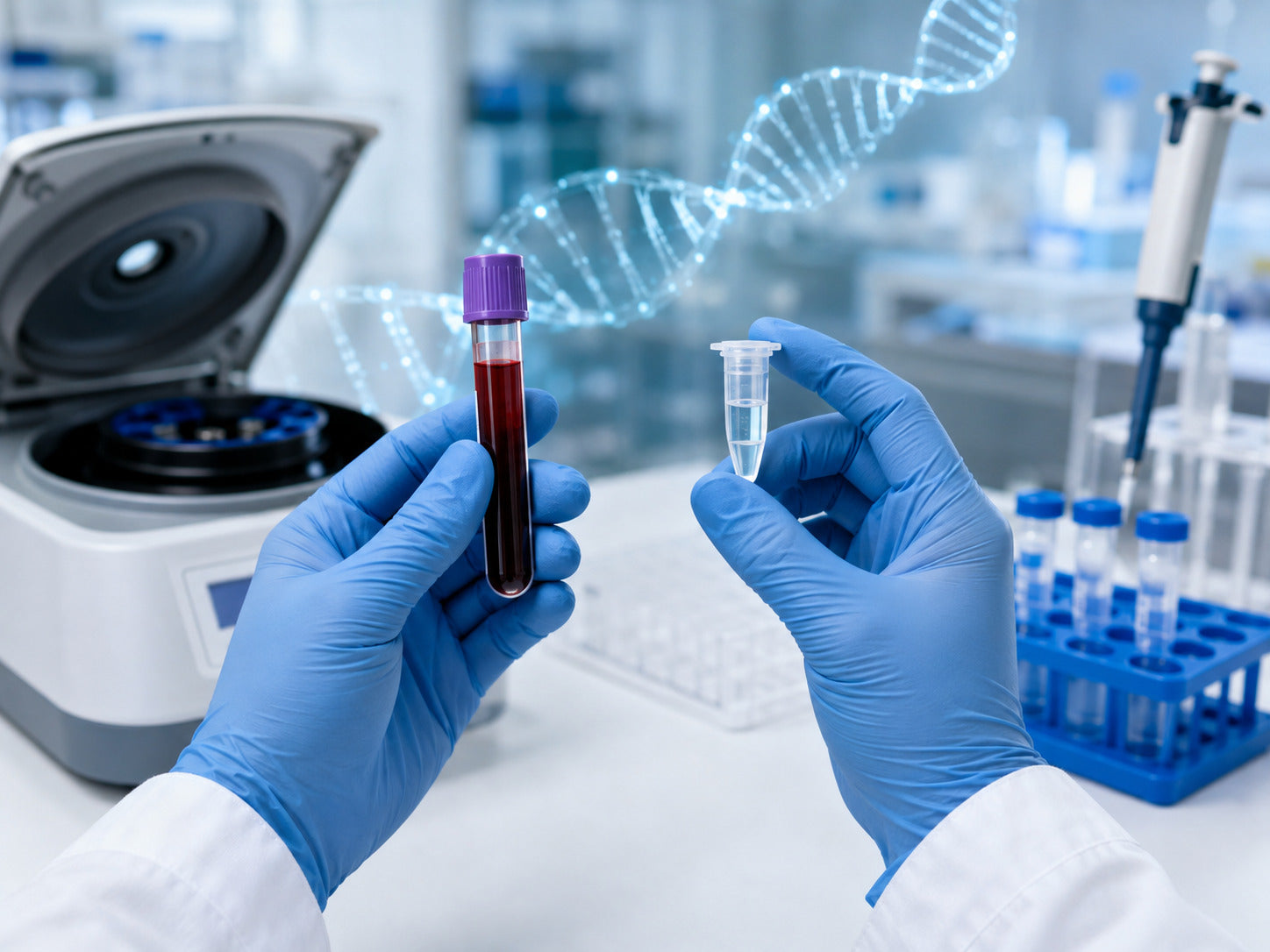
Choosing a DNA extraction kit for blood specimens starts with matching the product to the exact sample type, nucleic acid target, input volume, collection tube, throughput, and downstream assay. Whole-blood genomic DNA, plasma cell-free DNA, blood RNA, and viral nucleic acids are different targets and should not be processed with the same extraction chemistry.
FireGene supplies nucleic acid extraction and purification products for plasma, PAXgene-stabilized blood, viral samples, tissue, FFPE material, cells, and microorganisms. Researchers requiring genomic DNA from whole blood should provide their complete specimen and workflow requirements so the technical team can confirm whether an available product or a customized extraction workflow is appropriate.
Planning a blood nucleic acid extraction workflow? FireGene offers products for plasma cfDNA, PAXgene blood RNA, and viral DNA/RNA isolation. For whole-blood genomic DNA, submit your species, anticoagulant, input volume, sample count, and downstream application to confirm compatibility or discuss workflow customization. Discuss Your Workflow
Which FireGene Option Matches Your Blood Specimen?
The word “blood” can refer to several specimen types and research targets. Use the following comparison to identify the most relevant starting point.
|
FireGene option |
Intended specimen |
Nucleic acid target |
Suitable research use |
Buyer action |
|
Plasma |
Cell-free DNA |
Liquid-biopsy and other low-input cfDNA workflows |
||
|
PAXgene-stabilized whole blood |
RNA |
Gene-expression and transcriptomic research |
||
|
Supported plasma, serum, and viral specimens |
Viral DNA and RNA |
Infectious-disease and viral nucleic acid research |
||
|
Whole blood requiring genomic DNA extraction |
Genomic DNA |
PCR, genotyping, sequencing, and related research workflows |
FireGene does not currently list a dedicated whole-blood genomic DNA extraction kit clearly on its website. If genomic DNA from fresh or frozen whole blood is required, request compatibility confirmation or discuss a customized workflow before ordering.

Why the Blood Specimen and Nucleic Acid Target Matter
Human whole blood contains nucleated white blood cells, which provide most of its genomic DNA. Mature red blood cells do not have nuclei. A whole-blood genomic DNA workflow must therefore lyse nucleated cells and remove proteins, salts, heme, anticoagulant residues, and other contaminants while preserving DNA quality.
Plasma cfDNA extraction has a different objective. It is designed to recover short, low-abundance DNA fragments circulating in plasma rather than high-molecular-weight genomic DNA from white blood cells. A PAXgene blood RNA kit targets stabilized RNA, while a viral DNA/RNA kit is developed for viral nucleic acids in supported specimen types. Selecting the correct sample-specific product helps laboratories achieve more consistent recovery, reduce inhibitor carryover, standardize processing, and prepare nucleic acids suitable for the intended downstream assay.
Four Factors to Compare Before Ordering
1. Validated Sample Type and Collection Tube
Start by confirming that the product documentation explicitly supports the specimen being processed. Relevant descriptions may include plasma, serum, fresh whole blood, frozen whole blood, buffy coat, PAXgene-stabilized blood, or another defined specimen.
For genomic DNA extraction, also confirm compatibility with the collection tube. EDTA is commonly used for blood DNA workflows, but the selected kit should still document or confirm its compatibility. Heparin may interfere with amplification if it carries into the purified sample, while citrate can affect specimen characteristics. Treat the collection tube and extraction method as one connected workflow. Do not assume that a tissue DNA kit, plasma cfDNA kit, or blood RNA kit can replace a product validated for whole-blood genomic DNA.
2. Input Volume, Yield, and DNA Integrity
Check the supported minimum and maximum specimen volume for each preparation. Using more sample than a column or magnetic-bead system can process may reduce purity or increase inhibitor carryover. Very small inputs may not provide the DNA quantity required by the study.
Useful performance information includes:
- Expected yield or recovery range
- A260/A280 and A260/A230 purity data
- Consistency across specimens or runs
- DNA integrity or fragment-size information
- Available elution volumes
Blood volume, white blood cell count, specimen age, storage conditions, and extraction chemistry can all influence recovery. Ask whether published performance represents a typical result, a tested range, or an optimized specimen.
3. Purification Format and Throughput
The preferred purification format depends on sample count, available equipment, processing schedule, and automation plans.
|
Extraction format |
Main purchasing advantage |
Best choice when |
|
Silica spin column |
Familiar manual workflow with straightforward bench processing |
A laboratory handles small or moderate sample batches |
|
Magnetic beads |
Scalable processing with reduced centrifugation and automation potential |
High throughput or liquid-handling integration is required |
|
Precipitation-based method |
Potential recovery of high-molecular-weight DNA |
DNA length is important and additional handling is acceptable |
|
Organic extraction |
Continuity with an established legacy method |
A laboratory must maintain a previously validated procedure |
When comparing formats, calculate the number of preparations, hands-on time, total processing time, required centrifuges or magnetic racks, additional plastics, reagent storage, and cost per usable sample. A lower kit price may not provide the lowest total workflow cost if it requires more labor or repeat extraction.Processing multiple blood specimens? Ask FireGene about supported reaction quantities, magnetic-bead formats, automation compatibility, and bulk-order options.
4. Downstream Application Compatibility
The required DNA quality depends on what happens after extraction. DNA that performs adequately in a short PCR assay may not automatically be suitable for long-range PCR, restriction digestion, or whole-genome sequencing.
Before ordering, confirm compatibility with the laboratory’s intended application, such as:
- Conventional PCR or qPCR
- SNP genotyping and mutation analysis
- Sanger sequencing
- Targeted next-generation sequencing
- Whole-genome sequencing
- Microarray analysis
- Restriction digestion
- Long-term biobanking
Projects requiring high-molecular-weight DNA should also request information about DNA integrity and any mixing, transfer, or elution steps that could cause shearing.
General Blood DNA Extraction Workflow
A kit-specific protocol should always determine the exact reagent volumes, incubation periods, wash steps, centrifugation settings, and elution conditions. A typical workflow includes:
- Prepare the specimen: Confirm the tube type, storage condition, supported input volume, and specimen quality.
- Lyse nucleated cells: Use the specified lysis chemistry and Proteinase K when required to release DNA and digest proteins.
- Bind the DNA: Capture DNA on a silica membrane or magnetic beads under the required chemical conditions.
- Wash away contaminants: Remove proteins, salts, heme, anticoagulant residues, and other potential inhibitors.
- Elute the DNA: Recover purified DNA in the recommended buffer and volume for the downstream assay.
This overview helps buyers understand workflow requirements, but it should not replace the manufacturer’s validated instructions for use.

Blood DNA Extraction Purchasing Checklist
Before requesting a quote or placing an order, confirm:
- Exact specimen type and supported species
- Fresh, frozen, plasma, serum, or stabilized-blood compatibility
- Collection-tube and anticoagulant compatibility
- Minimum and maximum input volume
- Nucleic acid target: genomic DNA, cfDNA, RNA, or viral DNA/RNA
- Spin-column or magnetic-bead purification format
- Manual or automated processing requirements
- Preparations per kit and expected processing time
- Expected yield, purity, integrity, and elution volume
- Compatibility with the intended PCR, qPCR, genotyping, or sequencing assay
- Required instruments and additional consumables
- Reagent storage, shelf life, technical documentation, and support
Providing these details in the initial inquiry allows the technical team to evaluate the workflow efficiently and recommend the closest available product or customization route.
Frequently Asked Questions
What is the best method for extracting DNA from blood?
The best method is one validated for the exact blood specimen, input volume, anticoagulant, required DNA integrity, throughput, and downstream assay. Spin-column systems suit routine manual processing, while magnetic-bead formats are often preferred for scalable or automated workflows.
Can an EDTA blood tube be used for genomic DNA extraction?
EDTA-treated whole blood is commonly used for genomic DNA extraction. The extraction product should still be confirmed as compatible with EDTA blood, the collected volume, storage conditions, and intended downstream application.
Can a plasma cfDNA kit extract genomic DNA from whole blood?
A plasma cfDNA kit should not be assumed to support that purpose. It is optimized for short, low-concentration DNA fragments in plasma, whereas whole-blood genomic DNA is recovered mainly from nucleated white blood cells. Select a workflow validated for the actual specimen and nucleic acid target.
Choose the Right FireGene Extraction Workflow
The correct purchasing decision begins with a precise definition of the specimen and research objective. FireGene provides extraction products for plasma cfDNA, PAXgene-stabilized blood RNA, and viral DNA/RNA workflows. Researchers requiring genomic DNA from whole blood can contact the technical team to confirm compatibility or discuss a customized extraction solution.
For the fastest product evaluation, include the specimen type, species, collection tube, anticoagulant, input volume, number of samples, preferred manual or automated format, required yield or integrity, and downstream assay in the inquiry. Discuss Your Blood Nucleic Acid Extraction Requirements Share your complete specimen and workflow details to receive product-selection support or evaluate a customized extraction approach.


