
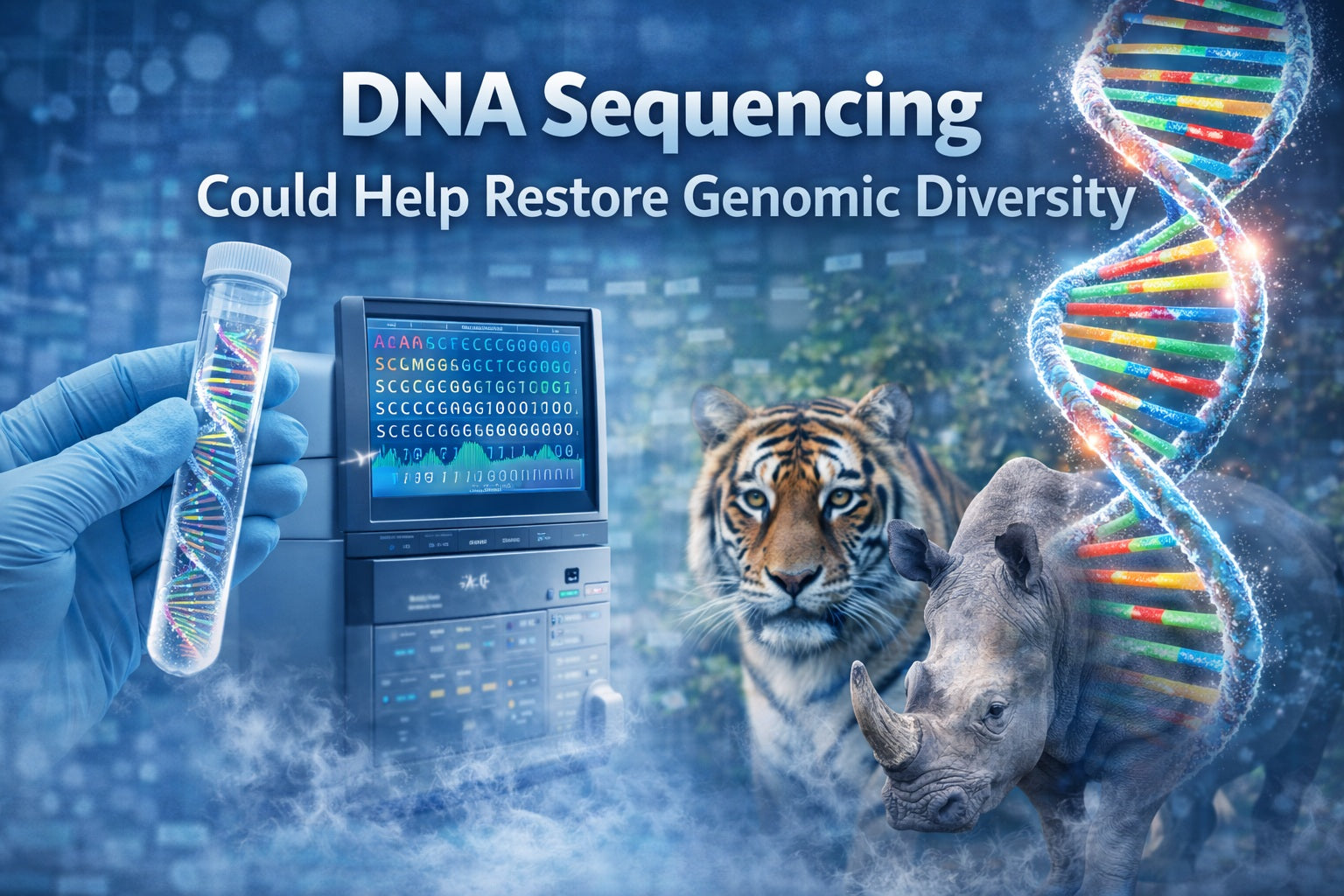
California’s wild landscapes still support an iconic big cat: the puma, also widely known as the mountain lion. In parts of the state, these animals live in pockets of habitat separated by roads, cities, and other barriers. When populations become isolated, they can lose genomic diversity over time, which makes it harder for them to adapt and thrive across generations.
This is where modern DNA sequencing offers exciting, practical value. By combining field conservation with data-rich genetics, scientists and wildlife managers can identify where gene flow is limited, pinpoint which populations are most at risk, and design targeted actions that help reconnect animals either by improving natural movement corridors or, in carefully planned situations, through managed translocation.
Why genomic diversity matters for pumas
Genomic diversity refers to the wide range of genetic variation within a population. That variation supports:
- Better resilience to environmental change
- Stronger long-term reproductive health
- More adaptive potential to disease pressures and habitat shifts
For wide-ranging carnivores like the puma, natural movement between habitats historically helped maintain genetic variation. When movement becomes limited, small populations can experience increased relatedness over time. The encouraging part is that conservation planning can actively improve connectivity, especially when genomics helps prioritize where action has the most impact.
The challenge in California: fragmentation and isolated puma groups
California is a success story in many ways because large predators persist in some of the most densely populated regions of the United States. At the same time, that proximity to dense infrastructure can create real barriers to movement.
When pumas cannot safely cross roads or navigate developed areas, groups become more isolated. Over multiple generations, isolation can reduce genomic diversity even when population size appears stable in the short term.
Conservation strategies increasingly focus on restoring connectivity through:
- Wildlife corridors and protected habitat linkages
- Wildlife crossings that help animals move safely across highways
- Habitat restoration that reduces bottlenecks
- Carefully planned population augmentation (where appropriate)
Genomics helps determine which strategy best fits each region.
How DNA sequencing supports conservation genetics
Conservation genetics uses genetic data to support real-world protection and recovery planning for wildlife populations. Earlier approaches often relied on a limited number of genetic markers. Today, DNA sequencing can generate far more information from each sample.
What genome sequencing adds
With genome sequencing, researchers can:
- Measure genomic diversity with greater resolution
- Detect signatures of isolation and inbreeding risk
- Map connectivity patterns across landscapes
- Identify which subpopulations are most genetically vulnerable
- Model how changes in connectivity could improve genetic outcomes
This makes sequencing a powerful tool for conservation teams who want decisions grounded in data.
What “restoring genomic diversity” can look like
Restoring or protecting genomic diversity doesn’t necessarily mean moving animals immediately. Often, the most sustainable approach is to improve natural dispersal opportunities.
1) Improve movement pathways
If pumas can safely cross key barriers, gene flow can increase naturally over time. This approach can be especially effective when larger, connected populations exist nearby.
2) Targeted, carefully planned translocation
In certain cases, a conservation agency may consider moving one or a few individuals to support genetic recovery. This is sometimes called genetic rescue, and it’s handled with strong ethical and ecological safeguards.
3) Long-term monitoring
Genetic monitoring helps track whether connectivity improvements are working. Continued DNA sequencing enables tracking progress over time.
In practice, genomics supports a step-by-step strategy: assess, act, measure, and refine.
From field sample to genome data: the practical workflow
Genomics starts with a biological sample. In wildlife work, that sample might be a blood draw during collaring, a tissue sample collected during veterinary care, or non-invasive sources, depending on the study design.
A typical workflow for genome sequencing includes:
- Sample collection and stabilization
- Biological sample storage and transport logistics
- DNA extraction
- Quantification and quality assessment
- Library preparation
- Sequencing
- Bioinformatics and interpretation
Every step supports the next. Strong sample handling makes downstream analysis smoother and more reliable.
Why DNA quality and purity matter in conservation genomics
Wildlife samples can be variable. They may be low-input, collected in challenging environments, or processed under time constraints. That’s why teams pay close attention to DNA quality and DNA purity.
DNA quality
DNA quality typically refers to:
- Integrity (how intact the DNA is)
- Fragment size distribution
- Suitability for library preparation and sequencing chemistry
Higher-integrity DNA can support more robust genome-wide analysis and reduce technical noise.
DNA purity
DNA purity focuses on:
- Whether inhibitors are present
- Whether residual salts, proteins, or other compounds could interfere with downstream enzymes
For many sequencing workflows, purity supports consistent library yields and cleaner data.
The positive takeaway is that practical lab workflows can produce strong results even when samples are field-collected—especially when extraction and storage are optimized.
Where FireGene fits in wildlife genomics workflows
FireGene is built around practical molecular workflows: extraction, sample preparation, and sequencing-ready pipelines. While conservation projects can vary in protocols, genomics programs often rely on the same foundational tools used across research and diagnostics.
Here are the touchpoints where FireGene aligns naturally with conservation genomics projects:
Nucleic acid extraction that supports downstream sequencing
Reliable extraction helps teams achieve consistent yields and cleanliness across diverse sample types. FireGene’s Nucleic Acid Extraction solutions are relevant wherever projects prioritize stable downstream performance for DNA sequencing.
Sample preparation for cleaner inputs
Field samples can include debris or inhibitors. FireGene’s Sample Preparation Kit category supports workflows that aim to improve consistency before extraction or downstream enzymatic steps.
NGS library preparation workflows
For projects that move into next-generation sequencing, FireGene’s NGS Library Prep Kits category is a natural fit for building sequencing-ready libraries when samples and study design support NGS approaches.
A quality-first mindset
Conservation genomics depends on dependable data. FireGene’s focus on consistent reagent performance helps labs maintain repeatability as they scale sample numbers—an important benefit when monitoring population genetics over time.
What genomic insights can reveal about California pumas?
When researchers sequence puma genomes from different regions, they can compare patterns across landscapes.
Common insights include:
- Which populations have the lowest genomic diversity
- Which barriers most strongly reduce connectivity
- Where corridors could have the largest genetic benefit
- Whether recent gene flow events improved diversity
These results help translate genetics into action, supporting a conservation plan that is both targeted and measurable.
Building a strong conservation genetics study: best-practice checklist
If you’re planning or supporting a conservation genomics project, these steps keep the workflow efficient and reliable.
Collection and metadata
- Standardize collection methods when possible
- Record time, location, sample type, and handling notes
- Maintain clear chain-of-custody labeling
Storage and transport
- Use stabilization methods suited to the sample type
- Prioritize cold-chain or validated alternatives
- Minimize freeze-thaw cycles for sensitive DNA samples
Extraction and QC
- Choose an extraction workflow suited to tissue/blood/saliva/swab inputs
- Quantify using fluorescence-based DNA measurements when possible
- Track both yield and purity indicators
- Confirm that DNA quality supports the planned library prep method
Sequencing strategy
- Choose an approach aligned with the question (population structure, connectivity, diversity)
- Use appropriate coverage and sample numbers for the study design
Communication and application
- Translate results into a practical management plan
- Keep monitoring built into the long-term strategy
This structure helps the science stay connected to real conservation outcomes.
FAQ
How can DNA sequencing help mountain lions in California?
DNA sequencing can identify which puma populations are genetically isolated, measure genomic diversity, and guide strategies that improve connectivity or support recovery planning.
What is the difference between DNA sequencing and genome sequencing?
DNA sequencing is a broad term for the process of reading DNA. Genome sequencing typically refers to sequencing the entire genome, providing deeper insight into population structure and genomic diversity.
Why do DNA quality and DNA purity matter for conservation genetics?
Good DNA quality supports reliable genome-wide analysis, while strong DNA purity helps ensure enzymes used in library preparation and sequencing workflows perform consistently.
What is conservation genetics?
Conservation genetics uses genetic information to support the protection and long-term health of wildlife populations, including monitoring genetic diversity and guiding management decisions.
Is restoring genomic diversity only possible through moving animals?
Not always. Improving habitat connectivity can support natural gene flow. In some cases, carefully managed translocation may also be considered as part of a broader conservation strategy.
CONCLUSION
For at-risk puma populations in California, DNA sequencing and genome sequencing offer a practical path to smarter conservation. By measuring genomic diversity and identifying areas of limited connectivity, conservation genetics can help guide targeted actions that strengthen long-term population health. With strong attention to DNA quality and DNA purity, genomics programs can generate data that is both dependable and actionable—supporting a future where the mountain lion continues to thrive across California’s wild spaces.


