
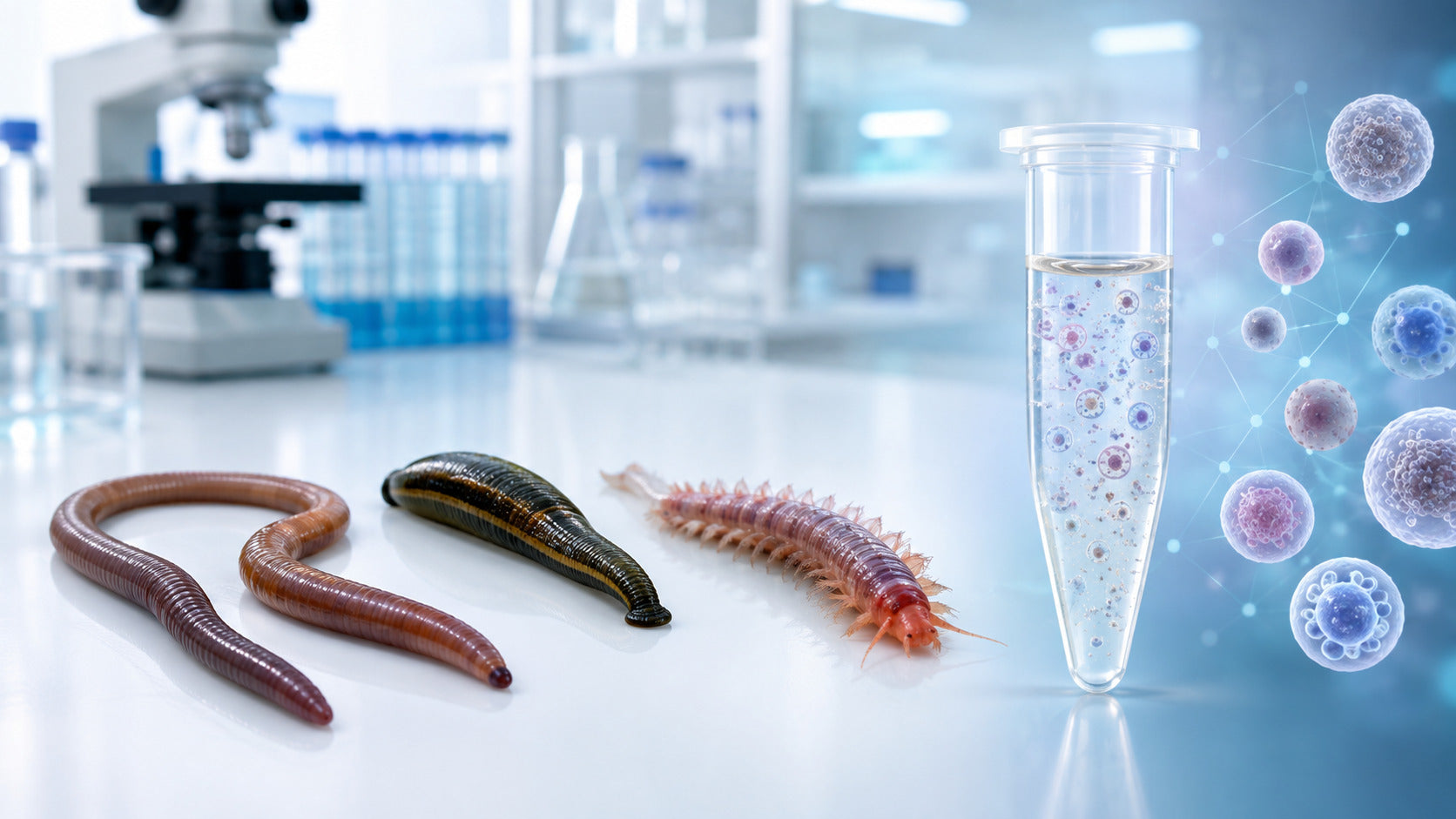
An annelid tissue dissociation kit should help researchers convert fresh earthworm, leech or sandworm tissue into a workable single-cell suspension while preserving the cell quality required for sequencing, culture or cell-based assays. The most suitable purchasing option depends on species, tissue condition, starting mass, digestion requirements and the downstream platform. General mammalian dissociation workflows may not reflect the structure or handling requirements of invertebrate tissue. A dedicated annelid workflow gives laboratories a more relevant starting point for standardizing washing, mincing, enzymatic digestion, filtration, centrifugation, resuspension and quality control.
Quick product recommendation: The FireGene Annelid Dissociation Kit for Single-Cell Preparation, SKU FG-BA3335-10, is designed for fresh tissues from earthworms, leeches and sandworms. The live product page offers 10- and 50-reaction options and supports single-cell sequencing, cell culture and cell-related assays. At the time of review, the 10-reaction option was displayed at $789. Check the product page for current pricing and availability.
View the 10-Reaction Kit and Current Price | Submit a Bulk Inquiry or Sample Request
Quick Annelid Dissociation Kit Selection Guide
|
Research requirement |
Recommended option |
Why it fits |
Buyer action |
|
Fresh earthworm tissue |
Earthworm tissue is specifically listed |
Review the 10-reaction option |
|
|
Fresh leech tissue |
Leech tissue is a documented compatible sample |
Review product specifications |
|
|
Fresh sandworm tissue |
Sandworm tissue is specifically included |
Review product specifications |
|
|
Field-collected annelid specimens |
Annelid-specific enzymatic workflow |
The product supports field-collected samples |
Standardize collection and processing time |
|
Laboratory-bred annelid samples |
Annelid-specific enzymatic workflow |
The product supports laboratory-bred samples |
Keep age, condition and tissue region consistent |
|
Larger study or multiple tissue conditions |
50-reaction option or project inquiry |
Allows purchasing to match planned throughput |
Request current format pricing |
The same kit can provide a common framework across multiple annelid projects while allowing digestion to be qualified for each sample condition.
Why Annelid Tissue Needs a Dedicated Dissociation Workflow
Earthworms, leeches and sandworms are used in regeneration, developmental biology, environmental toxicology, comparative cell biology and invertebrate model research. These studies increasingly benefit from single-cell approaches that explore tissue heterogeneity and cell-state differences.
The dissociation step directly affects what enters the downstream workflow. Insufficient digestion can leave tissue fragments and aggregates, while excessive incubation or harsh mechanical handling may change cell recovery or viability. Field-collected samples may also vary in size, physiological state, environmental exposure and time from collection to processing. A dedicated kit does not remove biological variation, but it provides a defined enzymatic reagent and an organized preparation sequence. Researchers can then optimize a smaller number of variables such as tissue region, mincing consistency, digestion duration and resuspension conditions rather than building the full workflow from unrelated enzymes.
Six Factors to Compare Before Ordering
1. Species and tissue region
Confirm whether the study uses earthworm, leech, sandworm or another annelid. The live listing specifically names these three sample groups and describes compatibility with fresh annelid tissues. Body wall, digestive tissue, reproductive structures and regenerating regions may dissociate differently. Include the study objective when requesting technical guidance.
2. Field-collected or laboratory-bred material
The product supports both field-collected and laboratory-bred samples. For field studies, standardize collection containers, transport conditions, holding time and processing temperature as far as the experimental design allows. For laboratory-bred animals, document developmental stage, feeding condition and sampling region. These details help distinguish kit performance from pre-analytical variation and make pilot results easier to reproduce.
3. Starting tissue amount
The documented starting material is approximately 200 mg of fresh tissue. If the study uses substantially different quantities, ask whether the reagent volume and vessel size should be scaled.
4. Digestion time and cell quality
The documented digestion condition is 37°C for 0.5–2 hours, with duration adjusted according to tissue type and condition. Treat this as a protocol range rather than a universal endpoint. Select the endpoint that provides adequate cell release while supporting the quality requirements of the intended assay.
5. Downstream application
The kit is documented for single-cell sequencing, cell culture and other cell-related assays. Each application has different acceptance criteria:
- Single-cell sequencing: viable cells, suitable concentration, limited aggregates and acceptable debris;
- Cell culture: viable cells compatible with the selected medium and culture conditions;
- Cell-based assays: consistent cell recovery and sample quality suited to the assay readout;
- Cell counting and viability analysis: a clean suspension that can be assessed reliably.
Do not use cell yield alone as the purchasing criterion. A high count with excessive debris or clumps may still require additional optimization before platform loading.
6. Kit size and total workflow cost
The storefront offers 10- and 50-reaction formats. The smaller option can support initial evaluation, while the larger option may suit established or multi-condition projects. Calculate cost per usable suspension, including required media, serum, PBS, strainers, tubes, tips, QC, repeats and technician time. This provides a more realistic commercial comparison than kit price alone.
Recommended Annelid Tissue Dissociation Kit
The FireGene Annelid Dissociation Kit for Single-Cell Preparation uses mild enzymatic digestion to prepare cell suspensions from fresh annelid tissue. The documented workflow includes tissue washing, mincing, digestion, filtration, centrifugation, washing, resuspension and quality control.
Product: Annelid Dissociation Kit for Single-Cell Preparation
SKU: FG-BA3335-10
Available options: 10 and 50 reactions
Price: Check the product page for the current amount
Samples: Fresh earthworm, leech and sandworm tissues
Starting material: Approximately 200 mg tissue
Digestion: 37°C for 0.5–2 hours, adjusted by tissue condition
Filtration: 70 μm cell strainer
Applications: Single-cell sequencing, cell culture and cell-related assays
Storage: −20°C
Shelf life: Two years
Use: Research use only
What Is Included?
The listed reagent is ADS Annelid Dissociation Solution, catalog number FG-BA3335-A. The documented configuration lists 2 × 1.25 mL; however, component quantities may differ between the 10- and 50-reaction formats. Confirm the current package contents for the selected option before ordering.
What Else Does the Laboratory Need?
The published workflow lists:
- PBS, FBS and RPMI 1640 medium;
- a water bath or hybridization oven;
- a horizontal centrifuge;
- low-adhesion pipette tips;
- 5 mL and 15 mL centrifuge tubes;
- 70 μm cell strainers;
- a suitable cell-counting and viability-assessment method.
Including these requirements in the purchasing plan helps prevent delays after the dissociation reagent arrives.
View the Annelid Dissociation Kit | Request 50-Reaction Pricing or Technical Guidance
Plan and Qualify the Single-Cell Workflow
The documented workflow helps laboratories plan the required equipment and consumables. Follow the current product manual for operational details.
- Prepare fresh tissue and wash it using the documented solution.
- Mince the tissue consistently to support uniform enzyme exposure.
- Add the dissociation solution and incubate within the documented range.
- Monitor tissue breakdown and adjust duration according to sample condition.
- Filter the suspension through a 70 μm strainer.
- Centrifuge, wash and resuspend the collected cells.
- Measure cell count, viability, debris and aggregation before downstream use.
For a representative evaluation, record tissue mass, mincing method, digestion duration, total and viable cell recovery, debris, aggregates and processing time. For single-cell sequencing, also match the final concentration and suspension quality to the loading requirements of the chosen platform.

Related Product for Aggregate-Prone Suspensions
If the post-dissociation suspension contains persistent aggregates, the Anti-Clumping Agent for Single-Cell Suspensions, SKU FG-BA3345-100, is an available 100 mL product designed to reduce aggregates in suspensions derived from dissociated animal tissues.
Because the product page does not specifically name annelid samples, confirm compatibility with the relevant earthworm, leech or sandworm cells before adding it to the workflow. Use it as a targeted cleanup option rather than an automatic step for every sample. Buyer action: Share the species, tissue region and observed aggregation level when requesting compatibility guidance.
Ordering Checklist
Prepare the following information before placing an order or requesting project pricing:
- annelid species and exact tissue region;
- field-collected or laboratory-bred origin;
- fresh tissue condition and transport history;
- approximate mass per sample;
- number of samples, controls and expected repeats;
- downstream single-cell platform, culture or assay;
- preferred 10- or 50-reaction format;
- available incubator, centrifuge, filters and QC equipment;
- expected study timeline and storage capacity.
This information helps the supplier understand whether the laboratory needs a pilot kit, a larger configuration or sample-specific technical guidance.

FAQs
What is the best tissue dissociation kit for earthworm single-cell sequencing?
A suitable kit should be documented for fresh earthworm tissue and produce suspensions that can be qualified for the chosen platform. The annelid-specific kit described here uses mild enzymatic digestion and supports single-cell sequencing workflows.
Can the same kit be used for leech and sandworm tissue?
Yes. Both leech and sandworm tissues are listed as compatible sample types. Digestion duration should be optimized for the species, tissue region and sample condition.
Is the kit suitable for field-collected specimens?
The product page states that both field-collected and laboratory-bred annelid samples are supported. Consistent collection, transport and processing records remain important for reproducible results.
Which downstream applications are supported?
The product is documented for single-cell sequencing, cell culture, cell counting, viability assessment and other cell-related assays. Confirm the final suspension requirements for the selected downstream platform.
Conclusion
Successful annelid single-cell research begins with a dissociation workflow matched to the sample and downstream assay. The dedicated kit provides a documented route for fresh earthworm, leech and sandworm tissues with two purchasing formats. Planning an earthworm, leech or sandworm single-cell study? Review the available format that fits the project or request guidance for a larger study.
View the FireGene Annelid Dissociation Kit and Current Price | Submit a Bulk Inquiry or Sample Request


