
Introduction
Single-cell RNA sequencing (scRNA-seq) has rapidly become one of the most powerful technologies in modern biomedical research. By analyzing gene expression at the individual cell level, scientists can uncover previously unknown cellular heterogeneity within complex organs.
The kidney is one of the most structurally complex organs in the body. It contains numerous specialized cell populations including epithelial cells, endothelial cells, fibroblasts, and immune cells. Understanding how these cell populations interact requires high-resolution analytical tools such as single-cell sequencing.
However, the success of any single-cell sequencing experiment depends heavily on sample preparation quality, particularly the tissue dissociation process.
Efficient dissociation ensures that kidney tissue can be converted into a viable single-cell suspension suitable for downstream analysis.
For this reason, many research laboratories choose to purchase optimized kidney dissociation kits from professional reagent suppliers rather than relying on traditional enzymatic digestion methods.
One such solution widely adopted by research laboratories is the FireGene Kidney Dissociation Kit.
Product page:
https://firegene.com/products/kidney-dissociation-kit-fg-ba3322
Importance of High-Quality Cell Suspensions
Single-cell sequencing experiments require extremely high sample quality.
If tissue dissociation is inefficient, several problems may occur:
- low cell recovery
- reduced cell viability
- RNA degradation
- loss of fragile renal cell populations
These issues can introduce bias into sequencing datasets and significantly affect biological interpretation.
For example, rare cell types may be underrepresented or completely lost if dissociation conditions damage sensitive cells.
Using optimized tissue dissociation reagents allows researchers to generate consistent and reproducible single-cell suspensions, which are essential for reliable sequencing results.
Challenges in Kidney Tissue Processing
Kidney tissue presents unique dissociation challenges due to its complex structure.
The renal extracellular matrix contains:
- collagen fibers
- laminin networks
- basement membrane components
These structural proteins provide stability to kidney tissue but also make digestion more difficult.
At the same time, several kidney cell populations are extremely delicate, particularly:
- podocytes
- tubular epithelial cells
Overly aggressive digestion protocols can damage these cells, while insufficient digestion may leave large tissue fragments intact.
Achieving the correct balance between efficient digestion and cell preservation is critical.
Benefits of Using a Dedicated Kidney Dissociation Kit
Pre-optimized dissociation kits provide several advantages compared with traditional enzyme mixtures.
Consistent Digestion Efficiency
Commercial kits use carefully optimized enzyme formulations designed specifically for renal tissues.
Improved Experimental Reproducibility
Standardized reagents ensure that experimental results remain consistent across different laboratories and experimental batches.
Simplified Experimental Workflow
Researchers no longer need to spend time optimizing enzyme concentrations or digestion times.
Compatibility With Modern Technologies
High-quality cell suspensions generated using optimized kits are suitable for:
- single-cell sequencing
- flow cytometry
- cell sorting
- transcriptomics analysis
FireGene Kidney Dissociation Kit for Advanced Research
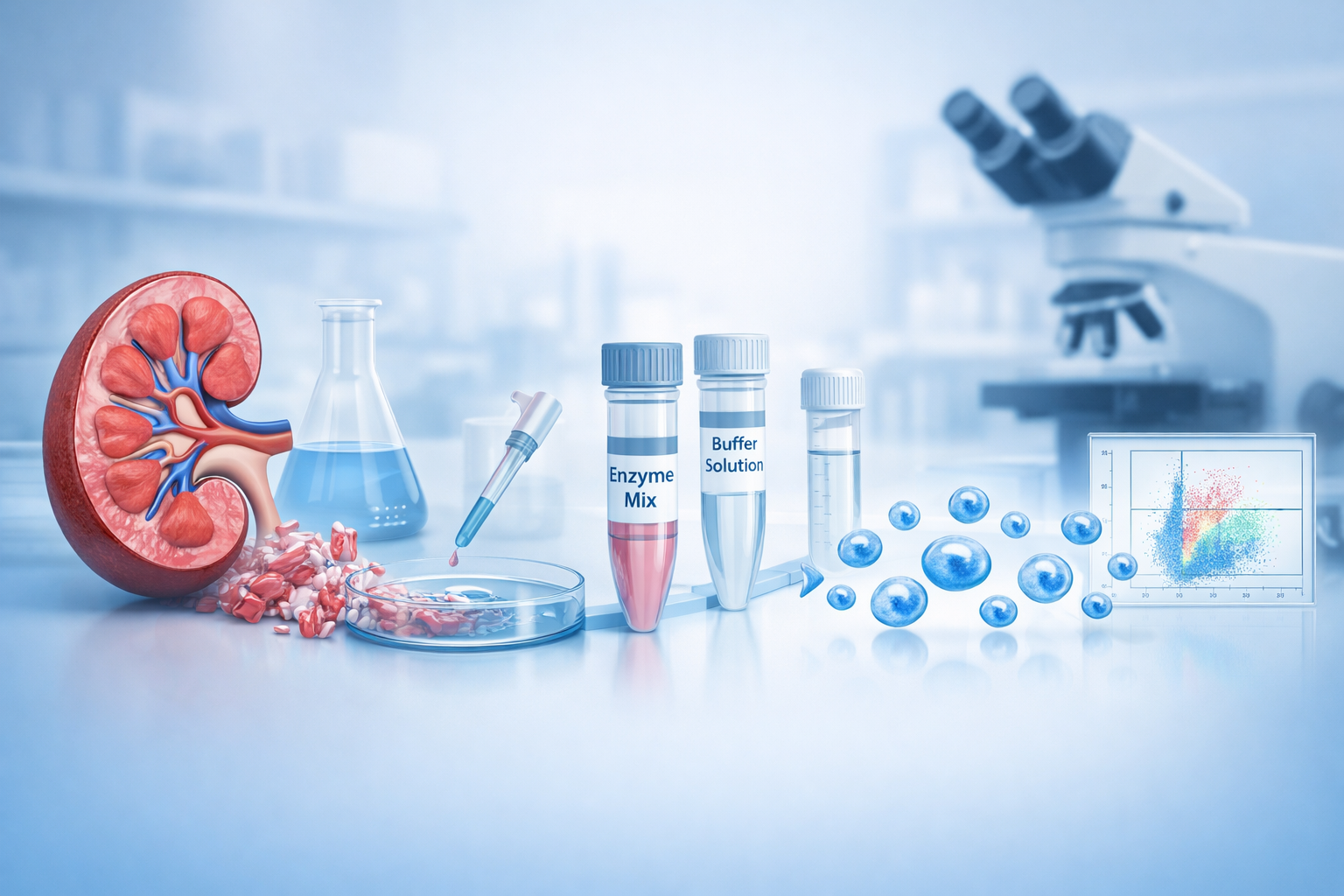
The FireGene Kidney Dissociation Kit FG-BA3322 is designed to efficiently isolate viable kidney cells from tissue samples.
Researchers can explore the product here:
https://firegene.com/products/kidney-dissociation-kit-fg-ba3322
The kit includes optimized enzymatic components that effectively digest extracellular matrix while maintaining high cell viability.
Key advantages include:
- reliable renal tissue digestion
- improved cell recovery rates
- compatibility with single-cell sequencing workflows
These features make the kit suitable for a wide range of nephrology research applications.
Supporting Multi-Tissue Research Projects
Many research laboratories work with multiple organ systems within the same experimental project.
To support these workflows, FireGene offers a comprehensive collection of tissue dissociation kits designed for different sample types.
Researchers may also explore related sample preparation tools such as:
Multi-Tissue Dissociation Kit
https://firegene.com/products/multi-tissue-dissociation-kit-fg-ba3303
Mouse Brain Dissociation Kit
https://firegene.com/products/mouse-brain-dissociation-kit-fg-ba3305
Bone Dissociation Kit
https://firegene.com/products/bone-dissociation-kit-fg-ba3308
Complete tissue preparation kits collection:
https://firegene.com/collections/sample-preparation-kit/tissue-dissociation-kits
Using compatible reagents across different tissues can significantly improve experimental consistency.
Choosing a Reliable Research Supplier
Selecting the right reagent supplier is an important decision for research laboratories.
Reliable suppliers should provide:
- consistent reagent quality
- detailed experimental protocols
- stable global supply chains
- technical support for researchers
FireGene focuses on delivering research-grade reagents that support advanced life science research and single-cell sequencing applications.
Conclusion
Kidney tissue dissociation plays a critical role in modern nephrology research.
Optimized dissociation reagents allow researchers to generate high-quality single-cell suspensions suitable for advanced analytical technologies.
Solutions such as the FireGene Kidney Dissociation Kit help laboratories simplify tissue processing workflows while ensuring reliable experimental results.
FireGene, light your research with passion, innovation, and profession.


